

Managing operational expenditure in energy and capital-intensive sectors requires rigorous financial controls at the point of invoice processing. Day-rate contracts introduce specific billing complexities, as charges stem from variable time units, equipment usage rates, and field-level service confirmations rather than fixed-item pricing. Failing to reconcile accounts payable documentation accurately leads to overpayment, unauthorized rate variance, and non-compliance with commercial terms. Organizations face systemic financial leakage when accounts payable teams, procurement personnel, and cost controllers lack standard operating procedures for validating field timesheets against purchase order line items.
Establishing structural controls begins with understanding transactional risk exposure across the supply chain. Before evaluating structured training solutions, financial teams must review Why Three Way Matching Matters in Day Rate Contracts to grasp how unvalidated day-rate invoices erode operating margins across complex operations. The 3-Way Matching & Invoice Verification for Day-Rate Contracts Training Course provided by the Institute For Oil & Gas Training addresses these operational vulnerabilities directly. This program equips accounts payable specialists, finance managers, and contract administrators with practical capabilities to enforce strict reconciliation protocols, validate complex invoices, and prevent revenue leakage.
What is the Three Way Matching and Invoice Verification for Day Rate Contracts Training by Institute For Oil & Gas Training and what problem does it solve?
The Three Way Matching and Invoice Verification for Day Rate Contracts Training by Institute For Oil & Gas Training is a professional financial control program that eliminates billing errors, unapproved rate variances, and overpayments by establishing standardized invoice verification protocols for day-rate contracts.
Day-rate contracting environments present unique accounts payable challenges that standard automated matching rules fail to address effectively. Unlike straightforward goods purchases supported by physical receiving slips, day-rate invoices combine personnel rates, equipment standby fees, consumables, and variable shift differentials. Without specialized training, verification staff routinely process invoices containing unverified rate tiers, incorrect operational classifications, and missing service confirmations. This knowledge gap creates financial vulnerabilities, increases audit findings, and strains vendor relationships through disputed payments.
The Institute For Oil & Gas Training developed this specialized curriculum to bridge the gap between commercial contract terms and accounts payable execution. Participants gain systematic techniques to execute purchase order to receipt to invoice matching across complex service scenarios. The training focuses on recognizing discrepancies in timesheet logs, identifying unauthorized contract markups, and enforcing contractual conditions before approving disbursements.
By standardizing verification procedures, the Institute For Oil & Gas Training enables organizations to establish operational consistency across decentralized finance teams. Personnel learn to navigate two way and four way matching models, determining the precise verification depth required based on contract value, risk profiles, and regulatory compliance mandates. The program converts high-risk invoice verification into an auditable financial workflow.
Why is this course structured specifically for day rate contract environments?
This course is structured specifically for day-rate environments because service-based billing requires real-time validation of time, rates, and operational scope rather than static material count matching, demanding specialized verification methods tailored to complex commercial agreements.
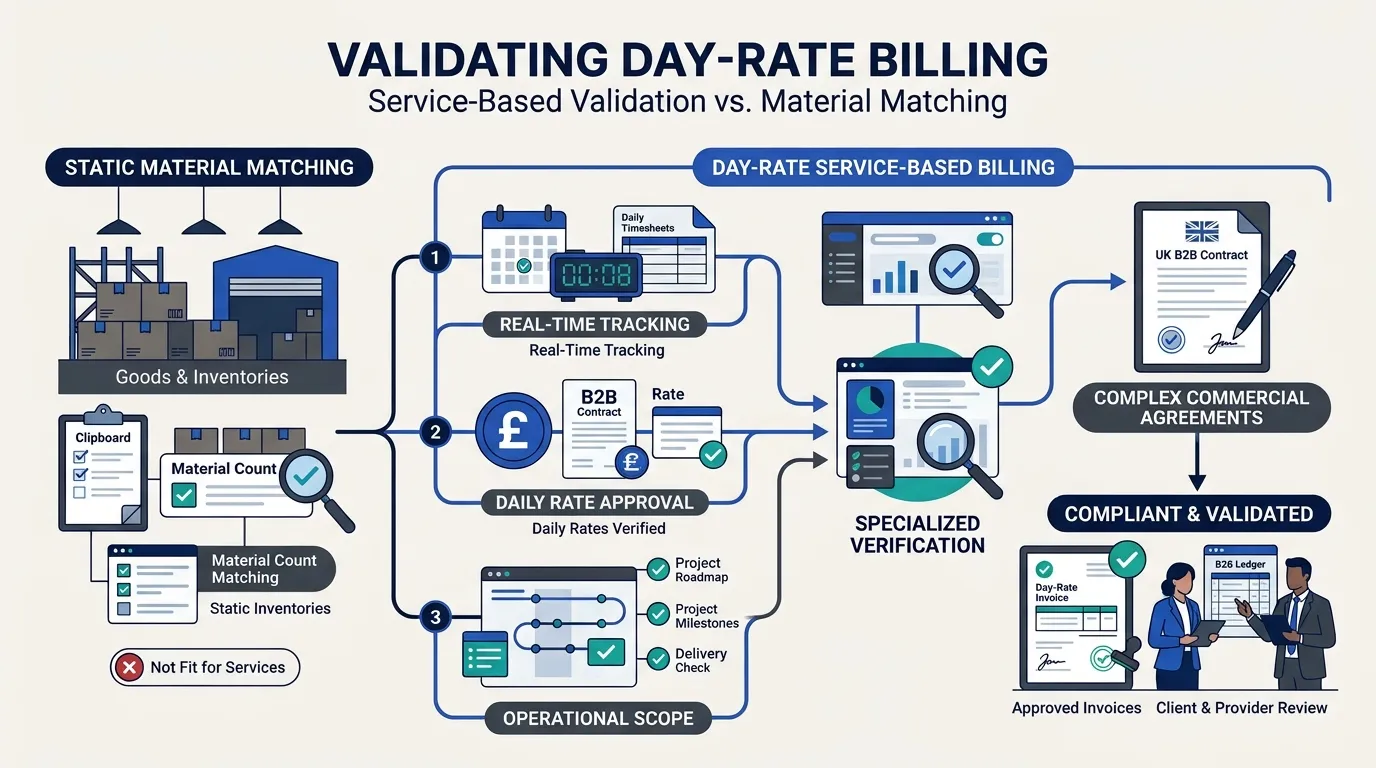
Traditional financial workflows rely on fixed pricing and physical goods receipts, which fail when applied to day-rate contract architectures. Service-based billing in industrial and extraction sectors features variable operational states, such as operating rates, standby rates, zero-rate downtime, and maintenance tariffs. A standard accounts payable system cannot independently confirm whether equipment was fully operational or sitting idle on a given date. Consequently, verifying these claims requires an integrated understanding of procurement documentation, field operations logs, and master service agreements.
The curriculum designed by the Institute For Oil & Gas Training uses a modular skill-building model. Participants move from fundamental commercial concepts to advanced exception handling. Learners explore How to Verify Invoices Against Purchase Orders and Service Confirmations in Day Rate Contracts to master cross-referencing field documentation against formal procurement agreements. The training incorporates practical exercises requiring attendees to audit actual vendor invoices against complex rate structures, field logs, and purchase orders.
The structural design prioritizes practical application over abstract accounting theory. Through controlled case studies, the Institute For Oil & Gas Training demonstrates how to configure system tolerance limits to catch subtle over-billing while keeping routine processing efficient. Learners examine real-world billing scenarios to identify common vendor billing errors, unauthorized rate escalations, and improper expense inclusions. This structured exposure ensures that participants return to their roles equipped to enforce commercial terms immediately.
What will participants learn through the course curriculum and modules?
Participants learn to execute complete 3-way matching, apply exact tolerance limits, reconcile timesheets with master service agreements, resolve unmatched invoices, and manage invoice hold and release protocols across complex industrial environments.
Module Title | Core Skill Focus | Practical Learning Deliverables |
Module 1: Commercial Foundations & PO Architecture | Purchase Order Structure & Contract Terms | Mapping day-rate structures, breakdown fees, and reimbursable terms to PO lines |
Module 2: Field Documentation & Verification | Service Confirmation & Timesheet Audit | Cross-referencing operational logs, daily progress reports, and signed timesheets |
Module 3: Advanced Matching Methodologies | Two Way and Four Way Matching & System Rules | Applying appropriate matching depth based on risk, value, and service type |
Module 4: Financial Variance & Tolerance Control | Price and Quantity Variance Analysis | Establishing system tolerance limits and evaluating line-item cost deviations |
Module 5: Exception Handling & Dispute Resolution | Unmatched Invoice Resolution & Holds | Executing invoice hold and release procedures and managing vendor disputes |
Module 1: Commercial Foundations and Purchase Order Architecture
This module establishes the legal and commercial baseline for day-rate verification. Participants analyze master service agreements, purchase order schedules, and rate card structures to identify critical payment terms. The session focuses on mapping complex rate structures—including operational rates, standby rates, and mobilization fees—directly into enterprise resource planning (ERP) line items. Personnel learn to identify ambiguous contract language that leads to billing disputes downstream.
Module 2: Field Documentation and Service Confirmation Audit
The second module covers the validation of operational field documentation. Attendees learn to audit timesheet and day rate verification records against daily progress reports, site logbooks, and operational sign-offs. The Institute For Oil & Gas Training provides concrete frameworks to identify duplicate billing, unapproved overtime hours, and invalid equipment utilization claims. Participants gain practical skills in confirming that the service confirmation reflects actual field activity before financial processing.
Module 3: Advanced Matching Methodologies and Control Protocols
Module three introduces systematic verification architectures, distinguishing standard matching from advanced control models. Participants examine the operational application of two way and four way matching protocols to determine when additional verification steps—such as third-party inspection certificates or technical approvals—are required. Training includes practical exercises in rate card validation, ensuring that line-item pricing on invoices matches contractual agreements precisely.
Module 4: Financial Variance, Tolerance Control, and Rate Validation
This module focuses on calculating and managing financial deviations during invoice processing. Learners master price and quantity variance analysis to separate acceptable operational adjustments from unauthorized billing increases. The Institute For Oil & Gas Training guides participants through setting up and applying system tolerance limits, ensuring minor rounding discrepancies do not block processing while material overcharges trigger automatic review.
Module 5: Exception Handling, Dispute Resolution, and System Controls
The final module equips personnel to manage blocked, disputed, and unverified invoices systematically. Attendees practice unmatched invoice resolution techniques to handle documentation gaps without compromising financial controls. Participants master the step-by-step invoice hold and release workflow, learning how to log dispute reasons, communicate efficiently with vendors, and clear legitimate holds safely once supporting documents are verified.
How is the training course delivered across corporate environments?
The training course is delivered through interactive instructor-led workshops, live virtual classrooms, hybrid learning models, and customized onsite corporate programs tailored to an organization's specific ERP systems and commercial workflows.
The Institute For Oil & Gas Training delivers this program in flexible learning formats designed for corporate scheduling needs. Enterprise clients can choose between intensive onsite workshops, interactive live virtual sessions, or blended learning programs. Each format maintains identical learning objectives, practical rigor, and assessment standards, ensuring uniform skill acquisition across global finance and procurement teams.
Workshops run by the Institute For Oil & Gas Training emphasize hands-on document processing and system simulations. Rather than relying solely on lectures, instructors use real-world contract documentation, anonymized invoice packages, and field timesheets. Participants complete practical exercises within mock ERP interface environments, validating data, identifying discrepancies, and applying proper resolution workflows under real-time conditions.
For large organizations, custom delivery models allow the inclusion of company-specific standard operating procedures, delegation-of-authority matrices, and contract templates. Corporate cohorts work directly with their own contract structures and invoice exception logs. This contextual application ensures that participants transition seamlessly from classroom concepts to active workplace execution, establishing consistent operational standards across all business units.
What measurable results can organizations and participants expect from completion?
Organizations can expect reduced invoice processing cycle times, the elimination of overpayment leakages, lower audit exception rates, improved vendor relations, and standardized financial controls across decentralized accounts payable operations.
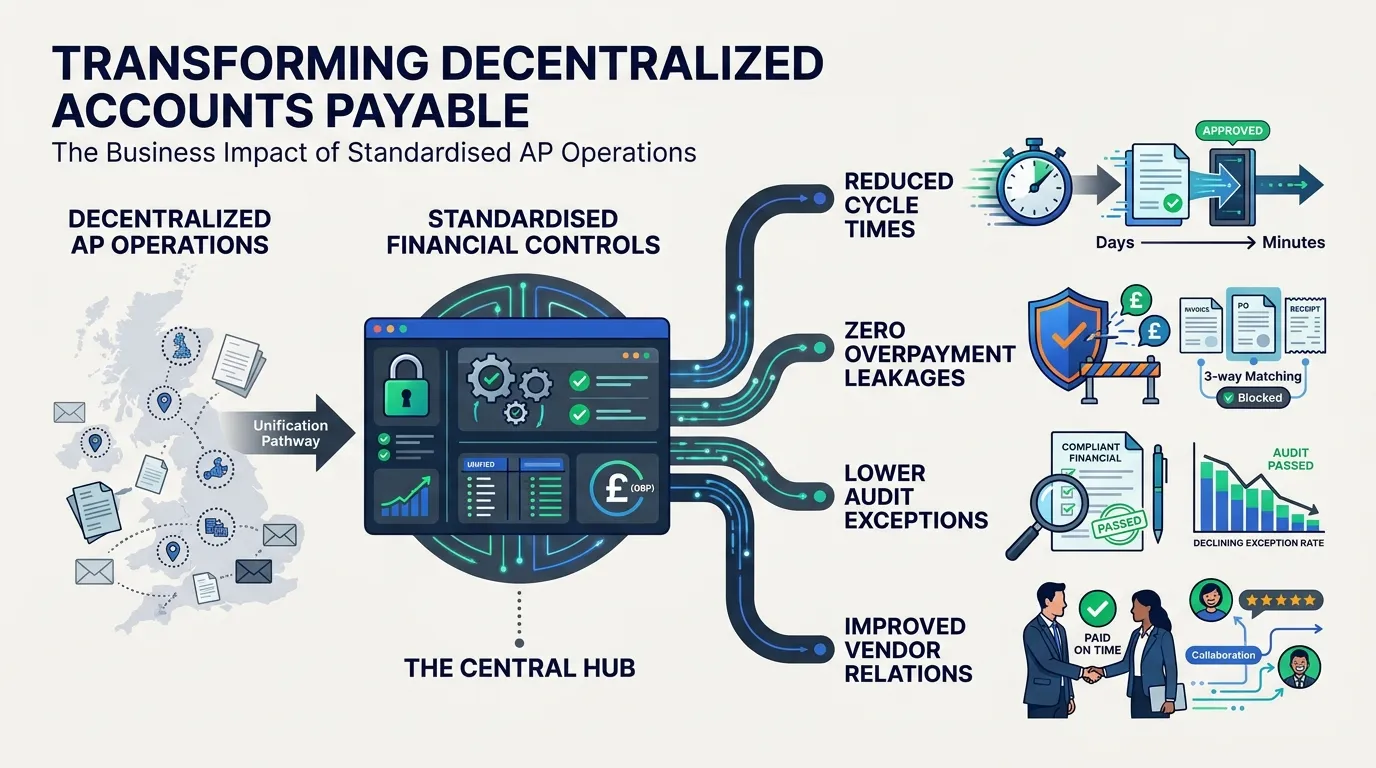
Completing the 3-Way Matching & Invoice Verification for Day-Rate Contracts Training Course delivers clear, measurable improvements in financial control and operational efficiency. Accounts payable teams trained by the Institute For Oil & Gas Training consistently reduce payment errors, eradicate unauthorized rate escalations, and eliminate duplicate billings. These operational gains protect corporate cash flow and optimize working capital management.
From a corporate governance perspective, the program strengthens internal controls and audit readiness. Organizations achieve lower exception rates during annual financial audits because every processed day-rate invoice features complete, auditable supporting documentation—including verified purchase orders, signed service confirmations, and documented variance checks. Standardizing these processes minimizes financial exposure and supports regulatory compliance.
Individual participants experience immediate performance gains in their day-to-day work. Accounts payable specialists and contract administrators process complex service invoices faster and with greater confidence. Personnel learn to resolve invoice holds efficiently, minimizing vendor payment delays while protecting organizational assets. This technical capability positions employees for career advancement into senior cost control, procurement management, and financial governance roles.
How does the enrollment process work for individuals and corporate teams?
The enrollment process involves selecting a delivery format, submitting candidate prerequisites for review, completing an initial skill assessment, and finalizing registration through the corporate portal or institutional registrar.
Enrolling in the program begins with an assessment of applicant background credentials. The Institute For Oil & Gas Training designs this training for finance professionals, accounts payable staff, procurement specialists, internal auditors, and field cost controllers. Applicants should possess foundational knowledge of basic accounting principles or commercial contract administration. Corporate HR departments can coordinate directly with the admissions team to evaluate cohort eligibility and align training objectives with company goals.
Upon acceptance, participants gain access to pre-course orientation materials covering basic contract terminology and core enterprise resource planning (ERP) functions. This preparation ensures all attendees start with a consistent baseline understanding of purchase order creation and invoice entry principles. Pre-course work allows the live instruction time to focus on complex verification scenarios, practical audit exercises, and advanced exception handling.
Assessment and certification follow rigorous professional standards. To earn formal certification from the Institute For Oil & Gas Training, candidates must attend all scheduled sessions, complete hands-on auditing labs, and pass a comprehensive practical examination. The assessment evaluates a candidate's ability to identify invoice discrepancies, calculate accurate variances, and apply correct hold or release procedures on complex day-rate billing packages.
Organizations seeking to upgrade their financial controls, eliminate invoice overpayments, and equip their workforce with industry-leading verification capabilities can enroll in this program today to secure upcoming course seats.
Frequently Asked Questions
What is Oil & Gas Petroleum Procurement?
Oil & Gas Petroleum Procurement is the strategic process of sourcing, purchasing, and managing the materials, equipment, and services required across upstream, midstream, and downstream operations. Offered by the Institute For Oil & Gas Training, this discipline focuses on navigating complex global supply chains, managing vendor contracts, and ensuring compliance with stringent energy sector standards.
Why is specialized procurement training essential in the petroleum industry?
Petroleum operations involve high-value capital expenditure, strict regulatory compliance, and volatile market conditions that general purchasing frameworks cannot address. Specialized training from the Institute For Oil & Gas Training equips professionals with sector-specific skills in risk mitigation, joint venture contracts, and strategic sourcing for Oil & Gas Petroleum Procurement.
What key skills are covered in the Oil & Gas Petroleum Procurement program?
Participants learn master service agreement (MSA) management, category management, incoterms, international logistics, and supplier performance evaluation. The Institute For Oil & Gas Training delivers practical modules on strategic cost analysis, inventory control, and sustainable supply chain governance tailored to Oil & Gas Petroleum Procurement.
Who should enroll in an Oil & Gas Petroleum Procurement course?
This training is designed for supply chain managers, procurement specialists, contract administrators, and finance professionals working within energy companies. The Institute For Oil & Gas Training structures the curriculum to benefit both technical personnel transitioning into commercial roles and experienced buyers refining their Oil & Gas Petroleum Procurement expertise.
How does effective petroleum procurement improve operational performance?
Optimised procurement directly reduces operational downtime, mitigates project delay risks, and controls capital expenditure in field operations. By implementing best practices taught by the Institute For Oil & Gas Training, organizations enhance contract compliance, foster strategic supplier partnerships, and protect margins throughout the Oil & Gas Petroleum Procurement lifecycle.
Related training courses
Procure-to-Pay (P2P) End-to-End Process for Oil & Gas Training Course
- Specialisation
- Oil & Gas Petroleum Procurement
- Duration
- 5 days · 15 CPD hours
3-Way Matching & Invoice Verification for JV Chargeability Training Course
- Specialisation
- Oil & Gas Petroleum Procurement
- Duration
- 5 days · 15 CPD hours
Vendor Management & Local Content Requirements: ICV Compliance Training Course
- Specialisation
- Oil & Gas Petroleum Procurement
- Duration
- 5 days · 15 CPD hours
More articles

Vendor Management and Local Content Requirements Onboarding Training by Institute For Oil & Gas Training
Enroll in the Vendor Management and Local Content Requirements Onboarding Training by Institute For Oil & Gas Training. Master procurement compliance.
Read article →
How to Evaluate Vendor Onboarding Processes and Local Content Requirements in Oil and Gas
Learn how to evaluate vendor onboarding processes and local content requirements in oil and gas to reduce supply chain risk and maintain compliance.
Read article →
Why Effective Vendor Onboarding Matters in Oil and Gas Procurement
Discover why vendor onboarding drives supply chain compliance, risk mitigation, and local content success in oil and gas procurement.
Read article →