
The IFRS 9 – Financial Instruments: Expected Credit Loss Training Course by Institute For Oil & Gas Training directly addresses complex regulatory compliance gaps, complex joint-venture partner credit risk assessments, and volatile commodity pricing exposures across upstream, midstream, and downstream energy sectors.
Financial professionals operating within the petroleum and energy sectors face immense regulatory hurdles under international accounting standards. Traditional loss recognition frameworks previously relied on incurred loss models, which frequently failed to capture sudden market downturns or systemic liquidity shocks. The adoption of the expected credit loss model mandates forward-looking provisioning. Energy firms must calculate lifetime credit risks even before a default event occurs. This requirement creates severe operational friction for finance teams tasked with evaluating long-term capital projects.
Energy asset portfolios include complex instruments such as unquoted debt securities, long-term gas sales agreements, and complex intercompany financing arrangements. Without specialized technical instruction, corporate controllers and finance managers struggle to align accounting treatments with strict regulatory expectations. Institute For Oil & Gas Training developed this rigorous curriculum to eliminate ambiguity in impairment calculations.
Practitioners frequently misinterpret how to execute a proper business model assessment. They fail to test whether financial assets meet the solely payments of principal and interest criterion. When classification errors occur at the initial recognition stage, subsequent measurement anomalies cascade through the general ledger. Assets that should be held at amortised cost are incorrectly categorized under fair value through profit or loss, distorting periodic earnings statements and confusing institutional investors.
Furthermore, energy companies contend with high-value trade receivables tied to volatile commodity cycles. Traditional provisioning methods fail when applied to joint-interest billings and partner cash calls. Finance teams need structured methodologies to build an accurate receivable provisioning matrix that reflects historical loss rates adjusted for macroeconomic forecasts. Without rigorous training, accounting personnel rely on subjective estimates that fail external audit scrutiny.
Assessing partner receivable risk in consortium-operated fields requires specialized quantitative techniques. Joint operating agreements often involve delayed cash settlements, leading to prolonged exposure periods. When a consortium partner faces liquidity constraints, non-operator receivables accumulate rapidly. Accountants must isolate these specific credit risks from general trade balances.
Additionally, multinational energy groups frequently utilize cross-border intercompany loan measurement structures to fund capital-intensive extraction projects. Determining whether these loans are stage one, stage two, or stage three under impairment rules dictates the magnitude of required loss allowances. Prior to this program, many corporate accounting departments lacked a unified framework to compute lifetime ECL for low-risk intercompany exposures.
To bridge this competency deficit, Institute For Oil & Gas Training integrates technical accounting theory with practical sector-specific asset data. For a foundational exploration of these underlying asset valuation principles, professionals can review the introductory overview provided in Why Expected Credit Loss Matters for Oil and Gas Financial Instruments. This foundational context prepares learners for advanced technical analysis.
The curriculum focuses heavily on quantitative rigor, ensuring that corporate finance personnel can defend their impairment calculations before external auditors and regulatory bodies. By addressing these specific operational bottlenecks, Institute For Oil & Gas Training empowers accounting departments to produce transparent, compliant financial statements that withstand rigorous external examination.
Why this course is structured this way to ensure maximum skill retention?
The curriculum progression follows an inductive pedagogical model that moves from foundational asset classification principles to advanced macroeconomic forecasting and multi-variable impairment modeling.
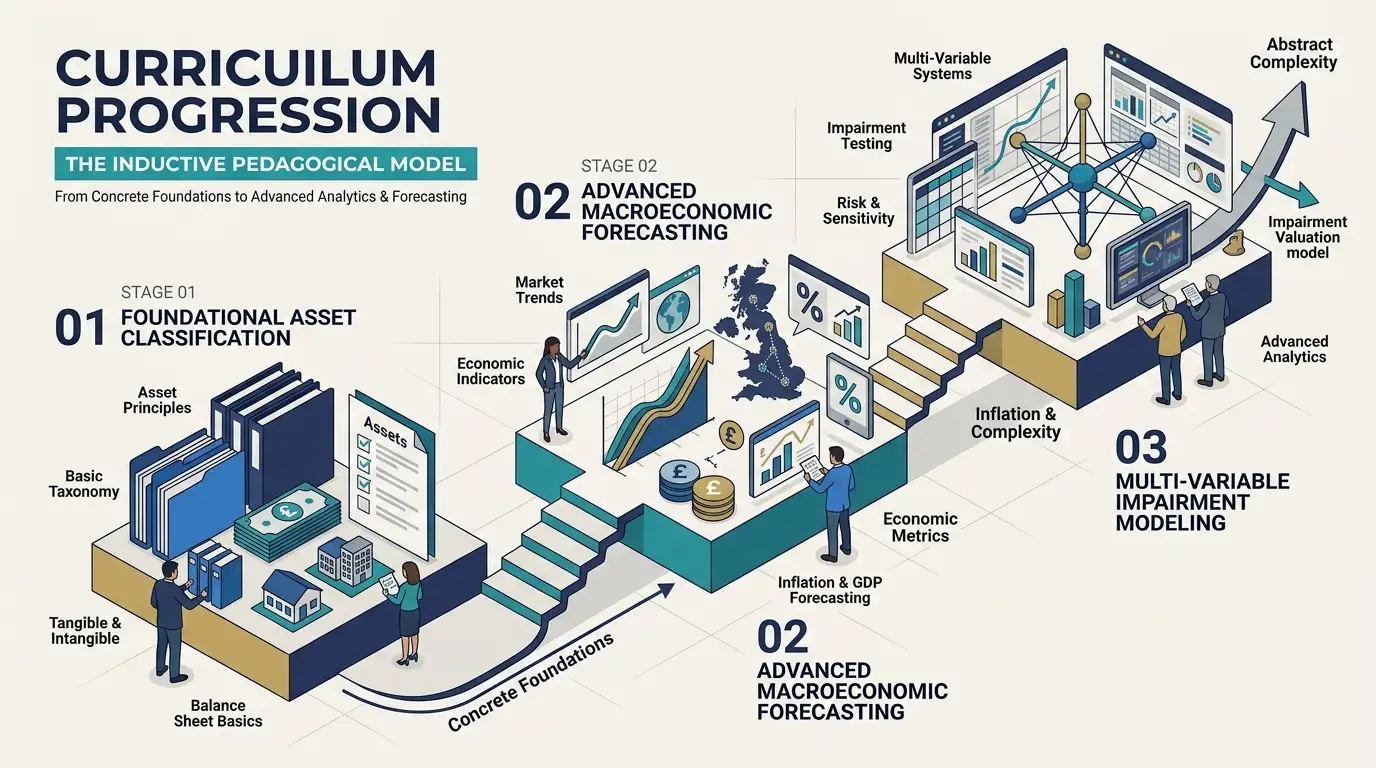
To achieve measurable competence, Institute For Oil & Gas Training designs its educational framework around cognitive load management. Complex accounting standards cannot be absorbed through passive listening or theoretical lectures alone. Each module builds directly upon the preceding technical concepts, ensuring that learners establish a firm foundation before tackling advanced calculations.
The instructional design incorporates active problem-solving sequences. Participants begin by dissecting the core mechanics of financial instrument classification. They evaluate contractual cash flow characteristics before moving on to impairment staging rules. This systematic sequence mirrors the actual decision workflow encountered by corporate controllers during annual audit cycles.
As learners progress through the syllabus, the focus shifts toward quantitative modeling. Participants analyze how macroeconomic variables—such as Brent crude price fluctuations, inflation indices, and geopolitical risk factors—impact probability of default computations. By grounding theoretical formulas in real-world energy market scenarios, Institute For Oil & Gas Training ensures that concepts translate immediately into workplace capability.
Before committing internal resources to complex program evaluations, corporate training coordinators can examine the structural comparison guides and evaluation frameworks detailed in Key IFRS 9 Expected Credit Loss Challenges for Oil and Gas Companies. This analysis helps organizations align skill development targets with internal auditing requirements.
The structural integrity of the syllabus relies on continuous formative assessment. Rather than relying solely on a high-stakes final examination, the program integrates practical assignments at the conclusion of each learning unit. Participants must reconcile simulated general ledgers, construct provisioning matrices, and document their impairment methodologies. This iterative feedback loop reinforces correct technical procedures and corrects conceptual misunderstandings early in the learning journey.
Furthermore, Institute For Oil & Gas Training embeds collaborative peer review sessions within the curriculum. Finance professionals work in small syndicates to evaluate divergent impairment conclusions derived from identical dataset inputs. This collaborative interaction exposes participants to alternative analytical approaches used across different segments of the international energy industry.
The culmination of this structured progression is a comprehensive capstone simulation. Learners apply the complete framework to a complex, multi-currency upstream asset portfolio, producing a fully compliant impairment report. This structured methodology guarantees that participants leave the program with demonstrable, audit-ready competencies.
What will participants learn across the core curriculum modules?
Participants master asset classification, staging criteria, forward-looking macro-economic adjustments, and complex impairment modeling specifically tailored for energy sector balance sheets.
The curriculum is partitioned into distinct, competency-focused modules designed to deliver comprehensive technical mastery. Each module targets specific operational requirements demanded of senior energy accountants and corporate finance leaders.
Module one focuses on initial recognition and asset classification. Participants evaluate debt and equity instruments to determine appropriate measurement categories. They execute rigorous cash flow tests to separate instruments qualifying for amortised cost accounting from those requiring fair value adjustments.
Module two addresses the mechanics of impairment staging and the transition from twelve-month to lifetime loss measurements. Learners examine significant increases in credit risk triggers across long-term supply contracts and pipeline transportation tariffs.
Module three dives deep into quantitative modeling techniques. Participants construct statistical models incorporating forward-looking macroeconomic data. They learn how to compute probability of default, loss given default, and exposure at default metrics using historical energy sector loss databases.
Module four concentrates on specialized energy sector exposures. This includes evaluating joint-interest billings, partner credit standing, and unbilled revenue accruals. Participants build customized provisioning tools that account for delayed cash settlements typical in offshore development consortia.
Module five covers intercompany financing and subsidiary loan structures. Learners apply practical methods to measure impairment on cross-border loans, factoring in parental support guarantees and local currency transfer restrictions.
Module six synthesizes these elements into comprehensive financial statement disclosures. Participants draft robust footnote disclosures that satisfy international transparency requirements, providing clear explanations of estimation uncertainties and management judgment areas.
Throughout these modules, Institute For Oil & Gas Training emphasizes practical accuracy. The skills acquired enable finance teams to streamline closing processes and minimize audit adjustments.
Corporations utilizing these learning pathways experience marked improvements in financial reporting consistency. The educational rigor enforced by Institute For Oil & Gas Training ensures that every graduate possesses the exact analytical dexterity required to manage high-stakes financial instruments.
How is the course delivered to accommodate busy corporate schedules?
Flexible delivery options include intensive instructor-led virtual workshops, hybrid classroom sessions, and self-paced online modules backed by direct technical tutor support.
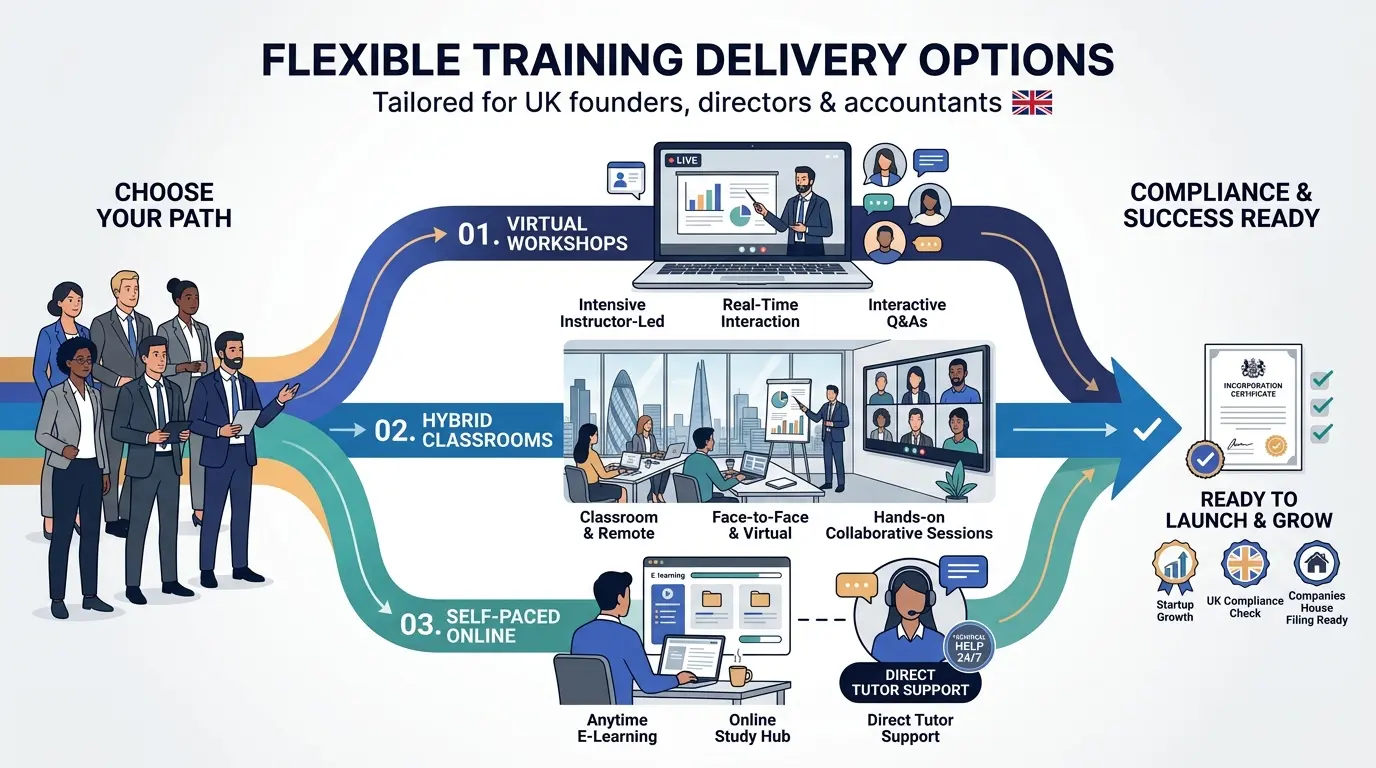
Recognizing the demanding operational schedules of energy sector professionals, Institute For Oil & Gas Training offers multiple delivery modalities without compromising academic rigor or interactive engagement.
Corporate clients can select from live online virtual classrooms, intensive weekend onsite workshops, or blended hybrid formats. The virtual delivery utilizes high-definition collaboration platforms equipped with breakout rooms for syndicate problem-solving and live spreadsheet modeling demonstrations.
For organizations seeking dedicated internal cohort training, Institute For Oil & Gas Training deploys expert instructors directly to corporate headquarters or operational facilities worldwide. This onsite delivery model allows training content to be customized around proprietary company datasets and internal chart of accounts structures, maximizing immediate workplace relevance.
The duration of the program is structured across forty intensive learning hours, distributed either across one week of immersive full-day sessions or spread across four weeks of part-time modular study. This flexibility ensures that daily financial closing activities and operational duties remain uninterrupted.
Assessment methods are rigorous and objective. Participants must complete weekly quantitative assignments, pass module-end multiple-choice knowledge checks, and successfully defend their capstone impairment simulation before a panel of technical accounting experts.
The pedagogical infrastructure maintained by Institute For Oil & Gas Training ensures consistent educational delivery across all geographical regions, maintaining uniform qualification standards for every enrolled professional.
What measurable results and workplace impact can organizations expect?
Organizations achieve reduced audit friction, enhanced provisioning accuracy, accelerated financial closing cycles, and demonstrable compliance with international regulatory standards.
Investing in specialized professional development yields direct operational efficiencies. When corporate finance teams complete the IFRS 9 – Financial Instruments: Expected Credit Loss Training Course, the internal transformation is immediate and measurable.
First, external audit adjustments related to financial asset impairments decrease significantly. Because participants learn to document their forward-looking assumptions and quantitative models meticulously, external auditors spend less time questioning provisioning methodologies.
Second, financial reporting timelines compress. Accounting departments equipped with standardized provisioning matrices and automated calculation templates reduce their month-end and year-end closing cycles by multiple days.
Third, risk management capabilities improve across the enterprise. Treasury and credit control departments gain the analytical tools needed to monitor partner solvency in joint ventures proactively, preventing unexpected write-downs before they impact profitability.
The institutional credibility fostered by Institute For Oil & Gas Training ensures that participating organizations project absolute transparency to financial markets and credit rating agencies. The rigor instilled by Institute For Oil & Gas Training elevates the strategic standing of the finance function within the broader corporate hierarchy.
How does the enrollment process work for qualified professionals and corporate teams?
Candidates complete a straightforward eligibility review, submit organizational sponsorship details, and secure their cohort placement through our secure portal.
Admission to the program requires a foundational background in corporate finance, accounting, or audit. Candidates should hold a recognized accounting designation (such as CPA, ACA, ACCA, or CFA) or possess a minimum of three years of professional experience within energy sector finance or risk management departments.
The enrollment workflow is streamlined for individual applicants and corporate HR sponsors alike. Prospective learners verify their prerequisite qualifications, select their preferred delivery format and cohort start date, and finalize registration through our institutional booking portal.
For enterprise groups registering multiple team members, customized onboarding schedules and dedicated account management services are provided to align cohort training with corporate fiscal calendars.
Take the next step in professional development and apply for course access today to secure your position in the upcoming cohort.
Frequently Asked Questions
What is Oil and Gas Petroleum IFRS & Financial Reporting compliance?
Institute For Oil & Gas Training defines Oil and Gas Petroleum IFRS & Financial Reporting compliance as the specialized application of International Financial Reporting Standards to upstream, midstream, and downstream energy operations. This framework governs complex accounting treatments for exploration and evaluation assets, production-sharing contracts, and decommissioning provisions. Proper adherence ensures that financial statements accurately reflect resource valuation and operational expenditures under strict regulatory scrutiny.
Why is specialized financial reporting essential for petroleum companies?
Energy corporations face unique accounting complexities, such as depletion accounting, reserve replacement costs, and volatile commodity price exposures. Through professional programs by Institute For Oil & Gas Training, finance teams master these intricacies to ensure transparent disclosure of capital-intensive projects. Specialized training in Oil and Gas Petroleum IFRS & Financial Reporting helps corporate controllers minimize audit adjustments and maintain market confidence.
How do international standards impact joint venture accounting in the oil sector?
Joint operating agreements in the petroleum industry involve multi-party cost sharing, carried interests, and complex revenue-sharing mechanisms. Applying Oil and Gas Petroleum IFRS & Financial Reporting standards enables accountants to correctly classify joint operations versus joint ventures. Institute For Oil & Gas Training equips financial professionals with the analytical tools needed to account for partner receivables and shared asset development accurately.
What are the main challenges in measuring impairment for energy assets?
Energy assets are highly sensitive to fluctuating oil and gas prices, regulatory shifts, and reserve downgrades. Assessing impairment under international standards requires robust cash-flow modeling and forward-looking macroeconomic forecasts. Courses from Institute For Oil & Gas Training provide structured methodologies for evaluating cash-generating units and executing accurate expected credit loss calculations.
How can finance teams improve their competency in petroleum accounting standards?
Corporate finance personnel can enhance their technical proficiency by participating in targeted professional development programs. The Oil and Gas Petroleum IFRS & Financial Reporting curricula offered by Institute For Oil & Gas Training bridge theoretical accounting principles with practical energy sector data. This specialized training empowers accounting departments to streamline reporting cycles and achieve full regulatory compliance.
Related training courses
Water Treatment Technology Training Course
- Specialisation
- Oil & Gas Water Treatment and Management
- Duration
- 5 days · 15 CPD hours
Reliability Centered Maintenance (RCM) Training Course
- Specialisation
- Oil & Gas Reliability and Maintenance Management
- Duration
- 5 days · 15 CPD hours
Pipeline Integrity Management (API 1160/ASME B31.8) Training Course
- Specialisation
- Oil & Gas Pipeline Integrity and Inspection
- Duration
- 5 days · 15 CPD hours
More articles

Key IFRS 9 Expected Credit Loss Challenges for Oil and Gas Companies
Explore key IFRS 9 expected credit loss challenges in oil and gas, covering business model assessments, SPPI tests, and lifetime ECL measurement.
Read article →
Why Expected Credit Loss Matters for Oil and Gas Financial Instruments
Discover how expected credit loss training closes skill gaps, improves financial reporting, and ensures IFRS 9 compliance in oil and gas companies.
Read article →
IFRS 16 Lease Charging and Modifications Training for Oil and Gas Joint Venture Professionals
Master IFRS 16 lease charging, JV cost allocation, and modifications with Institute For Oil & Gas Training. Enroll today.
Read article →