
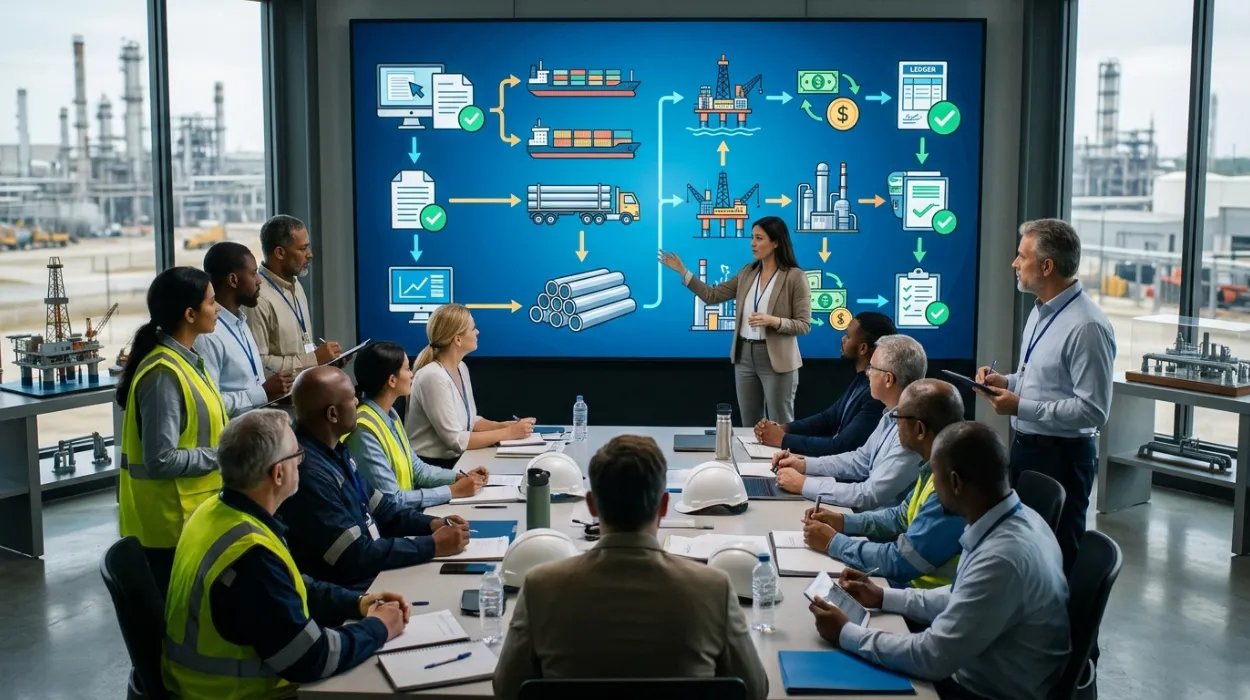
This professional training program resolves critical supply chain bottlenecks, invoice mismatches, and compliance risks in energy operations. It establishes standard operating procedures across procurement, inventory, and finance teams to maximize process visibility, accelerate cycle times, and secure total spend under management.
Oil and gas operations operate within high-risk, capital-intensive environments where supply chain inefficiencies directly impact operational continuity and profitability. A fragmented procurement workflow creates operational delays, unrecorded liabilities, compliance breaches, and inflated transactional costs. The Procure to Pay End to End Process Training for Oil and Gas Professionals by Institute For Oil & Gas Training addresses these structural failures by delivering an integrated, operational blueprint designed specifically for upstream, midstream, and downstream supply chain workflows. Understanding Why Procure to Pay Processes Matter in Oil and Gas Procurement is essential for organizations seeking to eliminate manual interventions, reduce rogue spending, and align operational purchasing with strict corporate governance protocols.
The Institute For Oil & Gas Training engineered this curriculum to bridge the persistent gap between field operations, procurement specialists, and corporate accounting departments. Participants evaluate end-to-end process integration, starting from early-stage demand identification to final ledger reconciliation. The program emphasizes the practical application of industry-specific controls, structured authorization matrices, and enterprise resource planning systems. By transitioning from isolated transactional processing to an integrated workflow model, organizations establish operational control across every purchasing touchpoint.
Corporate supply chain management requires clear cross-functional alignment. This course provides supply chain executives, procurement professionals, and finance managers with the technical expertise needed to standardize procurement documentation, automate control gates, and audit operational compliance. The Institute For Oil & Gas Training delivers this technical instruction through real-world operational datasets, ensuring that participants master the core mechanics of energy sector supply chains while preparing their organizations for scalable digital transformation.
Why is the P2P curriculum structured for energy sector operations?
The curriculum follows the precise chronological flow of operational procurement, moving from requisition generation to financial settlement. This linear, module-based progression ensures that participants master foundational workflow mechanics before executing complex contract management, service validations, dynamic discounting, and compliance audits.
Supply chain governance in the energy sector demands rigorous procedural alignment. The Institute For Oil & Gas Training structures this course to mirror the actual lifecycle of operational expenditure within oil and gas enterprises. Operational failures rarely stem from isolated errors; they occur when handoffs between field operations, procurement teams, and accounts payable fail. To solve this, the course systematically builds technical competency across every operational stage, ensuring that participants understand both upstream inputs and downstream financial impacts.
Learning progression requires mastering fundamental data structures before managing complex transactional exceptions. Participants analyze how a purchase requisition initiates the governance chain, transitioning into formal purchasing instruments and field validation records. Evaluating How to Manage the End to End Procure to Pay Process in Oil and Gas Operations forms a core structural component of the intermediate modules, where learners evaluate exception handling, three-way matching logic, and vendor performance verification. The Institute For Oil & Gas Training ensures that each structural phase incorporates real-world oil and gas scenarios, including offshore rig supply logistics, refinery maintenance contracts, and joint-venture accounting standards.
The educational architecture reinforces risk mitigation at every level. By dissecting points of process failure—such as unapproved emergency orders, duplicate invoicing, and inaccurate service entry sheets—the curriculum provides practical solutions to protect working capital. The Institute For Oil & Gas Training integrates governance frameworks directly into the learning modules, allowing corporate teams to implement immediate operational controls upon course completion.
What are the core learning modules and skill outcomes of this course?
Participants gain direct technical competencies in requisition validation, purchase order generation, goods receipt verification, service entry sheet approval, three-way invoice matching, and payment run execution. Each module delivers practical skills directly applicable to enterprise supply chain management and corporate risk control.
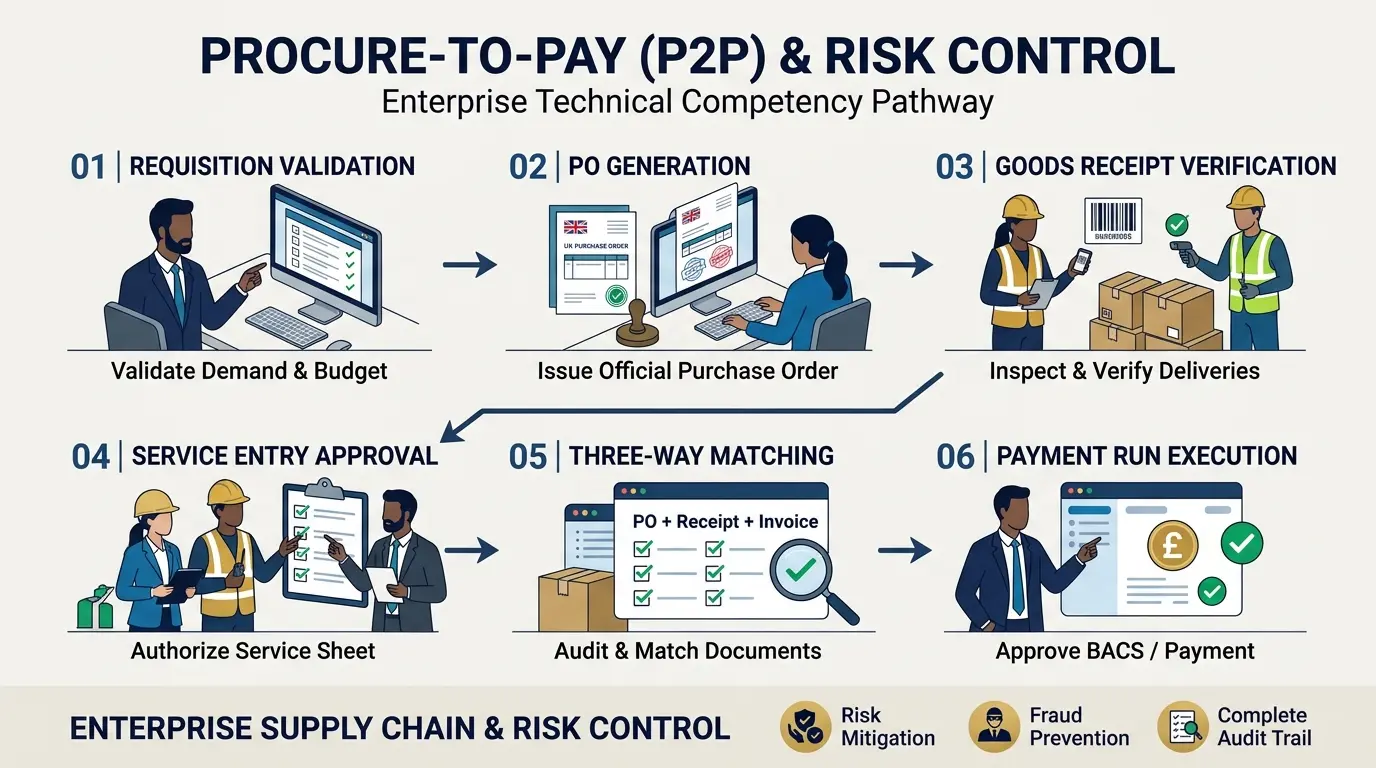
Module 1: Demand Identification and Purchase Requisition Management
Technical Focus: Standardizing initial purchase requests, material master cataloging, and delegation of authority matrices.
Skill Outcome: Participants master the generation and validation of a purchase requisition, ensuring technical specifications, cost-centre allocations, and spending thresholds are fully compliant prior to procurement execution.
Workplace Application: Field engineers and procurement initiators eliminate incomplete or unverified requisitions, reducing cycle time delays at the initial sourcing gate.
Module 2: Sourcing Execution and Purchase Order Creation
Technical Focus: Operationalizing catalogue and non-catalogue buying strategies, commercial term integration, and vendor order issuance.
Skill Outcome: Execution of precise purchase order creation workflows, establishing legally binding commercial terms, delivery schedules, and price compliance checks.
Workplace Application: Buyer groups systematically process approved requisitions, maximizing catalogue utilization and expanding overall spend under management.
Module 3: Physical Material Receipt and Goods Receipt Note Generation
Technical Focus: Materials management verification, warehouse staging, quality assurance inspections, and system updates.
Skill Outcome: Accurate processing of the goods receipt note (GRN) upon physical verification of materials at storage yards, offshore bases, or refinery facilities.
Workplace Application: Logistics and warehouse personnel prevent inventory record errors, unverified stock entries, and premature vendor payment triggers.
Module 4: Technical Service Rendering and Service Entry Sheet Management
Technical Focus: Verification of contractor labor, equipment rental, engineering deliverables, and field service milestones.
Skill Outcome: Compilation and sign-off of the service entry sheet (SES), validating rendered services against contracted rates and verified field timesheets.
Workplace Application: Asset managers and project engineers stop over-billing and unverified contractor claims before documentation reaches accounts payable.
Module 5: Accounts Payable Processing and Three-Way Matching
Technical Focus: Automated and manual invoice processing, discrepancy tolerance management, and exception resolution workflows.
Skill Outcome: Execution of three-way invoice matching logic, comparing the purchase order, goods receipt note or service entry sheet, and vendor invoice to clear valid liabilities.
Workplace Application: Accounts payable teams eliminate duplicate payments, resolve price/quantity variances efficiently, and mitigate fraudulent invoice exposure.
Module 6: Financial Settlement, Payment Run Execution, and Analytics
Technical Focus: Payment run scheduling, cash flow optimization, working capital management, and procurement analytics.
Skill Outcome: Managing the automated payment run, executing dynamic discounting opportunities, and analyzing key performance indicators such as total procurement cycle time.
Workplace Application: Finance leaders optimize cash outflows, maintain positive supplier relationships, and generate comprehensive spend analysis reports for executive leadership.
How is the training delivered by the Institute For Oil & Gas Training?
Training is delivered through immersive, highly structured formats including interactive corporate workshops, instructor-led live virtual classrooms, hybrid models, and customized on-site corporate programs. Duration ranges from intensive 3-day executive masterclasses to 5-week modular professional certifications.
The Institute For Oil & Gas Training utilizes an applied learning methodology that prioritizes practical execution over theoretical exposition. Delivery formats combine expert lecture modules, hands-on enterprise software simulation, group case study evaluations, and transactional troubleshooting labs. Participants work directly with simulated enterprise resource planning environments to process live transactional data across every procurement stage.
Every delivery format maintains strict academic and operational standards. Participants undergo continuous assessment through scenario-based diagnostic exercises, transactional speed tests, and end-of-module verification exams. Corporate clients opting for on-site delivery benefit from tailored curriculum adjustments, allowing the Institute For Oil & Gas Training to align training modules directly with the client’s internal operating procedures, software stack, and delegation of authority frameworks.
What measurable results can organizations and participants expect?
Organizations achieve up to a 35% reduction in overall procurement cycle time, eliminate unverified invoice payments, achieve over 90% spend under management, and build robust cross-functional operational alignment between supply chain, operations, and finance teams.
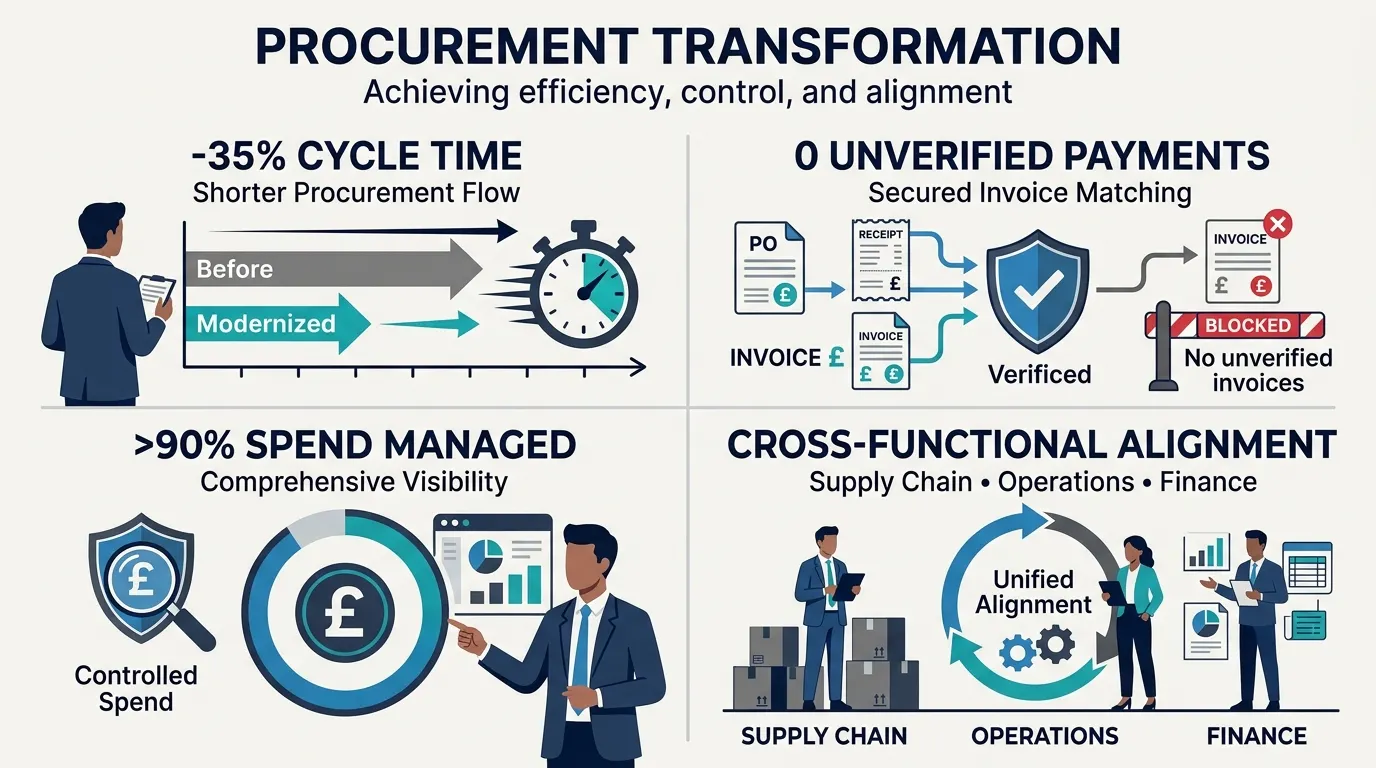
Corporate investment in professional development must yield clear, measurable operational returns. The Procure-to-Pay (P2P) End-to-End Process for Oil & Gas Training Course delivers direct performance improvements across key supply chain metrics. By standardizing input data and enforcing strict validation protocols at the requisition stage, organizations experience immediate reductions in transactional rework, purchase order amendments, and processing backlogs.
Human resource directors and learning executives utilize this training program to establish clear competency baselines across procurement and finance personnel. The structured learning outcomes provide measurable benchmarks for workforce capability reviews, talent advancement, and internal compliance audits. The Institute For Oil & Gas Training provides detailed post-training performance analytics for corporate cohorts, enabling HR teams to track skill acquisition and operational readiness directly.
On an operational level, participants return to their roles equipped to identify system inefficiencies, enforce contract terms, and resolve vendor disputes rapidly. The focus on establishing high levels of spend under management ensures that corporate purchasing power is fully leveraged during vendor negotiations, directly lowering operating costs across energy operations.
What are the eligibility criteria and enrollment procedures?
Enrollment is open to supply chain professionals, procurement specialists, materials managers, accounts payable staff, internal auditors, and field operations engineers. Corporate group enrollments are processed through a structured organizational intake assessment conducted by the institute.
The program assumes a foundational understanding of basic corporate operations or supply chain concepts. Candidates must possess at least one year of professional experience within procurement, logistics, accounting, contract administration, or asset operations. Candidates without direct supply chain experience may qualify following a preliminary intake review by the academic panel at the Institute For Oil & Gas Training.
Corporate intake procedures accommodate both individual registrations and intact departmental teams. To maintain high instructional standards, cohort sizes for interactive workshops are capped. Organizations seeking to train complete functional units can coordinate customized scheduling, language options, and enterprise-specific ERP simulation setups directly through the admissions department.
Completing all instructional modules, practical labs, and final diagnostic assessments leads directly to the professional certification designation. This credential verifies technical proficiency in oil and gas procurement workflows, supply chain risk management, and financial reconciliation protocols. To secure your seat in the upcoming professional cohort, enroll in this program today.
Frequently Asked Questions
What is oil and gas petroleum procurement?
Oil and gas petroleum procurement encompasses the strategic sourcing, purchasing, and management of materials, equipment, and specialized services required for upstream, midstream, and downstream operations. The Institute For Oil & Gas Training provides professional instruction on evaluating vendor bids, managing complex supply chains, and maintaining strict regulatory compliance across global energy projects. Professional training ensures organizations minimize operational delays and optimize expenditure across the entire supply chain.
Why is specialized procurement training essential for oil and gas operations?
Petroleum industry supply chains face unique risks, including volatile commodity pricing, stringent safety standards, and strict local content regulations. Structured training from the Institute For Oil & Gas Training equips supply chain specialists with advanced skills in contract management, strategic sourcing, and risk mitigation. This specialized expertise enables energy companies to control costs, prevent downtime, and build resilient vendor partnerships.
How does oil and gas petroleum procurement differ from standard supply chain management?
Unlike general supply chain management, oil & gas petroleum procurement involves high-capital equipment, specialized engineering services, and strict environmental compliance protocols. It requires precise execution of technical specifications, heavy reliance on international logistics, and strict adherence to health, safety, and environmental standards. The Institute For Oil & Gas Training focuses specifically on these sector-specific operational demands, high-risk contract structures, and global vendor networks.
What core skills are required for a career in energy sector procurement?
Key competencies include contract negotiation, strategic sourcing, supplier performance management, purchase order processing, and market analysis. Professionals must also master spend analysis, cost control techniques, and supply chain risk assessment. Courses offered by the Institute For Oil & Gas Training systematically build these competencies, preparing professionals to manage complex commercial arrangements and capital-intensive purchasing operations.
How do organizations improve spend management in oil and gas procurement?
Organizations improve spend visibility by establishing standardized delegation-of-authority matrices, deploying automated procurement software, and conducting regular contract compliance audits. Partnering with the Institute For Oil & Gas Training helps corporate supply chain and finance teams adopt standard operating procedures for catalog management and vendor performance evaluation. These measures eliminate rogue spending, shorten cycle times, and maximize capital efficiency across operational budgets.
Related training courses
Procure-to-Pay (P2P) End-to-End Process for Oil & Gas Training Course
- Specialisation
- Oil & Gas Petroleum Procurement
- Duration
- 5 days · 15 CPD hours
Procure-to-Pay (P2P) Controls & Automation: Workflow Design Training Course
- Specialisation
- Oil & Gas Petroleum Procurement
- Duration
- 5 days · 15 CPD hours
3-Way Matching & Invoice Verification for JV Chargeability Training Course
- Specialisation
- Oil & Gas Petroleum Procurement
- Duration
- 5 days · 15 CPD hours
More articles

Procure to Pay Controls and Automation Workflow Design Training by Institute For Oil & Gas Training
Master P2P workflow design, automation, and internal controls with Institute For Oil & Gas Training. Enroll now for measurable operational gains.
Read article →
How to Design Procure to Pay Workflows with Effective Controls and Automation
Learn how to design Procure to Pay workflows featuring robust internal controls and automation to eliminate procurement inefficiencies and financial risk.
Read article →
Why Procure to Pay Controls and Automation Are Essential for Procurement Efficiency
Discover how procure to pay controls and automation streamline workflows, mitigate risk, and boost corporate procurement efficiency.
Read article →