

Oil and gas upstream operations rely heavily on structural data integrity across supply chain networks and subterranean assets. Inconsistent vendor records and duplicated well identifiers directly cause purchasing errors, regulatory compliance failures, and inflated joint-venture accounting disputes. Organizations operating without standardized master data management experience friction in field logistics and reporting inaccuracies. The Institute For Oil & Gas Training addresses these structural operational risks through targeted corporate skill development and technical framework alignment. Professionals seeking foundational context on underlying operational risks should examine Why Vendor and Well Master Data Quality Matters in Oil and Gas before evaluating formal technical training options.
What is the Data Governance & Master Data: Vendor & Well Training Course and what problem does it solve?
The Data Governance & Master Data: Vendor & Well Training Course is an intensive technical program designed to eliminate master data redundancy, standardize asset identification frameworks, and implement structured change management protocols across upstream and midstream oil and gas enterprise resource planning systems.
Operational inefficiency in energy sector enterprises usually stems from poor asset record control. Ungoverned vendor master files lead to duplicate vendor records, incorrect tax withholding calculations, and lost volume discounts. Similarly, inconsistent well and wellbore identifiers compromise reservoir engineering models, mislead drilling logs, and obstruct regulatory reporting to energy commissions.
When operational teams enter data using disparate naming conventions, cross-departmental alignment breaks down completely. Procurement teams end up negotiating with identical suppliers under slightly different names, while subsurface teams waste hundreds of billable hours resolving conflicting well API numbers.
The Institute For Oil & Gas Training developed this course to directly target these exact enterprise vulnerabilities. The curriculum provides immediate structural remediation protocols to establish a single system of record designation for all operational assets and supplier entities.
Master Data Domain | Primary Operational Risk | Technical Remediation Mechanism | Enterprise Impact |
Vendor Master Records | Duplicate payments, incorrect tax filings | Standardized vendor master data maintenance workflows | 15–20% reduction in procurement processing overhead |
Well & Asset Identifiers | Misallocated drilling spend, compliance penalties | Strict well and wellbore identifiers assignment protocols | 100% audit compliance for regulatory asset reporting |
Financial Hierarchies | Mismatched Joint Interest Billing (JIB) statements | Chart of accounts governance alignment | Elimination of unallocated field expenditures |
Material Catalogues | Over-purchasing, inventory duplication | Uniform material master records categorization | Optimized capital expenditure and warehouse control |
Why is this training course structured this way?
This curriculum follows a progressive technical architecture, moving systematically from data structure fundamentals to workflow enforcement and enterprise system integration, ensuring participants master theoretical concepts alongside practical database application techniques.
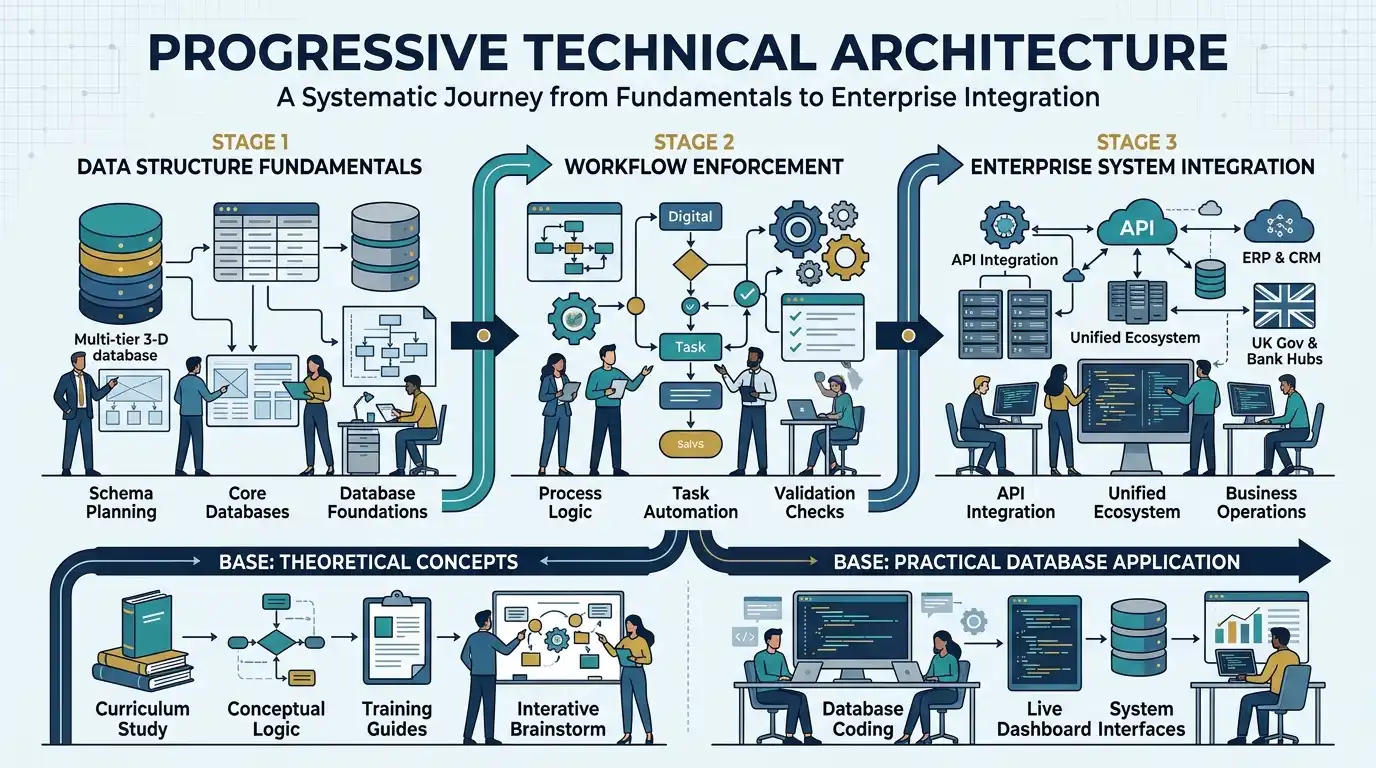
Technical data management requires structured, incremental skill development to ensure concepts translate into operational workplace practices. The program opens with structural data definitions, establishing precise technical definitions for master records versus transactional data elements. Participants first evaluate how data flows across exploration, production, procurement, and joint-venture accounting systems.
Once these fundamental frameworks are established, the curriculum progresses directly to operational governance mechanics. Learners analyze real-world case studies detailing financial losses caused by ungoverned data entry. For deeper technical strategies on establishing record consistency across legacy ERP platforms, review How to Improve Vendor and Well Master Data Quality and Consistency.
The Institute For Oil & Gas Training structures modules to mirror the actual lifecycle of operational enterprise data. Training progresses naturally from initial record creation and validation through to auditing and legacy data cleansing.
This deliberate sequencing ensures participants understand the operational mechanics of upstream enterprise systems before attempting to configure complex governance rules or enterprise change request workflows.
What will participants learn during the course?
Participants master key competencies including duplicate record prevention, standardization of well identification systems, alignment of cost object hierarchies, chart of accounts governance, material record creation, and establishing rigorous multi-tiered change approval workflows.
The course provides comprehensive instruction across six specialized technical areas designed for immediate workplace application:
Module 1: Vendor Master Architecture and Governance
Implementing proactive duplicate record prevention algorithms during initial vendor onboarding.
Structuring tax identification, legal entity naming standards, and banking verification procedures.
Mapping vendor profiles to parent-subsidiary corporate structures to optimize procurement leverage.
Defining clear data ownership roles across procurement, accounts payable, and legal teams.
Module 2: Well, Wellbore, and Subterranean Asset Identification
Applying global and regional standards for well and wellbore identifiers across subsurface systems.
Resolving data conflicts between surface locations, wellheads, and directional wellbore paths.
Integrating spatial GIS coordinate datasets with relational asset management databases.
Standardizing completion zone data to ensure precise production accounting and regulatory compliance.
Module 3: Financial Hierarchies and Accounting Governance
Standardizing the corporate cost object hierarchy to accurately track operational expenditure (OPEX) and capital expenditure (CAPEX).
Implementing strict chart of accounts governance to prevent misallocated field expenses.
Managing Joint Interest Billing (JIB) data structures to streamline joint-venture partner audits.
Aligning work breakdown structures (WBS) with physical well-site operational activities.
Module 4: Material Master Record Standardization
Classifying field equipment, spare parts, and consumables using standardized material master records.
Eliminating inventory duplication across regional supply hubs and offshore platforms.
Enriching material attribute data to support automated procurement and inventory management.
Establishing standardized units of measure to prevent stocking and reordering errors.
Module 5: Change Request Architecture and Approval Workflows
Designing a robust change request and approval workflow to control database modifications.
Configuring multi-stage approval matrices based on authorization levels and role permissions.
Preventing unauthorized batch updates and direct table edits within production ERP environments.
Establishing SLA-backed data maintenance service desks for operational personnel.
Module 6: Enterprise Data Auditing and System Governance
Conducting a systematic master data audit to assess baseline database health and error rates.
Defining authoritative system of record designation rules across integrated software suites.
Monitoring continuous data quality metrics via automated enterprise dashboards.
Formulating long-term enterprise data stewardship policies and training frameworks.
Instructors at the Institute For Oil & Gas Training combine theoretical governance models with practical, hands-on database exercises to reinforce these core competencies.
How is the training program delivered?
The program is delivered through flexible corporate formats including intensive onsite workshops, live interactive virtual classrooms, and customized hybrid schedules, using hands-on database sandbox environments and simulated operational workflows.
Recognizing diverse corporate schedules, the Institute For Oil & Gas Training offers versatile delivery formats tailored to organizational needs:
Participants complete practical exercises in simulated ERP environments, working with real-world energy sector datasets containing common errors such as duplicate vendors, broken well hierarchies, and invalid cost centers.
What operational results and workplace gains can be expected?
Organizations achieve up to 90% reduction in master record errors, streamlined joint-venture billing, accelerated vendor onboarding, and complete audit readiness across all technical asset databases.
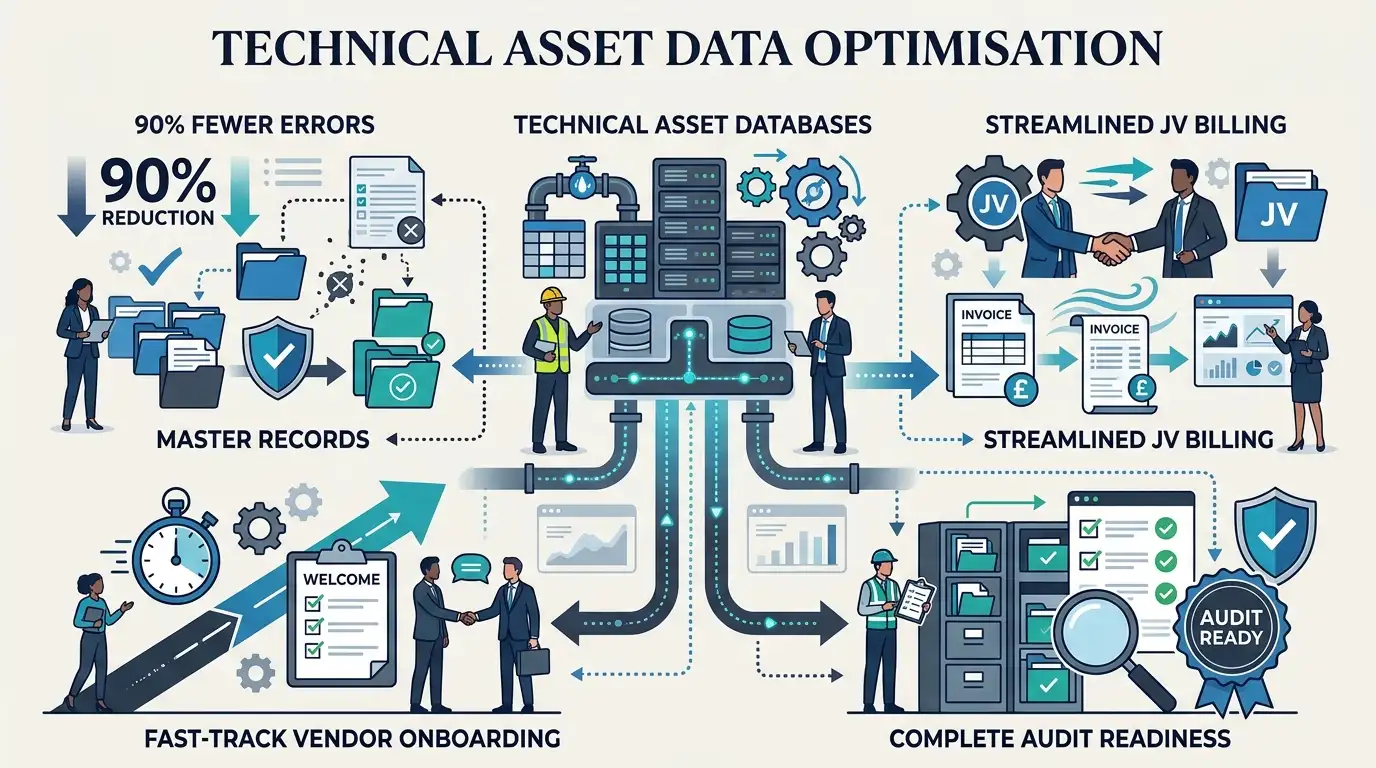
Structured master data training produces immediate, quantifiable improvements in organizational performance. Human Resource directors and department managers observe direct gains in operational efficiency and reporting accuracy once team members complete this program.
Departmental Performance Gains
Supply Chain and Procurement Teams: Fast-track vendor onboarding while establishing proactive checks that stop duplicate records from entering the system. Teams eliminate duplicate vendor entries and optimize volume purchasing terms across all operating divisions.
Subsurface and Data Management Teams: Standardize technical records across exploration and production databases, ensuring seamless integration between subsurface engineering models and enterprise ERP systems.
Finance and Accounting Departments: Achieve precise alignment across financial structures, drastically reducing Joint Interest Billing disputes with operating partners.
Regulatory and Compliance Teams: Maintain verified asset databases that withstand rigorous external audits by state and federal energy regulators.
The Institute For Oil & Gas Training works directly with client managers to establish baseline metrics before instruction begins, ensuring every corporate team measures tangible performance gains upon course completion.
How does enrollment and corporate onboarding work?
Enrollment involves a structured preliminary skill assessment, corporate registration, access to prerequisite technical materials, active program execution, and final certification validation.
Eligibility Requirements
This course is structured specifically for professionals working within energy sector operations, enterprise IT, supply chain management, and corporate finance. Recommended participant roles include:
Master Data Analysts and Enterprise Data Stewards
SAP / Oracle ERP Administrators and Database Managers
Procurement Managers and Accounts Payable Supervisors
Subsurface Data Managers and Production Accounting Specialists
HR Development Managers organizing technical upskilling programs
Enrollment Progression
Upon completing the final capstone assessment, participants receive formal professional credentials validating their ability to govern energy sector master data environments.
Organisations seeking to eliminate operational data errors and enhance enterprise resource planning efficiency can submit a corporate cohort application to enroll in this course.
Frequently Asked Questions
What is the focus of the Oil & Gas Petroleum Digital Finance & Automation program?
The Oil & Gas Petroleum Digital Finance & Automation program delivered by Institute For Oil & Gas Training focuses on modernising financial workflows across upstream and midstream operations. It equips finance professionals with technical skills in robotic process automation (RPA), joint-venture accounting software, and automated joint interest billing systems. This training enables corporate teams to streamline transactional tasks, reduce operational reporting errors, and accelerate monthly financial closing cycles.
Who should enroll in Oil & Gas Petroleum Digital Finance & Automation training?
This course is designed for financial controllers, joint-venture accountants, enterprise resource planning (ERP) systems analysts, and finance managers operating within energy sector organisations. Institute For Oil & Gas Training tailors the curriculum for corporate teams and decision-makers responsible for managing complex capital expenditures, field cost allocations, and automated vendor payments. It is particularly suitable for professionals seeking to lead digital transformation initiatives within their finance departments.
How does automation improve financial workflows in the petroleum industry?
Automating financial processes replaces manual data entry with standardized digital workflows, eliminating errors in high-volume transactions such as accounts payable and joint-venture auditing. Through the Oil & Gas Petroleum Digital Finance & Automation curriculum at Institute For Oil & Gas Training, organisations learn to integrate automated reconciliation tools with legacy ERP environments. This integration provides real-time visibility into cash flow, lowers administrative overhead, and ensures compliance with international accounting standards.
What digital tools are covered in this digital finance and automation course?
The Oil & Gas Petroleum Digital Finance & Automation program covers core enterprise tools, including specialized ERP modules, data analytics platforms, and automated workflow engines. Institute For Oil & Gas Training incorporates practical training on automated auditing scripts, digital ledger integration, and business intelligence dashboards. Participants gain hands-on experience using industry-standard applications to build automated financial reporting frameworks for exploration and production operations.
Does Institute For Oil & Gas Training offer customized corporate automation training?
Yes, Institute For Oil & Gas Training delivers tailored Oil & Gas Petroleum Digital Finance & Automation workshops designed around an enterprise’s specific software infrastructure and operational workflows. Corporate training programs can be delivered onsite or via interactive virtual sessions to align with team schedules and digital transformation goals. This tailored delivery ensures immediate skill application and measurable performance gains across departmental financial operations.
Related training courses
ERP Systems for Oil & Gas: Access Controls Training Course
- Specialisation
- Oil & Gas Petroleum Digital Finance & Automation
- Duration
- 5 days · 13 CPD hours
Digital Transformation in Petroleum Finance: AI & RPA Training Course
- Specialisation
- Oil & Gas Petroleum Digital Finance & Automation
- Duration
- 5 days · 15 CPD hours
Microsoft Copilot for Oil & Gas Finance Applications Training Course
- Specialisation
- Oil & Gas Petroleum Digital Finance & Automation
- Duration
- 5 days · 15 CPD hours
More articles

Automation of JV and PSC Reporting Data Integration Training by Institute For Oil & Gas Training
Master automated JV and PSC reporting data integration. Review course modules, delivery formats, and learning outcomes to enroll with confidence.
Read article →
How to Integrate Financial and Operational Data for Automated JV and PSC Reporting
Learn how to integrate financial and operational data for automated JV and PSC reporting. Compare methods, architectures, and implementation frameworks.
Read article →
Why Data Integration Is Essential for Automated JV and PSC Reporting
Learn why data integration automates JV and PSC reporting in petroleum finance, closing skill gaps, reducing reconciliation errors, and driving efficiency.
Read article →