

Integrating financial and operational data requires aligning disparate source systems through robust technical frameworks to eliminate manual reconciliation errors, reduce reporting cycle times, and guarantee regulatory compliance across complex joint ventures and production sharing contracts.
Exploring Why Data Integration Is Essential for Automated JV and PSC Reporting reveals how unintegrated systems create operational bottlenecks, compliance risks, and audit exposure. Energy sector organisations operating across upstream assets face structural challenges when consolidating production volumes, capital expenditures, operating costs, and revenue shares. Upstream accounting requires real-time data flow between field operations, general ledgers, asset management platforms, and non-operating partner portals. Successfully integrating these data streams creates a single source of truth, establishing the technical foundation necessary for accurate joint venture (JV) cash calls, billing statements, and production sharing contract (PSC) cost recovery schedules.
What Architectural Methods Enable Integration of Financial and Operational Data?
Integrating financial and operational data relies on three architectural methods: Application Programming Interfaces (APIs), file-based data feeds, and direct database queries, each delivering distinct performance capabilities, implementation timelines, scalability metrics, and data freshness profiles for enterprise reporting.
Selecting the appropriate data architecture determines system resilience, processing speed, and long-term maintenance overhead. Organisations must evaluate how data moves from remote field sensors, supervisory control and data acquisition (SCADA) systems, and hydrocarbon accounting software into central enterprise resource planning (ERP) platforms.
API-Based Data Ingestion
API integrations establish direct, programmatic communication between financial modules and operational systems. Modern ERP platforms expose RESTful and SOAP APIs to transmit transactional data instantaneously.
Latency: Real-time to near-real-time streaming.
Security: High security utilizing OAuth 2.0, SSL encryption, and granular token authorization.
Maintenance: Requires continuous API version management and ongoing developer oversight.
Data Volume: Optimized for high-frequency transactional payloads and event-driven triggers.
File-Based Data Feeds
File-based integration relies on automated Secure File Transfer Protocol (SFTP) pipelines to exchange structured files, such as CSV, XML, or JSON formats, at scheduled intervals.
Latency: Batch processing operating on hourly, daily, or monthly schedules.
Security: Secured through SSH key authentication, PGP payload encryption, and dedicated subnet isolation.
Maintenance: Low maintenance, though vulnerable to schema drifts and structural formatting alterations.
Data Volume: Highly effective for large bulk data transfers, end-of-month general ledger extracts, and historical asset logs.
Direct Database Integration
Direct connection methods link financial reporting databases directly to operational data warehouses using Open Database Connectivity (ODBC) or Java Database Connectivity (JDBC) protocols.
Latency: Near-real-time queries executing directly against target databases.
Security: Managed through database-level role-based access controls and Virtual Private Network (VPN) tunnels.
Maintenance: High maintenance costs due to schema dependencies and performance tuning requirements.
Data Volume: Exceptionally fast for querying vast relational datasets, though high queries risk degrading source system performance.
Architectural Method | Primary Transport Mechanism | Data Freshness Profile | Implementation Complexity | Best Applied Operational Use Case |
API Integration | REST / SOAP Endpoints | Instantaneous / Event-Driven | High | Continuous field production updates to ERP |
File-Based Feeds | SFTP / Scheduled Pipelines | Batch (Hourly / Daily) | Moderate | Monthly joint interest billing data exchange |
Database Connection | ODBC / JDBC Drivers | Direct Query Response | High | Complex cross-table financial reconciliations |
How Do Automated Controls and Reconciliation Checks Validate Data Quality?
Automated controls validate data quality by executing automated control totals, cross-system reconciliation checks, schema validations, and logic rules during data ingestion, stopping corrupt or imbalanced financial and operational records from reaching final partner reporting statements.
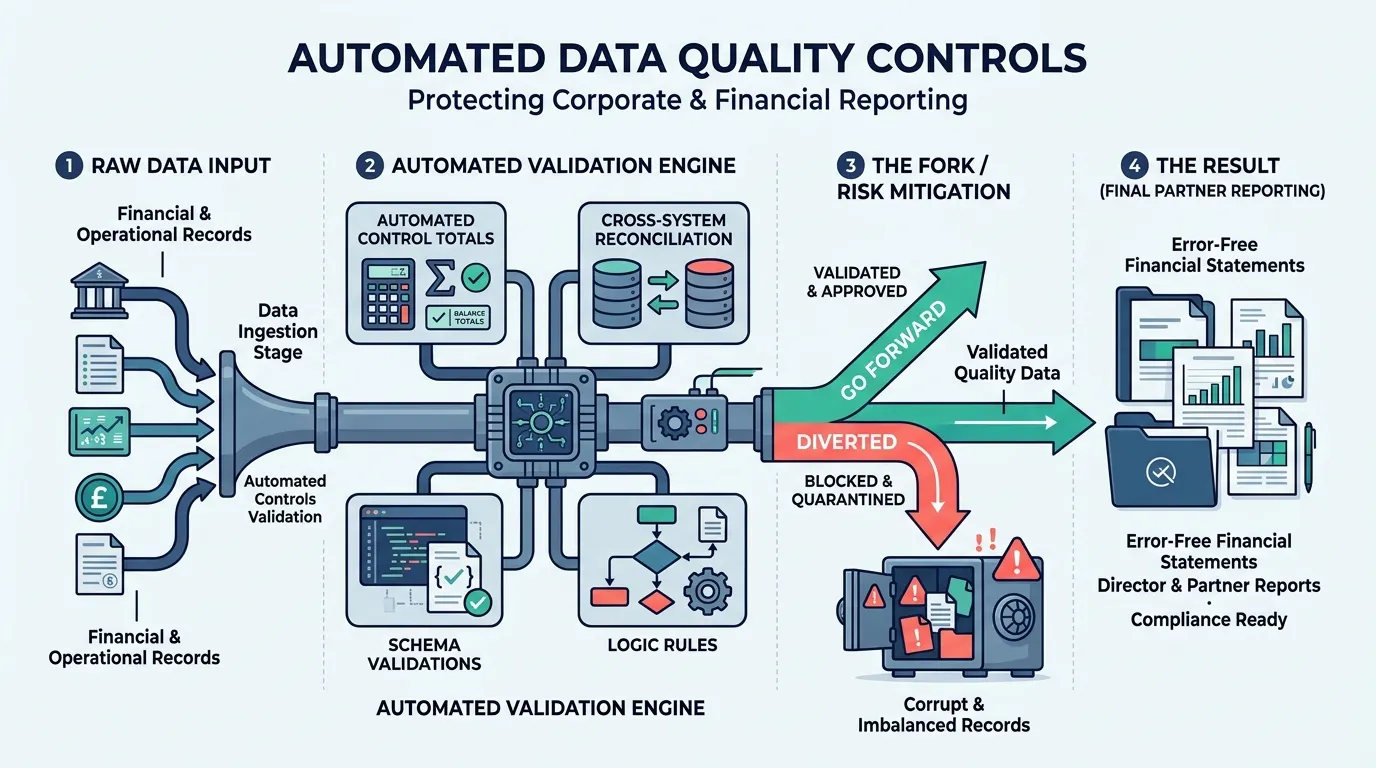
Data integrity failure directly causes JV partner disputes, delayed cash calls, and expensive audit penalties. Enterprise integration pipelines mandate multi-layered validation logic operating at ingestion, processing, and output stages.
Ingestion Validation and Schema Checks
The initial validation tier verifies incoming payload structures prior to data transformation. Schema validation confirms that data fields, data types, field lengths, and mandatory values match defined structural parameters. Systems reject malformed files or dropped columns immediately, preventing database corruption downstream.
Automated Control Totals and Balance Checks
Automated control totals verify arithmetic completeness across transactional batches. During data migration between operational accounting systems and JV reporting modules, the integration engine calculates checksums, total volumetric quantities, and currency balances.
If field production logs record 50,000 barrels of oil equivalent (BOE) transferred, the control total check confirms that the financial sub-ledger reflects the exact economic equivalent across all participating interests. A discrepancy exceeding predefined tolerance thresholds triggers an automated hold on statement generation.
Cross-System Reconciliation Algorithms
Automated reconciliation algorithms continuously cross-reference financial line items against operational metrics:
Authorization for Expenditure (AFE) Matching: Links capital expenditure invoices in the ERP to operational work-in-progress logs.
Volumetric Balance Verification: Matches allocated sales volumes from hydrocarbon accounting against revenue distribution statements.
Vendor Cost Allocation Reconciliation: Validates joint account charges against joint operating agreement (JOA) accounting procedure rules.
Error Handling and Alerting Mechanisms
When reconciliation logic detects anomalies, error handling processes isolate disputed records into a quarantine table while allowing valid records to proceed through the pipeline. Automated alerts notify financial analysts, joint venture accountants, and operations team leads via instant system notifications and email. The system documents the precise failure reason, timestamp, source payload, and affected account codes, cutting exception resolution times by over 70 percent.
What Governance Frameworks Ensure Compliance and Auditability?
Governance frameworks ensure compliance and auditability by establishing strict access controls, automated audit trails, version control of statements, and standardized automation protocols across all financial and operational data workflows.
Operating joint ventures and production sharing contracts demands rigid compliance with complex contractual agreements, international accounting standards, and sovereign host government regulations. Automated data integration workflows must incorporate comprehensive compliance frameworks to survive rigorous joint venture partner audits and government compliance reviews.
Version Control of Statements
Generating JV billing statements and PSC cost recovery accounts requires absolute version control. As monthly accounts close, financial systems generate immutable snapshots of underlying operational data, financial transactions, and allocation calculations.
Version control mechanisms ensure that any subsequent adjustments execute as distinct prior-period adjustments (PPAs) in current reporting periods rather than retroactively altering closed historical statements. This structural control preserves historical audit integrity and maintains clear alignment between historical ledger records and partner distributions.
Secure Partner Portal Distribution
Distributing sensitive joint venture financial statements and operational production reports via unencrypted email introduces significant cybersecurity risks and lack of delivery confirmation. Modern integration architectures route output statements directly into a secure partner portal.
Role-Based Access Control (RBAC): Restricts partner access strictly to authorized assets, blocks, or joint ventures.
Granular Encryption: Enforces AES 256-bit encryption for data at rest and TLS 1.3 for data in transit.
Immutable Audit Logging: Tracks exact timestamps for when partner representatives view, download, or dispute financial statements.
Documentation and Standard Operating Procedures
Automated data pipelines require documentation defining data lineage, transformation logic, allocation algorithms, and operational ownership.
Clear documentation specifies data inputs, mapping rules, control totals, and fallback procedures during system outages. This governance structure ensures organizational continuity when key financial accounting personnel shift roles or leave the company.
How Does Professional Skills Training Accelerate Data Integration Adoption?
Professional skills training accelerates data integration adoption by bridging technical knowledge gaps, aligning cross-functional teams, standardizing automation workflows, and building organizational competence around integrated financial and operational reporting infrastructure.
Deploying automated data integration infrastructure requires workforce capability upgrades. Technical implementation failure often stems from human operational gaps rather than software bugs. Financial teams, joint venture accountants, and operational engineers must understand both upstream accounting mechanics and automated data systems.
Workforce upskilling directly determines system adoption rates and project return on investment (ROI). HR teams and department managers must evaluate training solutions based on practical relevance, industry focus, delivery efficiency, and measurable business outcomes.
Selecting structured corporate upskilling programs like the Automation of JV & PSC Reporting: Data Integration Training Course equips accounting and operations personnel with hands-on skills required to oversee complex integration architectures, design automated reconciliation checks, and manage audit governance systems effectively.
Learning Delivery Model | Core Technical Focus | Operational Upskilling Speed | Organizational Scalability | Business Outcome Impact |
On-the-Job Self-Directed | Ad-hoc problem solving | Slow (6–12 Months) | Low | High error rates during learning curve |
Generic IT/Data Courses | Abstract coding skills | Moderate (3–6 Months) | Moderate | Disconnected from JV/PSC domain logic |
Structured Corporate Training | Domain-specific integration | Fast (1–2 Weeks) | High | Rapid adoption, immediate compliance |
Targeted learning programs address specific skill gaps across the organization:
Cross-Functional Alignment: Connects finance teams with field operational engineers to align data definitions, data types, and timing schedules.
Reduction in System Misconfigurations: Trains internal personnel to configure automated control totals, error thresholds, and schema validation rules without relying on external consultants.
Audit Readiness: Teaches accountants how to maintain immutable data lineage, defend accounting treatments, and manage partner exceptions efficiently.
How Should Organisations Evaluate Training Programs for Implementation Success?
Organisations evaluate training programs by assessing curriculum domain specificity, practical application depth, delivery framework efficiency, instructor industry expertise, and post-training capability metrics.
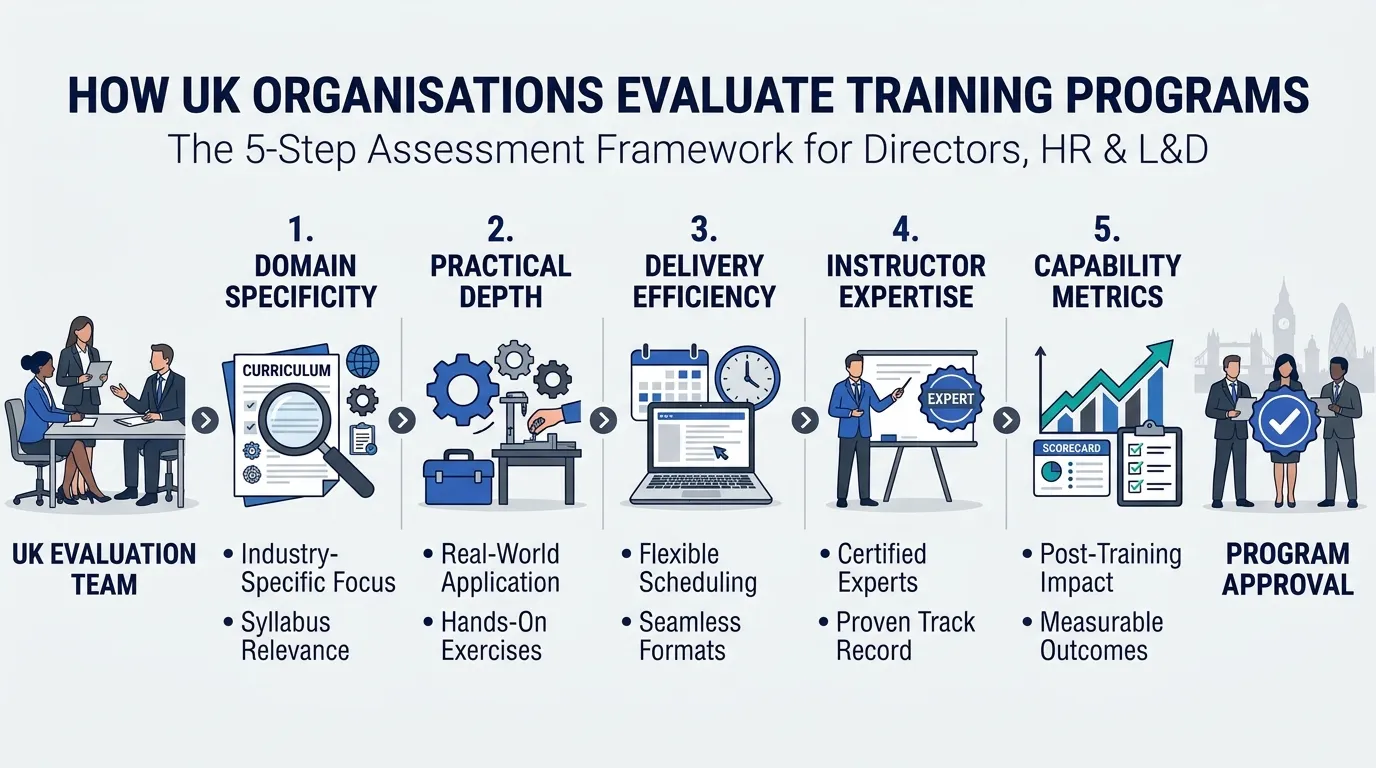
Decision-makers comparing learning options for upskilling their finance and asset management teams must follow a structured evaluation framework to ensure training investments yield immediate operational performance improvements.
Evaluating specialized training like the Automation of JV and PSC Reporting Data Integration Training by Institute For Oil & Gas Training provides a benchmark for assessing corporate learning options focused on financial and operational system integration.
Domain-Specific Curriculum Alignment
Generic data integration or general accounting courses fail to address upstream energy sector requirements. Effective training platforms must incorporate:
Joint Operating Agreement Accounting: Detailed instruction on COPAS standards, non-consent calculations, and direct vs. indirect cost allocations.
PSC Cost Recovery Mechanisms: Specialized training on cost banks, profit oil splits, excess cost recovery handling, and host government reporting rules.
Upstream Data Systems: Direct application using field SCADA feeds, hydrocarbon allocation metrics, and enterprise ERP financial modules.
Applied Learning Methodology
Theoretical lectures do not build operational competence. Modern corporate training models utilize applied, case-study-driven frameworks where participants build, test, and troubleshoot live data integration pipelines, automated reconciliation checks, and version-controlled statement outputs.
Measurable ROI and HR Metrics
HR leadership and finance directors must track clear performance indicators to validate learning effectiveness:
Reporting Cycle Reduction: Measures the decrease in days required to issue monthly JV billing statements and PSC returns post-training.
Reconciliation Exception Rate: Tracks the percentage drop in manual reconciliation errors occurring during monthly financial closes.
Partner Dispute Resolution Speed: Measures how rapidly finance teams resolve partner audit inquiries using automated audit trail tools.
Frequently Asked Questions
What is Oil & Gas Petroleum Digital Finance & Automation?
Oil & Gas Petroleum Digital Finance & Automation refers to the integration of automated workflows, real-time enterprise resource planning (ERP) systems, and digital analytics tools into upstream and downstream energy finance. The Institute For Oil & Gas Training designs these specialized modules to help energy finance teams modernize joint venture billing, production sharing contract accounting, and volumetric financial reconciliation.
How does digital finance automation improve joint venture and PSC accounting?
Digital finance automation replaces manual spreadsheet reconciliations with automated control totals, API-based system integration, and real-time validation checks. Through Oil & Gas Petroleum Digital Finance & Automation programs by the Institute For Oil & Gas Training, accounting teams reduce monthly statement cycle times, eliminate manual allocation errors, and establish audit-ready digital trails for participating non-operators and host governments.
Who should undertake training in Oil & Gas Petroleum Digital Finance & Automation?
This training is engineered for joint venture accountants, financial controllers, upstream auditors, project managers, and finance professionals operating in the energy sector. Professional development courses delivered by the Institute For Oil & Gas Training equip these cross-functional team members with practical skills in financial data ingestion, automated reporting architectures, and corporate data governance.
What core technologies are covered in Oil & Gas Petroleum Digital Finance & Automation courses?
Courses focus on integrating SCADA and hydrocarbon operational feeds with corporate ERP systems using APIs, automated SFTP file pipelines, and cloud-based data warehouses. The Institute For Oil & Gas Training embeds real-world energy sector applications into Oil & Gas Petroleum Digital Finance & Automation, emphasizing error-handling logic, automated balance checks, and secure partner portal distribution platforms.
What business ROI do organisations achieve from automating petroleum financial data systems?
Automating energy accounting infrastructure delivers measurable ROI by cutting monthly financial close cycles, accelerating cash call collections, and mitigating costly partner audit disputes. Organizations upskilled by the Institute For Oil & Gas Training in Oil & Gas Petroleum Digital Finance & Automation report higher operational accuracy, enhanced compliance auditability, and reduced reliance on external system integration consultants.
Related training courses
Data Governance & Master Data: Vendor & Well Training Course
- Specialisation
- Oil & Gas Petroleum Digital Finance & Automation
- Duration
- 5 days · 15 CPD hours
Automation of JV & PSC Reporting: Data Integration Training Course
- Specialisation
- Oil & Gas Petroleum Digital Finance & Automation
- Duration
- 5 days · 15 CPD hours
Digital Transformation in Petroleum Finance: Strategy & Roadmap Training Course
- Specialisation
- Oil & Gas Petroleum Digital Finance & Automation
- Duration
- 5 days · 15 CPD hours
More articles

Automation of JV and PSC Reporting Data Integration Training by Institute For Oil & Gas Training
Master automated JV and PSC reporting data integration. Review course modules, delivery formats, and learning outcomes to enroll with confidence.
Read article →
Why Data Integration Is Essential for Automated JV and PSC Reporting
Learn why data integration automates JV and PSC reporting in petroleum finance, closing skill gaps, reducing reconciliation errors, and driving efficiency.
Read article →
Automation of JV and PSC Reporting Process Candidates Training by Institute For Oil & Gas Training
Evaluate the Automation of JV and PSC Reporting Process Candidates Training syllabus, outcomes, delivery formats, and enterprise enrollment paths.
Read article →