

Energy sector mega-projects suffer multi-million-pound budget overruns because traditional financial accounting fails to identify operational cost leaks in real time. Standard accounting software records historical expenditures rather than tracking field commitments, scope shifts, and progressive work completion. Without standardized cost breakdown structure framework discipline, project teams cannot isolate whether budget variances stem from price inflation, scope creep, or operational inefficiency.
Uncontrolled expenditure directly erodes corporate profit margins, delays financial closure, and undermines stakeholder confidence across upstream, midstream, and downstream operations. Organizations operating without rigorous cost coding protocols struggle to reconcile invoices against physical progress. This breakdown leads to inaccurate forecasts, delayed corrective interventions, and misallocated capital resources. Understanding Why Cost Coding Is Essential for Accurate Oil and Gas Cost Control provides the foundational framework required to transition an enterprise from reactive financial reporting to proactive cost governance.
The Cost Control & Variance Analysis Using Cost Coding Training Course delivered by Institute For Oil & Gas Training establishes complete financial control over complex energy projects through standardized cost coding frameworks, earned value management metrics, and precise forecast modeling.
What Is the Cost Control & Variance Analysis Course and What Problem Does It Solve?
This course provides project managers, cost engineers, and finance professionals with technical methodologies to construct standardized cost coding structures, execute precise variance analysis, and calculate reliable estimates at completion, eliminating real-time cost visibility gaps across complex oil and gas assets.
The Cost Control Infrastructure Deficit
Hydrocarbon extraction and processing facilities require huge capital outlays across multi-year lifecycles. Project execution involves hundreds of contractors, specialized equipment rentals, bulk material procurements, and complex engineering modifications. When organizations lack unified cost breakdown structure design standards, cost data remains isolated inside departmental spreadsheets. Finance teams track paid invoices, procurement teams track purchase orders, and site engineers record field activity.
This structural disconnect prevents management from determining the actual financial state of an ongoing project. A project may appear under budget simply because supplier invoices have not yet passed through accounts payable, creating a false sense of security. Meanwhile, unrecorded field variations, unbilled equipment rentals, and undocumented scope adjustments quietly consume the project contingency allowance.
Root Causes of Capital Overruns
Budget control failures in energy operations originate from five core operational gaps:
Lack of Cost Coding Discipline: Absence of standard cost code dictionaries causes misallocation of field expenses, corrupting historical performance databases and skewing cost estimates.
Confusion Between Incurred and Committed Costs: Financial reports often confuse committed purchase orders with actual field costs incurred, obscuring real-time liabilities.
Inability to Measure Value of Work Done: Field progress is reported in non-standard physical percentages without financial mapping, preventing true progress measurement.
Unmonitored Contingency Drawdown: Project contingency funds are drawn down without baseline impact assessments or variance attribution analysis.
Subjective Forecast Modeling: Forecasting relies on contractor self-reporting rather than mathematical formulas for estimate at completion calculations.
The Institutional Solution
The Institute For Oil & Gas Training engineered this curriculum to bridge the gap between site engineering decisions and executive financial oversight. By embedding structured cost coding discipline into project management workflows, delegates gain the ability to establish unyielding baseline controls, trace every pound spent directly to specific work packages, and flag cost variances before they escalate into capital deficits.
Why Is This Training Program Structured Around Cost Coding Frameworks?
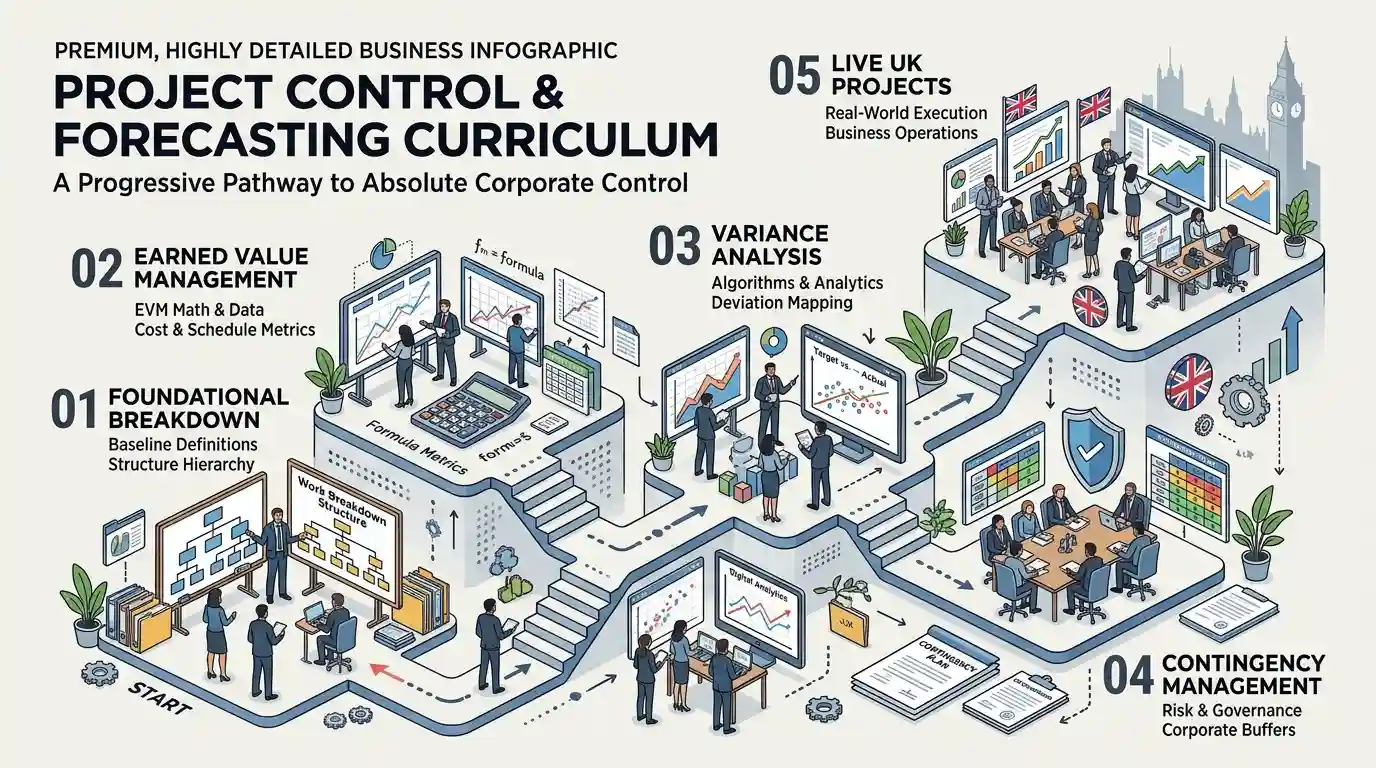
The curriculum is structured progressively from foundational breakdown structures to advanced predictive forecasting, ensuring delegates build absolute control over baseline definitions before applying earned value management math, variance analysis algorithms, and corporate contingency management protocols to live projects.
Curriculum Architecture and Pedagogical Logic
Effective learning demands a logical progression from baseline structural rules to complex data analysis. The Institute For Oil & Gas Training structures this program around the actual lifecycle of a capital project financial management system. Delegates master data collection structures first, because variance formulas are useless if input data is misclassified or incomplete.
Learning how to execute structured cost tracking is essential before attempting advanced variance analysis. Delegates learn How to Use Cost Coding for Effective Cost Tracking and Variance Analysis to structure data capture, establish baseline integrity, and maintain data consistency across multi-discipline project environments.
The Three-Stage Skill Mastery Framework
Baseline Definition & Structural Mapping (Modules 1–2): Participants master the relationship between work breakdown structure elements and cost breakdown structure elements. Focus centers on establishing a single source of truth across project operations.
Execution Tracking & Data Capture (Modules 3–4): Delegates learn mechanisms to isolate committed and incurred cost values, quantify physical value of work done, and audit field progress against contractor billing schedules.
Variance Mathematics & Forecasting (Modules 5–6): Participants apply earned value management equations, calculate real-time cost performance index metrics, run estimate to complete models, and govern contingency drawdown tracking systems.
What Will Participants Learn Across the Core Training Modules?
Delegates master six technical modules covering breakdown structure design, cost coding dictionaries, committed cost accounting, value of work done calculations, earned value variance mathematics, and predictive forecast modeling using live industry data sets.
Module Breakdown and Learning Outcomes
Module | Core Focus Area | Key Technical Competencies Developed | Practical Deliverable |
|---|---|---|---|
Module 1 | Breakdown Structure Design | WBS/CBS alignment, code hierarchy definition, element mapping | Master Project Cost Breakdown Structure |
Module 2 | Cost Coding Standardization | Coding dictionaries, discipline allocation, asset lifecycle coding | Standardized Corporate Cost Coding Manual |
Module 3 | Commitment & Incurred Cost Control | Purchase order tracking, accrual accounting, unbilled liability calculation | Real-Time Commitment & Incurred Ledger |
Module 4 | Value of Work Done (VOWD) | Physical progress measurement, milestone gates, contractor invoice audit | VOWD Assessment & Audit Template |
Module 5 | Earned Value Management (EVM) | CPI/SPI derivation, variance isolation, baseline trend analysis | EVM Performance Dashboard |
Module 6 | Forecast Modeling & Contingency | EAC/ETC mathematical models, contingency drawdown management | Predictive Project Forecasting Sheet |
Module 1: Work Breakdown Structure and Cost Breakdown Structure Alignment
Delegates study the alignment between project scope definitions and financial accounting structures. Training covers how to decompose major offshore and onshore asset developments into discrete, controllable work packages. Delegates establish rules for mapping engineering disciplines, procurement packages, and construction activities directly into unified cost codes.
Module 2: Cost Coding Discipline and Data Integrity
This module focuses on creating standard cost coding dictionaries. Delegates build coding schemas that capture asset location, discipline, sub-contractor details, and expense types. The curriculum enforces strict rules for cost coding discipline across project teams to eliminate misclassification, unauthorized scope additions, and inaccurate field reporting.
Module 3: Committed and Incurred Cost Accounting
Participants examine the distinction between money committed via contracts or purchase orders and money actually spent in the field. Delegates build tracking systems to register financial commitments immediately upon contract approval, preventing budget surprises caused by delayed vendor invoicing.
Module 4: Value of Work Done (VOWD) Assessment
This module presents formal methods for calculating the true value of work done across active jobsites. Delegates learn how to verify physical progress independently of contractor payment applications. Training covers progress measurement rules, milestone gates, and verification protocols for bulk material installations and engineering deliverables.
Module 5: Earned Value Management and Variance Analysis
Delegates master the mathematical frameworks of earned value management. Training covers how to compute and interpret key project performance indicators:
Cost Variance (CV): CV=EV−ACCV=EV−AC (Earned Value minus Actual Cost)
Schedule Variance (SV): SV=EV−PVSV=EV−PV (Earned Value minus Planned Value)
Cost Performance Index (CPI): CPI=EVACCPI=ACEV (Efficiency measure of capital spent)
Schedule Performance Index (SPI): SPI=EVPVSPI=PVEV (Time efficiency measure)
Delegates analyze these parameters to isolate whether budget overruns stem from labor inefficiency, material cost growth, or schedule delays.
Module 6: Forecast Modeling and Contingency Drawdown Tracking
The final module covers predictive project financial management. Delegates evaluate mathematical options for calculating estimate at completion and estimate to complete based on historical CPI trends and remaining risks. Participants also implement strict contingency drawdown tracking protocols to safeguard remaining project reserves.
Estimate At Completion (EAC)=Budget At Completion (BAC)Cost Performance Index (CPI)Estimate At Completion (EAC)=Cost Performance Index (CPI)Budget At Completion (BAC)
How Is the Training Delivered and What Are the Learning Formats?
The Institute For Oil & Gas Training delivers this course through four delivery formats—instructor-led classroom workshops, interactive virtual classrooms, customized on-site corporate programs, and blended digital models—all featuring live dataset simulations.
Flexible Delivery Formats
To accommodate global energy sector schedules, the Institute For Oil & Gas Training offers four primary delivery channels:
Instructor-Led Classroom Workshops: Intensive five-day residential courses held at regional training hubs (Aberdeen, London, Dubai, Houston, Singapore). Participants engage in face-to-face peer discussions and practical group exercises.
Interactive Virtual Classrooms: Delivered via live video sessions split across two weeks. Includes digital breakout rooms, live screen-sharing for spreadsheet auditing, and interactive instructor coaching.
On-Site Corporate Programs: Tailored specifically for an enterprise workforce. The curriculum is customized using the client's internal cost coding systems, corporate chart of accounts, and live project documentation.
Blended Learning Models: Combines self-paced digital learning modules covering foundational math with live, instructor-led practical application workshops.
Training Methodology and Practical Simulations
Every format avoids passive lectures. The Institute For Oil & Gas Training uses an applied, case-study-driven approach. Delegates spend over half of their time analyzing real project data sets from major energy projects.
Delegates build real-time variance tracking spreadsheets, clean corrupted cost databases, calculate cost performance index metrics under changing field conditions, and defend forecast models during simulated management reviews.
What Measurable Performance Results and Corporate Impact Can Be Expected?
Graduates acquire the technical skills needed to immediately eliminate unrecorded project liabilities, improve forecasting accuracy within a plus-or-minus five percent tolerance, protect project margins, and streamline cross-departmental financial reporting.
Individual Professional Competencies
Upon completing the program, delegates will demonstrate clear, practical competencies across six key project control areas:
Construct clear cost breakdown structure templates aligned with complex scope definitions.
Enforce strict cost coding discipline across procurement, engineering, and construction teams.
Reconcile committed costs against incurred liabilities to eliminate financial reporting delays.
Calculate accurate value of work done figures to audit contractor billing applications.
Analyze earned value management metrics to flag cost inefficiencies early.
Generate accurate estimate at completion models to protect overall project margins.
Corporate and HR ROI
For enterprise clients, sponsoring teams through the Institute For Oil & Gas Training delivers clear operational gains:
Corporate benefits include:
Margin Protection: Early detection of negative cost variances allows managers to execute corrective actions before contingency reserves are exhausted.
Standardized Corporate Governance: HR teams and department heads gain a unified financial control methodology across global assets, standardizing project management standards.
Contractor Billing Audits: Independent verification of value of work done prevents overpayment on milestone contracts and reduces claims disputes.
Capital Allocation Accuracy: Accurate estimate to complete calculations allow corporate finance leadership to reallocate capital safely across the enterprise portfolio.
How Does Enrollment Work and What Are the Entry Requirements?
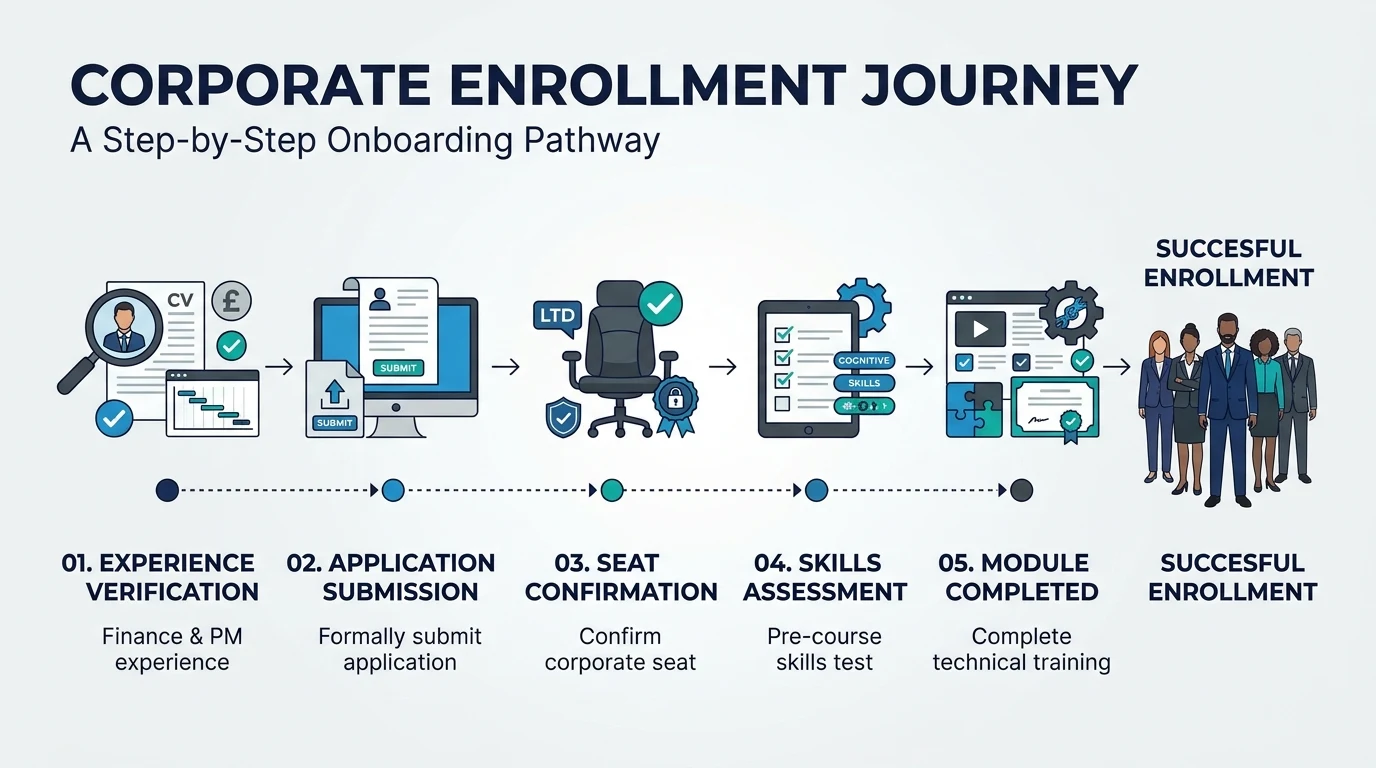
Enrollment requires candidate verification of basic financial or project management experience, followed by formal application submission, corporate seat confirmation, pre-course skills assessment, and completion of all technical modules.
Entry Requirements and Target Audience
This course is engineered specifically for professionals responsible for project budgets, commercial management, and financial control within the energy sector. Recommended roles include:
Cost Engineers and Project Control Managers
Project Managers and Engineering Team Leads
Corporate Finance Managers and Project Accountants
Commercial Contracts Administrators and Procurement Specialists
HR Development Managers building corporate project controls pipelines
Prerequisites: Candidates should have at least two years of experience in a project, engineering, finance, or commercial role. Basic proficiency with spreadsheet applications (Microsoft Excel) is required for calculations.
Enrollment Process and Path to Certification
Application Submission: Candidates or corporate HR teams submit an application outlining delegate experience levels and selected training formats.
Pre-Course Diagnostic: Enrolled delegates complete a diagnostic assessment to baseline their current knowledge of cost breakdown structure models and financial formulas.
Course Execution: Delegates complete all six modules, maintaining an 80% or higher attendance rate and actively participating in analytical simulations.
Final Capstone Assessment: Delegates complete a practical examination where they clean a corrupted project dataset, build a cost breakdown structure, compute earned value management metrics, and present a forecast report.
Professional Certification: Successful participants earn the formal Certificate of Completion in Cost Control & Variance Analysis issued by the Institute For Oil & Gas Training.
Corporate Group Bookings and Customized Delivery
For organizations enrolling teams of five or more delegates, the Institute For Oil & Gas Training offers customized corporate cohort delivery. Programs can be adapted to integrate the company's proprietary chart of accounts, corporate cost coding manuals, and internal project reporting templates.
To secure individual seats or schedule an enterprise training program for your engineering and project control teams, enroll in this program today.
Frequently Asked Questions
What is Oil & Gas Petroleum Budgeting & Cost Control?
Oil & Gas Petroleum Budgeting & Cost Control is a strategic financial management practice used by energy sector organizations to plan capital expenditures, track operational costs, and control variance across project lifecycles. Offered by Institute For Oil & Gas Training, this discipline establishes rigorous cost coding and baseline frameworks to prevent budget overruns in upstream, midstream, and downstream assets. It integrates work breakdown structures with accounting controls to maintain absolute fiscal governance.
Why is cost control essential in petroleum project management?
Petroleum projects involve complex supply chains, multi-year timelines, and high capital commitments that are vulnerable to market volatility and scope creep. Implementing structured budget controls through Institute For Oil & Gas Training enables project managers to differentiate between committed costs and actual incurred liabilities in real time. This structural oversight ensures early detection of financial variances and protects overall project profit margins.
What are the core components of Oil & Gas Petroleum Budgeting & Cost Control training?
The Oil & Gas Petroleum Budgeting & Cost Control curriculum focuses on practical financial tools including cost breakdown structure design, value of work done assessment, and earned value management metrics. Participants trained by Institute For Oil & Gas Training master technical methodologies for calculating cost performance index figures and developing predictive estimate at completion models. These core components allow finance and engineering teams to audit contractor billings accurately.
Who should undertake Oil & Gas Petroleum Budgeting & Cost Control training?
This professional development program is designed for project controllers, cost engineers, finance managers, procurement specialists, and commercial leads operating within the energy industry. Corporate HR teams partner with Institute For Oil & Gas Training to deliver this specialized Oil & Gas Petroleum Budgeting & Cost Control instruction to cross-functional teams seeking standardized financial governance across major capital investments.
How does cost coding improve variance analysis in energy projects?
Standardized cost coding assigns unique identifiers to specific work packages, establishing a single source of truth across engineering, procurement, and site construction departments. Through training provided by Institute For Oil & Gas Training, delegates learn to trace every field expenditure back to its original budget line item. This precise tracking simplifies variance analysis by isolating whether budget discrepancies stem from unit rate inflation, volume changes, or schedule delays.
Related training courses
CAPEX vs OPEX Classification & Decision Rules Training Course
- Specialisation
- Oil & Gas Petroleum Budgeting & Cost Control
- Duration
- 5 days · 13 CPD hours
Cost Control for Field Development Projects: Cost Baselines Training Course
- Specialisation
- Oil & Gas Petroleum Budgeting & Cost Control
- Duration
- 5 days · 15 CPD hours
Budget Management and Management Control in the Oil & Gas Industry
- Specialisation
- Oil & Gas Petroleum Budgeting & Cost Control
- Duration
- 5 days · 15 CPD hours
More articles

Cost Control for Field Development Projects Overrun Prevention Training by Institute For Oil & Gas Training
Explore the Cost Control for Field Development Projects Overrun Prevention Training Course by Institute For Oil & Gas Training for corporate team skill gain.
Read article →
How to Identify Cost Overrun Risks and Apply Effective Prevention Strategies
Learn how to identify cost overrun risks in field development and apply proven prevention strategies to protect project capital and performance.
Read article →
Why Cost Overruns Occur in Oil and Gas Field Development Projects
Discover why cost overruns occur in oil and gas field development projects and how workforce training mitigates financial risks for energy firms.
Read article →