

Field development projects within the oil and gas sector frequently suffer from budget inflation due to mismanaged financial controls, scope creep, and unverified contractor expenses. The Cost Control for Field Development Projects Overrun Prevention Training by Institute For Oil & Gas Training provides a structured educational framework designed to eliminate systemic financial leakage. To understand the root drivers of initial capital deviations, review Why Cost Overruns Occur in Oil and Gas Field Development Projects. The Institute For Oil & Gas Training delivers this specification-driven course to equip project managers, commercial directors, and finance personnel with standard methodologies required to protect capital expenditure.
What is the course and what problem does it solve?
The Cost Control for Field Development Projects Overrun Prevention Training Course delivers standard cost-control methodologies to mitigate expenditure inflation, unverified variations, and baseline budget erosion across complex onshore and offshore oil and gas field developments.
Capital project execution in energy sector development relies on stringent cost management techniques. Organizations routinely face financial variance because baseline budgets fail to incorporate structural risk adjustments or robust verification protocols. The Cost Control for Field Development Projects: Overrun Prevention Training Course addresses these vulnerabilities by instilling systematic monitoring skills into commercial and technical management teams.
The primary skill gap in field development lies in the disconnect between physical progress reporting and financial commitment tracking. Project engineering teams often approve technical modifications without evaluating the immediate and long-term financial consequences. Through instruction provided by the Institute For Oil & Gas Training, participants learn to align engineering progress directly with financial metrics, preventing unbudgeted cost accumulation.
Uncontrolled expenditure directly degrades project internal rates of return (IRR). Organizations experience margin compression when field development schedules slip and reimbursable claims remain unscrutinised. This course provides an analytical structure that allows project teams to detect expenditure anomalies prior to baseline exhaustion.
By training personnel through real-world operational scenarios, the Institute For Oil & Gas Training resolves operational inefficiencies within project governance. Corporate finance and operations teams gain standard auditing capability, ensuring every unit of capital spent aligns with validated work breakdown structures.
Why is this course structured this way?
This curriculum follows a progressive pedagogical design, moving systematically from baseline cost management principles to advanced variance forecasting, contract auditing, and post-project financial capitalization frameworks.
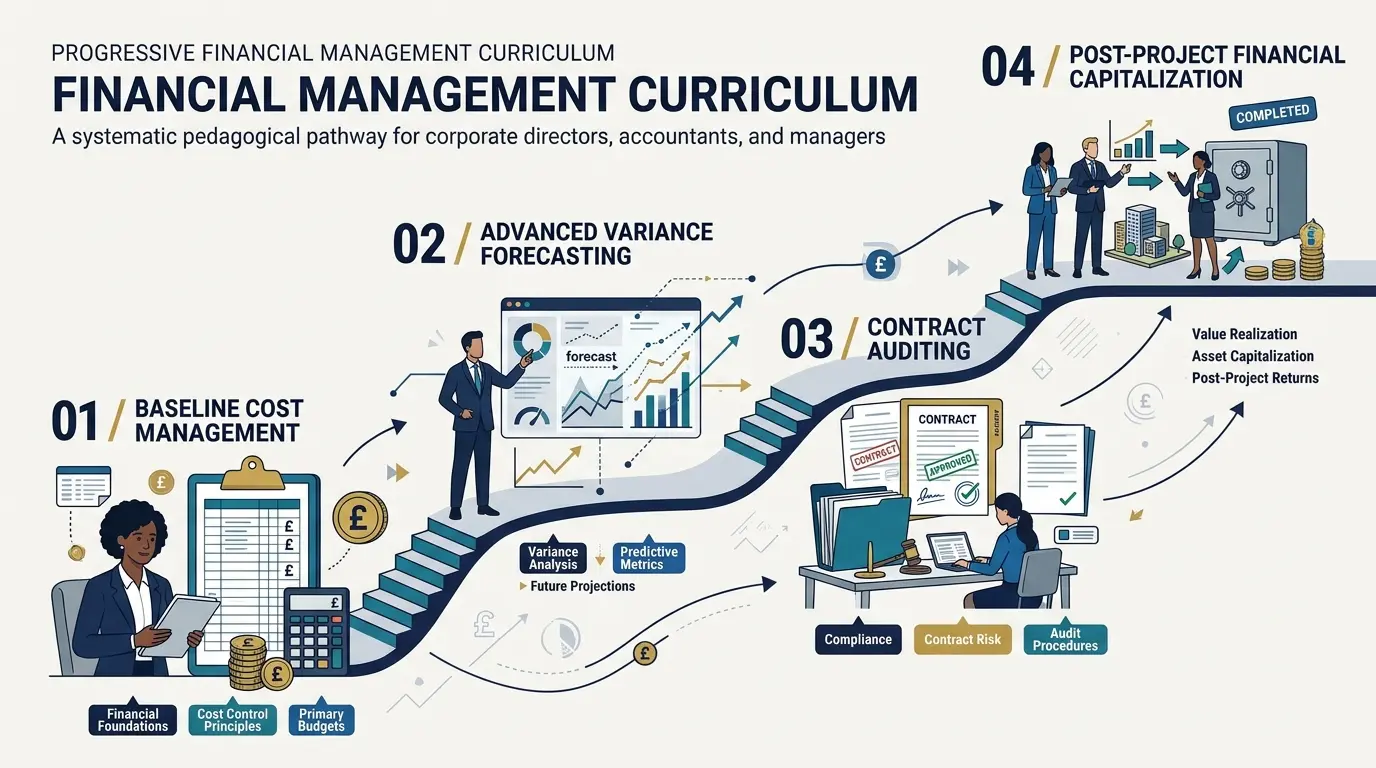
The structural logic of the course reflects the lifecycle of an energy field development project. Initial modules establish foundational mechanics before introducing complex contractual risk management and verification protocols. To evaluate operational risk detection frameworks prior to enrollment, read How to Identify Cost Overrun Risks and Apply Effective Prevention Strategies.
Learning progression requires technical professionals to master early-stage cost definition before tackling field execution anomalies. The Institute For Oil & Gas Training designs this sequencing to ensure concepts such as Earned Value Management (EVM) are understood in relation to actual physical progress rather than theoretical accounting entries.
Contractual interfaces represent the highest concentration of financial exposure during field development. The syllabus dedicates specific instructional phases to evaluating contractor cost reporting and reimbursable cost verification. Participants progress from passive reporting to active financial governance.
The final structural phase focuses on project capitalization and close-out processes. The Institute For Oil & Gas Training structures this section to ensure learning extends into organizational knowledge retention, establishing formal mechanisms for capturing post-completion financial metrics.
What will participants learn?
Participants master quantitative cost forecasting, reimbursable cost auditing, variation management, earned value analysis, and formal project close-out capitalization procedures.
The training curriculum comprises structured modules delivered over dedicated operational blocks. Each module addresses specific technical competencies required in energy project cost management.
Participants gain explicit operational capabilities across several key analytical domains:
Cost Overrun Root Causes: Analyzing historic project data to identify systematic estimation flaws, scope additions, and execution delays.
Contractor Cost Reporting: Evaluating contractor financial submissions against verifiable site progress logs and procurement records.
Reimbursable Cost Verification: Implementing forensic auditing standards to check time-and-materials invoices against contract terms.
Variation and Claim Cost Impact: Calculating the cumulative cost implications of technical scope modifications on the baseline budget.
Forecast Final Cost Methods: Utilizing Estimate at Completion (EAC) and Estimate to Complete (ETC) metrics to predict final spend.
Cost Recovery of Project Expenditure: Aligning project costs with Joint Operating Agreement (JOA) cost recovery guidelines in upstream ventures.
Project Capitalisation and Close-Out: Executing structured financial reconciliation to transfer project assets to operating accounts.
Lessons Learned and Post-Completion Review: Capturing cost variances to refine organizational estimation models for future developments.
Through this comprehensive curriculum, the Institute For Oil & Gas Training ensures technical personnel move beyond administrative tracking to active cost control.
How is the course delivered?
The course is delivered through instructor-led live workshops, online virtual classrooms, hybrid learning models, and customized corporate onsite programs featuring simulated project data exercises.
The Institute For Oil & Gas Training offers flexible delivery mechanisms designed to accommodate corporate operational requirements and remote site schedules.
Instructional Methodology
Training sessions rely heavily on practical execution rather than passive lecture formats. Instructors lead participants through real-world field development data sets, requiring them to perform cost calculations, audit invoices, and adjust forecast models in real time.
Workshops utilize field-simulated scenarios where scope changes occur mid-project. Delegates must recalculate the forecast final cost, assess contract compliance, and present mitigation options to maintain budget integrity.
Assessment & Certification
Knowledge retention is validated through rigorous quantitative assessment protocols. Participants undergo baseline competency checks, practical case study evaluations, and a final technical examination.
Upon successful completion of all assessment criteria, delegates receive a professional certification from the Institute For Oil & Gas Training, validating their technical capacity to manage capital expenditure in field development projects.
What results can be expected?
Organizations achieve measurable reduction in cost variance, improved audit readiness, faster financial close-outs, and enhanced commercial decision-making across project teams.
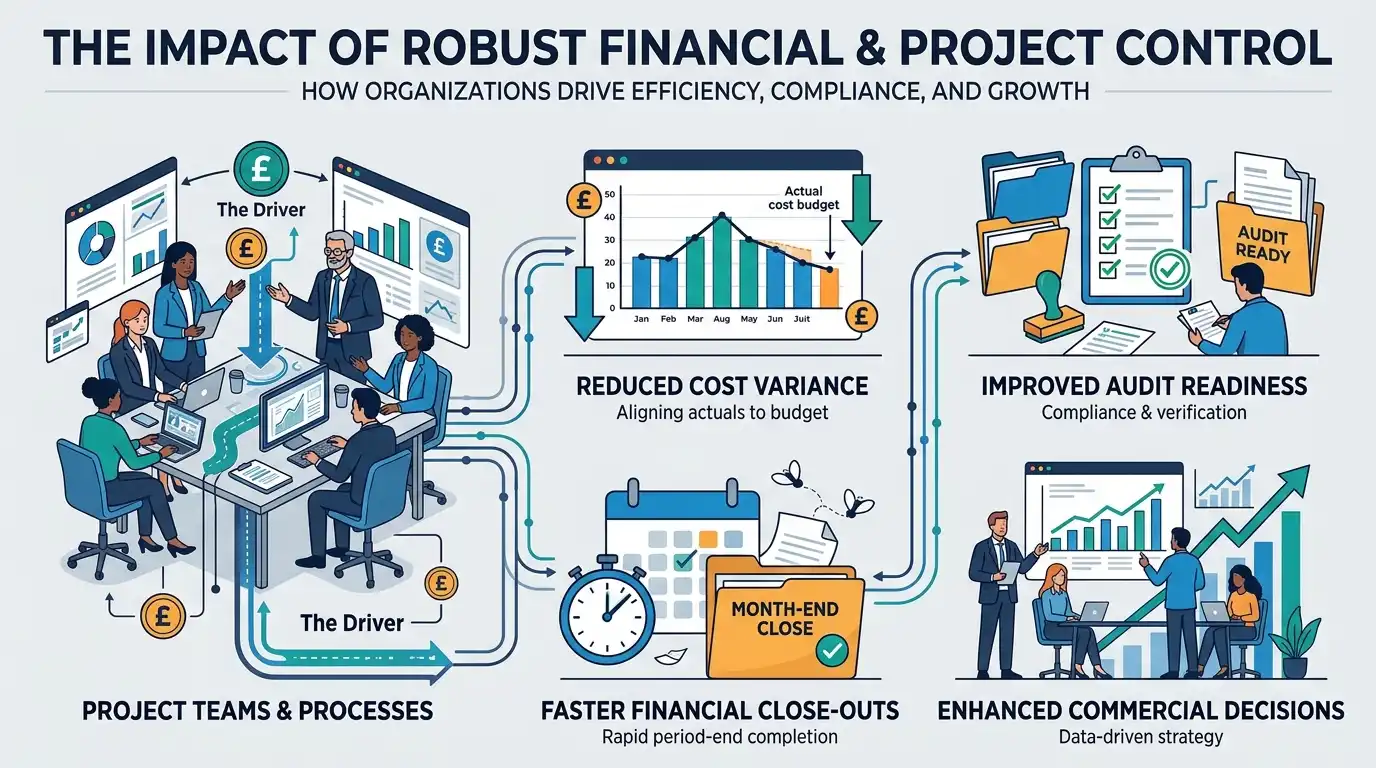
The implementation of standard cost control methodologies directly enhances corporate project governance. Organizations sending project personnel to this program report immediate operational improvements in cost visibility and verification.
Workplace Impact Case Study: Upstream Project Management Unit
A multi-national energy operator deployed an integrated engineering and procurement team to the Institute For Oil & Gas Training program following consecutive budget overruns on offshore tie-back projects.
The team established a standardized reimbursable cost verification protocol during the workshop phase. Upon returning to operations, the project control unit applied these audit mechanisms to active contractor claims.
Within six months of implementation, the team identified unverified contractor charges totaling 4.2% of the operating budget, successfully mitigating baseline leakage. Furthermore, standardized variation evaluations reduced the processing time for scope changes by 35%, preventing schedule delays associated with unresolved commercial claims.
HR and Talent Pipeline Development
For Human Resource departments, this course serves as a critical professional development milestone for mid-career engineers, quantity surveyors, and project accountants. Standardizing cost control competencies ensures consistent execution standards across multi-disciplinary project teams.
Integrating this training into career progression pathways enables corporate talent managers to build robust pipelines for future project directors and commercial managers.
How does enrollment work?
Enrollment requires submission of professional credentials, verification of prerequisite technical experience, and selection of an appropriate training schedule through the corporate registration portal.
The Cost Control for Field Development Projects Overrun Prevention Training by Institute For Oil & Gas Training maintains selective admission standards to ensure high-level technical dialogue during workshop sessions.
Entry Requirements
Candidates must possess foundational knowledge of project management principles or financial control operations within energy or heavy infrastructure sectors.
Recommended participant profiles include:
Project Managers and Project Engineers
Cost Engineers and Quantity Surveyors
Commercial Managers and Contracts Administrators
Project Accountants and Financial Controllers
HR Professionals managing technical training pipelines
Application & Registration Process
Syllabus Review: Evaluate organizational learning objectives against the course module specifications.
Application Submission: Complete the corporate candidate profile, detailing professional experience and project roles.
Prerequisite Verification: Academic and professional background review by the admissions committee at the Institute For Oil & Gas Training.
Format Selection: Choose between open-enrollment public workshops or dedicated corporate onsite delivery.
Confirmation & Onboarding: Receive preparatory learning materials and baseline assessment links prior to course initiation.
Organisations planning to enroll teams of five or more delegates can request tailored case study integration specific to their current asset development portfolio.
To confirm your eligibility and secure your place in the upcoming cohort, enroll in this program.
Frequently Asked Questions
What is the primary purpose of the Oil & Gas Petroleum Budgeting & Cost Control service?
The Oil & Gas Petroleum Budgeting & Cost Control program delivered by the Institute For Oil & Gas Training provides professionals with analytical tools to manage capital expenditure (CAPEX) and operational expenditure (OPEX) in energy projects. It establishes standardized financial frameworks to prevent budget overruns, audit reimbursable expenses, and maintain financial precision throughout the upstream and downstream project lifecycles.
How does cost control training help energy sector organizations mitigate financial risks?
Corporate training from the Institute For Oil & Gas Training equips finance and engineering teams with quantitative techniques like Earned Value Management (EVM) and Estimate at Completion (EAC) forecasting. Mastering these Oil & Gas Petroleum Budgeting & Cost Control principles allows organizations to identify cost variances early, evaluate contractor claims accurately, and protect overall project profit margins.
Who should attend the Oil & Gas Petroleum Budgeting & Cost Control course?
This specialized training is designed for project managers, cost engineers, financial controllers, quantity surveyors, and commercial managers within the energy sector. Offered by the Institute For Oil & Gas Training, the curriculum supports cross-functional alignment between operational engineering teams and corporate accounting divisions.
What core methodologies are covered in Oil & Gas Petroleum Budgeting & Cost Control?
The Institute For Oil & Gas Training covers critical financial methodologies, including Work Breakdown Structure (WBS) budgeting, joint operating agreement (JOA) cost recovery, and forensic contractor invoice verification. Participants gain practical expertise in Oil & Gas Petroleum Budgeting & Cost Control through real-world case studies focused on variance analysis, risk allowances, and asset capitalization.
What measurable outcomes can corporate HR teams expect from this training?
HR managers utilizing the Oil & Gas Petroleum Budgeting & Cost Control course by the Institute For Oil & Gas Training establish consistent financial governance across project teams. Organizational benefits include reduced contract variation processing times, fewer unverified expenditure leaks, and faster asset close-out reconciliations.
Related training courses
CAPEX vs OPEX Classification & Decision Rules Training Course
- Specialisation
- Oil & Gas Petroleum Budgeting & Cost Control
- Duration
- 5 days · 13 CPD hours
Budgeting & Forecasting: Rolling & Zero-Based Techniques Training Course
- Specialisation
- Oil & Gas Petroleum Budgeting & Cost Control
- Duration
- 5 days · 15 CPD hours
Cash Calls, AFEs & Work Program/Budget Control: Preparation Training Course
- Specialisation
- Oil & Gas Petroleum Budgeting & Cost Control
- Duration
- 5 days · 15 CPD hours
More articles

How to Identify Cost Overrun Risks and Apply Effective Prevention Strategies
Learn how to identify cost overrun risks in field development and apply proven prevention strategies to protect project capital and performance.
Read article →
Why Cost Overruns Occur in Oil and Gas Field Development Projects
Discover why cost overruns occur in oil and gas field development projects and how workforce training mitigates financial risks for energy firms.
Read article →
Cost Control for Field Development Projects Cost Baselines Training by Institute For Oil & Gas Training
Evaluate the Cost Control for Field Development Projects Cost Baselines Training by Institute For Oil & Gas Training. View syllabus and enroll.
Read article →