

The Cash Calls, AFEs & Work Program/Budget Control: Overruns Training Course delivers structured technical instruction to solve systematic budget control failures, unapproved authorization for expenditure overruns, partner dispute friction, and joint venture cash call liquidity mismatches across upstream petroleum assets.
Petroleum exploration and production operations run under complex Joint Operating Agreements (JOAs) where operating partners, non-operating partners, and state entities share significant capital commitments. Financial friction occurs when operational execution departs from baseline budget authorizations. Unplanned drilling complications, offshore logistics delays, procurement price swings, and sub-surface uncertainties frequently lead to major expenditure variances. Without systematic oversight, these operational variances create severe cash flow bottlenecks, partner defaults, and administrative standoffs.
Understanding Why Managing Cash Call and AFE Overruns Matters in Petroleum Projects is essential for financial controllers and asset managers who must preserve joint venture liquidity and project alignment. Operating companies face significant administrative pressure when cash calls are issued without aligned cash-flow forecasting or when Authorizations for Expenditure (AFEs) exceed statutory partner consent thresholds. Non-operating partners frequently withhold cash call payments when expenditure reporting lacks transparency, detailed cost coding, or baseline alignment with approved annual Work Programmes and Budgets (WP&B).
The Institute For Oil & Gas Training designed this course to bridge the critical operational gap between engineering execution and joint venture financial compliance. Financial managers, asset accountants, project directors, and joint venture auditors frequently operate in silos, treating cash calls and AFEs as isolated administrative tasks rather than integrated financial control mechanisms. This structural gap leads to delayed partner billing, unapproved expenditure absorption by operators, and costly audit exceptions during joint venture audit cycles.
Through rigorous technical modules, the Institute For Oil & Gas Training provides professionals with standard procedures for setting up budget control frameworks, tracking cost commitments in real time, and enforcing compliance across complex joint venture operational structures. Participants learn how to construct audit-ready financial tracking workflows that protect joint venture integrity, ensure prompt partner cash contributions, and mitigate financial exposure during field development and production operations.
Why is this commercial budget control course structured in this specific progression?
This curriculum follows a strict operational control sequence moving from baseline Work Programme and Budget formulation to Authorization for Expenditure execution, cash call accounting workflows, variance tracking methodologies, and formal joint venture dispute resolution mechanics.
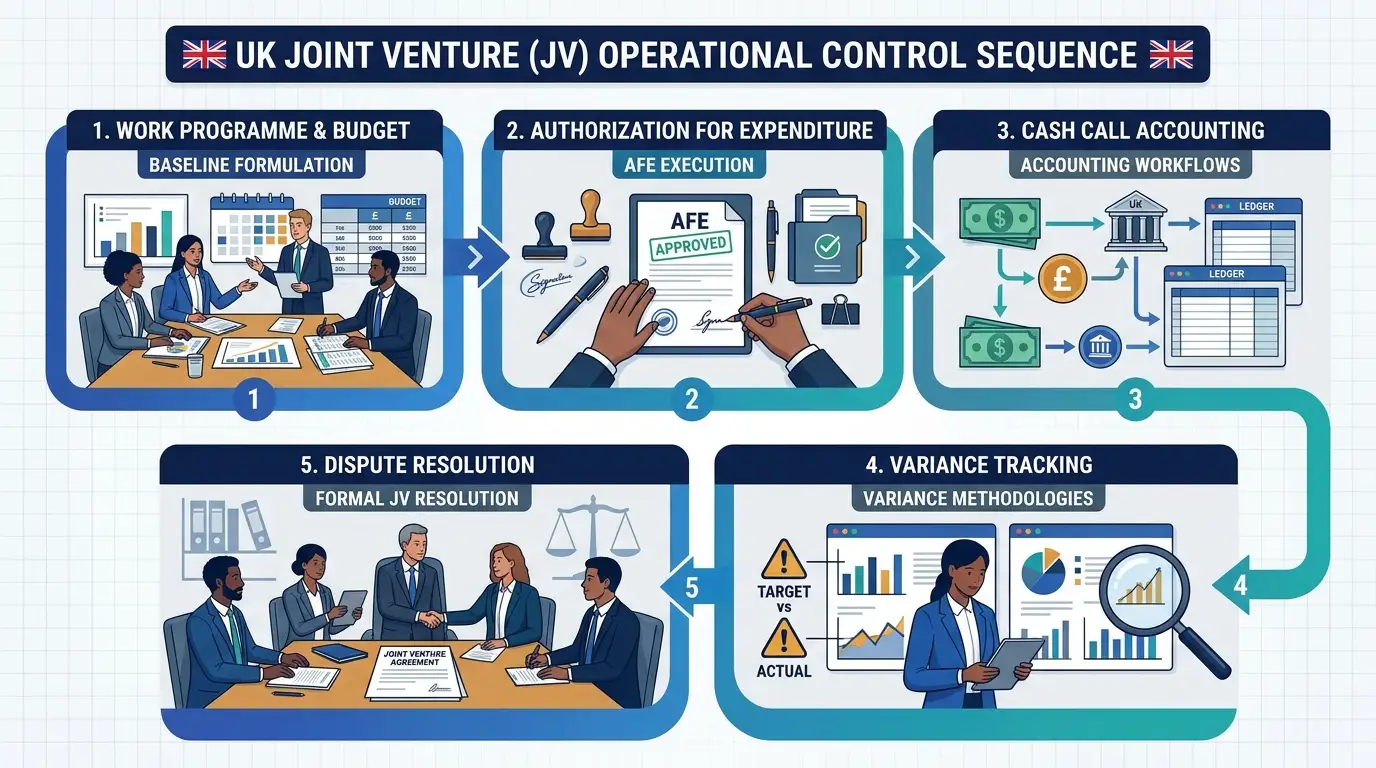
Effective financial oversight in capital-intensive energy projects requires strict alignment with the asset operational lifecycle. The course progression mirrors real-world petroleum asset workflows, ensuring participants master upstream accounting logic before handling operational variance scenarios. Learning begins with macro-level budget formulation under Joint Operating Agreements before advancing to micro-level cost commitment tracking and partner cash management.
Understanding How to Monitor and Control Cash Call AFE and Work Program Budget Overruns requires systematic training on how operational decisions immediately impact cash obligations. By structuring the course around sequential asset execution stages, the Institute For Oil & Gas Training ensures that participants gain practical expertise in preventing unauthorized spending before capital is committed in the field.
The educational model balances theoretical JOA accounting rules with hands-on numerical reconciliation exercises. Participants analyze real-world case studies involving offshore field developments, onshore drilling campaigns, and joint pipeline infrastructure projects. This systematic approach transforms legal joint operating clauses into clear, actionable daily financial management routines.
What will participants learn throughout the modules of this training program?
Participants gain comprehensive mastery over upstream budget modeling, authorisation for expenditure preparation, AFE approval thresholds, partner voting and consent mechanisms, supplementary AFE generation, AFE close-out procedures, work programme and budget submission workflows, budget variance approval limits, and non-consent and sole risk provisions.
The syllabus delivers rigorous, practical training across five technical core modules designed for maximum workplace applicability:
Module 1: Work Programme and Budget (WP&B) Baseline Construction
JOA Accounting Standards: Structuring upstream capital expenditures (CAPEX) and operating expenditures (OPEX) in accordance with international petroleum accounting guidelines.
WP&B Submission Protocols: Managing timeline requirements, line-item budget allocations, and formal operator presentation standards for joint venture operating committees.
Cost Allocation Formulas: Designing transparent overhead calculation methodologies, parent company service charges, and shared infrastructure cost-apportionment rules.
Module 2: AFE Architecture, Approval Thresholds, and Governance
Authorisation for Expenditure Preparation: Building standardized AFE templates containing granular work breakdown structures (WBS), cost itemization, contingency allowances, and execution schedules.
AFE Approval Thresholds: Enforcing contractual authority limits, partner authorization tiers, and formal voting procedures required for project sanctioning.
Partner Voting and Consent Mechanics: Navigating passthrough approvals, pass/fail voting percentages, deemed approval timelines, and formal partner ballot management.
Module 3: Cash Call Operations, Liquidity Management, and Billing
Cash Call Calculation Methods: Determining monthly cash advance requirements based on physical progress schedules, procurement lead times, and operational commitments.
Billing Statement Reconciliation: Issuing formal monthly joint interest billings (JIBs), tracking partner advances, and managing currency exchange adjustments.
Cash Call Default Management: Executing contractual default notices, enforcing financial penalty interest, and applying remedies for non-paying joint venture partners.
Module 4: Overrun Tracking, Variance Analysis, and Control Controls
Real-Time Commitment Accounting: Implementing early-warning cost controls that track field commitments, purchase orders, and service contracts prior to invoice processing.
Budget Variance Approval Limits: Establishing operational tolerances, line-item flexibility limits, and formal escalation paths for cost growth.
Earned Value Management (EVM): Integrating physical progress measurement with financial burn rates to forecast total final cost at project completion.
Module 5: Supplementary AFEs, Non-Consent Provisions, and Close-Out Audits
Supplementary AFE Generation: Structuring technical justification packages and economic evaluations required when project expenditures breach baseline AFE thresholds.
Non-Consent and Sole Risk Provisions: Managing commercial mechanics when specific partners opt out of proposed operations, including penalty recovery factors and premium payouts.
AFE Close-Out Protocols: Executing formal financial close-outs, final cost reconciliations, asset capitalization transfers, and joint venture audit defenses.
How is the training program delivered and evaluated by the institute?
The Institute For Oil & Gas Training delivers this course through immersive instructor-led workshops, live interactive online modules, custom onsite corporate sessions, and hybrid learning formats supported by continuous practical assessment.
To accommodate diverse corporate schedules and regional operational teams, flexible delivery options are available:
Delivery Format | Structure & Duration | Ideal For | Key Features |
In-Person Workshop | 5 Intensive Days (35 Hours) | Corporate Teams & Regional Groups | Live financial modeling, face-to-face case analysis, direct instructor coaching |
Live Virtual Classroom | 2 Weeks (3 Hours/Day) | Remote Professionals & Multi-Site Teams | Interactive spreadsheet lab sessions, real-time Q&A, recorded digital access |
Onsite Corporate Training | Tailored Duration & Syllabus | Enterprise HR & Joint Venture Operations | Customized using company-specific JOAs, internal AFEs, and actual asset data |
Hybrid Executive Format | Self-Paced Prep + 3-Day Lab | Busy Finance Leaders & Controllers | Blended self-study modules combined with intensive practical application labs |
Professional Assessment Framework
Learning effectiveness is evaluated using real-world operational benchmarks rather than rote memory tests:
Baseline Technical Evaluation: Pre-course assessment to benchmark current understanding of JOA accounting terms and budget control mechanics.
Applied Spreadsheet Laboratories: Practical exercises requiring participants to build cash call schedules, calculate AFE variance thresholds, and model supplementary AFE packages under strict time constraints.
Simulated Joint Venture Committee Exercise: A live team simulation where participants represent operating and non-operating partners negotiating disputed cash calls and budget overruns.
Final Capstone Project: Comprehensive financial audit and variance report generated from a complex, multi-year offshore field development dataset.
Professional Certification: Candidates scoring 80% or higher across practical assessments earn the formal Certificate of Mastery in Petroleum Cash Call and Budget Control from the Institute For Oil & Gas Training.
What measurable performance results and enterprise outcomes can organizations expect?
Graduates of this program achieve immediate operational capabilities, reducing unapproved AFE overruns, eliminating cash call billing delays, streamlining joint venture audit cycles, and protecting corporate joint venture cash flows.
The Institute For Oil & Gas Training designs all corporate curriculum to yield clear, quantifiable workplace benefits across finance, legal, and engineering divisions:
Real-World Workplace Application Examples
Corporate HR & L&D Teams: Enables human resources departments to establish standardized competency models for joint venture accounting positions, accelerating onboarding for new asset financial controllers.
Joint Venture Asset Managers: Equips asset leaders with the analytical tools needed to challenge unjustified operator cost overruns during technical and commercial committee meetings.
Upstream Project Finance Teams: Provides finance staff with precise workflows to prevent working capital deficits by aligning monthly cash calls directly with field activity schedules.
How does the enrollment process work and what are the eligibility requirements?
Enrollment requires professional background verification, formal application review by the admissions board, selection of training delivery format, and completion of pre-course preparation materials.
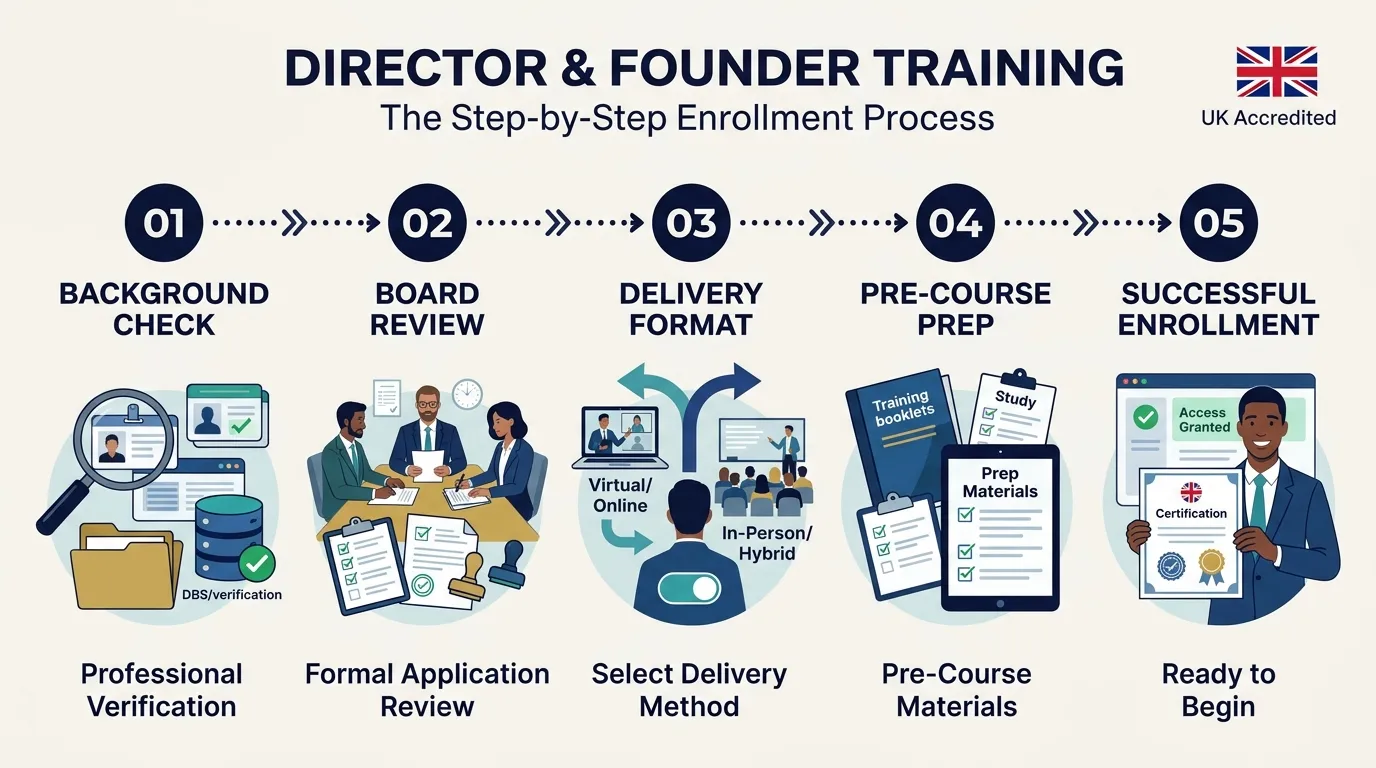
The Institute For Oil & Gas Training maintains clear candidate entry criteria to preserve high classroom interaction quality:
Participant Eligibility Criteria
This program is structured specifically for energy sector professionals, including:
Petroleum Financial Controllers, Joint Venture Accountants, and Asset Auditors
Upstream Project Managers, Drilling Engineers, and Asset Development Leads
Joint Venture Managers, Commercial Analysts, and Enterprise Legal Counsel
Corporate HR leads seeking targeted technical upskilling for finance and engineering departments
Step-by-Step Registration Workflow
Application Submission: Submit candidate professional details, current corporate role, and selected training format via the official enrollment portal.
Prerequisite Assessment: The admissions team reviews candidate experience to confirm foundational knowledge of general accounting or petroleum project operations.
Format Confirmation & Scheduling: Select preferred open-enrollment dates or schedule a customized enterprise workshop for corporate teams.
Pre-Course Material Access: Enrolled participants receive preparatory technical documentation, JOA terminology guides, and baseline financial modeling templates.
Course Execution & Certification: Complete all instructional hours, practical lab exercises, capstone assessments, and earn professional certification from the Institute For Oil & Gas Training.
To secure seat availability for upcoming training sessions or register your enterprise team, professionals are encouraged to submit their candidate documentation directly to enroll in this program.
Frequently Asked Questions
What does Oil & Gas Petroleum Budgeting & Cost Control training cover?
Oil & Gas Petroleum Budgeting & Cost Control training delivered by Institute For Oil & Gas Training covers joint venture accounting standards, Work Programme and Budget (WP&B) formulation, Authorization for Expenditure (AFE) management, and cash call mechanics. Participants learn practical techniques for real-time cost tracking, variance analysis, partner voting compliance, and handling supplementary AFE procedures across upstream energy assets.
Why is cost control critical in upstream petroleum joint operating agreements?
In petroleum operations governed by Joint Operating Agreements (JOAs), strict cost control prevents unapproved capital expenditure overruns, working capital shortfalls, and joint venture billing disputes. Professional instruction from Institute For Oil & Gas Training ensures asset managers and financial controllers establish clear authorization limits and accurate cash call forecasting to protect joint venture liquidity and operational alignment.
Who should enrol in an Oil & Gas Petroleum Budgeting & Cost Control course?
This course is designed for petroleum financial controllers, joint venture accountants, project managers, drilling engineers, commercial analysts, and asset auditors working within exploration and production organizations. Corporate HR teams also utilize Institute For Oil & Gas Training to upskill multidisciplinary finance and engineering professionals who oversee joint operating budgets and enterprise expenditure governance.
How do non-consent and sole risk provisions affect petroleum project budgets?
Non-consent and sole risk provisions allow specific joint venture partners to opt out of proposed capital operations while permitting remaining partners to proceed under adjusted financial terms. Oil & Gas Petroleum Budgeting & Cost Control modules at Institute For Oil & Gas Training teach professionals how to calculate penalty recovery factors, track exclusive project costs, and adjust joint interest billings accurately when partner participation changes.
What is the difference between an AFE and a Work Programme and Budget (WP&B)?
A Work Programme and Budget (WP&B) sets the annual macro-level operational schedule and financial caps for an entire asset block as approved by the joint operating committee. An Authorization for Expenditure (AFE) is a micro-level operational commitment document that authorizes funding for specific individual activities, such as drilling a single well, under the budget framework taught by Institute For Oil & Gas Training.
Related training courses
Cost Control & Variance Analysis for Budget Deviations Training Course
- Specialisation
- Oil & Gas Petroleum Budgeting & Cost Control
- Duration
- 5 days · 15 CPD hours
Cost Control for Field Development Projects: Overrun Prevention Training Course
- Specialisation
- Oil & Gas Petroleum Budgeting & Cost Control
- Duration
- 5 days · 15 CPD hours
Cash Calls, AFEs & Work Program/Budget Control: Preparation Training Course
- Specialisation
- Oil & Gas Petroleum Budgeting & Cost Control
- Duration
- 5 days · 15 CPD hours
More articles

Budget Planning and Cost Optimisation Training by Institute For Oil & Gas Training
Master petroleum operating budgets, CAPEX, and OPEX management through the professional training course offered by the Institute For Oil & Gas Training.
Read article →
How to Identify Cost Saving Opportunities and Optimise Petroleum Operating Budgets
Discover proven methods to identify cost-saving opportunities, optimize OPEX and CAPEX, and improve financial forecasting in petroleum operations.
Read article →
Why Budget Planning and Cost Optimisation Matter in Oil and Gas Operations
Discover why budget planning and cost optimisation matter in oil and gas operations. Learn how structured training improves financial control and OPEX.
Read article →