

Financial planning in the petroleum sector requires precise capital control, volatile commodity tracking, and continuous resource allocation across exploration and operational assets. Traditional annual budgeting frameworks frequently fail to adapt to rapid market movements, operational delays, and price swings. The Budgeting & Forecasting: Rolling & Zero-Based Techniques Training Course provided by the Institute For Oil & Gas Training resolves these structural inefficiencies by equipping finance professionals, departmental heads, and corporate planners with advanced forecasting methodologies. Understanding Why Rolling Forecasts and Zero Based Budgeting Matter in Petroleum Finance provides the foundation for why modern energy firms are abandoning static financial models in favour of dynamic, driver-based planning.
What is the course and what operational problems does it solve?
The Budgeting & Forecasting: Rolling & Zero-Based Techniques Training Course addresses structural financial planning inefficiencies, static budget rigidity, and poor cost-driver tracking in energy firms by establishing continuous forecasting cycles, zero-based cost structures, and precise variance evaluation methodologies for petroleum operations.
Petroleum operations encounter significant cost management challenges due to fluctuating crude values, regulatory shifts, and complex field operational timelines. Traditional annual static budgets lock capital into outdated assumptions, preventing rapid reallocation when field conditions change. This rigid setup creates misalignment between capital expenditures, operating expenses, and market realities.
Departmental managers frequently struggle with line-item allocation, inflating baseline budgets to protect future capital access. This incremental budgeting practice conceals operational waste, masks cost drivers, and distorts the true profitability of individual assets. Without active reforecast triggers, project teams cannot adjust project spending to reflect technical changes in field development or unexpected plant downtime.
The Budgeting & Forecasting: Rolling & Zero-Based Techniques Training Course addresses these challenges by introducing modern financial control frameworks directly tailored to industrial operations. Participants evaluate cost structures from a clean sheet, ensuring every expenditure correlates to measurable operational activity. By implementing driver based planning, financial teams align revenue and cost projections with physical production metrics, rig days, and maintenance cycles.
Through structured training, the Institute For Oil & Gas Training enables organisations to convert passive accounting routines into active decision support systems. Professionals acquire skills to build continuous rolling forecast cycle models that project performance beyond standard fiscal boundaries. This methodology removes fiscal-end planning rushes and establishes steady visibility over liquidity, capital commitments, and cash flow requirements.
Why is this course curriculum structured in this specific sequence?
The curriculum follows a progressive pedagogical sequence moving from foundational cost-driver identification to zero-based rebuilds, rolling forecast implementations, and integrated scenario analysis, ensuring delegates master individual mechanics before constructing enterprise-wide financial planning models.
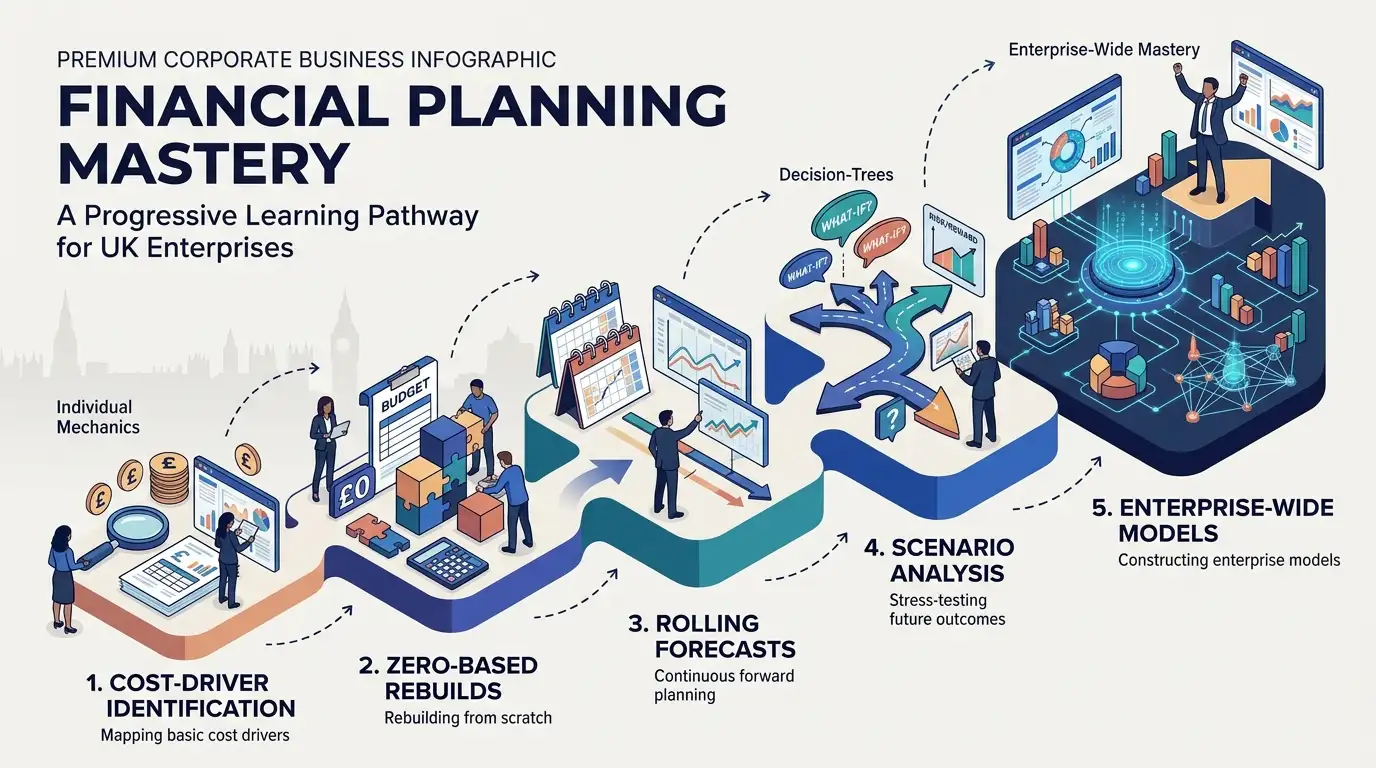
Curriculum structure directly determines how effectively professionals translate classroom instruction into workplace execution. This training program follows a rigorous progression designed to build technical proficiency step by step. Delegates begin with cost analysis, move through zero-based rebuilding, establish rolling forecast frameworks, and conclude with enterprise integration.
Understanding How to Compare Rolling Forecasting and Zero Based Budgeting Techniques in Oil and Gas allows finance managers to select the correct analytical approach for specific operating assets or corporate units. Initial modules focus on identifying key cost drivers across upstream, midstream, and downstream operations. Participants isolate variable, fixed, and semi-variable expenses to establish clear relationships between physical activities and financial outcomes.
Once cost mechanics are defined, the curriculum introduces zero based budgeting procedures. Delegates practice constructing operational budgets from a zero baseline, evaluating activity based budgeting methods that require justification for every proposed expenditure. This phase eliminates historical budget carry-overs and forces systematic cost optimization.
The subsequent phase builds rolling forecast capabilities. Participants configure continuous 12-to-24-month horizon planning systems that update quarterly or monthly based on market movements and operational progress. Delegates establish reforecast triggers and latest estimate and outlook practices to maintain real-time financial tracking across project lifecycles.
The final stage links these techniques into enterprise financial models. The Institute For Oil & Gas Training structures this phase around planning tool integration, risk mitigation, and management reporting. Participants combine zero-based operational baselines with dynamic rolling forecasts to produce robust financial models capable of handling commodity price volatility and capital shifts.
What specific modules and technical skills will participants master?
Participants master eight specialized modules covering zero-based rebuilding, activity-based cost derivation, rolling forecast model construction, driver-based planning, forecast accuracy tracking, reforecast trigger design, latest estimate calculations, and planning tool integration.
The training course delivers specific, practical capabilities required for modern petroleum corporate finance. Each module focuses on concrete analytical deliverables, replacing generic financial concepts with industry-tested calculations and technical templates.
Core Training Modules and Technical Content
Module 1: Foundations of Dynamic Financial Planning
Deconstructs traditional budget limitations in capital-intensive industries. Defines the operational requirements for transitioning from static annual budgets to flexible planning systems tailored to energy market volatility.
Module 2: Zero Based Budgeting (ZBB) Implementation Mechanics
Establishes decision units, decision packages, and baseline cost evaluations. Delegates build zero-based templates, justify resource requests against operational objectives, and remove legacy inflation from departmental spend plans.
Module 3: Activity Based Budgeting and Cost Driver Identification
Links operational workload measures directly to financial allocations. Teaches participants to isolate primary cost drivers—such as drilling hours, pipeline throughput, and plant maintenance cycles—to establish clear unit-cost metrics.
Module 4: Designing and Implementing the Rolling Forecast Cycle
Builds continuous planning structures across 4-quarter to 8-quarter horizons. Details how to roll over financial periods, update planning assumptions, and manage overlapping fiscal reporting windows without interrupting business operations.
Module 5: Driver Based Planning and Latest Estimate & Outlook
Integrates operational volume, price realisations, and yield drivers into dynamic financial models. Focuses on generating reliable latest estimate and outlook projections for executive leadership and board reporting.
Module 6: Reforecast Triggers and Variance Management
Establishes quantitative thresholds that compel budget updates outside standard schedules. Teaches precise forecast accuracy tracking using mean absolute percentage error (MAPE) and root mean square error (RMSE) calculations.
Module 7: Contingency and Management Reserve Allocation
Defines formal procedures for establishing, holding, and releasing contingency funds. Ensures contingency and management reserve accounts are governed by clear risk metrics rather than informal departmental buffers.
Module 8: Enterprise Planning Tool Integration and Governance
Examines how to embed zero-based and rolling forecast workflows into enterprise resource planning (ERP) platforms and dedicated planning software. Establishes data governance, audit trails, and reporting structures.
How is the training course delivered across different learning formats?
Training is delivered via interactive instructor-led workshops, live virtual classrooms, hybrid models, and customized on-site corporate programs, utilizing hands-on financial modeling, case studies, and practical exercises.
The Institute For Oil & Gas Training offers versatile training delivery formats engineered to support individual participants as well as enterprise-wide corporate training initiatives. All formats maintain strict academic standards and use practical, real-world analytical tasks.
Delivery Format | Duration | Primary Audience | Key Features & Learning Tools |
In-Person Workshop | 5 Intensive Days | Finance Teams & Asset Managers | Classroom instruction, live modeling labs, peer collaboration, instructor feedback. |
Live Virtual Classroom | 2 Weeks (Part-Time) | Remote & International Delegates | Interactive video lectures, shared digital spreadsheets, real-time breakout rooms. |
Corporate On-Site | Customizable | Enterprise Units & Joint Ventures | Tailored to corporate chart of accounts, proprietary asset models, and internal workflows. |
Hybrid Model | Self-Paced + Live | Multi-Regional Operations | Pre-course technical modules combined with intensive live synthesis and application sessions. |
In-person workshops provide an immersive environment featuring dedicated computer lab sessions. Delegates work through practical dataset exercises, constructing operational financial models under the direct guidance of senior petroleum financial instructors.
Live virtual delivery uses real-time collaboration platforms to deliver identical learning outcomes for distributed workforces. Remote delegates interact via shared screen sessions, participate in break-out case analysis, and receive direct feedback on their financial modeling logic.
Custom corporate on-site programs adapt the standard syllabus to align with an organization's specific planning systems and reporting calendars. Corporate cohorts solve internal planning bottlenecks using actual departmental data, standardizing reporting practices across business units.
Every format incorporates rigorous assessment methods to confirm practical skill application. Participants complete individual financial modeling tasks, sit mid-program technical tests, and complete a final capstone assignment requiring the design of a complete zero-based rolling forecast framework for a simulated petroleum enterprise.
What measurable results and performance gains can organizations expect?
Organisations achieve reduced budget preparation times, eliminated baseline cost inflation, improved forecast accuracy, faster capital reallocation response, and enhanced financial alignment between departmental managers and executive leadership.
Implementing modern budgeting and forecasting techniques yields immediate operational and financial improvements. Organizations that transition away from static annual budgets experience tighter cost controls and improved capital deployment efficiency.
Key Performance Improvement Areas
Enhanced Forecast Accuracy Tracking
Corporate finance teams standardise variance tracking methodologies, consistently maintaining forecast variance within tight operational tolerances. Early identification of variance trends allows leadership to correct course before fiscal year-end.
Elimination of Baseline Budget Inflation
Applying zero based budgeting forces department heads to justify all operating costs against current business activity. This eliminates legacy baseline carry-overs, reducing unnecessary operating expenses across administrative and technical units.
Agile Resource Allocation via Reforecast Triggers
Clear reforecast triggers enable finance teams to adjust capital allocation rapidly when market prices fluctuate or production targets shift. Capital is redirected toward high-performing assets without waiting for the next annual budget cycle.
Streamlined Enterprise Planning Cycles
Shifting to a continuous rolling forecast cycle eliminates month-long annual budgeting bottlenecks. Planning becomes a routine quarterly update, lowering administrative workloads for HR teams, operational managers, and finance personnel.
How does corporate application strengthen departmental leadership pipelines?
Corporate application equips HR teams, functional leaders, and department heads with financial discipline, creating structured leadership pipelines where managers effectively control operational budgets and align spending with strategic corporate goals.
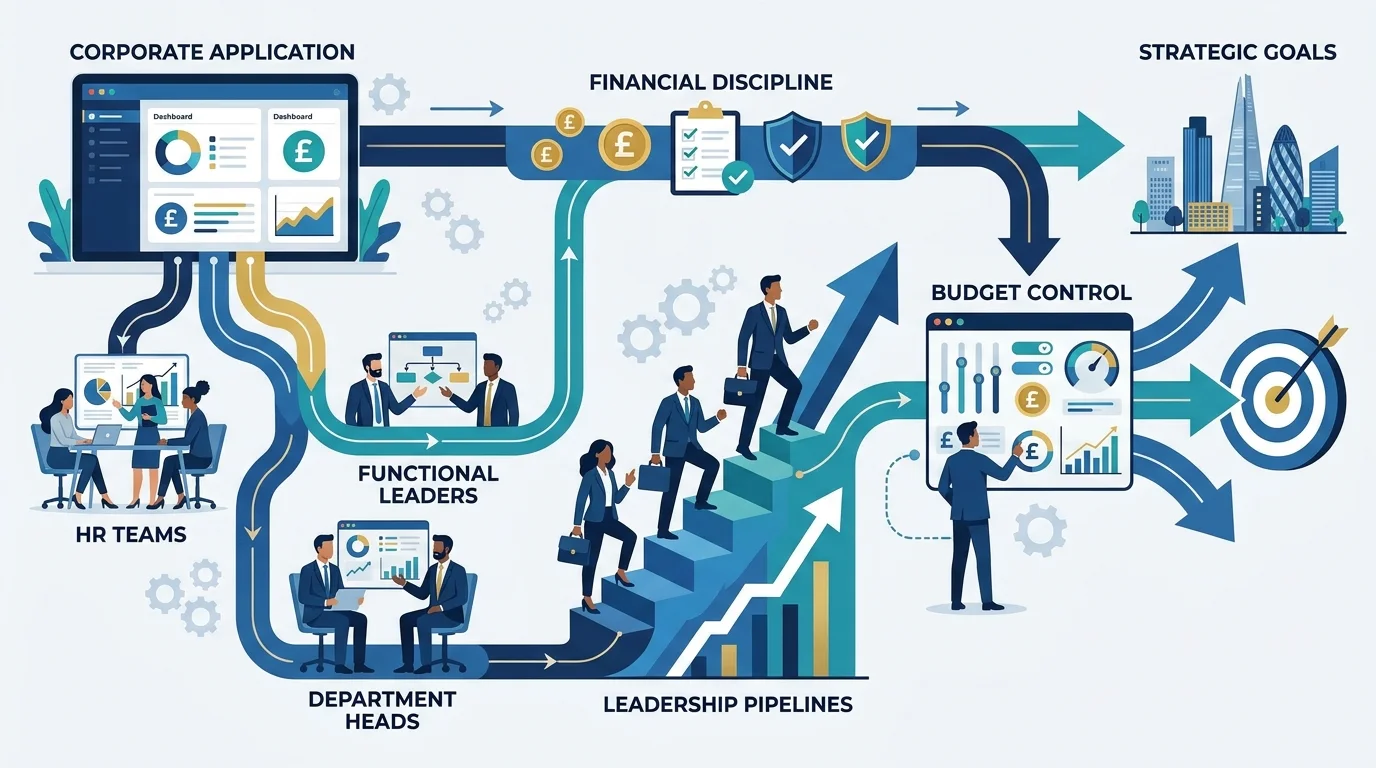
For HR teams and corporate learning directors, building financial capabilities across middle and senior management is essential for long-term succession planning. Operational experts often advance into executive roles without formal training in financial management, creating risk in resource allocation and cost control.
The Institute For Oil & Gas Training designs courses to bridge this gap between technical field management and enterprise financial administration. Department heads gain an understanding of how operational decisions directly impact corporate financial statements, capital structures, and cash flow projections.
When functional leaders master activity based budgeting, they communicate more effectively with executive management. They defend resource requests using objective cost drivers, clear activity metrics, and detailed operational justifications rather than subjective estimates.
Integrating this training program into corporate career development frameworks strengthens an organization's leadership pipeline. Managers develop the financial acumen required to oversee large-scale capital projects, manage cross-functional asset teams, and execute strategic organizational change.
How does the enrollment process work and what are the entry requirements?
Enrollment requires a formal application evaluating candidate professional background, online registration confirmation, prerequisite confirmation in basic financial spreadsheets, and program selection prior to cohort access.
The Institute For Oil & Gas Training maintains a structured enrollment process to ensure high-quality peer interaction and technical alignment across delegate cohorts. The admissions framework evaluates candidate experience to verify prerequisites are met.
Entry Requirements and Prerequisites
Professional Experience: A minimum of two years working in corporate finance, operational accounting, departmental management, project planning, or commercial management within industrial or energy sectors.
Technical Skills: Practical working knowledge of standard financial spreadsheets, basic budgeting concepts, and financial reporting terminology.
Corporate Sponsorship: Self-sponsored professionals and corporate-nominated delegates are both evaluated under identical academic entry criteria.
Enrollment Step-by-Step Path
Application Submission: Candidates or corporate HR teams submit an application form detailing candidate roles, educational background, and learning objectives.
Profile Review: The admissions committee reviews candidate credentials within 48 hours to confirm program suitability and prerequisite compliance.
Format and Schedule Selection: Approved candidates select their preferred delivery format (in-person workshop, live virtual, or corporate custom) and choose an upcoming cohort date.
Registration Confirmation: Final confirmation documents, preliminary reading materials, and setup instructions for financial modeling tools are distributed upon enrollment completion.
Program Completion Path: Delegates attend all instructional modules, complete practical simulations, pass the final technical assessment, and earn their professional certification credential.
To secure your place in an upcoming cohort or register your corporate team, enroll in this program.
Frequently Asked Questions
What is Oil & Gas Petroleum Budgeting & Cost Control?
Oil & Gas Petroleum Budgeting & Cost Control is a specialized financial management discipline that aligns operating expenses, capital deployment, and field activities with energy market conditions. Provided by the Institute For Oil & Gas Training, this training equips professionals to establish zero-based cost structures, track variance metrics, and eliminate baseline budget inflation across upstream, midstream, and downstream assets.
Who should attend an Oil & Gas Petroleum Budgeting & Cost Control course?
This course is designed for finance managers, asset accountants, project planners, and departmental heads working within the energy sector. HR teams frequently enroll technical managers into the Institute For Oil & Gas Training program to develop executive financial discipline and driver-based planning capabilities required for senior leadership roles.
How does zero-based budgeting work in petroleum operations?
Zero-based budgeting requires managers to justify every operating expense from a clean baseline rather than carrying forward historical spending totals. The Institute For Oil & Gas Training teaches delegates how to build activity-based decision packages that directly link proposed expenditures to measurable production metrics, rig schedules, and maintenance cycles.
Why are rolling forecasts replacing annual static budgets in energy firms?
Annual static budgets struggle to adapt to volatile commodity prices, changing regulatory demands, and field operational delays. Through Oil & Gas Petroleum Budgeting & Cost Control programs at the Institute For Oil & Gas Training, corporate planners master continuous rolling forecast cycles that update financial projections monthly or quarterly to maintain precise cash flow visibility.
What measurable outcomes does cost control training deliver to organizations?
Implementing modern cost control methodologies reduces annual budget preparation cycles by up to 50% and eliminates redundant baseline expenditures across operating units. Organizations utilizing training from the Institute For Oil & Gas Training achieve tighter forecast accuracy tracking, maintaining variance levels within target limits despite market fluctuations.
Related training courses
Budgeting & Forecasting: Rolling & Zero-Based Techniques Training Course
- Specialisation
- Oil & Gas Petroleum Budgeting & Cost Control
- Duration
- 5 days · 15 CPD hours
Cost Control for Field Development Projects: Overrun Prevention Training Course
- Specialisation
- Oil & Gas Petroleum Budgeting & Cost Control
- Duration
- 5 days · 15 CPD hours
Cash Calls, AFEs & Work Program/Budget Control: Preparation Training Course
- Specialisation
- Oil & Gas Petroleum Budgeting & Cost Control
- Duration
- 5 days · 15 CPD hours
More articles

Cost Control and Variance Analysis for Budget Deviations Training by Institute For Oil & Gas Training
Master budget deviations with the Cost Control & Variance Analysis Training Course by Institute For Oil & Gas Training. Learn financial variance techniques.
Read article →
How to Identify and Analyse Budget Deviations Through Cost Variance Analysis
Learn how to analyse budget deviations with cost variance analysis. Evaluate tracking methods, variances, and training for financial control.
Read article →
Why Cost Variance Analysis Matters in Oil and Gas Budget Control
Learn how cost variance analysis prevents budget overruns in oil and gas projects. Discover key frameworks, execution steps, and measurable ROI.
Read article →