

Tax management within upstream, midstream, and downstream petroleum operations requires absolute alignment between fiscal strategy and regulatory compliance. Oil and gas ventures operate across complex fiscal regimes characterized by production sharing contracts, joint operating agreements, cross-border transactions, and stringent transfer pricing regulations. Failure to maintain audit readiness leads to severe financial exposure, statutory penalties, and reputational disruption. Understanding Why Tax Audit Readiness Matters for Oil and Gas Companies serves as the initial foundation for operational compliance. Moving from foundational risk recognition to actionable operational readiness requires a structured, specification-driven approach to corporate training. The Institute For Oil & Gas Training delivers specialized technical instruction designed to transform complex tax compliance requirements into repeatable, audit-ready operational workflows for energy sector professionals and corporate finance teams.
What is the Tax Planning & Compliance for Audit Readiness Training Course and what workplace problem does it solve?
The Tax Planning & Compliance for Audit Readiness Training Course is an intensive corporate learning program that solves cross-border tax compliance gaps, inadequate documentation practices, and high audit vulnerability in complex petroleum joint ventures and international operations.
Oil and gas organizations operate within volatile fiscal environments where regulatory authorities scrutinize capital expenditures, ring-fencing provisions, decommissioning funds, and intercompany charges. A primary operational weakness in energy finance departments is the disconnect between strategic tax planning and day-to-day accounting documentation. When tax teams operate in isolation from operational and legal departments, corporate records fail to substantiate commercial substance during revenue authority audits.
The Institute For Oil & Gas Training structured this program to systematically bridge this gap. Corporate finance professionals, tax managers, and legal advisors frequently struggle with applying general anti-avoidance rules (GAAR) to legitimate tax planning structures. Without a robust internal tax governance and control model, energy enterprises risk substantial back-taxes, interest charges, and litigation costs.
This course addresses technical execution gaps by converting regulatory specifications into standardized corporate workflows. Participants analyze fiscal stability mechanisms, joint venture accounting practices, and multi-jurisdictional tax risks. By embedding rigorous compliance protocols directly into financial operations, organizations ensure their accounting records meet statutory standards before regulatory notices are issued.
Why is this petroleum tax compliance course structured in this learning sequence?
This course uses a tiered learning progression, moving from foundational fiscal architecture to operational risk controls, tax audit preparation, and dispute resolution, ensuring systematic skill progression and immediate practical workplace application.
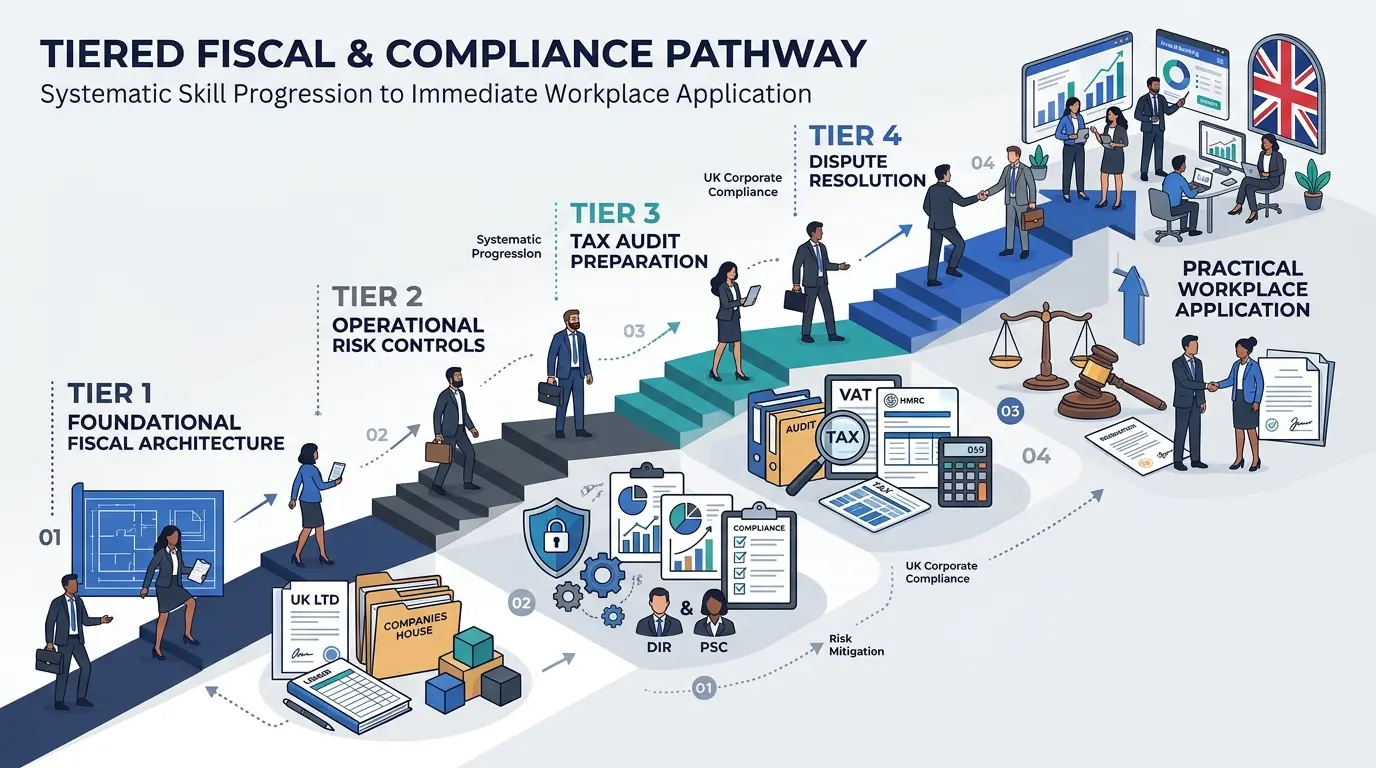
Petroleum financial management demands a logical transition from macro-level legal frameworks to micro-level documentation practices. Understanding How to Evaluate Tax Audit Risks and Strengthen Compliance Documentation in Petroleum Operations allows decision-makers to evaluate their organizational posture before committing to formal workforce upskilling. The syllabus engineered by the Institute For Oil & Gas Training mirrors the lifecycle of oil and gas asset management.
Initial modules focus on structural design, including holding structure and jurisdiction selection, alongside the practical application of tax stability clauses in production sharing contracts. This structural knowledge is critical because early-stage structural decisions set the boundary conditions for all downstream tax compliance obligations.
Subsequent modules transition into internal corporate control mechanisms. Participants learn how to construct a resilient tax risk framework, distinguishing clearly between legitimate tax planning versus avoidance in light of evolving international general anti-avoidance rules.
The final segment of the program addresses active defense mechanisms, focusing on tax audit preparation, the management of formal tax queries, and the administrative step-by-step procedures required for assessment appeals and objections. This sequential architecture ensures that participants build foundational theoretical knowledge before applying complex procedural skills to real-world corporate audit scenarios.
What specific technical skills and curriculum modules will participants learn?
Participants master four core technical modules covering international petroleum fiscal structures, anti-avoidance compliance, audit dossier compilation, and tax dispute management, delivering comprehensive technical proficiency for complex energy sectors.
Module 1: International Fiscal Architecture and Petroleum Tax Structures
Participants analyze the core legal and financial frameworks governing international oil and gas investments. This module delivers comprehensive instruction on holding structure and jurisdiction selection, evaluating cross-border dividend flows, interest deductions, and capital gains exposures.
The Institute For Oil & Gas Training embeds detailed practical exercises on treaty shopping parameters and ring-fencing provisions across distinct license blocks to prevent unauthorized cost leakage between active exploration and production assets.
Module 2: Tax Governance, Control, and Anti-Avoidance Frameworks
This module establishes internal corporate protocols required to maintain ongoing statutory compliance. Key instruction centers on constructing an enterprise-wide tax governance and control framework capable of monitoring cross-border transactions and intercompany services.
Professionals practice evaluating corporate structures against modern substance requirements, ensuring that all corporate tax positions reflect underlying economic realities and withstand regulatory scrutiny.
Module 3: Operational Accounting, Cost Recovery, and Transfer Pricing
Focusing on the operational engine of energy finance, this module covers the mechanics of petroleum cost recovery, joint venture billing, and intercompany pricing methodologies. Participants learn to document technical management fees, equipment leasing rates, and shared service allocations according to arm's-length standards.
Special emphasis is placed on preparing robust transfer pricing master files and local files that satisfy national tax administration mandates while protecting joint venture partner entitlements.
Module 4: Audit Readiness, Administrative Appeals, and Dispute Resolution
The final module equips teams with practical techniques to prepare for and execute tax audit defenses. Instruction covers the entire audit lifecycle, from preliminary information requests to field examinations and formal assessments.
Through simulated audit conditions delivered by the Institute For Oil & Gas Training, participants learn how to organize supporting documentation, control information disclosures, and draft legally precise administrative objections to overturn erroneous tax assessments.
How is the training program delivered, formatted, and assessed?
The course offers flexible delivery via intensive live workshops, distance learning, or custom corporate onsite programs, utilizing real-world case simulations, case studies, and practical assessments for verifiable skill acquisition.
Delivery Attribute | Specification Details |
Available Formats | • 5-Day Classroom Workshop (Instructor-Led) • 10-Week Live Virtual Distance Learning • Custom Onsite Corporate Program |
Duration Options | • 40 total contact hours of technical instruction • Structured modular delivery with practical work assignments |
Target Class Size | Limited to 15–20 participants per cohort to ensure direct instructor interaction |
Assessment Methods | • Baseline pre-course technical evaluation • Practical case study assignments and model calculations • Final simulated audit defense panel examination |
Instructional Materials | Full access to standard tax risk templates, compliance checklists, and reference manuals |
Delivery formats cater to diverse corporate scheduling demands without compromising academic rigor. The five-day intensive workshop format provides an immersive environment away from daily operational distractions, allowing finance and legal leaders to focus entirely on advanced technical compliance.
The live virtual distance learning option spans ten weeks, delivering weekly four-hour instruction blocks that allow working professionals to immediately apply classroom concepts to ongoing workplace projects. For enterprise clients, custom onsite training is tailored directly to the client's specific production sharing contracts, local operating jurisdictions, and existing accounting software stack.
What measurable corporate results and workplace outcomes can organizations expect?
Organizations gain immediate operational efficiency, standardized compliance workflows, reduced audit adjustments, enhanced tax risk control, and improved multi-departmental coordination between finance, tax, and legal business units.
Enrolling personnel in this program yields direct, quantifiable benefits for corporate finance departments, tax functions, and enterprise risk management teams. Upon completing the curriculum developed by the Institute For Oil & Gas Training, enterprise clients observe a marked reduction in time spent responding to routine tax authority queries.
By standardizing tax audit preparation procedures, corporate teams assemble comprehensive audit dossiers within days rather than months, mitigating the administrative burden associated with unexpected field audits.
From an operational governance perspective, organizations establish clearer boundaries between legitimate aggressive tax management and high-risk tax structures. Incorporating structured general anti-avoidance rule checks into capital allocation decisions minimizes the likelihood of retroactive tax assessments, penalties, and interest charges.
Furthermore, internal communication between legal departments drafting petroleum contracts and finance teams managing tax ledgers becomes highly synchronized. This inter-departmental alignment ensures that tax stability clauses are actively monitored and leveraged whenever statutory changes threaten asset economics.
How does enrollment work, and what are the entry requirements?
Enrollment involves a formal candidate profile review, prerequisite verification in corporate finance or oil and gas law, team allocation, and pre-course technical preparation via an online registration platform.
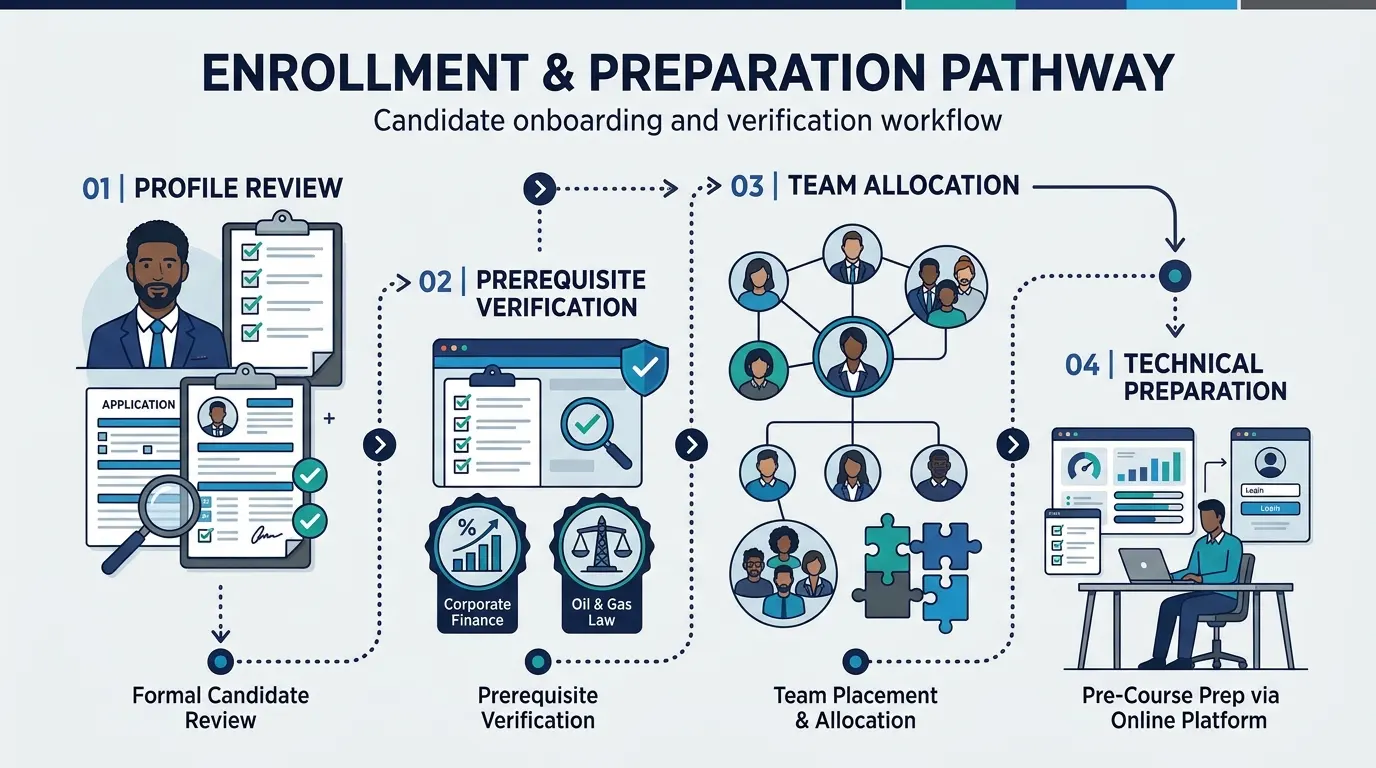
To maintain high instructional quality and meaningful peer exchange, admission to the Tax Planning & Compliance for Audit Readiness Training Course is subject to professional eligibility criteria.
Candidate Prerequisites
Applicants must possess a minimum of three years of professional experience in one of the following corporate roles:
Corporate Tax Manager, Tax Advisor, or Director of Tax Compliance
Finance Director, Chief Accountant, or Joint Venture Financial Controller
Legal Counsel specializing in oil and gas contracts, concessions, or corporate governance
Commercial Manager, Business Development Lead, or Government Relations Specialist
Application and Admission Steps
Submission of Application: Candidates or corporate HR representatives submit candidate profiles directly through the Institute For Oil & Gas Training portal.
Profile Evaluation: Course directors review applicant credentials to confirm requisite baseline knowledge in financial accounting or corporate law.
Pre-Course Preparation: Approved participants receive a technical diagnostic package two weeks prior to start. This includes background reading materials on petroleum fiscal systems and current global tax updates.
Program Commencement: Participants attend scheduled interactive workshops, complete assigned practical modules, and participate in final case study defenses.
Certification: Successful candidates who complete all module assessments receive a verified Certificate of Completion in Tax Planning and Audit Readiness for Petroleum Operations.
Organizations seeking to upskill entire finance departments or multi-disciplinary tax teams can arrange customized corporate group intakes. Group enrollments include tailored pre-course consultations to align practical case studies directly with the operating jurisdictions and asset portfolios of the sponsoring energy firm.
To secure seat allocations for upcoming public cohorts or to initiate a private corporate group intake, teams should submit their applications early to complete all pre-course diagnostic assessments. Professionals ready to enhance their corporate tax defense capabilities and protect their energy assets against regulatory exposure are invited to apply for course access today.
Frequently Asked Questions
What is included in an oil and gas petroleum taxation training course?
An oil and gas petroleum taxation course covers fiscal regimes, production sharing contracts, joint venture accounting, and international transfer pricing standards. Training delivered by the Institute For Oil & Gas Training provides finance and legal professionals with practical frameworks for managing tax stability clauses, ring-fencing compliance, and general anti-avoidance rules. Participants learn to construct audit-ready documentation and manage administrative tax appeals across petroleum operations.
How does petroleum taxation differ from standard corporate taxation?
Petroleum taxation incorporates specialized fiscal mechanisms such as resource rent taxes, royalty structures, cost recovery limits, and field-specific ring-fencing provisions. Unlike standard corporate tax models, upstream oil and gas operations require unique accounting treatments for exploration expenditure, field development, and decommissioning liabilities. The Institute For Oil & Gas Training equips teams to navigate these multi-jurisdictional tax rules while maintaining statutory compliance in complex joint operations.
Why is tax audit readiness critical for oil and gas companies?
Tax audit readiness prevents substantial financial exposure, statutory interest penalties, and prolonged legal disputes resulting from revenue authority examinations. Maintaining defense-ready tax dossiers ensures that intercompany service charges, equipment leasing rates, and cost oil allocations meet transfer pricing standards. Through structured programs at the Institute For Oil & Gas Training, organizations establish robust internal tax governance controls that streamline audit responses and protect asset profitability.
Who should undertake training in petroleum taxation and compliance?
This training is designed for corporate tax managers, petroleum financial controllers, energy sector legal advisors, and joint venture accounting professionals. It also supports corporate strategy teams and government relations managers who evaluate cross-border holding structures and fiscal risks in petroleum assets. Courses at the Institute For Oil & Gas Training help multidisciplinary teams align operational decision-making with modern tax risk management frameworks.
How do oil and gas firms handle transfer pricing and cost recovery disputes?
Energy companies mitigate transfer pricing and cost recovery disputes by maintaining contemporaneous documentation that substantiates the commercial substance of intercompany transactions. Detailed master files, local files, and benchmark analyses are used to justify shared service allocations and technical management charges. The Institute For Oil & Gas Training provides practical instruction on drafting formal assessment objections, conducting settlement negotiations, and appealing adverse tax decisions within petroleum jurisdictions.
Related training courses
Magnetic Particle Testing (MT) Training Course
- Specialisation
- Oil & Gas Inspection and Non-Destructive Testing
- Duration
- 5 days · 15 CPD hours
Liquid Penetrant Testing (PT) Training Course
- Specialisation
- Oil & Gas Inspection and Non-Destructive Testing
- Duration
- 5 days · 15 CPD hours
Corrosion Control Painting & Coating Training Course
- Specialisation
- Oil & Gas Corrosion Management and Control
- Duration
- 5 days · 15 CPD hours
More articles

Data Governance and Master Data Ownership and Standards Training by Institute For Oil & Gas Training
Evaluate the Data Governance & Master Data Ownership & Standards Training Course syllabus, delivery, outcomes, and enrollment requirements.
Read article →
How to Define Data Ownership and Master Data Standards for Petroleum Operations
Learn how petroleum operations define data ownership, establish master data management standards, and improve data governance frameworks.
Read article →
Why Data Governance and Master Data Standards Matter in Oil and Gas
Learn why data governance and master data standards transform petroleum operations, resolve enterprise risk, and drive ROI across global energy assets.
Read article →