

Poor data management creates operational friction, regulatory exposure, and costly decision errors across petroleum exploration, production, and refining assets. The Institute For Oil & Gas Training delivers this course to equip technical, operational, and administrative teams with precise methodologies to establish single sources of truth, enforce ownership boundaries, and automate data quality validation. Organizations transitioning from fragmented legacy systems to unified digital architectures require structured oversight to prevent costly inaccuracies across subsurface, facilities, and supply chain domains.
Understanding the foundational operational risks associated with poor data stewardship is necessary before implementing comprehensive corporate frameworks. Executives and departmental heads often evaluate Why Data Governance and Master Data Standards Matter in Oil and Gas when identifying systemic inefficiencies, mapping compliance gaps, and establishing business cases for organizational data maturity programs.
What is the Data Governance & Master Data: Ownership & Standards Training Course and what problem does it solve?
The Data Governance & Master Data: Ownership & Standards Training Course is an intensive corporate program designed to eliminate data silos, inconsistent asset definitions, and unclear operational accountability by training professionals to build robust governance frameworks and standardized master data architectures.
Petroleum enterprises routinely generate petabytes of heterogeneous information across drilling, reservoir engineering, refining operations, and enterprise resource planning systems. Without rigorous structural alignment, variations in unit measures, equipment tagging formats, and vendor codes create severe administrative friction and safety risks. Disconnected data repositories force technical teams to waste valuable engineering hours manually reconciling conflicting reports rather than executing operational optimizations.
The Institute For Oil & Gas Training designed this curriculum to solve the technical and organizational chaos caused by unmanaged master data. Upstream, midstream, and downstream operations depend on precise synchronization between field operations and corporate decision-making units. When maintenance engineers, procurement specialists, and finance teams utilize disparate asset definitions, procurement delays increase and safety compliance reporting becomes unreliable.
By participating in this structured program, corporate teams learn to transition from reactive data firefighting to proactive data stewardship. The curriculum addresses the root causes of data decay by establishing clear stewardship mandates, standardized metadata definitions, and automated data quality controls. Organizations enrolling their workforce ensure that technical datasets directly support operational safety, environmental reporting, and fiscal precision.
Why is this course structured around data governance and master data management principles?
This course uses a logical progression from foundational governance principles to execution strategies, ensuring participants master stewardship roles, quality dimensions, and reference standards before attempting enterprise-wide master data management implementation.
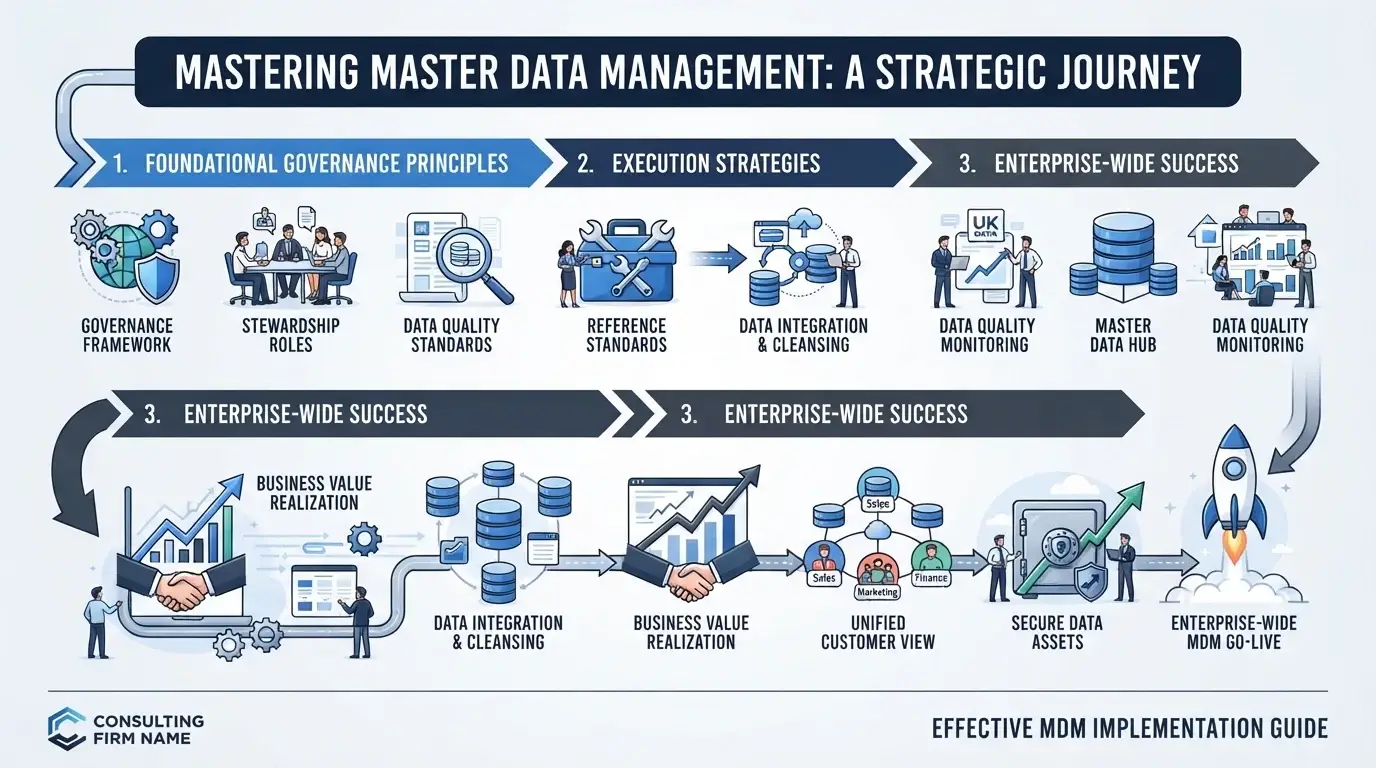
The sequence of learning modules reflects the actual lifecycle of enterprise data transformation initiatives within complex energy environments. Attempting to deploy master data technologies without established ownership boundaries consistently results in project failure and wasted capital investments. The Institute For Oil & Gas Training structures the learning path so that organizational strategy and policy design precede software configuration and technical architecture discussions.
During initial evaluations, human resource directors and operations managers must examine How to Define Data Ownership and Master Data Standards for Petroleum Operations to assess organizational readiness and align technical training objectives with corporate digital strategy goals.
The curriculum deliberately pairs governance policies with practical technical standards to bridge the gap between business leadership and information technology units. Participants analyze real-world field scenarios to understand how policy definitions directly influence database schemes, sensor integration feeds, and joint-venture financial reporting structures. This dual focus ensures that theoretical policies translate directly into repeatable daily workflows.
What specific skills and modules are included in the curriculum?
Participants develop practical competencies in constructing a data governance framework, defining data ownership and stewardship, implementing data quality dimensions, managing golden record creation, maintaining business glossaries, and tracking data lineage across enterprise pipelines.
The Data Governance & Master Data: Ownership & Standards Training Course is divided into five core modules delivered over an intensive instruction period.
Module | Core Subject Area | Primary Technical Deliverables |
Module 1 | Governance Framework & Stewardship | Corporate data policies, RACI matrices, governance charter |
Module 2 | Data Quality Dimensions & Remediation | Profiling reports, cleansing routines, quality dashboards |
Module 3 | Master Data Management & Golden Record | Survivorship rules, entity resolution models, taxonomy trees |
Module 4 | Metadata & Reference Data Standards | Business glossary terms, data dictionary, lineage diagrams |
Module 5 | Enterprise Implementation & Control | Audit workflows, stewardship KPIs, change management plans |
Module 1: Data Governance Framework and Stewardship Architecture
Designing functional governance bodies, including data governance councils and working groups.
Operationalizing data ownership and stewardship across technical, financial, and operational divisions.
Developing decision rights, operational policies, and compliance enforcement workflows.
Constructing organizational RACI matrices specifically tailored for upstream and downstream data lifecycles.
Module 2: Data Quality Dimensions, Profiling, and Remediation
Measuring data quality dimensions: completeness, uniqueness, consistency, timeliness, accuracy, and validity.
Conducting automated data profiling across legacy maintenance logs, well files, and ERP systems.
Designing root-cause remediation workflows to resolve recurring data entry errors at field level.
Establishing continuous data quality monitoring rules and automated exception handling alerts.
Module 3: Master Data Management and Golden Record Consolidation
Architecting master data management strategies for well registries, equipment hierarchies, and vendor lists.
Defining matching algorithms, deduplication rules, and entity resolution models.
Establishing survivorship logic to merge conflicting records into an authoritative golden record.
Harmonizing reference data standards across joint ventures, subsidiaries, and international assets.
Module 4: Metadata Management, Business Glossaries, and Data Lineage
Building a standardized data dictionary and business glossary to unify operational terminology.
Documenting end-to-end data lineage from SCADA sensors to executive financial reporting tools.
Implementing reference data management for standardized units of measure and geographic codes.
Utilizing metadata registries to support regulatory audits, environmental compliance, and safety inspections.
Module 5: Program Implementation, Monitoring, and Change Management
Formulating a phased corporate deployment roadmap with clear capability maturity milestones.
Establishing data stewardship Key Performance Indicators (KPIs) and operational metric tracking.
Designing change management frameworks to drive enterprise-wide adoption of governance protocols.
Executing continuous compliance audits to maintain operational data integrity over long-term asset lifecycles.
How is the course delivered and assessed by the Institute For Oil & Gas Training?
The Institute For Oil & Gas Training delivers this program through interactive workshops, instructor-led online sessions, blended hybrid modules, and customized onsite corporate programs, with assessment based on practical projects and scenario testing.
Flexible delivery formats ensure that corporate teams, remote field engineers, and executive managers can complete training without disrupting operational schedules. The Institute For Oil & Gas Training utilizes instructor-led, practical environments where theoretical concepts are immediately applied to simulated oilfield data scenarios.
Each learning pathway maintains identical rigor, assessment standards, and practical exercise requirements to ensure consistent educational outcomes across all delivery modes.
Practical assessment forms the core of the evaluation model. Participants complete individual skill validations and group-based capstone projects rather than relying purely on theoretical examinations.
Baseline Assessment: Pre-course evaluation of domain knowledge to establish individualized learning targets.
Applied Practical Assignments: Weekly hands-on lab work involving data profiling, business glossary creation, and data lineage mapping.
Interactive Case Simulations: Group exercises focused on resolving severe data corruption and governance failure scenarios in production environments.
Capstone Governance Project: Construction of a comprehensive enterprise data governance blueprint tailored to the participant's specific operational context.
Final Certification Exam: Rigorous evaluation assessing mastery of master data management, stewardship rules, and quality metrics.
The Institute For Oil & Gas Training provides dedicated learning support, software environment access, and reference templates throughout the training duration, ensuring every participant successfully masters the practical toolkit.
What measurable operational results and performance improvements can organizations expect?
Organizations deploying teams through this program achieve measurable reductions in data maintenance overhead, eliminate costly equipment ordering errors, streamline joint-venture reporting, and improve regulatory compliance speed.
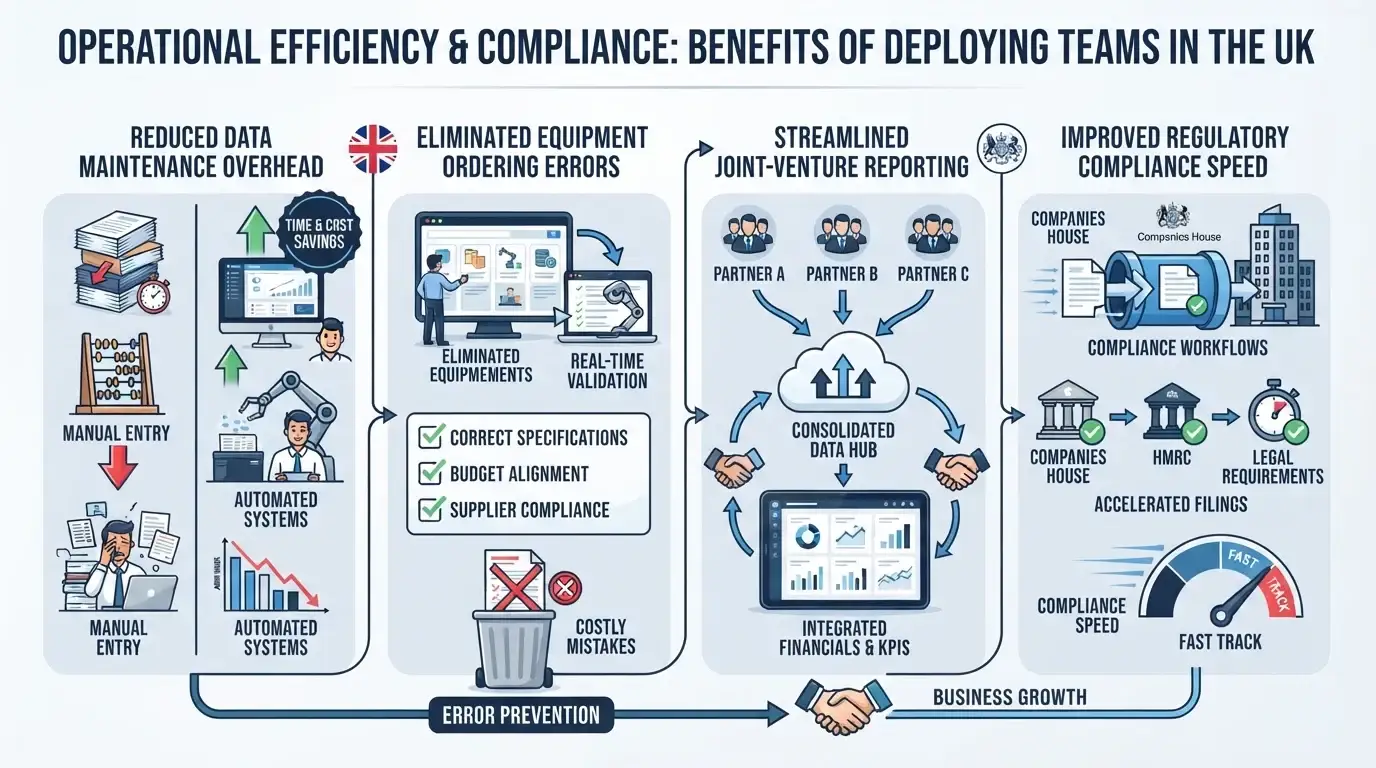
Corporate investments in data governance training yield immediate operational dividends by eliminating administrative redundancies and manual data correction tasks. The Institute For Oil & Gas Training focuses strictly on actionable skill outcomes that drive measurable efficiency gains across core business units.
The systematic elimination of data ambiguities directly improves safety, maintenance, and asset management performance across operational facilities.
Human Resources & Talent Management: Clear definition of technical competencies, improved role clarity for data stewards, and structured progression pathways for digital asset management personnel.
Operations & Facility Maintenance: Elimination of duplicate equipment orders, accurate bill-of-materials tracking, and improved predictive maintenance modeling through clean sensor datasets.
Finance & Joint Venture Accounting: Accelerated month-end closing processes, precise joint-interest billing calculations, and complete auditability of historical expenditure datasets.
Regulatory, Health, Safety & Environment (HSE): Automated generation of compliance records, verified data lineage for safety-critical systems, and rapid incident reporting capabilities.
Corporate sponsors receive detailed post-training evaluation reports tracking participant performance gains, skill mastery metrics, and project recommendations developed during the capstone workshop.
What are the entry requirements, fees, and corporate enrollment steps?
Enrollment requires a background in energy operations, engineering, IT, or corporate administration, with entry structured through individual application or direct corporate group sponsorship.
The Institute For Oil & Gas Training maintains clear entry criteria to ensure balanced classroom dynamics and optimal group project execution.
Target Audience & Prerequisites
This course is structured specifically for professionals working within or supporting energy sector operations:
Data Stewards, Data Governance Managers, and Enterprise Architects
Maintenance, Reliability, and Reservoir Engineers
Procurement, Materials Management, and Logistics Specialists
IT Managers, Database Administrators, and Business Intelligence Analysts
HR Directors, Learning & Development Lead Managers, and Operations Executives
Prerequisites: Candidates should possess at least two years of professional experience within energy operations, technical administrative roles, or corporate IT functions. Prior exposure to enterprise systems such as SAP, Oracle, or specialized subsurface databases is beneficial but not mandatory.
Corporate Pricing & Group Enrollment Options
Pricing structures cater to both individual open-enrollment candidates and custom corporate cohorts.
Individual Public Cohort Fee: £3,450 per participant (includes training materials, laboratory access, assessment, and certification).
Corporate Group Rate (5–10 Participants): £14,500 total (includes cohort customization and dedicated project mentoring).
Onsite Enterprise Delivery (Up to 20 Participants): Custom pricing based on location, customization requirements, and schedule constraints.
Enrollment Process & Path to Certification
Application Submission: Submit formal candidate profiles or corporate team lists for pre-qualification review.
Needs Assessment: Complete an operational alignment session with an advisor to select the optimal delivery format.
Cohort Assignment: Receive access to pre-course orientation modules and preparatory literature.
Training Execution: Complete formal coursework, laboratory exercises, and practical assessments.
Certification Award: Graduates earning a passing mark of 75% or higher on assessments receive the official Master Data & Governance Specialist Certification.
To secure seats for upcoming corporate cohorts or to request a customized proposal for your workforce, enroll in this program today through the official registration portal.
Frequently Asked Questions
What is Oil & Gas Petroleum Digital Finance & Automation training?
Oil & Gas Petroleum Digital Finance & Automation training by Institute For Oil & Gas Training equips finance, accounting, and operations professionals with skills to digitise financial workflows across energy operations. The course covers automated joint-venture accounting, robotic process automation (RPA) for financial reconciliation, predictive budgeting, and real-time ledger integration for upstream, midstream, and downstream assets.
Who should enrol in the digital finance and automation course for petroleum operations?
This training is designed for financial controllers, joint-venture accountants, finance managers, IT business analysts, and corporate leadership working within the energy sector. The curriculum delivered by Institute For Oil & Gas Training helps finance teams eliminate manual spreadsheet dependencies, streamline compliance reporting, and modernise financial decision-making processes.
How does automating digital finance benefit oil and gas companies?
Automating petroleum financial management reduces month-end closing cycles, minimises manual data entry errors, and improves cash flow visibility across multi-asset portfolios. Professionals trained by Institute For Oil & Gas Training learn to deploy automated audit trails and real-time reporting architectures that enhance transparency for joint-interest billing and regulatory compliance.
What tools and technologies are covered in Oil & Gas Petroleum Digital Finance & Automation?
The program covers enterprise digital tools including ERP financial modules, robotic process automation software, cloud accounting platforms, and business intelligence analytics dashboards. Institute For Oil & Gas Training focuses on practical applications of automated data pipelines that link SCADA and production metrics directly into corporate financial software.
What are the prerequisites for attending this digital finance training program?
Participants should possess a foundational understanding of corporate accounting, financial reporting, or operational budgeting within energy enterprise environments. Institute For Oil & Gas Training structures the course to accommodate both finance professionals adopting digital tools and technical personnel seeking to automate financial reporting systems.
Related training courses
Digital Transformation in Petroleum Finance: Strategy & Roadmap Training Course
- Specialisation
- Oil & Gas Petroleum Digital Finance & Automation
- Duration
- 5 days · 15 CPD hours
Digital Transformation in Petroleum Finance: AI & RPA Training Course
- Specialisation
- Oil & Gas Petroleum Digital Finance & Automation
- Duration
- 5 days · 15 CPD hours
Data Governance & Master Data: Ownership & Standards Training Course
- Specialisation
- Oil & Gas Petroleum Digital Finance & Automation
- Duration
- 5 days · 15 CPD hours
More articles

How to Define Data Ownership and Master Data Standards for Petroleum Operations
Learn how petroleum operations define data ownership, establish master data management standards, and improve data governance frameworks.
Read article →
Why Data Governance and Master Data Standards Matter in Oil and Gas
Learn why data governance and master data standards transform petroleum operations, resolve enterprise risk, and drive ROI across global energy assets.
Read article →
Power BI for Production and Cost Dashboards Design Training by Institute For Oil & Gas Training
Evaluate the Power BI Production & Cost Dashboards Design Training Course curriculum, delivery formats, skill outcomes, and corporate enrollment details.
Read article →