

The Royalties, Bonuses & Government Take: Valuation & Deductions Training Course is a structured professional program designed to resolve critical skill gaps in petroleum fiscal management, contractual compliance, government take assessment, and revenue assurance for upstream oil and gas operations globally.
Upstream fiscal regimes are notoriously complex, demanding precise technical and financial oversight to ensure compliant revenue distribution. Professionals in resource management, corporate planning, commercial law, finance, and human resources frequently encounter challenges when evaluating complex fiscal mechanisms. Misunderstandings surrounding fiscal terms often lead to severe financial leakages, regulatory non-compliance, and costly legal disputes between host governments and international oil companies. Organizations require technical clarity to handle complex royalty valuation points, contractual bonus structures, and allowable cost deductions. Without structured training, multidisciplinary teams risk misinterpreting fiscal clauses, which directly impacts project cash flows and institutional credibility.
To establish foundational knowledge on host government entitlement mechanics, professionals can refer to our guide on Why Valuation and Deduction Rules Matter in Petroleum Royalties and Government Take before evaluating structured training options.
The Institute For Oil & Gas Training developed this decision-stage training syllabus to transform technical ambiguity into repeatable corporate competency. By offering specification-driven instruction, the Institute For Oil & Gas Training bridges the gap between legal contracts and operational accounting practices. This program addresses operational disconnects between government compliance officers, commercial managers, and finance professionals by establishing unified workflows for fiscal assessment. Participants learn to accurately audit fiscal returns, establish verified audit trails, and calculate national take without operational delay. Corporate teams gain a standardized framework for evaluating fiscal exposure, protecting capital investments, and preventing revenue misallocation.
Why Is This Petroleum Fiscal Valuation and Deductions Course Structured This Way?
This course uses a logical learning progression moving from foundational fiscal principles to advanced quantitative modeling, ensuring participants systematically master contractual mechanics, deduction audits, and royalty calculations before performing complex government take strategic valuations.
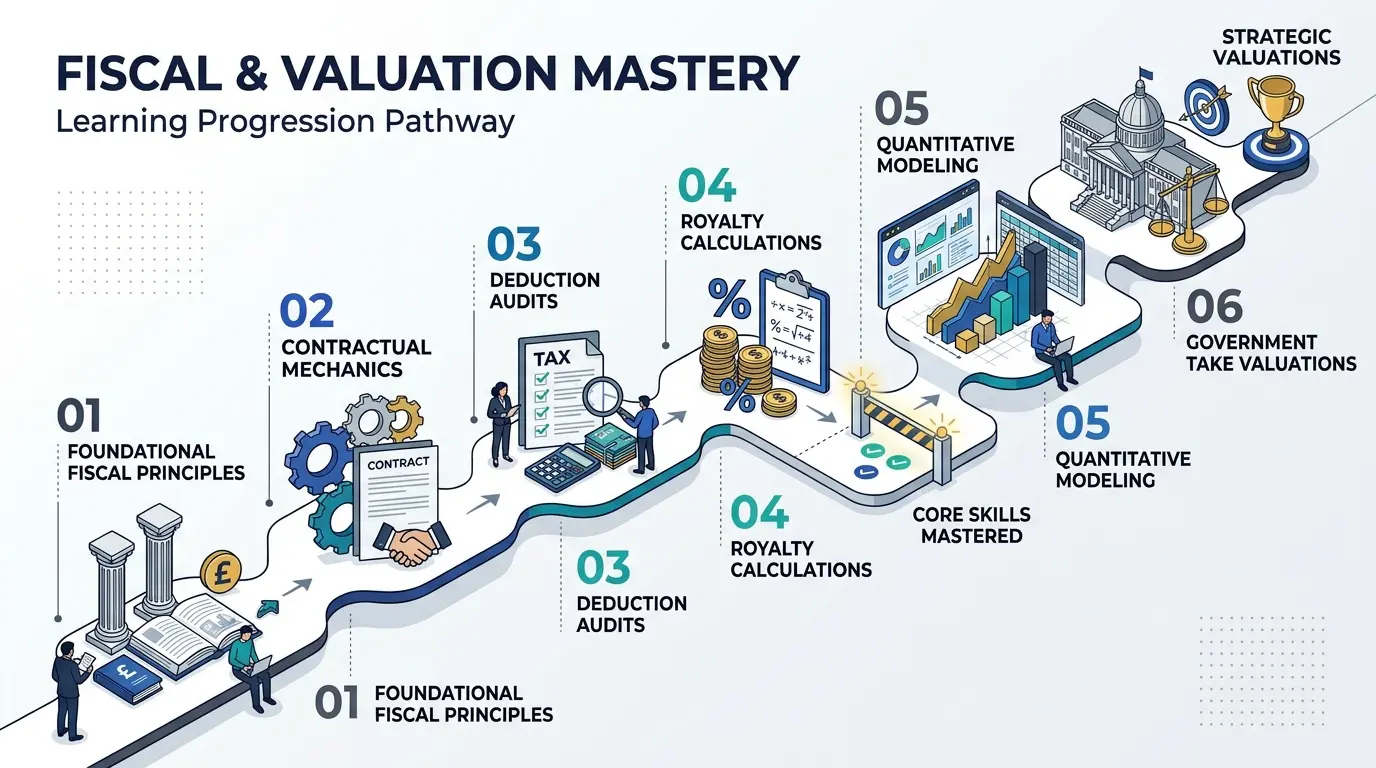
The curriculum architecture aligns with the technical demands of international petroleum fiscal systems. Early modules establish clear definitions of royalty mechanics, signature bonuses, production bonuses, and discovery bonuses within Concessionary Systems, Production Sharing Contracts (PSCs), and Risk Service Agreements (RSAs). Participants build essential competencies before progressing to complex operational scenarios, such as auditing allowable deductions and calculating netback prices at distinct valuation points.
A primary focus is distinguishing between a royalty valuation point defined at the wellhead versus a downstream custody transfer point. Training modules clarify how posted price versus realised price mechanisms alter baseline taxable revenue. Industry professionals must evaluate these pricing methodologies alongside allowable transport and processing deductions to prevent incorrect tax filings and revenue underreporting.
When evaluating institutional capabilities and curriculum depth, organizations should read our practical breakdown on How to Assess Valuation Methods and Allowable Deductions in Oil and Gas Fiscal Systems to align corporate training objectives with industry standards.
The syllabus structures theory and application through alternating technical lectures, case study reviews, and hands-on modeling exercises. The Institute For Oil & Gas Training structures this progression so that learners master individual analytical components before managing end-to-end fiscal evaluations. The instructional model enforces immediate practical application, ensuring professionals retain technical concepts and apply them directly within their organizations.
What Will Participants Learn in the Royalties, Bonuses & Government Take Training Course?
Participants gain measurable technical skills to analyze petroleum contracts, calculate precise government take, audit allowable deductions, determine correct pricing points, manage royalty schedules, and eliminate institutional exposure to financial penalties.
The Royalties, Bonuses & Government Take: Valuation & Deductions Training Course delivers practical expertise through four focused modules. Each module targets a core workplace capability, transferring technical specifications into operational practice.
Module | Core Subject Area | Measurable Skill Outcomes |
Module 1 | Fiscal Frameworks & Bonus Mechanisms | • Classify fiscal systems (PSCs, Concessions, RSAs) • Calculate bonus triggers and payment schedules • Evaluate government take percentages accurately |
Module 2 | Royalty Valuation & Pricing Models | • Establish wellhead vs. point-of-sale valuation points • Model posted price versus realised price variance • Administer royalty in kind versus royalty in cash options |
Module 3 | Allowable Deductions & Compliance Audits | • Audit allowable transport and processing deductions • Standardize self-assessment and returns procedures • Conduct reconciliation to production volumes |
Module 4 | Risk Mitigation & Fiscal Modeling | • Quantify corporate underpayment exposure • Enforce royalty payment schedule compliance • Build robust audit trails for state monitoring bodies |
Participants learn to evaluate operational scenarios, such as determining whether lifting costs or pipeline tariffs qualify as allowable transport and processing deductions under specific PSC terms. Learners practice calculating netback prices from secondary processing facilities to the designated royalty valuation point.
The curriculum addresses the operational administration of royalty in kind versus royalty in cash, enabling commercial leads to optimize lifting schedules and cash flow management.
The Institute For Oil & Gas Training integrates rigorous self-assessment and returns workflows into the practical exercises. Learners execute complete reconciliation to production volumes, comparing fiscal meter logs with official tax filings to detect discrepancies before statutory reporting deadlines. This technical grounding reduces financial risk, limits underpayment exposure, and maintains strict alignment with regulatory guidelines.
How Is the Royalties, Bonuses & Government Take Training Course Delivered?
The Institute For Oil & Gas Training delivers this training through instructor-led live online sessions, interactive face-to-face corporate workshops, hybrid models, and customized onsite corporate programs tailored to organizational requirements.
To accommodate global workforces, the Institute For Oil & Gas Training offers flexible delivery formats designed for individual professionals and corporate cohorts. Every format maintains the same rigorous syllabus, interactive exercises, and expert instruction.
Instructional Methodology
Training relies on active, application-based learning rather than passive lectures. Faculty members guide participants through real-world commercial contracts, regulatory filing templates, and custom financial models.
Case-Based Problem Solving: Participants analyze redacted real-world petroleum contracts, identifying hidden compliance risks and calculation errors.
Financial Modeling Simulations: Learners build dynamic spreadsheet models to test sensitivity variables across changing oil prices, production volumes, and deduction limits.
Group Audit Scenarios: Teams work in parallel to perform mock audits on complex production data, verifying royalty payment schedule adherence and reporting discrepancies.
Assessment and Certification Methods
Skill mastery is assessed through objective, performance-based evaluation criteria. Participants complete practical assessments throughout the program rather than relying solely on attendance.
Practical Benchmark Exercises: Module-specific assignments requiring participants to solve real-world netback pricing and deduction problems.
Applied Capstone Project: A comprehensive fiscal audit simulation requiring participants to reconcile production volumes, calculate bonuses, prepare tax returns, and present audit findings.
Professional Certification: Candidates who demonstrate proficiency in all competency areas earn the official certificate of completion from the Institute For Oil & Gas Training.
What Workplace Results and Performance Improvements Can Be Expected?
Organizations achieve improved financial accuracy, reduced audit penalties, streamlined regulatory filings, faster cross-functional workflows, and protected asset profitability by establishing standardized fiscal assessment capabilities across teams.
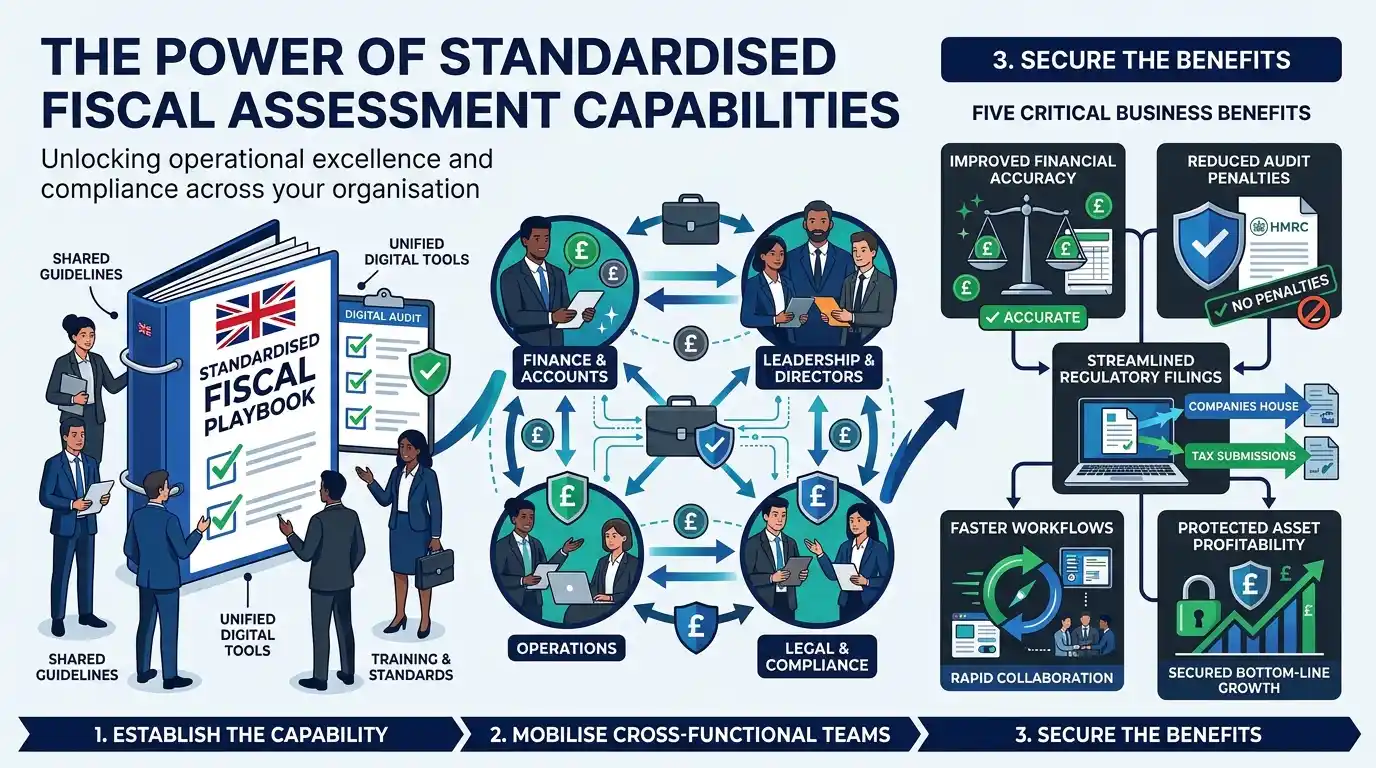
Enrolling staff in the Royalties, Bonuses & Government Take: Valuation & Deductions Training Course delivers direct operational value to corporate sponsor organizations and state regulatory entities alike. By training multidisciplinary teams together, organizations replace fragmented communication with clear, standardized analytical procedures.
Impact Across Key Organizational Functions
Human Resources & Talent Management: HR leaders gain a proven framework for upskilling finance, legal, and operational staff. This structured training establishes clear technical benchmarks for career progression and internal talent pipelines.
Commercial & Legal Teams: Contract negotiators learn to identify ambiguous valuation wording during concession drafting, preventing future legal disputes and revenue loss.
Finance & Accounting Departments: Financial controllers establish rigorous validation workflows for posted price versus realised price adjustments, ensuring accurate general ledger postings and timely royalty payments.
Internal Audit & Compliance Units: Internal auditors gain precise checklists to audit allowable transport and processing deductions, ensuring every claim is backed by verified cost documentation.
Real-World Workplace Application
A international exploration and production company experienced recurring friction between its commercial accounting team and host government auditors regarding transportation deduction caps. After sending a cross-functional cohort of eight professionals to the Institute For Oil & Gas Training, the team instituted a standardized deduction audit model.
The updated process eliminated reporting errors, resolved outstanding regulatory audit queries six months ahead of schedule, and saved the company substantial penalty exposure through precise self-assessment filings.
How Does Enrollment Work for Individuals and Corporate Teams?
Enrollment involves a structured three-step process including candidate eligibility verification, format selection, and formal registration confirmation to ensure participants meet foundational background requirements.
The Institute For Oil & Gas Training maintains a direct administrative process for both individual applicants and corporate team bookings.
Eligibility Criteria
To ensure productive cohort dynamics and meaningful peer discussions, applicants should meet at least one of the following criteria:
Minimum of two years of professional experience in energy finance, legal compliance, joint-venture accounting, commercial management, or petroleum regulation.
HR-sponsored participation within an organizational learning and development pipeline targeting petroleum fiscal management.
Active involvement in government revenue monitoring, state oil company auditing, or upstream commercial contract negotiations.
Corporate Registration and Group Enrollment
Human Resource departments and corporate training managers can enroll intact functional teams or cross-departmental cohorts. Customized in-house sessions allow the curriculum to be adapted directly to the organization's specific operating agreements, national tax legislation, and asset portfolio. Corporate coordinators receive structured progress reports and completion metrics for all enrolled staff.
To secure seats for upcoming corporate cohorts and master fiscal compliance workflows, enroll in this program today.
Frequently Asked Questions
What is an oil and gas petroleum fiscal regime?
An oil and gas petroleum fiscal regime is the legal, contractual, and tax framework that governs the division of revenue and risk between host governments and commercial energy companies. It defines specific financial mechanisms, including royalties, signature bonuses, profit oil splits, and corporate income taxes across Concessionary Systems, Production Sharing Contracts (PSCs), and Risk Service Agreements. Through specialized courses, the Institute For Oil & Gas Training provides technical instruction on assessing and navigating these fiscal mechanisms to ensure precise regulatory compliance and financial control.
What are the main types of petroleum fiscal systems used globally?
The two primary categories of petroleum fiscal systems are concessionary (royalty and tax) systems and contractual systems, which include Production Sharing Contracts (PSCs) and Service Agreements. Concessionary systems grant resource ownership to the operating company subject to royalties and taxes, whereas PSCs retain resource ownership with the host government while sharing produced volumes based on cost recovery and profit splits. The Institute For Oil & Gas Training offers structured modules covering an Oil & Gas Petroleum Fiscal Regime to help commercial, legal, and financial teams evaluate the strategic and financial trade-offs of each system.
How do allowable deductions affect government take in petroleum contracts?
Allowable deductions, such as operating costs, capital expenditure cost recovery, and transportation tariffs, directly reduce the net taxable revenue or profit oil base used to calculate government entitlement. Accurately auditing these allowable deductions ensures that operating companies avoid underpayment penalties while preventing host governments from losing legitimate revenue. The Institute For Oil & Gas Training trains industry professionals to establish verified audit trails and perform netback pricing calculations within their organization's fiscal compliance workflows.
Why is training on an oil and gas petroleum fiscal regime essential for corporate teams?
Structured fiscal regime training resolves critical skill gaps across legal, accounting, commercial, and human resource departments by establishing standardized analytical methodologies for complex petroleum agreements. Misinterpreting fiscal terms can lead to severe financial leakages, regulatory non-compliance, and costly arbitration between joint-venture partners and host nations. Delivering comprehensive instruction on an Oil & Gas Petroleum Fiscal Regime, the Institute For Oil & Gas Training enables multidisciplinary teams to accurately model government take, audit fiscal returns, and protect upstream asset profitability.
How is government take calculated in upstream oil and gas projects?
Government take is calculated by determining the cumulative percentage of project cash flows, net revenues, or production volumes accrued by the host government through royalties, bonuses, profit splits, and taxes over the asset life cycle. Quantitative economic models simulate baseline cash flows alongside variables such as changing oil prices, production volumes, and sliding-scale royalty rates. The Institute For Oil & Gas Training provides hands-on financial modeling workshops where professionals build dynamic spreadsheets to evaluate government take sensitivity under diverse contractual terms.
Related training courses
Magnetic Particle Testing (MT) Training Course
- Specialisation
- Oil & Gas Inspection and Non-Destructive Testing
- Duration
- 5 days · 15 CPD hours
Advanced Ultrasonic Testing Techniques Training Course
- Specialisation
- Oil & Gas Inspection and Non-Destructive Testing
- Duration
- 5 days · 15 CPD hours
Corrosion Control Painting & Coating Training Course
- Specialisation
- Oil & Gas Corrosion Management and Control
- Duration
- 5 days · 15 CPD hours
More articles

Data Governance and Master Data Ownership and Standards Training by Institute For Oil & Gas Training
Evaluate the Data Governance & Master Data Ownership & Standards Training Course syllabus, delivery, outcomes, and enrollment requirements.
Read article →
How to Define Data Ownership and Master Data Standards for Petroleum Operations
Learn how petroleum operations define data ownership, establish master data management standards, and improve data governance frameworks.
Read article →
Why Data Governance and Master Data Standards Matter in Oil and Gas
Learn why data governance and master data standards transform petroleum operations, resolve enterprise risk, and drive ROI across global energy assets.
Read article →