

The Transfer Pricing for Oil & Gas Groups Training Course is a specification-driven corporate program designed by Institute For Oil & Gas Training to resolve cross-border tax compliance, intercompany valuation, and transfer pricing audit vulnerabilities across integrated energy supply chains.
Multinational energy enterprises operate across complex upstream exploration, midstream transport, refining, and downstream distribution networks. This structural complexity generates thousands of intercompany transactions spanning joint operating agreements, technical service allocations, financing arrangements, and physical commodity sales. Tax authorities globally scrutinise these intercompany transactions to ensure taxable profits align with value creation. When corporate finance and tax teams lack practical technical capabilities, energy groups face severe audit adjustments, double taxation, and administrative penalties.
Organizations frequently attempt to manage transfer pricing compliance using generic framework knowledge that fails to address energy sector realities. Hydrocarbon pricing fluctuates rapidly, requiring precise benchmark selection and constant monitoring of economic adjustments. Furthermore, cross-border technical management fees and intellectual property recharges require detailed functional substance to withstand international tax authority audits. Tax professionals must move beyond theoretical knowledge to apply rigorous functional analysis across oil and gas value drivers.
The Institute For Oil & Gas Training developed this technical training course to bridge the operational gap between corporate tax theory and energy sector execution. Participants acquire hands-on experience in executing economic benchmarking studies, documenting intra-group services, and justifying intercompany financing rates. By establishing consistent intercompany pricing methodologies across all operating units, energy groups insulate themselves against tax disputes and establish repeatable compliance processes.
Understanding these foundational economic principles is critical before evaluating specific operational risks, as detailed in our guide on Why Transfer Pricing Matters for Multinational Oil and Gas Groups.
Why is this course structured this way?
This syllabus follows a deliberate progression from structural value chain mapping to advanced OECD economic analysis, ensuring participants systematically build practical skills required to document, defend, and benchmark intercompany transactions within multinational energy groups.
Energy sector transfer pricing demands a dual mastery of corporate finance and operational mechanics. A theoretical explanation of pricing principles without context does not prepare corporate tax teams to evaluate upstream risk allocations or downstream trading margin splits. The curriculum created by Institute For Oil & Gas Training begins with structural mapping of energy value drivers, establishing clear visibility over physical product flows, capital investments, and risk-bearing entities.
Once value drivers are mapped, the curriculum transitions into economic method selection and transfer pricing documentation execution. Participants learn when to apply traditional transaction methods versus transactional profit methods based on data availability and operational risk profiles. The progression ensures that complex concepts, such as benchmarking intra-group service fees or determining arm's length interest rates on intercompany debt, are introduced only after participants master core functional analysis techniques.
The practical learning structure allows tax managers, corporate finance directors, and internal auditors to test compliance methodologies against real-world energy datasets. Training modules are paired with technical case studies where participants analyze intercompany contracts, identify uncompensated functions, and execute adjustments. This structured progression converts theoretical regulatory knowledge into standardized corporate workflows.
To determine whether your team requires foundational structural training or advanced documentation workflows, review our guide on How to Evaluate Transfer Pricing Risks and Intercompany Transactions in Oil and Gas Groups.
What will participants learn during the program?
Participants gain measurable competencies in executing functional analysis, selecting appropriate transfer pricing methodologies, performing benchmarking studies, defending intra-group service charges, and building local file and master file documentation for energy entities.
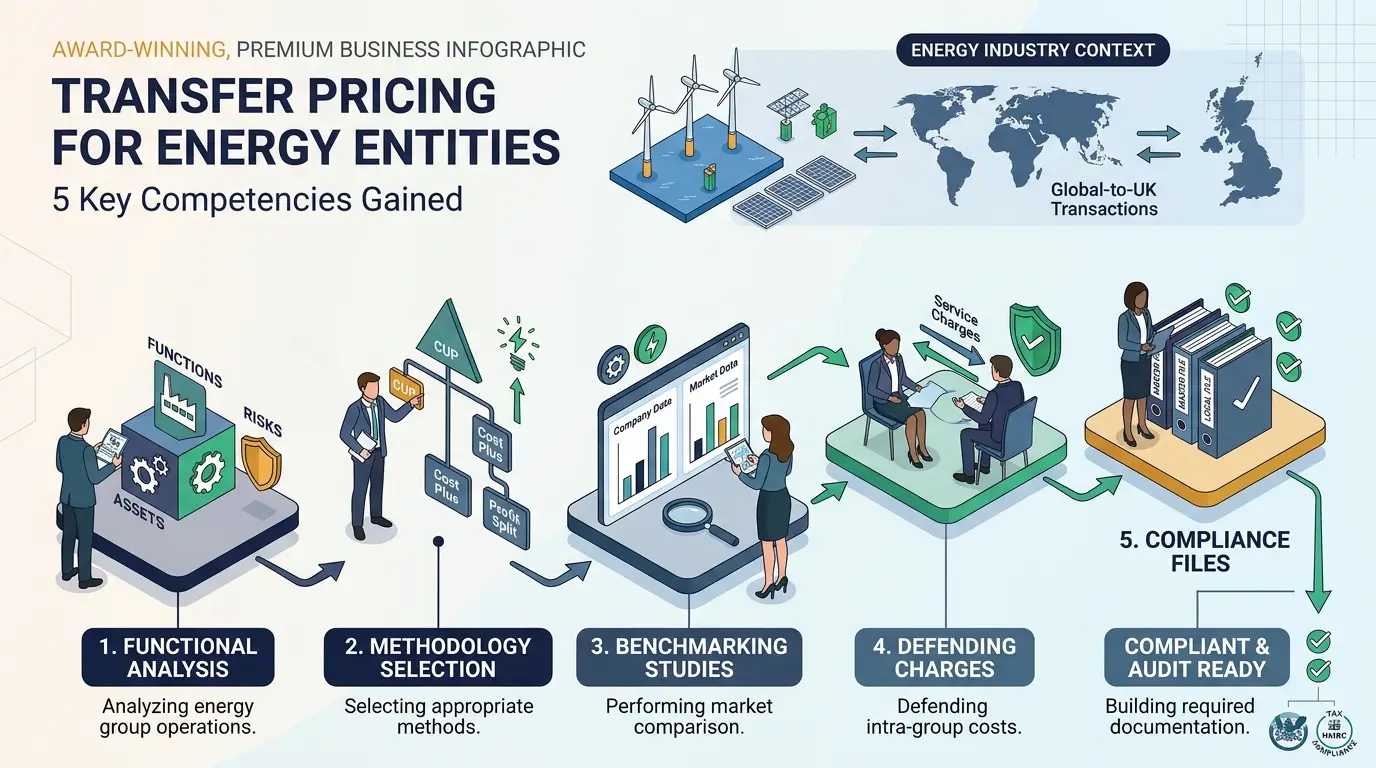
The curriculum delivers practical skill growth across four structured modules:
Module 1: Value Chain Mapping and Functional Analysis
Participants master the execution of comprehensive functional analysis across integrated upstream, midstream, and downstream operations.
Operational Risk Profiling: Identify and assign operational, financial, and market risks across exploration, production, refining, and marketing entities.
Asset Characterization: Evaluate tangibles, intangibles, and capital deployment to establish entity profiles such as fully fledged manufacturers, contract operators, or limited risk distributors.
Value Chain Realities: Map intercompany transaction flows to isolate key value drivers within complex joint ventures and operating agreements.
Module 2: OECD Transfer Pricing Method Selection and Economic Analysis
Participants learn to evaluate, select, and apply OECD transfer pricing methods tailored to specific energy transactions.
Comparable Uncontrolled Price Method: Apply the comparable uncontrolled price method to physical crude oil, natural gas, and refined product sales using published index benchmarks.
Cost Plus Method: Deploy the cost plus method to evaluate contract drilling, pipeline transportation, and midstream processing services.
Transactional Net Margin Method: Utilize the transactional net margin method to establish arm's length profitability targets for regional distribution subsidiaries.
Profit Split Applications: Apply residual profit splits to complex global energy trading hubs and joint technology development initiatives.
Module 3: Intra-Group Services, Financial Transactions, and Benchmarking
Participants build technical capabilities to defend management fee allocations and intercompany financing structures.
Intra-Group Services: Establish direct and indirect benefit tests for central management, technical engineering support, and corporate governance services.
Cost Allocation Pools: Formulate transparent cost allocation keys that satisfy tax authority scrutiny for shared services centres.
Intercompany Financing: Benchmark interest rates on intercompany loans, cash pooling arrangements, and corporate guarantees using credit rating models.
Benchmarking Study Execution: Construct defensible benchmarking studies, screen financial databases, and perform comparability adjustments.
Module 4: Documentation, Audit Defence, and Dispute Resolution
Participants master the preparation of master files, local files, and country-by-country reports while developing audit defense strategies.
OECD Pillar Alignment: Structure master file and local file documentation that meets multi-jurisdictional reporting deadlines.
Audit Defense Workflows: Prepare defense files, draft responses to information requests, and manage tax authority audit inquiries.
Dispute Avoidance: Evaluate Advance Pricing Agreements and Mutual Agreement Procedures to proactively mitigate double taxation risks.
The corporate training delivered by Institute For Oil & Gas Training equips participants with actionable technical tools to standardize intercompany compliance across global operations.
How is the course delivered?
The program is delivered through flexible live virtual, on-site corporate, and hybrid delivery formats, combining interactive lectures, technical software workshops, and practical case studies over intensive multi-day schedules.
To accommodate international corporate teams, Institute For Oil & Gas Training offers multiple delivery options:
On-Site Corporate Workshops: Intensive 3-day to 5-day programs conducted directly at client headquarters or regional offices. On-site delivery allows custom adaptation of course materials to reflect the organization's specific intercompany transactional structure.
Live Virtual Classroom: Interactive online sessions delivered over four weeks in structured half-day blocks. This format minimizes workplace disruption while enabling global tax and finance teams to learn together in real time.
Hybrid Learning Models: Combined self-paced digital preparatory modules with live practical workshops focused on economic benchmarking and document generation.
Every delivery format emphasizes practical execution over theoretical passive listening. Participants work directly with specialized benchmarking databases, review anonymized intercompany contracts, and draft technical functional analysis reports. Interactive sessions are led by senior transfer pricing advisors with deep experience in energy tax governance.
Organizations booking corporate team training receive custom pre-course consultations. Institute For Oil & Gas Training reviews the organization's regional footprint and operational structure to align case study exercises with actual workplace challenges faced by participating departments.
What measurable results can organizations expect?
Organizations achieve standardized intercompany compliance, reduced tax audit risk, eliminated double taxation exposures, and improved technical collaboration between corporate finance, legal, and tax departments.
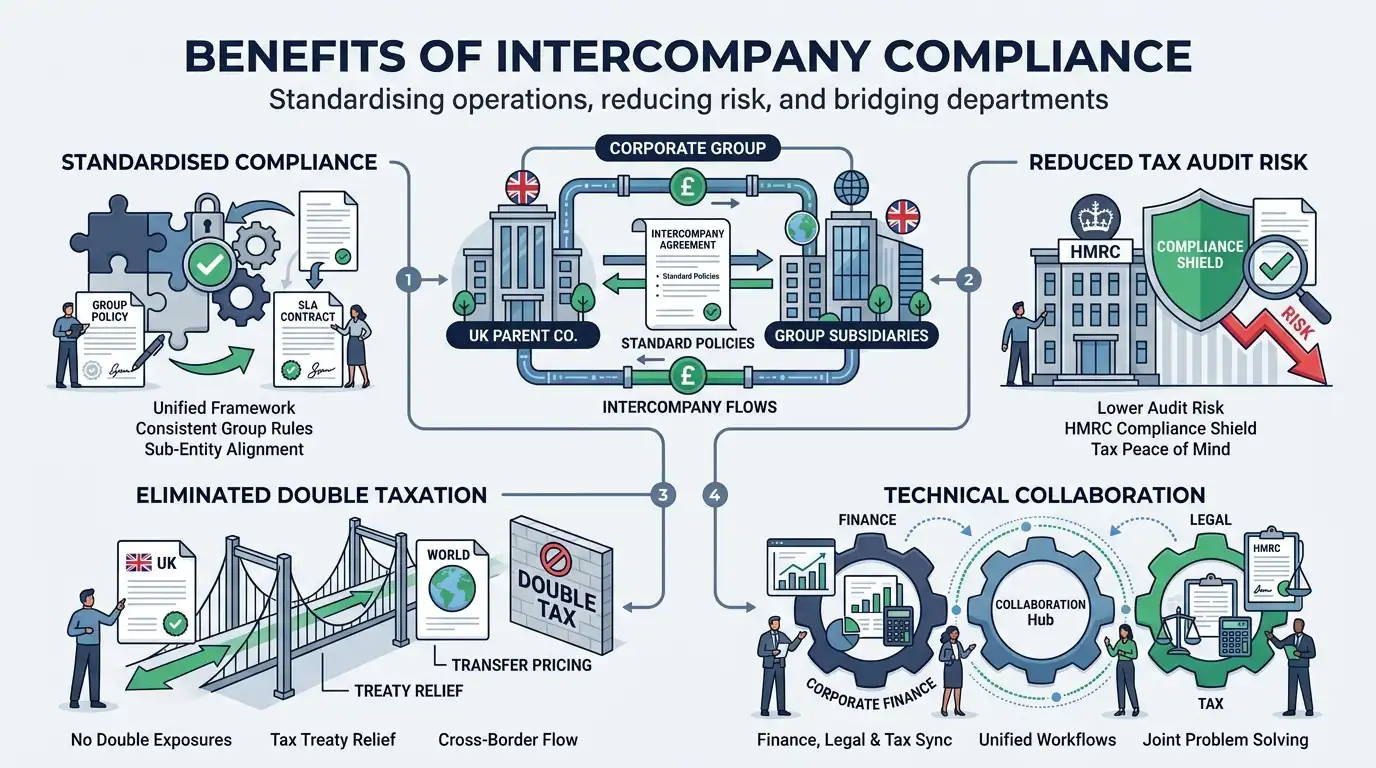
Sponsoring organizations gain immediate operational benefits upon employee completion of this program:
Audit Defense Readiness: Corporate tax departments construct auditable local and master file documentation supported by robust benchmarking studies, reducing potential audit adjustments.
Standardized Governance: HR leaders and tax directors establish unified intercompany pricing policies across global operating subsidiaries, replacing fragmented regional approaches.
Intercompany Risk Mitigation: Finance teams accurately identify uncompensated functional contributions, protecting the group against base erosion tax assessments.
Cost Allocation Efficiency: Shared service centers implement transparent allocation keys for intra-group services, ensuring local tax deductibility without triggering tax disputes.
HR teams and corporate learning officers utilize this course to build long-term technical capabilities within financial leadership pipelines. By developing in-house expertise, organizations reduce reliance on external advisory firms for routine annual compliance and benchmarking updates.
Graduates of the Institute For Oil & Gas Training program return to their roles equipped with standardized documentation templates, economic analysis tools, and practical audit defense workflows ready for immediate deployment.
How does enrollment and completion work?
Enrollment involves a formal professional background assessment, structured registration, interactive coursework completion, and a rigorous technical capstone evaluation leading to professional certification.
Entry Requirements
Candidates should hold a background in corporate tax, finance, accounting, legal affairs, or internal audit. The course is structured for:
Corporate tax managers and transfer pricing specialists seeking sector-specific energy expertise.
Chief financial officers, finance directors, and controllers overseeing cross-border intercompany transactions.
In-house legal counsel drafting intercompany agreements, joint operating agreements, and service contracts.
Tax authority officials and revenue auditors seeking deeper technical understanding of energy value chains.
Enrollment Process
Step 1: Application Submission: Candidates or corporate HR teams submit an application outlining current job roles and organizational training requirements.
Step 2: Technical Assessment: Institute For Oil & Gas Training conducts a brief pre-enrollment review to ensure candidate prerequisites align with curriculum intensity.
Step 3: Registration Confirmation: Approved participants receive access to preparatory reading materials and software setup instructions.
Completion and Certification Pathway
To earn professional certification from Institute For Oil & Gas Training, participants must maintain 100% attendance during live instructional sessions, complete all practical benchmarking workshops, and pass a final capstone evaluation. The capstone project requires participants to perform functional analysis and economic method selection for a hypothetical energy corporate group facing a multi-jurisdictional audit.
Upon successful evaluation, graduates receive the official certification validating their technical competence in energy sector transfer pricing governance. Organizations looking to upskill their finance and tax divisions can enroll in this program to secure training seats for upcoming cohorts.
Frequently Asked Questions
What does the Oil & Gas Petroleum Taxation course cover?
The Oil & Gas Petroleum Taxation program delivered by Institute For Oil & Gas Training covers fiscal regimes, production sharing contracts, royalties, and international cross-border tax compliance. Participants learn how to evaluate corporate tax liabilities, analyze government take, and manage complex petroleum revenue accounting across upstream and midstream operations.
Who should attend petroleum taxation training in the energy sector?
This course is designed for tax managers, corporate finance directors, energy accountants, and legal advisors working within multinational oil and gas enterprises. It is also suitable for government revenue auditors and HR teams seeking to build specialized fiscal management capabilities across their workforce.
How does oil and gas petroleum taxation differ from standard corporate tax?
Petroleum taxation involves specialized fiscal frameworks, including ring-fencing rules, windfall profit taxes, resource rent taxes, and production sharing arrangements that do not exist in standard corporate tax structures. Understanding these unique mechanics ensures accurate financial forecasting and prevents severe regulatory non-compliance penalties.
What delivery options are available for Institute For Oil & Gas Training tax courses?
Institute For Oil & Gas Training offers flexible learning formats, including live virtual classrooms, hybrid digital instruction, and customized on-site corporate workshops. These structured delivery methods enable global energy finance teams to complete practical tax analysis training with minimal operational disruption.
How do professionals earn certification in oil and gas petroleum taxation?
Participants achieve certification by maintaining full attendance across all training modules and successfully completing a practical capstone evaluation. The final assessment tests real-world competencies in fiscal modeling, tax risk assessment, and petroleum contract compliance.
Related training courses
API 570 Piping Inspection and Integrity Assessment Training Course
- Specialisation
- Oil & Gas Inspection and Non-Destructive Testing
- Duration
- 5 days · 15 CPD hours
Metallurgy for Non-Metallurgist Training Course
- Specialisation
- Oil & Gas Corrosion Management and Control
- Duration
- 5 days · 15 CPD hours
Corrosion Metallurgy & Failure Prevention Training Course
- Specialisation
- Oil & Gas Corrosion Management and Control
- Duration
- 5 days · 15 CPD hours
More articles

Transfer Pricing Documentation and Country by Country Reporting Training for Oil and Gas Tax Professionals
Master BEPS Action 13 compliance, Master File, Local File, and CbC Reporting with Institute For Oil & Gas Training professional courses.
Read article →
How to Assess Transfer Pricing Documentation and Country by Country Reporting Requirements for Oil and Gas Groups
Evaluate Transfer Pricing Documentation and CbC Reporting requirements for oil and gas groups. Assess compliance risks, frameworks, and audit readiness.
Read article →
Why Transfer Pricing Documentation Matters for Oil and Gas Multinational Groups
Discover why transfer pricing documentation matters for oil and gas groups, how corporate training builds compliance, and ways to mitigate audit risks.
Read article →