

Transfer Pricing Documentation and Country by Country Reporting Training for Oil and Gas Tax Professionals provides structured corporate learning to solve compliance, audit exposure, and cross-border tax valuation challenges. Multinational energy groups face heightened regulatory scrutiny under the OECD Base Erosion and Profit Shifting (BEPS) framework. Tax teams must prepare accurate, audit-defensible documentation across multiple jurisdictions. Tax leaders and corporate governance officers often encounter technical execution gaps when assembling multi-tiered compliance files under tight statutory deadlines. Understanding Why Transfer Pricing Documentation Matters for Oil and Gas Multinational Groups establishes the baseline rationale for implementing systematic compliance protocols across complex upstream, midstream, and downstream joint venture operating models.
What is the course and what problem does it solve?
The Transfer Pricing Documentation & CbC Reporting Training Course is an intensive corporate program designed to bridge technical compliance execution gaps for energy sector tax teams.
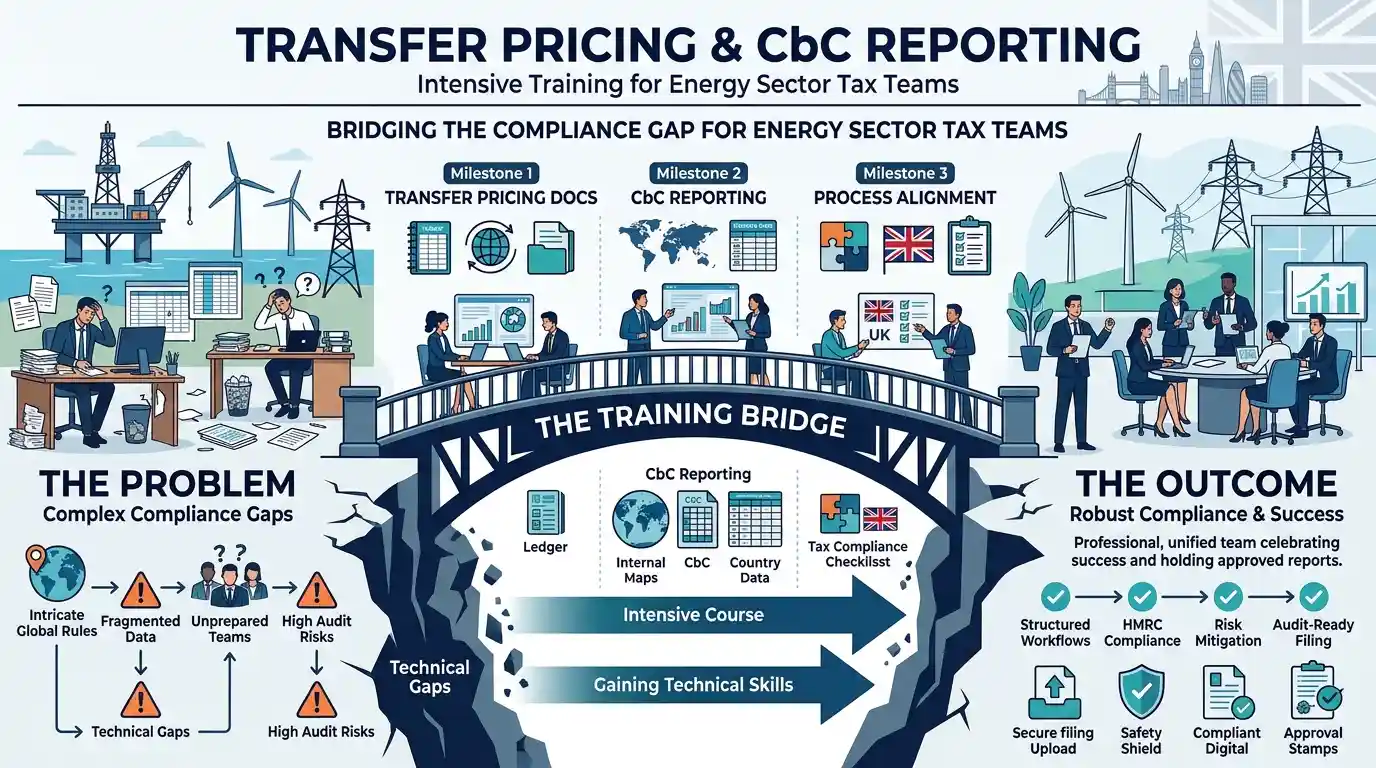
Tax departments operating within multinational oil and gas enterprises struggle with aligning financial reporting across diverse operational jurisdictions. Cross-border intra-group transactions involve complex asset pricing, cost-sharing arrangements, technical service fees, and financing charges. Inadequate documentation leads to double taxation, severe administrative fines, and prolonged tax authority disputes.
Intra-group transactions in the oil and gas value chain require precise functional and risk analyses. A commercial error in establishing the arm's length price for crude oil marketing, charter party agreements, or shared service centers exposes the entire group to audit adjustments.
The Institute For Oil & Gas Training developed this course to convert theoretical tax legislation into practical, audit-ready operational workflows. Participants gain the precise capabilities required to assemble comprehensive compliance packages that withstand strict tax administration scrutiny.
Why is this course structured this way?
This curriculum follows a progressive technical taxonomy structured to build competencies sequentially from foundational BEPS Action 13 concepts to advanced dispute resolution strategies.
Transfer pricing expertise requires a logical progression from core legal frameworks to practical economic modeling and defense strategies. Random or fragmented instruction creates operational knowledge gaps that jeopardize corporate compliance integrity.
The course structure addresses the operational hierarchy of transfer pricing tasks within corporate enterprise tax departments. Initial modules establish the legal boundaries and regulatory expectations enforced by tax authorities globally. Intermediate modules address the daily mechanics of drafting documentation and reconciling transactional ledgers. Final modules train specialists to handle regulatory friction, audits, and international dispute resolution channels.
Evaluating corporate learning options requires understanding How to Assess Transfer Pricing Documentation and Country by Country Reporting Requirements for Oil and Gas Groups relative to organizational skill gaps. The curriculum design by the Institute For Oil & Gas Training aligns corporate technical development with measurable risk-reduction milestones.
What will participants learn during the program?
Participants learn to build, audit, and defend multi-tiered transfer pricing documentation while executing precise Country by Country Reporting data structures for energy enterprises.
The learning objectives target high-value technical skills required to manage cross-border transfer pricing risks effectively.+
Module 1: International Transfer Pricing Standards & Regulatory Frameworks
This module establishes the legal and economic principles governing intercompany transactions in the energy sector.
Evaluation of the OECD BEPS Action Plan requirements impacting oil and gas operations.
Mapping cross-border transactions across exploration, production, refining, and distribution entities.
Interpretation of local statutory transfer pricing regulations versus international guidelines.
Identification of high-risk intra-group service charges and management fee allocations.
Module 2: Constructing the Master File and Local File
Participants acquire technical drafting capabilities to produce compliant core documentation files.
Structuring the master file and local file hierarchy to reflect enterprise operations accurately.
Conducting detailed Functional, Assets, and Risks (FAR) analyses for energy operations.
Selection and application of appropriate transfer pricing methods for commodity sales and services.
Database benchmarking strategies for identifying comparable uncontrolled transactions.
Module 3: Country by Country Reporting (CbCR) Data Aggregation & Analysis
This section focuses on data collection, formatting, and risk analysis for CbCR filings.
Structuring CbCR Table 1, Table 2, and Table 3 requirements from consolidated financial statements.
Reconciling corporate financial ledgers with tax reporting requirements across foreign subsidiaries.
Conducting pre-filing risk assessments using tax authority audit selection algorithms.
Managing information exchange mechanics between tax administrations under multilateral agreements.
Module 4: Dispute Resolution, Audits, and Risk Mitigation
The final module covers defensive strategies, risk management, and formal resolution pathways.
Preparing robust defenses against local transfer pricing audit enquiries and information requests.
Quantifying potential adjustment and penalty exposure from non-arm's length pricing structures.
Structuring Unilateral, Bilateral, and Multilateral advance pricing agreement applications.
Utilizing the mutual agreement procedure (MAP) and dispute resolution provisions under double tax treaties.
How is the course delivered to corporate teams?
The training is delivered through flexible corporate formats including live virtual instructor-led sessions, interactive on-site workshops, and blended hybrid learning schedules. Delivery options allow energy companies to train distributed international tax teams without interrupting operational business cycles.
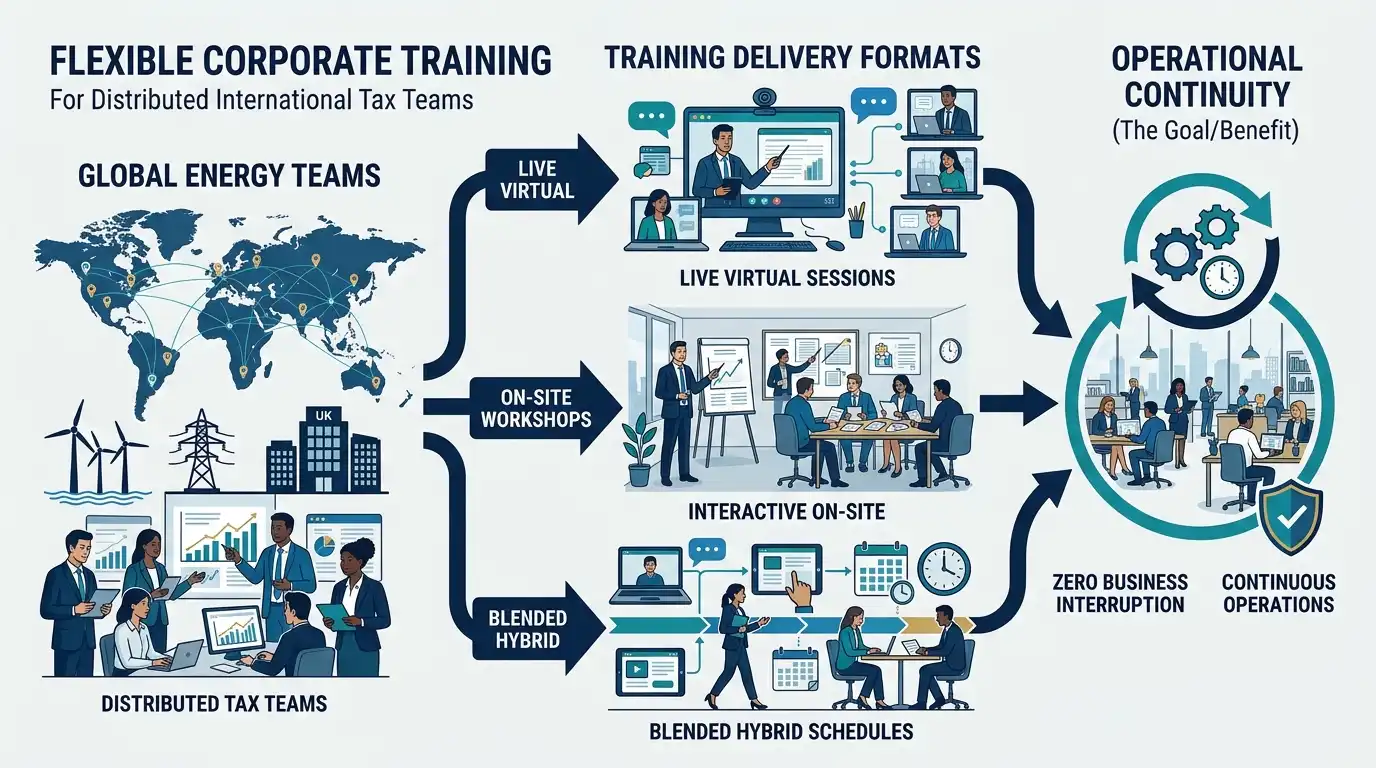
The Institute For Oil & Gas Training integrates real-world workplace scenarios into every delivery mode. Training sessions rely heavily on practical exercises, corporate financial datasets, and simulated audit proceedings rather than passive lecturing.
Participants engage in guided software simulations to construct XML-compliant CbC reports. Dedicated drafting workshops allow professionals to prepare defensive transfer pricing policy documentation using actual industry transaction models.
Knowledge acquisition is validated through structured assessment checkpoints. Participants complete individual functional analyses, participate in group dispute negotiations, and submit a final capstone documentation project.
What operational results can organizations expect?
Organizations achieve measurable risk reduction, optimized tax compliance workflows, and enhanced audit defense capability across international operating units. Structured corporate training transforms tax departments from reactive compliance units into proactive risk-management functions
The Institute For Oil & Gas Training focuses on delivering directly transferable capabilities that yield immediate operational returns. HR leaders and heads of tax observe marked performance improvements in technical execution and cross-departmental alignment.
Human Resources departments can integrate the program into formal career development pipelines for tax and finance staff.
Tax department managers establish standardized internal controls for gathering intercompany financial data.
Senior leadership gains greater clarity over global tax exposure and potential liability risks.
How does course enrollment and corporate access work?
Enrollment requires candidate profile screening to confirm foundational accounting or tax knowledge prior to formal registration. The program is structured specifically for professionals directly involved in corporate tax management, financial reporting, corporate governance, or legal oversight.
The admission process ensures high classroom standards and meaningful peer interaction. Candidates must hold relevant qualifications in finance, law, or accounting, or possess equivalent practical industry experience.
Organizations seeking to build strong compliance defense mechanisms can secure cohort seats for their tax teams. Contact the admissions board to register your department team or apply for course access for the upcoming training session.
Frequently Asked Questions
What key topics are covered in the Oil & Gas Petroleum Taxation course?
The Oil & Gas Petroleum Taxation course delivered by the Institute For Oil & Gas Training provides comprehensive coverage of fiscal regimes, concession agreements, and production-sharing contracts (PSCs). Participants gain practical expertise in managing ring-fencing provisions, decommissioning tax liabilities, cross-border transfer pricing, and double taxation treaty structures. The curriculum is specifically designed to align financial operations with local and international energy sector tax laws.
How does specialized petroleum taxation differ from general corporate taxation?
Petroleum taxation involves unique fiscal instruments, including resource rent taxes, royalties, cost-recovery mechanisms, and complex joint-venture accounting rules that standard corporate tax frameworks do not address. Industry-specific challenges such as high upfront capital expenditure, long exploration cycles, and site restoration liabilities require tailored tax strategies. Training programs from the Institute For Oil & Gas Training equip tax professionals to navigate these complex, high-value regulatory requirements effectively.
Who should enrol in an Oil & Gas Petroleum Taxation training program?
This training is designed for corporate tax managers, finance directors, energy accountants, legal counsel, and government regulatory officers operating within the energy value chain. Professionals handling upstream, midstream, or downstream contracts benefit from structured skill development in fiscal risk management and tax compliance. The Institute For Oil & Gas Training tailored its Oil & Gas Petroleum Taxation course to suit both corporate finance teams and public sector policy advisors.
How does training in Oil & Gas Petroleum Taxation help mitigate fiscal and regulatory risks?
Formal instruction establishes standardized compliance procedures for handling complex tax calculations, joint-operating audits, and international transfer pricing arrangements. By understanding statutory filing frameworks and tax authority expectations, energy firms significantly lower their exposure to statutory penalties, double taxation, and costly legal disputes. The Institute For Oil & Gas Training focuses on practical risk-reduction workflows and defensive tax strategies for multinational energy operations.
What learning delivery formats are available for the Oil & Gas Petroleum Taxation course?
The Institute For Oil & Gas Training offers flexible learning formats, including live instructor-led virtual sessions, interactive in-person corporate workshops, and customized hybrid schedules. Courses incorporate real-world case studies, contract modelling exercises, and tax filing simulations to ensure immediate workplace application. Corporate groups can also request tailored delivery formats aligned with specific regional fiscal regimes and operational priorities.
Related training courses
API 570 Piping Inspection and Integrity Assessment Training Course
- Specialisation
- Oil & Gas Inspection and Non-Destructive Testing
- Duration
- 5 days · 15 CPD hours
API 579 Fitness-For-Service Assessment Methods Training Course
- Specialisation
- Oil & Gas Inspection and Non-Destructive Testing
- Duration
- 5 days · 15 CPD hours
Metallurgy for Non-Metallurgist Training Course
- Specialisation
- Oil & Gas Corrosion Management and Control
- Duration
- 5 days · 15 CPD hours
More articles

How to Assess Transfer Pricing Documentation and Country by Country Reporting Requirements for Oil and Gas Groups
Evaluate Transfer Pricing Documentation and CbC Reporting requirements for oil and gas groups. Assess compliance risks, frameworks, and audit readiness.
Read article →
Why Transfer Pricing Documentation Matters for Oil and Gas Multinational Groups
Discover why transfer pricing documentation matters for oil and gas groups, how corporate training builds compliance, and ways to mitigate audit risks.
Read article →
Transfer Pricing Training for Oil and Gas Groups and Tax Professionals
Master cross-border tax compliance and intercompany pricing with structured training from Institute For Oil & Gas Training.
Read article →