

Energy sector enterprises operating across emerging petroleum jurisdictions face persistent currency Volatility and regulatory controls. Corporate treasury teams, finance managers, and commercial officers must navigate parallel market rates, repatriation restrictions, and local content payment obligations to protect operating margins. Unhedged balance sheet revaluation often leads to severe financial distress across multi-year exploration and production assets. Understanding Why Foreign Exchange Risk Matters for Oil and Gas Companies in Emerging Markets forms the baseline required to establish resilient risk mitigation frameworks across transnational operations.
The Institute For Oil & Gas Training delivers the Foreign Exchange (FX) Exposure Management in Emerging Markets Training Course to resolve these structural capability deficits within energy corporations. Designed as an institutional-grade professional development program, this course transitions finance and commercial personnel from passive currency accounting to active exposure management. The curriculum equips cross-functional operational units with practical tools to structure dollar linked contracts, quantify devaluation risk, and handle FX revaluation of monetary items. The following document outlines the curriculum specifications, delivery mechanics, participant eligibility criteria, and corporate learning outcomes.
What is the course and what problem does it solve?
The Foreign Exchange Exposure Management in Emerging Markets Training Course is a professional corporate training program that solves operational margin erosion by teaching technical exposure identification, devaluation modeling, and sovereign exchange control navigation for energy sector commercial teams.
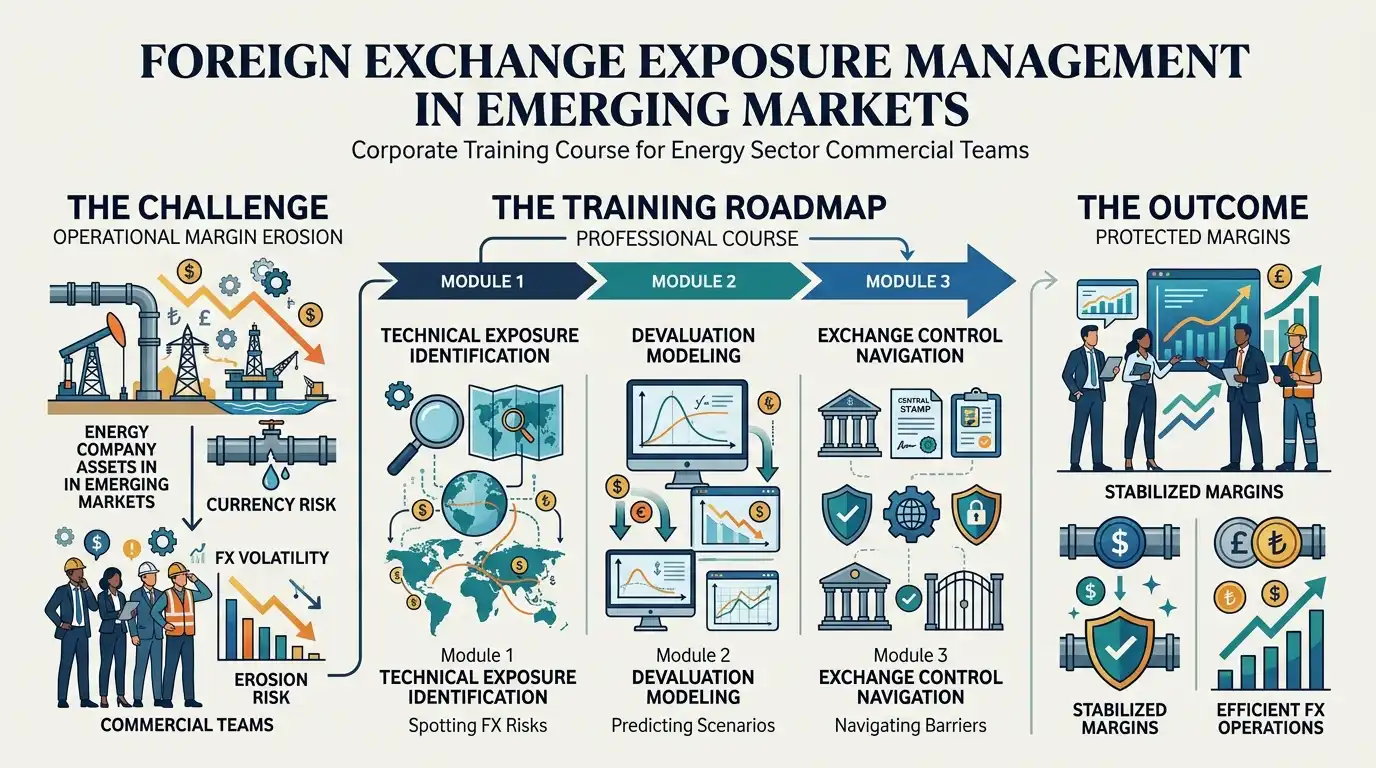
Operating within frontier and emerging energy markets exposes oil and gas organizations to asymmetrical financial risks. Local operational expenditures require payments in host currencies, whereas capital expenditure and petroleum revenues are predominantly denominated in United States Dollars. This structural mismatch generates severe transaction, translation, and economic exposure across operating subsidiaries.
Finance departments in host nations often struggle with sudden policy shifts, such as exchange control regulations and unexpected currency convertibility risk. When central banks implement capital controls or limit access to official foreign exchange auction windows, corporate operations face severe bottlenecks. Unprepared management teams frequently suffer losses when foreign exchange reserves dry up, preventing the repatriation of dividends or international vendor payments.
Furthermore, compliance with host country nationalization policies introduces complex local content payment obligations. Energy companies must settle vendor contracts in local currencies that are subject to rapid devaluation risk or wide spreads driven by parallel market rates. Without formalized hedging mechanics and optimized contractual clauses, finance and commercial teams absorb unaccounted foreign exchange losses directly into operating expenses.
The Institute For Oil & Gas Training created this curriculum specifically to bridge this institutional skill gap. The program eliminates disjointed risk practices by aligning treasury execution with project finance and legal contracting practices. Participants learn to evaluate structural vulnerability across corporate cash flows, audit balance sheet items against sovereign policy shifts, and execute risk-mitigating treasury policies.
Why is this training course structured this way?
This course utilizes a modular, decision-driven progression that moves systematically from risk identification and quantitative exposure modeling to contractual structuring, treasury hedging, and integrated sovereign exchange control management.
The educational architecture mirrors the actual capital allocation and treasury management lifecycle within an international oil company. Learners must first understand the fundamental accounting and economic mechanisms of currency vulnerability before attempting to deploy mitigation strategies. Evaluating real-world energy balance sheets ensures that theoretical concepts immediately connect to enterprise-level financial metrics.
The progression requires participants to master exposure quantification prior to selecting contractual or financial hedging tools. Attempting to deploy financial derivatives or re-negotiate vendor terms without accurate risk exposure data leads to costly over-hedging or unmitigated tail risk. Reviewing How to Evaluate Foreign Exchange Risk Management Strategies in Emerging Petroleum Markets demonstrates how structured evaluation protocols prevent capital misallocation during volatile economic cycles.
By structuring the learning path from balance sheet diagnostics to advanced market execution, the Institute For Oil & Gas Training ensures that delegates gain scalable, job-ready skills. HR teams and department heads can track participant advancement through standardized evaluation gates. This systematic design prepares commercial personnel to defend corporate cash flows against macro-economic shocks in unstable operating environments.
What will participants learn across the curriculum?
Participants learn to identify, model, hedge, and manage foreign exchange exposure across four specialized core technical modules using real-world energy balance sheet datasets and sovereign market simulations.
Module 1: FX Risk Identification & Accounting Standards
Mapping transaction, translation, and economic exposure across petroleum assets.
Evaluating the impact of IAS 21 / ASC 830 on the FX revaluation of monetary items.
Analyzing parallel market rates versus official central bank fixings in asset valuation.
Identifying operational bottlenecks created by central bank exchange control regulations.
Module 2: Quantitative Exposure Modeling & Sensitivity Analysis
Building Value-at-Risk (VaR) models for multi-currency operational expenditures.
Stress-testing cash flows against sudden national currency devaluation risk.
Calculating cash flow at risk (CFaR) for long-term field development projects.
Measuring net monetary asset positioning in volatile emerging market currencies.
Module 3: Contractual Structuring & Local Content Optimization
Designing dollar linked contracts to legal and regulatory host-nation standards.
Structuring indexation clauses that absorb inflation and currency fluctuations.
Balancing host country local content payment obligations against hard currency reserves.
Mitigating non-convertibility clauses in joint venture operating agreements.
Module 4: Treasury Management, Hedging & Capital Controls
Deploying forward contracts, cross-currency swaps, and non-deliverable forwards (NDFs).
Managing operational liquidity under strict central bank repatriation restrictions.
Establishing offshore reserve accounts and escrow mechanisms within statutory limits.
Constructing internal corporate net pools to minimize external transaction costs.
How is the course delivered and assessed?
The course is delivered through interactive short-course formats, including intensive onsite workshops, virtual classrooms, and customized corporate cohorts, assessed via practical modeling exams and project simulations.
The Institute For Oil & Gas Training offers flexible learning modalities tailored to corporate operational schedules. Organizations can select the delivery infrastructure that best aligns with their geographical distribution and internal learning frameworks.
Delivery Format | Duration | Structure & Methodology | Ideal Participant Audience |
In-Person Workshop | 5 Consecutive Days | Intensive classroom lectures, group case studies, live financial modeling labs, and peer discussions. | Senior leadership, Treasury heads, Legal counsel, Finance directors. |
Live Virtual Classroom | 4 Weeks (2 sessions/week) | Interactive online modules, real-time software walkthroughs, digital breakout rooms, and weekly assignments. | Distributed finance teams, regional commercial analysts, joint venture accountants. |
Corporate Onsite | Customized Schedule | Tailored instruction using the client enterprise's internal accounting data, contracts, and treasury constraints. | Intracompany functional units (Finance, HR, Legal, Supply Chain). |
Assessment protocols focus entirely on practical execution rather than theoretical memorization. Participants must complete real-world diagnostic projects to demonstrate competency before receiving professional certification.
Diagnostic Exposure Audit: Candidates evaluate an anonymized balance sheet from an emerging market E&P operator, identifying unhedged monetary items and regulatory compliance risks.
Financial Modeling Test: Candidates build a functional cash-flow-at-risk model in spreadsheet software, incorporating sudden currency devaluations and dual exchange rates.
Contractual Redrafting Exercise: Delegates modify a standard local procurement contract to integrate inflation-indexed, dollar-linked payment terms that satisfy local content laws.
Treasury Capstone Simulation: Participants navigate a interactive scenario involving central bank repatriation restrictions, determining optimal capital allocation paths under constrained liquidity.
What measurable results can organizations expect?
Organizations achieve immediate improvements in risk visibility, reduced transaction losses, compliant local content execution, and protected asset margins across operating subsidiaries.
Enrolling corporate teams in this program delivers direct financial and operational benefits to energy enterprises. The Institute For Oil & Gas Training designs all course activities to produce immediate work-product output that delegates can deploy within their functional roles.
Operational and Financial Value Drivers
Protection of Operating Margins: Commercial teams learn to eliminate unhedged currency risks before signing multi-year supply and service agreements.
Reduced Friction in Joint Ventures: Finance units gain standardized frameworks to report and account for foreign exchange gains and losses across joint venture operating partners.
Enhanced Regulatory Compliance: Legal and procurement personnel structure contracts that strictly meet host-nation local content requirements without exposing the enterprise to unmitigated devaluation risk.
Optimized Treasury Operations: Treasury teams implement structured strategies to manage liquidity when facing foreign currency convertibility risk and strict capital controls.
Department leaders and HR directors observe direct performance enhancements within cross-functional teams. Finance managers gain the capability to defend balance sheets against macroeconomic shocks, legal counsel draft resilient commercial terms, and procurement specialists manage vendor pricing structures effectively under volatile economic conditions.
How does enrollment work and what are the entry requirements?
Enrollment requires a formal application submission, functional background verification, professional prerequisite review, and corporate sponsorship confirmation.
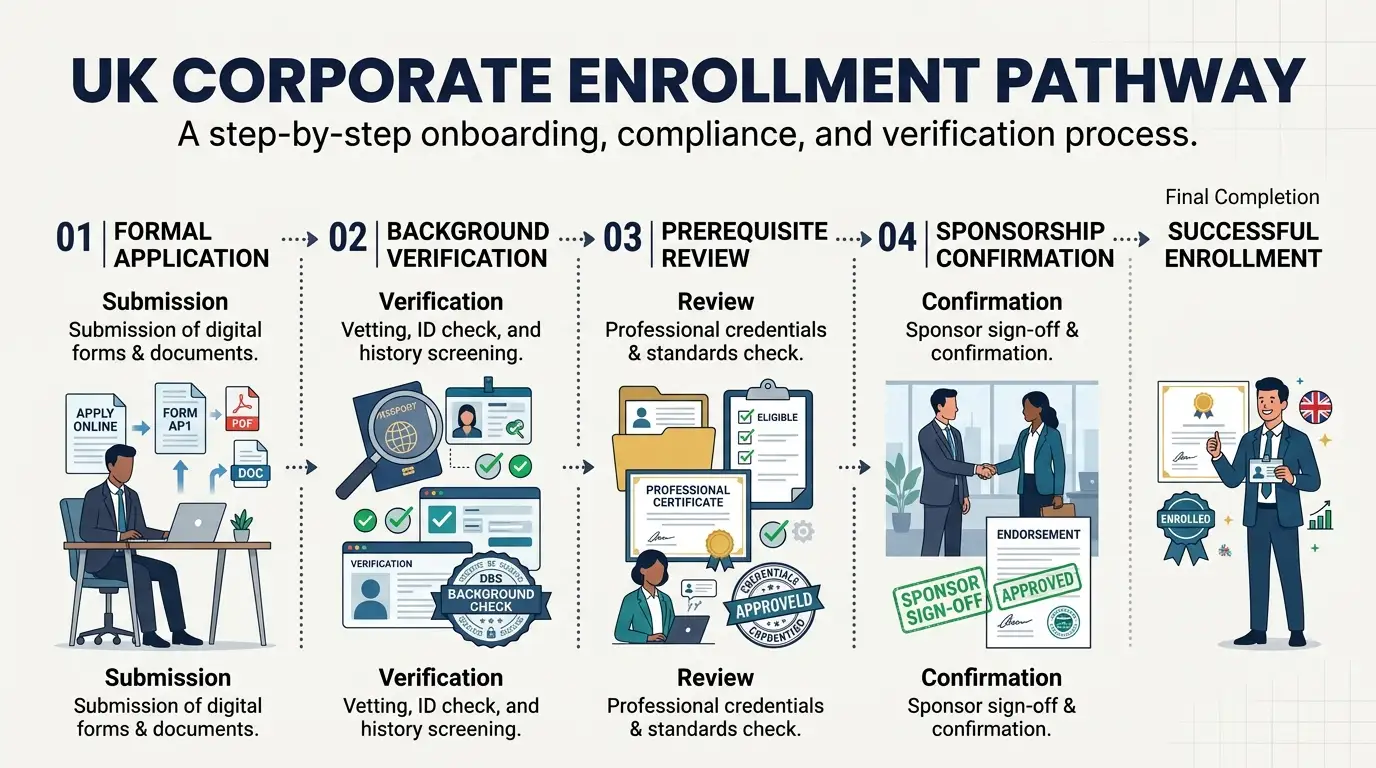
To maintain instructional quality and high-level peer interactions, the Institute For Oil & Gas Training applies strict entry criteria for candidates entering the Foreign Exchange (FX) Exposure Management in Emerging Markets Training Course.
Candidate Eligibility Criteria
Minimum Experience: Three years of professional experience in finance, accounting, corporate treasury, legal, commercial contracting, or supply chain management within the energy sector.
Technical Prerequisites: Fundamental understanding of corporate financial statements (balance sheets, income statements, cash flow statements) and basic commercial contract structures.
Target Professional Roles:
Corporate Treasury Managers and Financial Controllers
Commercial and Legal Contracts Managers
Joint Venture Accounting Specialists
Supply Chain and Local Content Directors
Enterprise Risk Management Officers
Step-by-Step Registration Pathway
Application Submission: The applicant or corporate HR representative submits the candidate's professional profile and current operational role details through the registration portal.
Prerequisite Audit: The academic committee at the Institute For Oil & Gas Training reviews the candidate's background to ensure they possess the quantitative baseline required for advanced modeling modules.
Enterprise Approval & Seat Allocation: Upon verification, formal invoice and registration documentation are issued to the sponsoring enterprise or individual participant.
Pre-Course Onboarding: Confirmed delegates receive preparatory reading materials, core financial formulas, and case study overviews 14 days prior to course commencement.
Upon successful completion of all instructional modules and practical assessments, participants receive an institutional Certificate of Completion from the Institute For Oil & Gas Training, verifying their technical capability to manage complex currency exposure in emerging markets.
Organizations seeking to safeguard their financial performance against volatile exchange rates can apply for course access to secure candidate seats for upcoming training cohorts.
Frequently Asked Questions
What does an oil and gas petroleum treasury, cash, and banking course cover?
The Oil & Gas Petroleum Treasury, Cash and Banking course delivered by the Institute For Oil & Gas Training covers operational liquidity management, multi-currency cash pooling, international banking structures, and financial risk mitigation. Participants learn how to manage complex petroleum cash flows, navigate central bank capital controls, and oversee cross-border treasury operations within the energy sector.
Why is corporate cash management critical for oil and gas companies?
Corporate treasury and banking management is vital for energy firms due to high capital expenditure requirements, volatile commodity pricing, and foreign exchange exposure in international operations. Efficient liquidity structures prevent working capital shortfalls, optimize yield on short-term cash reserves, and maintain uninterrupted funding across exploration and production assets.
How do petroleum treasury management systems improve operational cash flow?
Petroleum treasury management systems centralize multi-bank accounts, automate foreign currency revaluations, and streamline cash forecasting across joint venture operations. Through practical instruction at the Institute For Oil & Gas Training, energy professionals master automated treasury workflows that reduce banking friction and protect operating margins against currency volatility.
Who should enroll in an oil and gas banking and liquidity management program?
This professional development program is designed for treasury managers, financial controllers, joint venture accountants, and corporate finance personnel working in petroleum operations. The curriculum benefits commercial teams looking to enhance their technical knowledge of international banking protocols, debt service mechanics, and regional cash management frameworks.
How are cross-border banking restrictions managed in emerging energy markets?
Managing banking restrictions in emerging markets requires structured dollar-linked contracts, compliant local content payment arrangements, and active central bank regulatory monitoring. Courses from the Institute For Oil & Gas Training equip treasury officers with practical tools to structure non-deliverable forwards, manage repatriation constraints, and safeguard international vendor payments.
Related training courses
Corrosion Control by Material Selection Training Course
- Specialisation
- Oil & Gas Corrosion Management and Control
- Duration
- 5 days · 15 CPD hours
Corrosion Monitoring & Testing Training Course
- Specialisation
- Oil & Gas Corrosion Management and Control
- Duration
- 5 days · 15 CPD hours
Contract Strategy, Risk and Negotiation Training Course
- Specialisation
- Oil & Gas Petroleum Contracts
- Duration
- 5 days · 15 CPD hours
More articles

Bank Relationship Management Training for Petroleum Company Treasury Professionals
Master bank evaluation, RFPs, and fee analysis. Enroll in the Bank Relationship Management Training by Institute For Oil & Gas Training.
Read article →
How to Evaluate Banking Partners and Treasury Services for Oil and Gas Businesses
Evaluate banking partners and treasury services for oil and gas firms with structured criteria, RFP models, and counterparty credit frameworks.
Read article →
Why Bank Relationship Management Matters for Petroleum Companies
Learn how structured bank relationship management training mitigates liquidity risk, lowers financing costs, and improves treasury performance.
Read article →