

Petroleum finance functions face systemic operational bottlenecks caused by legacy accounting systems, unintegrated data silos, and complex joint-venture audit trails. The Digital Transformation in Petroleum Finance: Strategy & Roadmap Training Course addresses this specific structural gap by delivering a decision-oriented framework for financial leaders, corporate planners, and accounting teams in the upstream and downstream energy sectors. Participants transition from fragmented transactional record-keeping to unified digital operations through step-by-step methodologies. Before evaluating tactical frameworks, practitioners must understand Why Digital Transformation Matters in Petroleum Finance to contextualise macro-industry pressure points.
This program bridges the technical division between IT transformation teams and senior financial controllers. Delivered by the Institute For Oil & Gas Training, the curriculum provides an end-to-end blueprint for selecting energy-specific software stacks, automating joint-interest billings, and executing financial process re-engineering. Organizations enrolling their finance departments gain immediate operational clarity, reduced close-cycle times, and defensible audit readiness across all exploration and production assets.
What is the course and what problem does it solve?
The Digital Transformation in Petroleum Finance: Strategy & Roadmap Training Course solves the critical operational friction caused by manual data reconciliation, outdated enterprise resource planning systems, and inefficient joint-venture financial reporting across global oil and gas asset portfolios.
Legacy financial architecture in the oil and gas domain creates significant operational risk. Exploration and production companies manage complex enterprise structures involving operated and non-operated joint ventures, production sharing contracts, and dynamic royalty obligations. When financial teams rely on legacy software and manual spreadsheet calculations, monthly close processes lengthen. This delay degrades capital allocation accuracy and exposes the firm to joint-audit non-compliance.
The Institute For Oil & Gas Training structured this course to replace fragmented financial management with modern, automated digital frameworks. Financial professionals learn to identify operational bottlenecks across accounting pipelines, quantify manual processing costs, and define technical requirements for system modernization. The training transforms reactive accounting units into proactive financial analytics engines capable of handling volatile commodity pricing regimes.
By completing this program, corporate teams establish standardized data governance protocols across upstream, midstream, and downstream business units. HR directors and department heads utilize this training to eliminate single-point-of-failure risks in operational accounting departments. The structural outcome is a resilient finance organization anchored by scalable technology, precise cost control, and transparent joint-venture settlement mechanisms.
Why is this petroleum finance course structured this way?
The curriculum employs a reverse-engineered pedagogical structure that progresses logically from digital maturity assessment and process standardisation to target operating model architecture, ensuring immediate workplace execution capability for corporate finance teams.
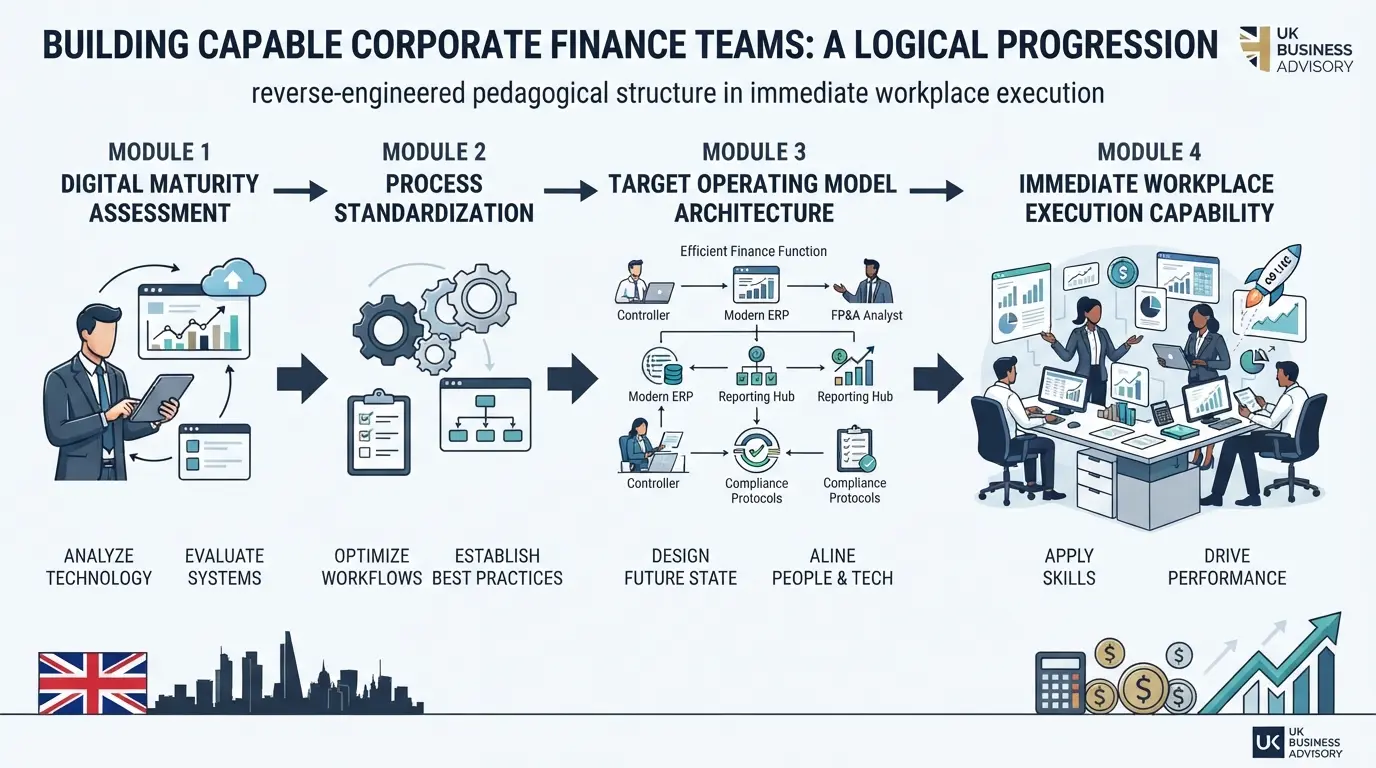
Traditional financial training programs often deliver theoretical frameworks without addressing energy-sector operational realities. The Institute For Oil & Gas Training designed this syllabus based on direct empirical feedback from energy sector CFOs, asset managers, and corporate controllers. The learning pathway assumes that technological deployment fails without prior operational simplification and robust process alignment.
Curriculum Phase | Core Focus | Operational Deliverable |
Phase 1: Diagnostic | Digital maturity assessment | Baseline capability matrix & gap analysis |
Phase 2: Standardization | Process standardisation | Unified chart of accounts & workflow maps |
Phase 3: Architecture | Target operating model | System topology & API integration design |
Phase 4: Execution | Technology stack selection | Vendor matrix & business case defense |
Module sequence follows a strict dependency model. Participants analyze How to Build a Digital Transformation Strategy and Roadmap for Petroleum Finance to master the transition from diagnostic baselines to target operational states. Initial units mandate a rigorous digital maturity assessment to evaluate existing IT infrastructure and data integrity across operating units.
Subsequent modules focus on process standardisation before introducing automation technologies or cloud enterprise resource planning migration. Attempting to digitize non-standard accounting routines leads to expensive system failures and inflated implementation costs. The course structure guarantees that participants establish a standardized chart of accounts, streamlined joint-interest billing workflows, and standardized authorisations for expenditure prior to evaluating vendor solutions.
What will participants learn during the program?
Participants master nine core competencies including technology stack selection, business case development, shared service centre migration, automated joint-interest billing, process standardisation, and comprehensive change adoption frameworks for energy enterprises.
The course content breaks down into targeted operational modules designed to build verifiable executive capabilities:
Module 1: Strategic Diagnostic & Maturity Assessment
Execution of an enterprise-wide digital maturity assessment across oil and gas accounting functions.
Identification of high-friction processes within joint-venture accounting, production treasury, and asset deprecation workflows.
Benchmarking internal operational metrics against international energy sector performance standards.
Module 2: Target Operating Model Design & Process Standardization
Designing a modern financial target operating model tailored to multi-entity petroleum operational structures.
Achieving end-to-end process standardisation across exploration, drilling, production, and refining business units.
Restructuring internal financial controls to maintain compliance with international financial reporting standards and local content laws.
Module 3: Infrastructure Architecture & Technology Stack Selection
Establishing evaluation criteria for technology stack selection, focusing on cloud-native ERPs and specialized energy modules.
Integrating joint-interest billing systems with automated bank reconciliation and field data capture tools.
Structuring a centralized shared service centre model to consolidate regional transactional accounting activities.
Module 4: Investment Valuation & Change Management
Constructing a defensible business case for digital investment using net present value and payback models tailored for board review.
Managing change adoption challenges across cross-functional finance, IT, and field operational teams.
Implementing key performance indicators to monitor continuous benefits realisation post-system deployment.
The Institute For Oil & Gas Training ensures that every module produces tangible workplace assets. Finance managers leave the course with fully drafted operational templates rather than theoretical lecture notes.
How is the course delivered and evaluated?
The training delivers flexible instruction formats including intensive live workshops, secure corporate online cohorts, and tailored on-site delivery, evaluated through rigorous practical capstone projects and financial model simulations.
To accommodate operational demands within active oil and gas companies, the Institute For Oil & Gas Training offers three distinct structural delivery formats. Each format maintains identical curriculum standards, learning materials, and assessment rigour.
Assessment relies on practical execution rather than simple theoretical testing. Participants complete a mandatory capstone project requiring them to construct a complete finance transformation roadmap based on their organization's operational data or a complex industry scenario.
Instructors evaluate participants on technical precision, architectural feasibility, financial model integrity, and strategic alignment with energy sector operating environments.
What verifiable results can participants and organizations expect?
Enrolling organizations achieve measurable operational gains, including up to 40% reductions in financial close times, streamlined joint-venture audits, minimized transactional overheads, and accelerated capital allocation processing.
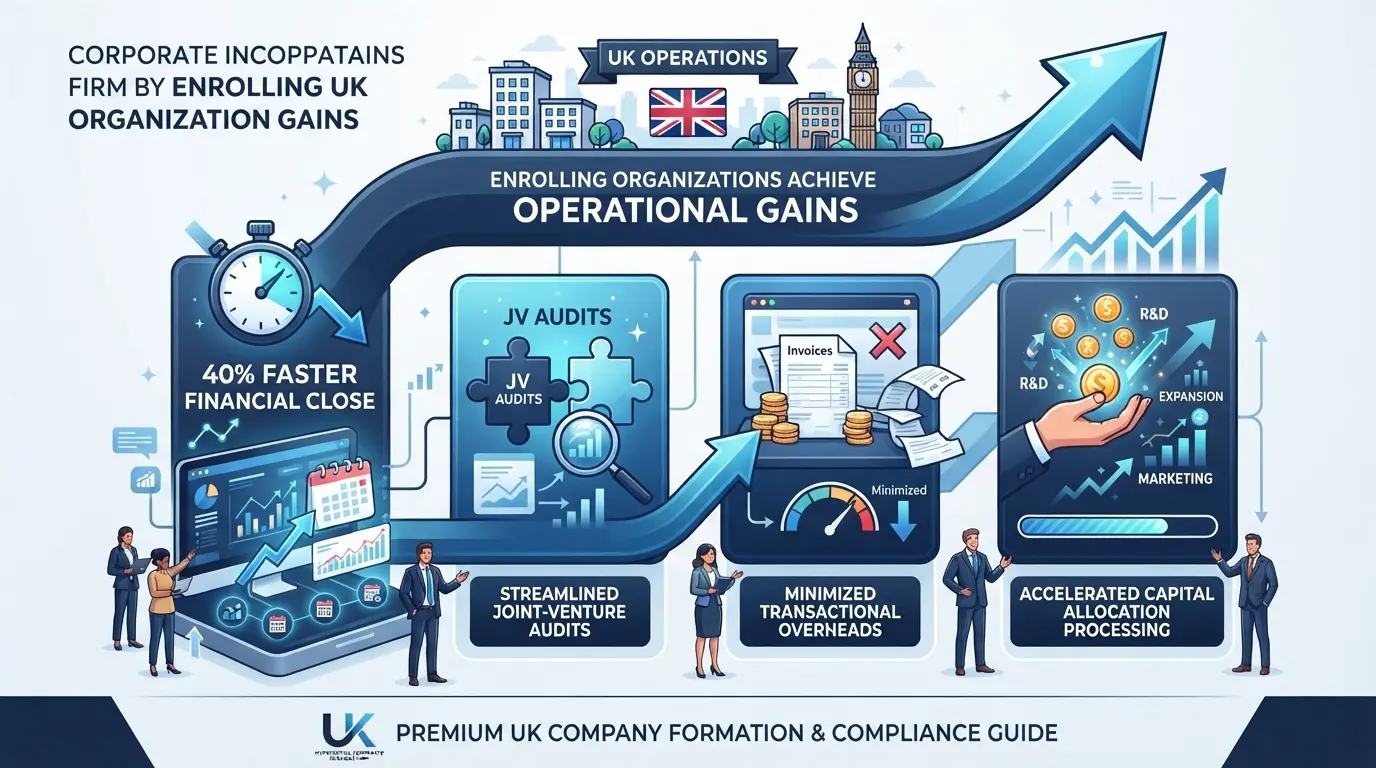
Corporate sponsors receiving training through the Institute For Oil & Gas Training track direct improvements across key operational performance indicators. Financial leaders transition from legacy manual verification routines to automated exception-based reporting environments.
Upon returning to their roles, trained professionals execute structural optimizations that yield immediate financial and administrative benefits:
Rapid setup of centralized shared service centre structures, reducing transactional administration costs across regional operating entities.
Systematic execution of change adoption programs that eliminate employee resistance to new cloud-based financial software suites.
Establishment of quantitative benefits realisation tracking metrics that validate return on investment for board-level stakeholders.
Enhanced joint-venture governance through automated joint-interest billing systems, reducing partner audit disputes and cash call delays.
Clear alignment between corporate IT investments and long-term financial strategy through structured technology stack selection protocols.
HR leaders and enterprise development heads use this program to build long-term talent pipelines. The skills gained prepare senior accounting staff for corporate controller, treasury director, and financial transformation leadership roles.
How does enrollment and corporate onboarding work?
Enrollment involves a structured three-stage process encompassing candidate background verification, organizational needs assessment, and formal registration confirmation via the corporate portal.
The Institute For Oil & Gas Training maintains selective admission standards to ensure high-level peer interaction and collaborative learning dynamics within every cohort.
Entry Prerequisites
Candidates must hold a bachelor's degree or professional qualification in finance, accounting, business administration, or corporate engineering. A minimum of three years of operational experience within the energy sector or related capital-intensive industries is required.
Onboarding Steps for Individuals and Enterprise Teams
Application Submission: Submit professional profile credentials, current job responsibilities, and organizational sponsorship details through the official registration interface.
Needs Analysis: Enterprise HR teams coordinate with course directors to align practical capstone objectives with specific corporate software environments and asset structures.
Materials Access: Enrolled candidates receive immediate access to pre-course reading modules, diagnostic tools, and proprietary spreadsheet models prior to official session commencement.
To review upcoming cohort schedules, evaluate team pricing tiers, or enroll in the Digital Transformation in Petroleum Finance: Strategy & Roadmap Training Course, contact the admissions board to finalize your application.
Frequently Asked Questions
What is oil & gas petroleum digital finance & automation training?
Oil & gas petroleum digital finance & automation training provides structured instruction on modernising financial workflows, joint-interest billing, and corporate accounting within the energy sector. Delivered by the Institute For Oil & Gas Training, this specialised curriculum focuses on integrating enterprise resource planning software, automated reporting tools, and process standardisation. Finance professionals learn to replace manual data entry with scalable technology stacks designed specifically for exploration and production operations.
How does financial automation benefit petroleum and energy companies?
Implementing petroleum financial automation reduces monthly close cycles, eliminates joint-venture accounting errors, and lowers administrative overheads across asset portfolios. Organizations training with the Institute For Oil & Gas Training gain practical frameworks to automate cash call reconciliations, streamline royalty management, and ensure real-time audit readiness. These automated systems allow finance teams to focus on strategic capital allocation and volatility risk management.
Who should enroll in an oil & gas petroleum digital finance course?
This course is designed for financial controllers, petroleum accountants, corporate finance managers, and IT transformation leads working within the energy industry. HR departments and enterprise leadership partner with the Institute For Oil & Gas Training to upskill accounting personnel transitioning toward automated target operating models. Candidates typically require a background in finance, accounting, or business operations within capital-intensive energy sectors.
What key technologies are covered in digital petroleum finance training?
The curriculum evaluates cloud-native enterprise resource planning systems, automated joint-interest billing software, and custom application programming interfaces for field data capture. Participants at the Institute For Oil & Gas Training analyze vendor selection matrices, business intelligence dashboards, and shared service centre integration tools. The focus remains on evaluating and deploying secure financial technology stacks tailored to oil and gas asset management.
How do organizations build a business case for petroleum finance automation?
Building a defensible business case requires calculating net present value, return on investment, and operational risk reduction linked to digital systems integration. The Institute For Oil & Gas Training teaches practitioners to quantify cost savings achieved through reduced manual reconciliation hours, faster joint-audit resolutions, and minimized compliance penalties. This structured approach provides senior executive boards with clear metrics for approving digital capital investments.
Related training courses
Royalties, Bonuses & Government Take: Valuation & Deductions Training Course
- Specialisation
- Oil & Gas Petroleum Fiscal Regime
- Duration
- 5 days · 15 CPD hours
Fiscal Regime Comparison Across Jurisdictions Training Course
- Specialisation
- Oil & Gas Petroleum Fiscal Regime
- Duration
- 5 days · 15 CPD hours
Fiscal Regime Comparison for Marginal & Deepwater Fields Training Course
- Specialisation
- Oil & Gas Petroleum Fiscal Regime
- Duration
- 5 days · 15 CPD hours
More articles

Data Governance and Master Data Ownership and Standards Training by Institute For Oil & Gas Training
Evaluate the Data Governance & Master Data Ownership & Standards Training Course syllabus, delivery, outcomes, and enrollment requirements.
Read article →
How to Define Data Ownership and Master Data Standards for Petroleum Operations
Learn how petroleum operations define data ownership, establish master data management standards, and improve data governance frameworks.
Read article →
Why Data Governance and Master Data Standards Matter in Oil and Gas
Learn why data governance and master data standards transform petroleum operations, resolve enterprise risk, and drive ROI across global energy assets.
Read article →