

The CAPEX vs OPEX Impact on Cost Recovery Training Course provided by the Institute For Oil & Gas Training is an intensive professional development program. It resolves classification errors, joint venture audit disputes, and delayed cost recovery mechanisms across petroleum production sharing contracts.
In upstream petroleum operations, financial governance relies heavily on precise accounting classifications. Mischaracterising capital expenditure (CAPEX) as operational expenditure (OPEX) directly alters cost recovery timelines, tax liabilities, and partner cash allocations under Production Sharing Agreements (PSAs) and Joint Operating Agreements (JOAs). When finance teams, joint venture accountants, and commercial managers lack a unified technical framework, organisations face severe compliance penalties, deferred revenues, and drawn-out partner audits.
Understanding Why CAPEX and OPEX Classification Affects Cost Recovery in Oil and Gas is essential for establishing baseline financial control across joint ventures. Without structured training, multidisciplinary teams misinterpret cost recovery treatment of capex, leading to unrecoverable expenditure and strained regulatory relationships.
The CAPEX vs OPEX Impact on Cost Recovery Training Course addresses this systemic gap by establishing rigorous accounting standards across operational, financial, and legal departments. Delivered by the Institute For Oil & Gas Training, this curriculum aligns corporate workflows with international petroleum accounting norms and host government regulations. Participants gain actionable expertise in capital allowances versus deductible expenses, ensuring every operational outlay is classified correctly from initial authorization for expenditure (AFE) to final cost statement reconciliation.
Why is this training course structured this way?
The curriculum structure designed by the Institute For Oil & Gas Training follows a progressive learning logic. It transitions participants from core statutory standards to advanced commercial modeling, ensuring immediate, verifiable application within corporate joint venture management workflows.
Petroleum accounting requires integrated competencies spanning legal contract analysis, financial accounting, and field operations. The Institute For Oil & Gas Training structures this course to bridge the operational divide between engineering teams submitting AFEs and accounting departments filing cost recovery claims. The sequence builds from foundational contractual definitions to complex dispute resolution scenarios.
A core element of this design involves evaluating How to Assess the Impact of CAPEX and OPEX Classification on Petroleum Cost Recovery during operational execution. Participants analyze real-world Production Sharing Agreements to understand how capitalization thresholds dictate cost ceiling allowances.
By analyzing real case studies, delegates see firsthand how classification decisions impact cash flow versus profit impact over multi-year production lifecycles. The Institute For Oil & Gas Training deliberately limits theoretical lecturing in favor of applied problem-solving. This approach ensures that corporate participants master the mechanics of joint venture chargeability and regulatory compliance before returning to their active asset teams.
What will participants learn in the training modules?
Participants acquire specialized technical skills across four comprehensive modules. The curriculum covers contractual cost accounting, joint venture billing, capitalization strategies, and audit defence mechanisms designed specifically for the international upstream energy sector.
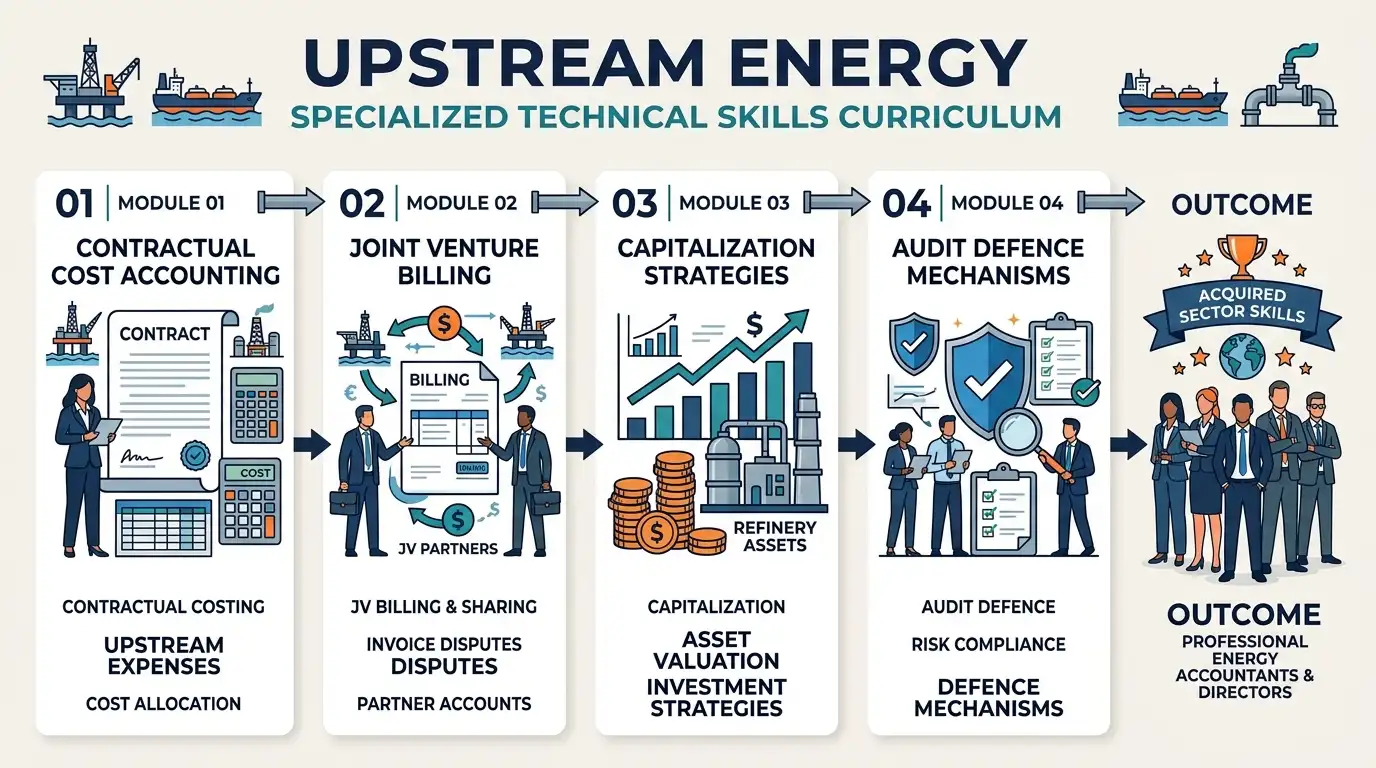
The CAPEX vs OPEX Impact on Cost Recovery Training Course delivers targeted competency upgrades tailored to high-stakes energy sector operations.
Module 1: Accounting Foundations & Contractual Regimes
Participants analyze how contractual wording defines recoverable expenditure across various international operational jurisdictions. The Institute For Oil & Gas Training provides detailed breakdowns of cost recovery treatment of capex within concessionary systems, service agreements, and production sharing contracts. Delegates learn to categorize exploration, appraisal, development, and decommissioning expenditures accurately.
Module 2: AFE Structuring & Joint Venture Chargeability
This module focuses on the practical execution of Authorization for Expenditure documents. Delegates learn to define precise boundary lines between capital asset additions and routine operational repairs. Training emphasizes joint venture chargeability rules to prevent parent company overheads or non-recoverable operational expenses from being rejected during joint venture audits.
Module 3: Commercial & Tax Impact Modeling
Participants build comparative financial models to measure how cost treatment affects corporate financial metrics. The course covers capital allowances versus deductible expenses under host country tax codes. Delegates model the depreciation impact on earnings alongside short-term cash flow versus profit impact to understand corporate liquidity realities.
Module 4: Audit Preparedness & Strategic Optimization
The final module equips delegates to navigate classification disputes with partners and regulators. The Institute For Oil & Gas Training supplies proven frameworks for defending cost submissions during statutory government audits. Participants formulate a compliant capex to opex shift strategy to optimize asset life extension projects without risking penalty exposure.
How is the training delivered and assessed?
The Institute For Oil & Gas Training delivers this program through flexible executive formats including instructor-led interactive workshops, live virtual classrooms, hybrid models, and customized corporate onsite sessions, verified by practical skill assessments.
Professional development requires practical exposure to realistic operational data sets. The Institute For Oil & Gas Training utilizes an applied learning methodology where lectures are integrated with practical accounting exercises, contract reviews, and financial modeling workshops.
Training Methodology
Delivery centers on practical execution rather than passive listening. Participants work with anonymized petroleum accounting data, actual joint venture audit exception reports, and production sharing contract clauses. Interactive sessions encourage peer discussion regarding regional regulatory environments and host government compliance expectations.
Assessment & Certification
Skill acquisition is verified through practical evaluations rather than simple attendance checks. Delegates complete three core assessment components during the program:
Practical AFE Classification Test: Delegates review sample field expenditure requests and correctly classify every line item under target contract rules.
Joint Venture Audit Simulation: Participants defend a contested cost recovery statement against simulated partner and regulatory audit exceptions.
Financial Impact Case Study: Delegates model a capital project to demonstrate the net earnings and cash flow consequences of alternative accounting classifications.
Upon successful completion of all assessment checkpoints, the Institute For Oil & Gas Training awards a formal Certificate of Professional Competency in Petroleum Cost Recovery Accounting.
What measurable results can organizations expect?
Organizations enrolling their workforce achieve immediate improvements in financial compliance, reduced audit write-offs, accelerated cost recovery cycles, and improved cross-functional alignment between engineering and accounting departments.
Sending personnel to the CAPEX vs OPEX Impact on Cost Recovery Training Course delivers clear, quantifiable operational returns for upstream operating companies and non-operating joint venture partners.
Financial & Risk Mitigation Metrics
Misclassified expenditures lead to audit disallowances that directly hurt corporate net income. By standardizing accounting approaches across operating teams, organizations eliminate joint venture chargeability errors before filing cost statements.
Reduced Audit Exceptions: Companies experience a significant reduction in formal disallowances raised by state audit agencies and joint venture partners.
Faster Cash Realization: Correct cost recovery treatment of capex ensures faster approval of monthly audit statements, optimizing operational working capital.
Eliminated Penalty Exposure: Proper alignment with host country tax codes prevents retroactive tax penalties caused by incorrect expense deductions.
Corporate Human Resources & Talent Development Application
For HR directors and enterprise learning managers, this course serves as an effective tool for talent development within finance, commercial, and operational divisions.
Cross-Functional Capability: Finance staff gain essential insights into field operations, while project engineers learn the commercial consequences of their AFE classifications.
Structured Succession Planning: The course provides mid-level asset accountants with the technical capability required to step into senior Joint Venture Manager and Commercial Lead roles.
Standardized Operating Procedures: Intact teams return from training with a unified, compliant framework for processing daily authorization documents and joint interest billings.
How does enrollment and entry work for individuals and corporate teams?
Enrollment requires a background in finance, accounting, engineering, or legal management within the energy sector. Candidates complete a preliminary profile assessment before selection to ensure balanced group dynamics and targeted learning outcomes.
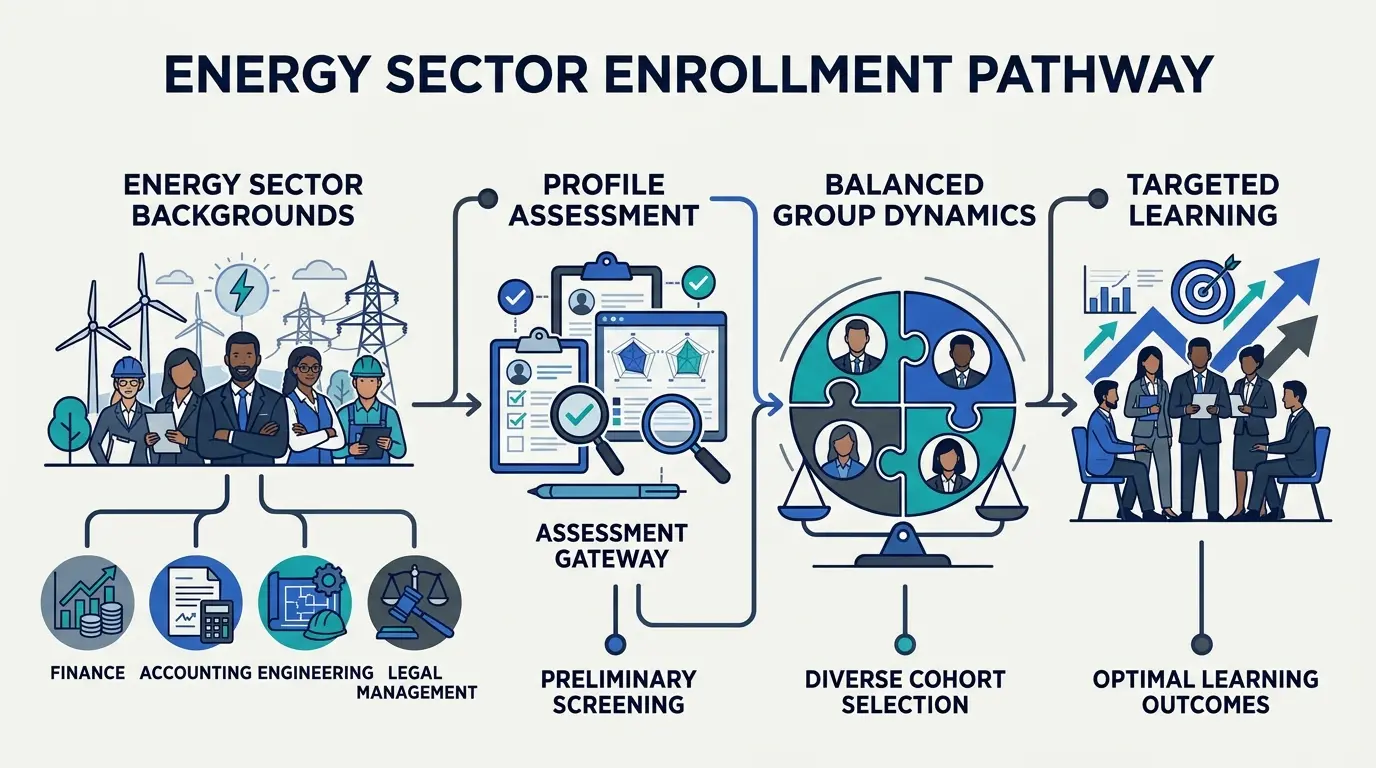
The Institute For Oil & Gas Training maintains structured entry standards to preserve high-level peer exchange during executive workshops and corporate sessions.
Eligibility & Prerequisites
This program is designed for industry professionals who handle or oversee upstream financial governance. Recommended roles include:
Joint Venture Accountants and Cost Engineers
Upstream Finance Directors and Financial Controllers
Commercial Managers and Business Analysts
Regulatory Compliance Officers and State Audit Liaisons
Project Managers and Operations Leads approving AFEs
Participants should possess a fundamental understanding of general accounting principles or petroleum exploration and production workflows.
Corporate Team Registrations
Human Resource departments and corporate training managers can enroll whole asset teams or cross-functional units. The Institute For Oil & Gas Training offers tailored corporate delivery options where course materials, contract templates, and case studies are adapted to reflect the organization's specific operating agreements and regional regulatory requirements.
Step-by-Step Enrollment Process
Application Submission: Submit candidate details, professional background, and selected delivery format through the official program portal.
Pre-Course Skills Assessment: Complete a brief online diagnostic assessment to identify specific skill gaps across joint venture chargeability and cost recovery rules.
Materials Access: Gain access to pre-reading modules, industry contract definitions, and preparation materials via the learning management portal.
Course Attendance & Evaluation: Participate in the training sessions, complete practical modeling assignments, and pass the final audit simulation.
Certification Issuance: Receive the official credential from the Institute For Oil & Gas Training along with a personalized post-course skill development summary.
To secure places for your finance or asset management personnel, enroll in this program today.
Frequently Asked Questions
What is covered in the Oil & Gas Petroleum Budgeting & Cost Control training program?
The Oil & Gas Petroleum Budgeting & Cost Control course delivered by the Institute For Oil & Gas Training covers joint venture accounting, capital expenditure authorization, operational cost tracking, and fiscal variance analysis. Delegates learn how to construct baseline operational budgets, manage cost recovery limits, and apply financial controls across upstream exploration and production assets.
Who should attend the Oil & Gas Petroleum Budgeting & Cost Control course by Institute For Oil & Gas Training?
This professional training is designed for petroleum accountants, project controls managers, commercial analysts, and operational budget holders working in the energy sector. HR managers frequently enroll cross-functional asset teams with the Institute For Oil & Gas Training to align engineering workflows with enterprise financial governance standards.
How does this petroleum budgeting course improve joint venture cost control?
The Oil & Gas Petroleum Budgeting & Cost Control curriculum equips delegates with standardized frameworks for managing Authorization for Expenditure (AFE) procedures and joint operating agreement (JOA) billing schedules. By training with the Institute For Oil & Gas Training, teams reduce billing disputes with non-operating partners and prevent unrecoverable cost overruns.
Does the Institute For Oil & Gas Training provide practical cost control tools during training?
Yes, participants engage in practical financial modeling, variance reporting exercises, and realistic audit scenarios during the Oil & Gas Petroleum Budgeting & Cost Control program. The Institute For Oil & Gas Training supplies delegates with industry-aligned templates and analytical tools for immediate implementation in corporate asset management.
What is the delivery format for the Oil & Gas Petroleum Budgeting & Cost Control training?
The Institute For Oil & Gas Training delivers the Oil & Gas Petroleum Budgeting & Cost Control course through five-day executive workshops, live virtual learning sessions, and customized corporate onsite programs. Each format features interactive lectures, case study evaluations, and formal competency assessments.
Related training courses
CAPEX vs OPEX Classification & Decision Rules Training Course
- Specialisation
- Oil & Gas Petroleum Budgeting & Cost Control
- Duration
- 5 days · 13 CPD hours
Cost Control & Variance Analysis Using Cost Coding Training Course
- Specialisation
- Oil & Gas Petroleum Budgeting & Cost Control
- Duration
- 5 days · 15 CPD hours
Cash Calls, AFEs & Work Program/Budget Control: Preparation Training Course
- Specialisation
- Oil & Gas Petroleum Budgeting & Cost Control
- Duration
- 5 days · 15 CPD hours
More articles

How to Assess the Impact of CAPEX and OPEX Classification on Petroleum Cost Recovery
Learn how to assess CAPEX and OPEX classification in petroleum cost recovery. Evaluate audit risks, cash flow effects, and joint venture compliance.
Read article →
Why CAPEX and OPEX Classification Affects Cost Recovery in Oil and Gas
Learn how CAPEX and OPEX classification dictates cost recovery mechanisms, cash flow velocity, and regulatory compliance in upstream petroleum accounting.
Read article →
CAPEX vs OPEX Classification and Decision Rules Training by Institute For Oil & Gas Training
Master petroleum accounting rules with Institute For Oil & Gas Training. Learn CAPEX vs OPEX capitalization criteria, workovers, and compliance.
Read article →