
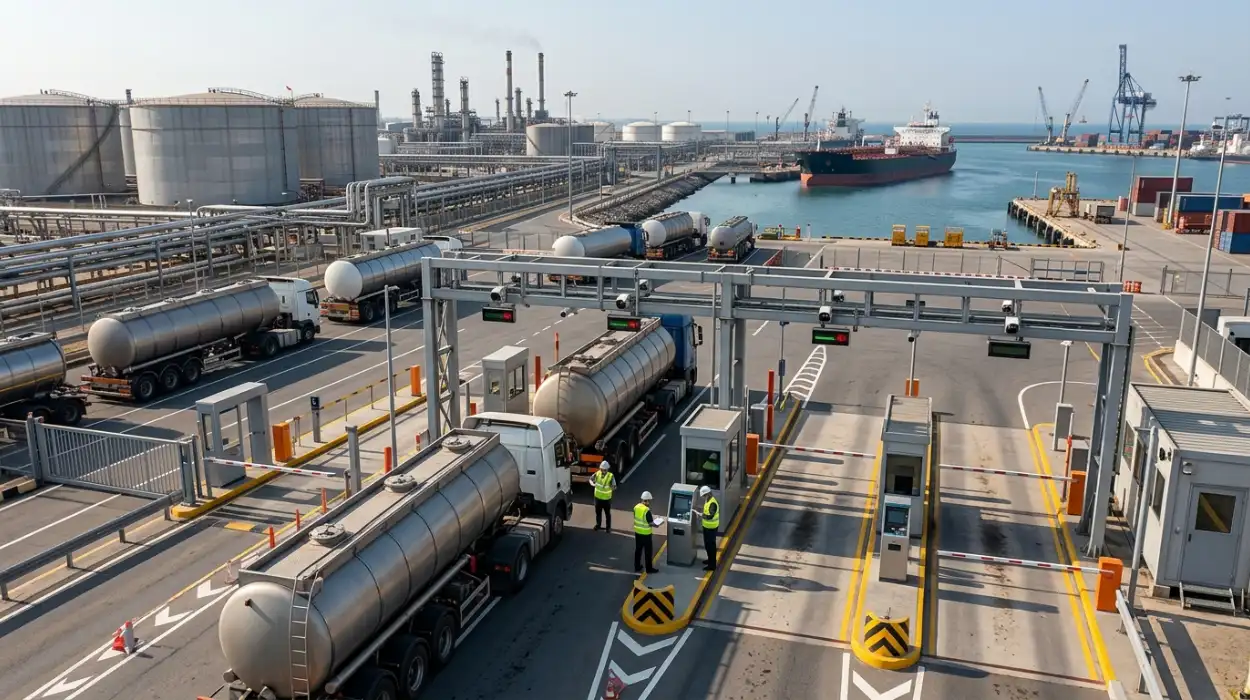
Indirect taxes and duties in petroleum operations represent consumption and transactional levies—including Value Added Tax, customs duties, excise taxes, and local levies—imposed across upstream, midstream, and downstream supply chains, directly impacting operational cash flows, compliance risks, and corporate profitability.
Within energy sector organizations, indirect taxation governs every capital expenditure, equipment procurement, and service contract. Unlike direct income taxes levied on net annual corporate profits, indirect taxes apply to transactional volume, cross-border movements, and operational expenditures. Upstream exploration ventures incur billions of dollars in procurement costs where unrecovered Value Added Tax (VAT) or unexpected customs tariffs immediately erode operational budgets.
Managing these obligations requires precise technical execution across finance, supply chain, legal, and operational divisions. A failure to correctly classify imported machinery or apply statutory exemption certificates results in severe financial penalties, delayed vessel clearances, and blocked working capital. Corporate enterprise resource planning systems must register exact tax rules for diverse jurisdictions to maintain regulatory alignment.
Organizations mitigate exposure by training multidisciplinary teams to recognize transactional tax triggers during contract drafting and procurement execution. Strategic indirect tax management ensures that petroleum ventures maintain tax efficiency, protect project margins, and preserve seamless operational supply chains.
How Do Corporate Teams Process Indirect Tax and Customs Obligations?
Corporate teams process indirect tax and customs obligations through structured compliance workflows, integrated enterprise software, cross-departmental data validation, and regular statutory reporting that reconcile operational procurement actions with host-government tax legislation.
Tax administration begins during the procurement initiation stage within operating companies and EPC (Engineering, Procurement, Construction) contractors. When supply chain teams raise purchase orders for capital items—such as offshore blowout preventers or subsea production trees—finance specialists verify statutory tax codes and apply applicable exemptions.
Customs brokers and logistics coordinators submit import declarations to national border authorities. Items imported under temporary admission regimes require strict record-keeping to prevent default duty assessments when gear leaves the host country.
Finance departments process vendor invoices by cross-referencing tax registration numbers, validated tax rates, and official tax exemption certificates. Tax managers aggregate input VAT paid on operational purchases and offset these amounts against output VAT collected on sales. Tax departments file monthly or quarterly tax returns with national revenue authorities, producing audit trails that link purchase orders, bills of lading, and bank settlement records.
What Key Components Frameworks and Delivery Formats Build Indirect Tax Competence?
Indirect tax competence relies on structured frameworks encompassing tax technical knowledge, supply chain integration, dispute resolution mechanics, interactive workshops, real-world case simulations, and digital learning modules delivered across 16 to 32 instructional hours.
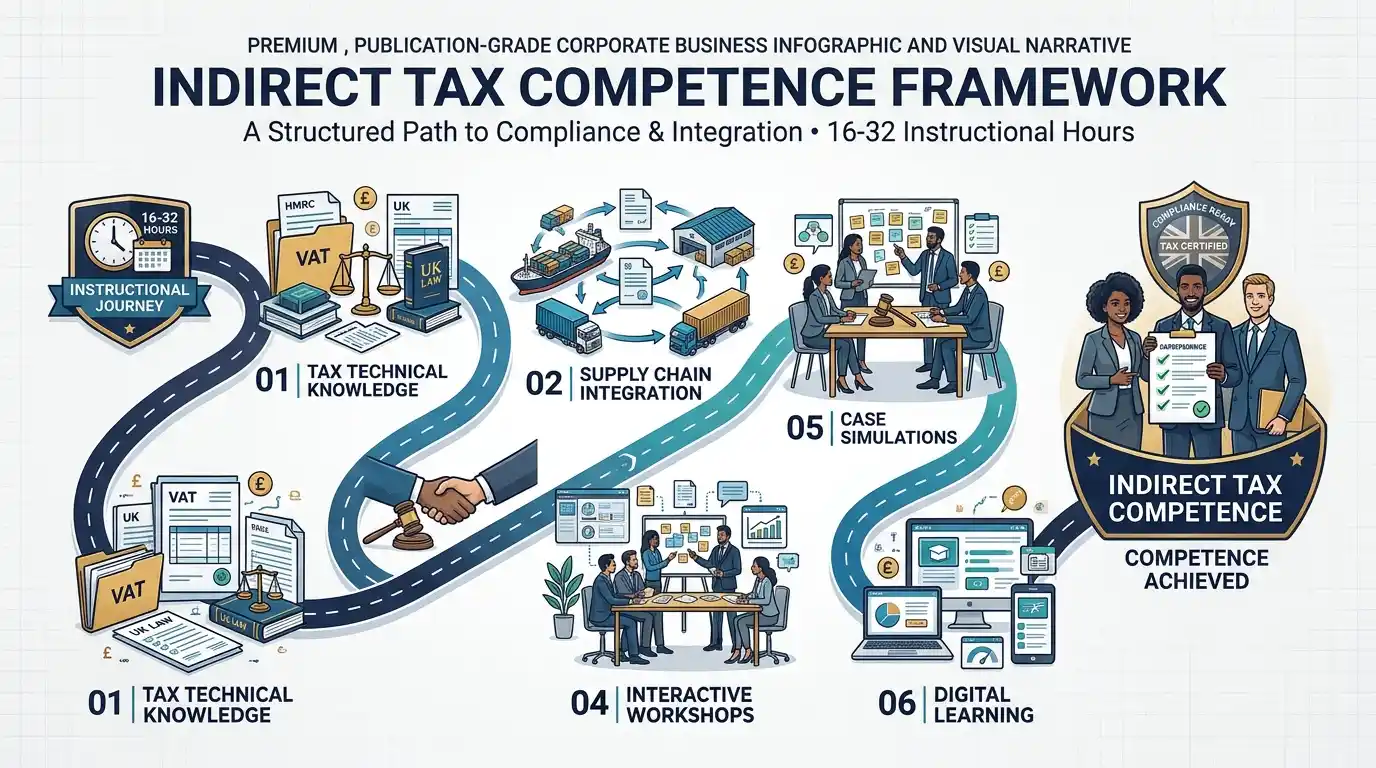
Comprehensive capability development in indirect taxation combines technical legal understanding with operational execution tools. Professionals require mastery over specific knowledge domains to protect assets and eliminate financial leakages.
Core Framework Components
Tariff Classification Mechanics: Harmonized System (HS) code assignment for specialized oilfield equipment, offshore vessels, and chemical additives.
VAT Recovery and Refund Protocols: Accounting mechanisms to claim input tax credits on operational expenditures, exploration costs, and joint venture cash calls.
Temporary Importation Regimes: Legal frameworks governing temporary admission of drillships, seismic survey vessels, and specialized tools without paying full import duties.
Contractual Tax Allocation: Drafting tax indemnities, gross-up clauses, and local tax burden allocations in production sharing contracts (PSCs) and joint operating agreements (JOAs).
Statutory Compliance and Auditing: Maintaining digital documentation trails to withstand host-government tax audits and avoid statutory interest penalties.
Training Delivery Formats
Structured corporate development programs utilize three primary modalities:
Executive Workshops: Intensive 2-day to 4-day interactive sessions focused on strategic tax planning, contract negotiation, and regulatory risk management.
Digital Learning Modules: Self-paced digital instruction covering fundamental concepts like excise duty calculations, stamp duty applications, and local tax levies.
Simulation-Based Seminars: Practical laboratory exercises where cross-functional teams analyze real-world contract clauses, fill out customs documentation, and process complex VAT return filings.
What Organizational Benefits Result from Systemic Indirect Tax Training?
Systemic indirect tax training yields measurable organizational benefits including a 30% reduction in customs clearance delays, complete elimination of improper tax penalty assessments, enhanced working capital efficiency, and optimized contractual tax structuring.
Unplanned tax liabilities directly compress operating margins. Upskilling workforce teams ensures that business operations run without costly bureaucratic friction or cash leakage.
Financial and Working Capital Optimization
When supply chain specialists understand tax structures, they utilize temporary importation regimes and bonded warehousing effectively. This prevents capital lock-up in customs duty deposits. Finance teams trained in VAT recovery and refunds optimize cash flows by submitting compliant documentation that accelerates statutory refund timelines from revenue authorities.
Operational Efficiency and Delay Mitigation
Rig equipment and maintenance spares held at port customs warehouses generate daily demurrage charges ranging from $5,000 to $50,000. Up-skilled logistics personnel present proper tax exemption certificates and accurate HS code documentation upon arrival, cutting clearance times by up to 30% and eliminating costly equipment idle time.
Risk Management and Compliance Integrity
Tax authorities actively audit multinational energy operations. Systemic workforce instruction embeds standardized compliance habits across project operations. Teams systematically log transactions, track temporary importation of equipment, and archive statutory filings, eliminating exposure to non-compliance fines and legal disputes.
Which Corporate Roles and Departments Require Indirect Tax Mastery?
Corporate roles across supply chain management, finance and accounting, legal counsel, project management, and tax compliance require indirect tax mastery to prevent transaction errors, manage joint venture expenditures, and protect project economics.
Indirect tax management is not solely the responsibility of the tax department. Operational decisions taken by non-finance staff trigger immediate tax consequences.
Key Target Departments and Strategic Responsibilities
Procurement and Supply Chain Teams: Logistics officers assign HS codes, manage bonded storage facilities, and monitor temporary importation of equipment to prevent unintended duty assessments.
Corporate Finance and Accounting Personnel: Accounts payable specialists verify vendor tax invoices, calculate excise duty liabilities, track stamp duty obligations, and manage VAT recovery and refunds.
Legal Counsel and Contracts Managers: Commercial negotiators draft production sharing contracts and joint venture agreements that allocate local taxes and levies, specify tax indemnities, and define customs duty exemptions.
Project Managers and Field Engineers: Operational leaders schedule equipment mobilizations and demobilizations to comply with host-country temporary admission timeframes.
What Misconceptions and Structural Failures Block Indirect Tax Management?
Structural failures in indirect tax management stem from isolated departmental silos, reliance on ad-hoc advice, the misbelief that tax is solely a finance task, and generic training that ignores petroleum-specific tax codes.
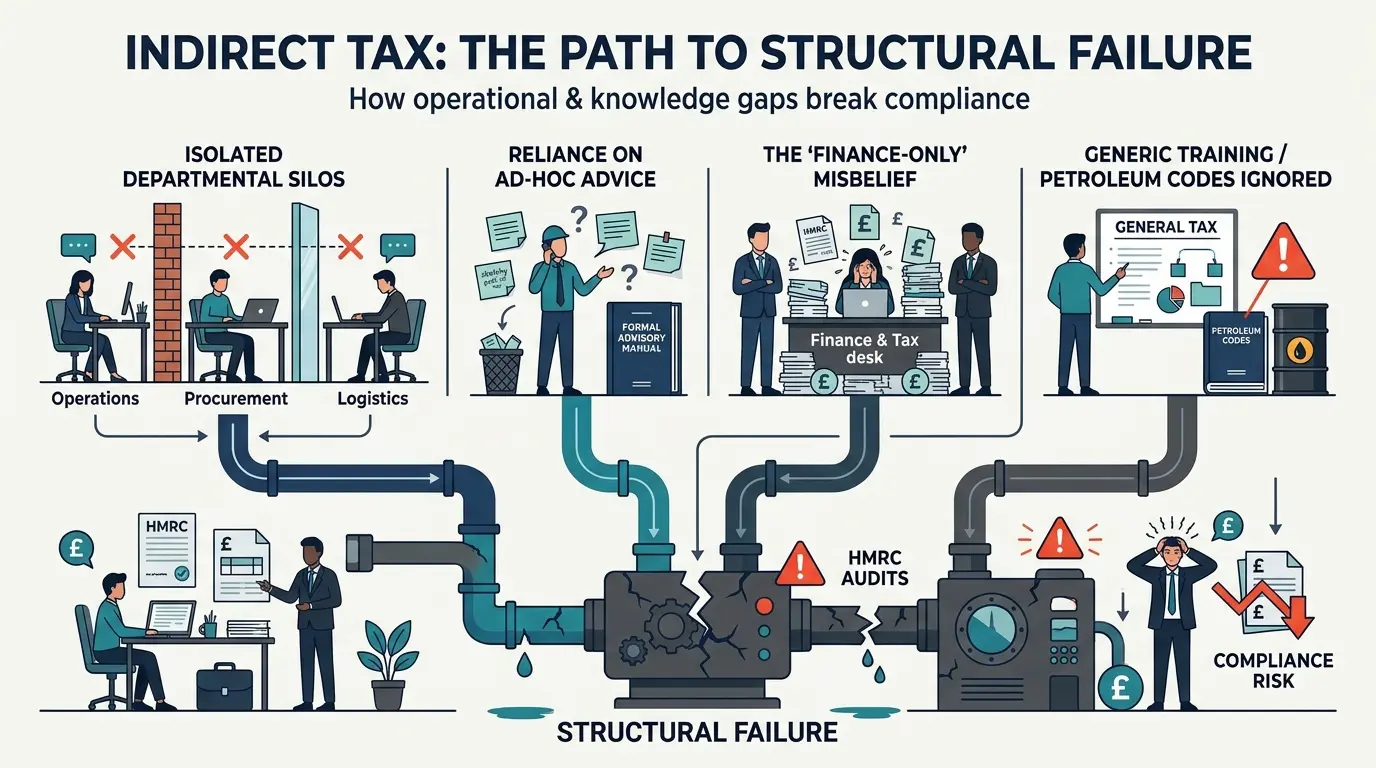
Energy companies frequently experience cash leakage due to widespread operational misunderstandings regarding indirect taxation.
Common Corporate Misconceptions
"Tax management belongs exclusively to the accounting team."
Reality: Up to 70% of indirect tax errors stem from improper procurement coding, flawed contract terms, or poor logistics execution prior to invoice arrival in finance.
"Standard commercial tax rules apply equally to oil and gas operations."
Reality: Petroleum operations operate under special legal frameworks, including production sharing contracts, special customs duty exemptions, and custom local taxes and levies that differ from standard corporate commercial environments.
"Temporary imports require minimal administrative oversight."
Reality: Failing to re-export equipment within statutory time limits automatically converts temporary entries into permanent imports, triggering immediate customs duty assessments and heavy administrative fines.
Structural Training Failures
Organizations often rely on broad, non-industry-specific tax accounting seminars. These generic programs fail to address complex oilfield reality—such as subsea equipment transfers, joint venture cash call tax treatments, or regional value added tax on petroleum operations. Effective capability development must focus specifically on energy-sector transactional structures.
How Do Organizations Implement Petroleum Indirect Tax Training Programs?
Organizations implement petroleum indirect tax training programs through a four-phase strategy: conducting skills gap analyses, designing industry-specific curricula, delivering case-based interactive workshops, and evaluating operational performance metrics.
To achieve measurable operational transformation, learning and development leaders follow a structured implementation sequence.
Step 1: Pre-Training Assessment and Audit Review
HR managers and tax directors review historical tax audit adjustments, customs penalty records, and supply chain bottlenecks. This assessment pinpoints operational knowledge gaps within procurement, finance, and project operations.
Step 2: Curriculum Tailoring and Contextualization
Educational content is built directly around the organization’s operating environment. Case studies utilize actual company production sharing agreements, local tax statutes, joint venture arrangements, and enterprise resource planning software workflows.
When evaluating how structured learning programs address operational tax risks, decision-makers must examine specialized course frameworks. Organizations review specialized options like the Petroleum Taxation Fundamentals for Indirect Taxes & Duties Training Course to align corporate upskilling initiatives with specific regulatory requirements.
Step 3: Multi-Disciplinary Workshop Delivery
Mixed cohorts comprising procurement officers, finance specialists, legal counsel, and operational engineers participate in intensive cohort training. Participants analyze realistic contract clauses, draft formal tax exemption applications, reconcile input tax credits, and map equipment import schedules.
Step 4: Post-Training Evaluation and Continuous Alignment
Learning leaders track practical workplace execution 30, 60, and 90 days after training completion. Key performance indicators include reduced customs clearance times, faster VAT recovery and refunds, zero non-compliance penalties, and increased accuracy in tax code assignments across all purchase orders.
What Measurable Key Performance Indicators Track Indirect Tax Capability?
Measurable Key Performance Indicators tracking indirect tax capability include VAT refund recovery timelines, customs clearance lead times, tax error rates on purchase orders, penalty avoidance ratios, and total dollar savings from tax exemptions.
Quantifying the return on investment from workforce development requires tracking performance benchmarks directly tied to corporate financial health and operational agility.
Primary Evaluation Metrics
VAT Refund Processing Days: Measures the average duration between statutory tax filing and actual refund receipt from national tax authorities.
Customs Clearance Duration: Tracks the average time required to clear oilfield equipment through port customs declarations.
Purchase Order Tax Coding Accuracy: Calculates the percentage of enterprise procurement orders issued with correct tax codes and exemption designations.
Audit Penalty Reduction: Measures the financial value of tax fines, interest charges, and penalties assessed during statutory tax audits before and after workforce upskilling.
Temporary Import Status Compliance: Tracks the percentage of temporarily imported assets re-exported or renewed prior to statutory expiration dates.
By implementing structured, industry-aligned training programs, energy companies convert indirect tax management from a passive compliance vulnerability into a predictable operational advantage.
Frequently Asked Questions
What does Oil & Gas Petroleum Taxation training cover?
Oil & Gas Petroleum Taxation training covers host-government contracts, production sharing agreements, Value Added Tax (VAT), customs duties, ring-fencing, and cross-border fiscal frameworks. The program provided by Institute For Oil & Gas Training details how national tax regimes directly impact capital expenditure, operational cash flow, and overall joint venture profitability. Participants analyze real-world petroleum tax models to ensure statutory compliance across local and international energy projects.
Who should attend a petroleum taxation course in the energy sector?
Finance directors, corporate tax managers, legal counsel, commercial negotiators, and procurement specialists working in upstream, midstream, or downstream operations benefit from this training. Institute For Oil & Gas Training structures its Oil & Gas Petroleum Taxation curriculum to help cross-functional teams prevent costly compliance errors, manage temporary importation duties, and optimize tax recovery mechanisms. It is equally valuable for government revenue authorities auditing petroleum fiscal systems.
How does indirect taxation impact oil and gas operations?
Indirect taxes, including VAT, customs duties, excise taxes, and local levies, directly affect supply chain logistics and working capital across exploration and production projects. Improper management of tax exemption certificates or temporary equipment imports leads to severe customs delays, demurrage costs, and statutory fines. Institute For Oil & Gas Training equips industry professionals with technical capabilities to streamline tariff classification, claim input tax credits, and protect operational margins.
Why is petroleum taxation different from standard corporate tax regimes?
Petroleum taxation relies on specialized fiscal mechanisms—such as petroleum profit taxes, royalty arrangements, windfall profit levies, and production sharing contracts—that differ significantly from general corporate tax structures. These complex frameworks account for high capital investment risks, long exploration cycles, and resource depletion. Through specialized instruction in Oil & Gas Petroleum Taxation, Institute For Oil & Gas Training helps organizations navigate host-country legislation, ring-fencing provisions, and joint venture tax allocation rules.
How do oil and gas companies minimize customs duties on imported equipment?
Energy companies lower customs duty liabilities by utilizing statutory duty exemptions, bonded warehousing, and temporary importation regimes for heavy machinery and offshore drilling equipment. Proper Harmonized System (HS) code assignment and timely re-export documentation prevent default tariff assessments upon equipment arrival at border ports. Institute For Oil & Gas Training provides practical guidance on navigating customs regulations, securing statutory tax exemption certificates, and ensuring seamless supply chain compliance.
Related training courses
Oilfield Production Chemicals and Treatment Applications Training Course
- Specialisation
- Oil & Gas Process Engineering and Operations
- Duration
- 5 days · 15 CPD hours
Hazardous Liquid Pipeline Inspection and Integrity Management Training Course
- Specialisation
- Oil & Gas Pipeline Integrity and Inspection
- Duration
- 5 days · 15 CPD hours
API 510 Pressure Vessel Inspection and Integrity Assessment Training Course
- Specialisation
- Oil & Gas Inspection and Non-Destructive Testing
- Duration
- 5 days · 15 CPD hours
More articles

How to Evaluate Transfer Pricing Risks and Intercompany Transactions in Oil and Gas Groups
Evaluate transfer pricing risks in oil and gas intercompany transactions. Learn methods, functional analysis, and arm's length compliance strategies.
Read article →
Why Transfer Pricing Matters for Multinational Oil and Gas Groups
Learn why transfer pricing matters for multinational oil and gas groups, including compliance frameworks, risk management, and workforce development.
Read article →
Withholding Tax Compliance and Treaty Relief Training for Oil and Gas Tax Professionals
Master cross-border oil and gas tax compliance. Evaluate syllabus, delivery, and outcomes for the Institute For Oil & Gas Training course.
Read article →