

The Petroleum Taxation Fundamentals for Indirect Taxes & Duties Training Course is an intensive professional training program designed to resolve severe compliance gaps, financial leakages, and administrative penalties arising from mismanaged indirect taxes and duty obligations across complex upstream and downstream oil and gas operations.
Operating within the international energy sector requires navigate multi-jurisdictional tax regimes, complex customs protocols, and evolving fiscal frameworks. Energy companies frequently expose themselves to substantial financial risk due to poor management of value added tax on petroleum operations, unrecovered input taxes, and misclassified customs declarations. A lack of specialized knowledge among finance, supply chain, and legal teams leads to delayed shipments, unrecovered capital, and costly legal disputes with tax authorities.
Understanding fiscal exposure begins early in the asset lifecycle. Prior to evaluating specialized training, organizations often analyze why indirect taxes and duties matter in oil and gas operations to establish baseline institutional awareness across cross-functional departments. Without structured intervention, non-compliance disrupts joint venture accounting, inflates operational expenses, and erodes profit margins.
The Institute For Oil & Gas Training developed this curriculum to transform high-level tax principles into actionable operational protocols. The program addresses the skill deficit between general accounting practices and specialized petroleum fiscal management. Participants evaluate real-world frameworks governing customs duty exemptions, temporary importation of equipment, and localized duty assessments.
By replacing disjointed operational habits with standardized legal and financial workflows, organizations mitigate audit risks and safeguard cash flow. The curriculum bridges corporate strategy and daily execution, ensuring operational teams execute cross-border transactions without triggering unexpected liabilities.
Why Is This Petroleum Taxation Curriculum Structured for Decision-Makers?
This course is structured chronologically along the oil and gas value chain to move participants systematically from foundational legal requirements to complex tax optimization, ensuring immediate application to live energy projects, joint ventures, and international operations.
Corporate tax environments in the energy sector demand a logical, progressive learning model. Random or topic-isolated training fails to equip professionals with the systemic perspective required to audit supply chains or negotiate concession agreements. The Institute For Oil & Gas Training designs its instructional architecture to mirror the operational lifecycle of exploration, development, production, and decommissioning.
Organisations evaluating corporate development programs rely on a structured framework on how to evaluate indirect tax and customs duty obligations across petroleum operations before committing capital to full workforce upskilling. This course builds upon that evaluation model by providing step-by-step methodologies to handle complex tax scenarios.
Participants analyze statutory provisions alongside real-world contractual terms. Early modules establish fiscal definitions, while advanced modules cover tax optimization strategies, compliance documentation, and audit preparedness. This logical progression ensures participants acquire both broad policy knowledge and precise technical skills required for executive decision-making.
What Key Technical Modules and Skills Will Participants Master?
Participants master five core functional domains covering value-added tax recovery, customs duty optimization, temporary equipment importation, local statutory levies, and audit defense, resulting in direct, measurable improvements in financial accuracy and risk mitigation.
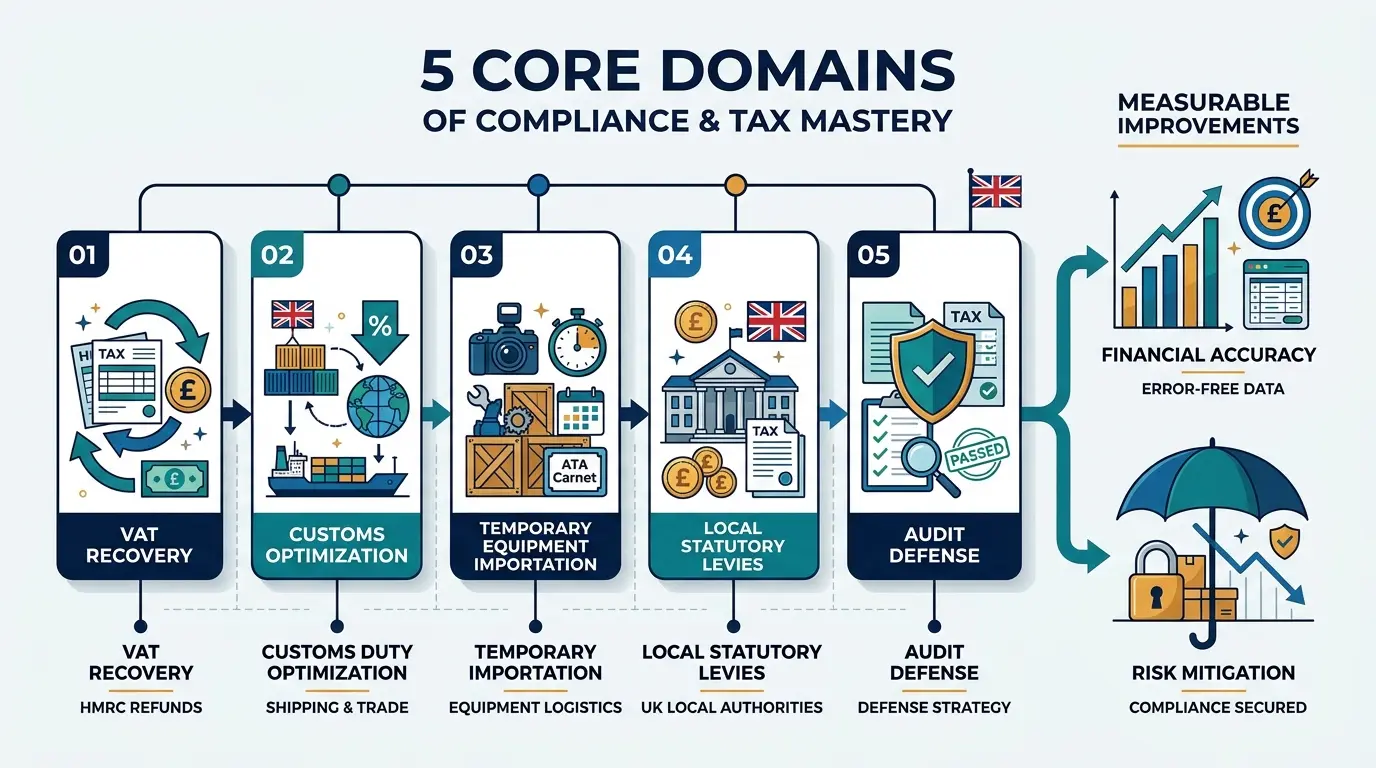
Module 1: Legal & Fiscal Frameworks in Petroleum Operations
Analysis of concession contracts, Production Sharing Contracts (PSCs), and Risk Service Agreements.
Mapping indirect tax liabilities across exploration, appraisal, development, and production phases.
Interaction between national tax laws, international treaties, and host government contracts.
Establishing governance frameworks to monitor legislative changes in host countries.
Module 2: Value Added Tax (VAT) Recovery and Refund Management
Structuring VAT recovery and refunds protocols for multi-million-dollar capital expenditures.
Managing input VAT on shared costs, joint venture billings, and operator overheads.
Filing tax exemption documentation and managing tax exemption certificates with authorities.
Resolving zero-rating issues on international hydrocarbon sales and midstream transport.
Module 3: Customs Duty Exemptions and Temporary Importation
Applying customs duty exemptions under exploration and production license agreements.
Managing the temporary importation of equipment for offshore rigs, drill pipes, and specialized machinery.
Operating within duty-suspension regimes, customs bonded warehouses, and free zone logistics.
Mitigating customs penalties associated with late re-exportation or misclassified tariff codes.
Module 4: Excise Duty, Local Taxes, and Statutory Levies
Calculating excise duty liabilities on refined products, fuel consumption, and operational inputs.
Navigating stamp duty applications on property transfers, farm-in agreements, and corporate restructuring.
Managing local taxes and levies, municipal assessments, and community development obligations.
Integrating local indirect tax liabilities into project financial models and field development plans.
Module 5: Tax Audits, Dispute Resolution, and Compliance Governance
Preparing comprehensive audit trails for national revenue authority inspections.
Managing formal tax disputes, administrative appeals, and tax tribunal procedures.
Implementing internal controls to detect indirect tax errors prior to statutory filings.
Developing standardized operating procedures for cross-border logistics and finance teams.
How Is the Training Delivered, and What Is the Format Structure?
The program is delivered through flexible live virtual, blended online, interactive classroom, and customized on-site corporate formats led by senior energy tax practitioners using real-world case studies and practical financial modeling.
The Institute For Oil & Gas Training offers multiple instruction methods to match corporate schedules and operational demands. Every delivery format maintains rigorous academic standards and practical focus.
Executive On-Site Workshops
Designed for corporate teams, joint venture partners, and state oil companies. Delivered directly at corporate offices or operational bases, allowing the curriculum to incorporate company-specific contracts, regional tax laws, and internal accounting systems.
Live Virtual Instruction
Delivered via secure, interactive online platforms. Features scheduled live lectures, real-time Q&A sessions, digital breakout rooms for group exercises, and instant access to digital working papers. Ideal for distributed international teams.
Interactive Hybrid Modules
Combines self-paced digital modules covering foundational tax concepts with intensive live virtual seminars focused on practical problem-solving, case studies, and audit simulations.
Assessment Methods and Certification Requirements
Participants complete continuous practical assessments throughout the program, including:
Targeted case study evaluations involving complex joint venture tax reconciliations.
Customs tariff classification and temporary import documentation exercises.
A comprehensive final simulation requiring an audit defense strategy for an active energy project.
Upon achieving an 80% passing standard across all assessments, participants earn the formal professional designation issued by the Institute For Oil & Gas Training.
What Measurable Performance Outcomes Do Organizations Achieve?
Organizations achieve measurable financial returns, including reduced input tax leakages, accelerated VAT refunds, zero customs delay penalties, and robust defense strategies against aggressive tax authority audits.
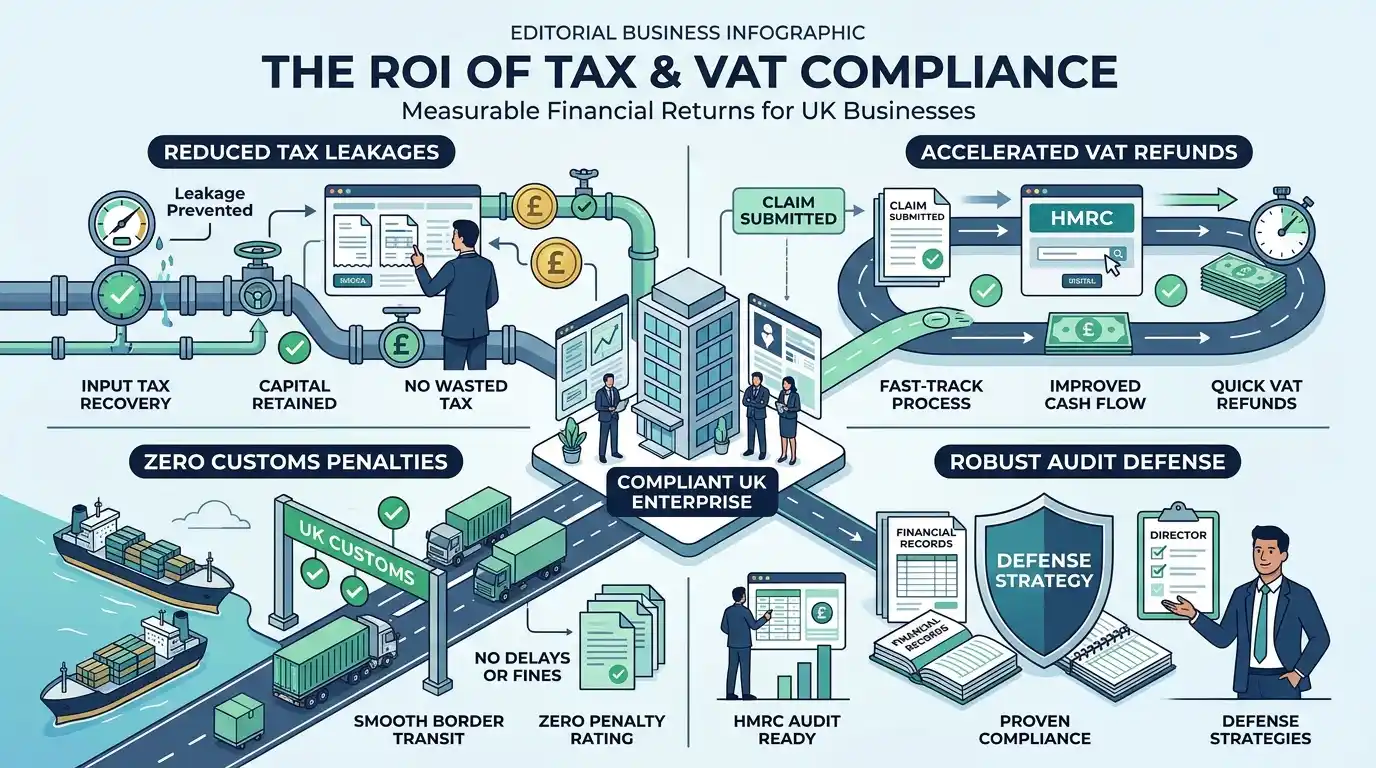
Investing in specialized indirect tax training yields direct financial gains. Corporate finance and tax departments transition from reactive troubleshooting to proactive compliance management, optimizing working capital across global operations.
Key Organizational Outcomes
Optimized Working Capital: Eliminates unrecovered input tax by implementing structured tracking and prompt refund filings for all operational expenditures.
Reduced Importation Costs: Maximizes statutory customs duty exemptions and correctly applies temporary import regimes, avoiding unnecessary duty payments on high-value equipment.
Audit Readiness: Establishes rigorous documentation protocols, drastically reducing exposure to tax penalties, interest charges, and statutory fines during revenue audits.
Seamless Supply Chain Logistics: Prevents customs delays at ports of entry by training logistics staff on accurate tariff classification and documentation.
Enhanced Cross-Functional Alignment: Aligns finance, legal, tax, and procurement teams around a single indirect tax compliance framework.
Cross-functional alignment ensures tax considerations are integrated into procurement and legal decisions, preventing costly oversights during contract execution.
How Does the Enrollment and Corporate Onboarding Process Work?
Enrollment involves a formal candidate background assessment, corporate group registration, flexible pre-qualification screening, and tailored onboarding coordinated directly by dedicated learning specialists.
To maintain high professional standards, the Institute For Oil & Gas Training evaluates all candidates against established professional prerequisites before confirming admission.
Participant Eligibility Criteria
This course is engineered for professionals operating within or supporting the energy sector, including:
Tax Managers, Financial Controllers, and Corporate Accountants.
Supply Chain, Logistics, and Customs Compliance Managers.
In-House Legal Counsel and Contracts Engineers.
Joint Venture Accountants and Audit Managers.
HR Leaders building technical talent pipelines for international energy operations.
Corporate Group Enrollments and Enterprise Customization
Organizations enrolling teams of five or more receive customized onboarding plans. The Institute For Oil & Gas Training aligns program case studies with the client company’s specific host country contracts, concession agreements, and operational locations.
Completion Credentials
Graduates receive a formal Certificate of Technical Mastery from the Institute For Oil & Gas Training. This credential verifies advanced competency in managing indirect taxes, customs duties, and statutory compliance within global petroleum operations.
To secure places for technical teams, align corporate tax workflows, or review upcoming cohort schedules, professionals can apply for course access through the official registration portal.
Frequently Asked Questions
What does an Oil & Gas Petroleum Taxation course cover?
An Oil & Gas Petroleum Taxation course delivered by the Institute For Oil & Gas Training covers specialized fiscal regimes, revenue laws, and tax compliance across energy operations. Participants learn to navigate value-added tax, customs duty exemptions, temporary importation regulations, production sharing agreements, and audit procedures.
Who should enroll in Oil & Gas Petroleum Taxation training?
This training program is designed for tax managers, financial controllers, joint venture accountants, legal advisors, and corporate finance teams working within the energy sector. Professionals aiming to reduce tax risk, manage statutory duties, and ensure regulatory compliance across global petroleum projects will benefit directly from the curriculum offered by the Institute For Oil & Gas Training.
How does understanding petroleum taxation help manage operational costs?
Proper knowledge of Oil & Gas Petroleum Taxation enables finance and procurement departments to identify input tax recovery opportunities and prevent costly customs fines. By applying correct tariff classifications and statutory duty exemptions, organizations trained by the Institute For Oil & Gas Training protect operating capital and minimize unexpected fiscal liabilities.
What is the difference between direct and indirect tax in petroleum operations?
Direct petroleum taxes apply to corporate profits and resource rents, whereas indirect taxes apply to goods, services, and cross-border equipment transfers. The Institute For Oil & Gas Training addresses both frameworks, emphasizing how indirect levies such as VAT, excise duties, and import tariffs directly impact daily operational cash flows.
Does the Institute For Oil & Gas Training offer customized corporate tax workshops?
Yes, the Institute For Oil & Gas Training provides customized corporate workshops tailored to specific concession agreements, host country tax codes, and operational contracts. These targeted sessions allow energy companies to upskill cross-functional teams using their own real-world financial data and regulatory scenarios.
Related training courses
Hazardous Liquid Pipeline Inspection and Integrity Management Training Course
- Specialisation
- Oil & Gas Pipeline Integrity and Inspection
- Duration
- 5 days · 15 CPD hours
API 510 Pressure Vessel Inspection and Integrity Assessment Training Course
- Specialisation
- Oil & Gas Inspection and Non-Destructive Testing
- Duration
- 5 days · 15 CPD hours
API 653 Storage Tank Inspection and Integrity Assessment Training Course
- Specialisation
- Oil & Gas Inspection and Non-Destructive Testing
- Duration
- 5 days · 15 CPD hours
More articles

How to Evaluate Transfer Pricing Risks and Intercompany Transactions in Oil and Gas Groups
Evaluate transfer pricing risks in oil and gas intercompany transactions. Learn methods, functional analysis, and arm's length compliance strategies.
Read article →
Why Transfer Pricing Matters for Multinational Oil and Gas Groups
Learn why transfer pricing matters for multinational oil and gas groups, including compliance frameworks, risk management, and workforce development.
Read article →
Withholding Tax Compliance and Treaty Relief Training for Oil and Gas Tax Professionals
Master cross-border oil and gas tax compliance. Evaluate syllabus, delivery, and outcomes for the Institute For Oil & Gas Training course.
Read article →