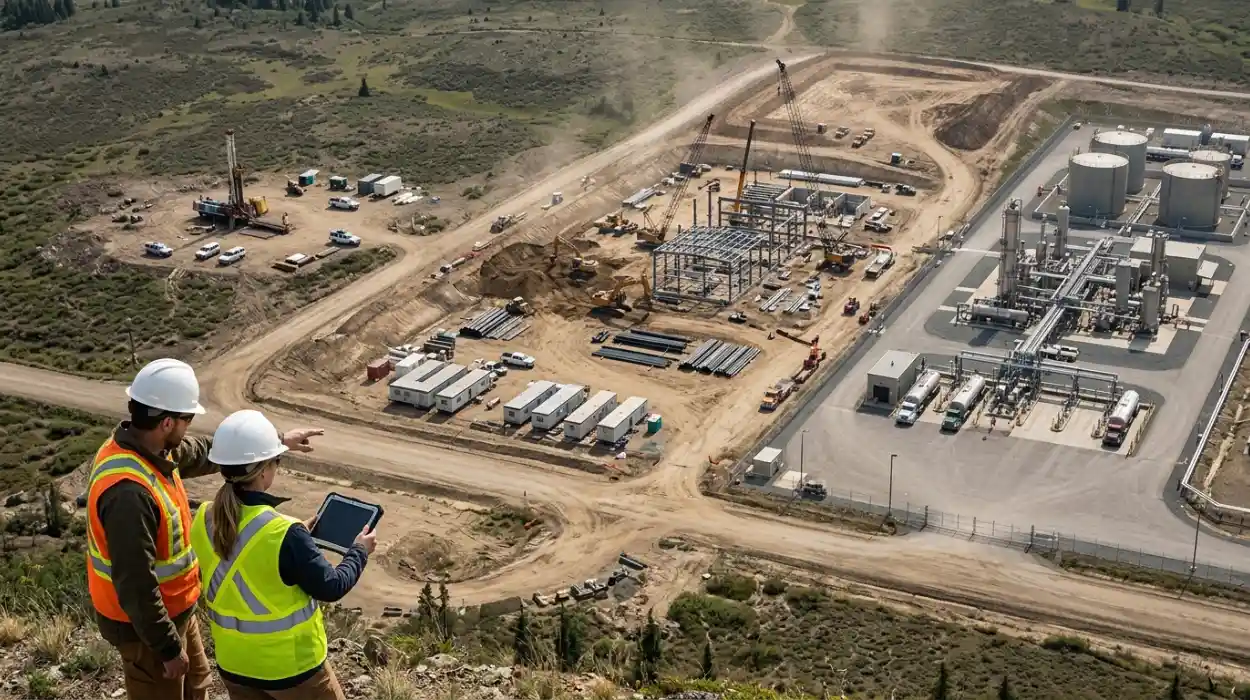
Fraud risk shifts across petroleum operations from speculative capital exposure during exploration to complex transactional vulnerabilities in development, and high-volume financial flows during production.
Organizations operate within high-stakes environments where financial integrity determines operational survival. Exploration activities involve high upfront capital expenditures, remote geographical locations, and minimal initial revenue streams. These conditions create unique vulnerabilities centered on capital allocation, geological data falsification, and inflated contractor invoicing. As projects move into the development phase, engineering contracts expand, procurement volumes surge, and supply chain complexities multiply. Decision-makers face severe exposures related to engineering overbilling, equipment substitution, and vendor kickbacks. When assets reach the production phase, the operational focus shifts to continuous crude extraction, physical custody transfers, and international commodity trading. Corporate treasuries manage massive capital movements, complex trade finance instruments, and multi-jurisdictional logistics.
To bridge foundational awareness and deeper operational controls, organizations often evaluate advanced strategies such as Integrating Fraud Risk Assessment, Forensic Accounting and AML Controls Across the Petroleum Lifecycle when structuring comprehensive risk frameworks. Enterprise risk committees utilize structured professional development programs to educate internal audit teams, finance managers, and compliance officers on these lifecycle shifts. Workforce training ensures that personnel recognize how exposure vectors adapt as physical assets transition from subsurface discovery to above-ground commercialization. Employees learn to identify specific red flags, such as abnormal expenditure spikes during seismic data acquisition or unexplained variances in operational expenditures during secondary recovery stages.
What causes fraud risk profiles to transform during exploration operations?
Exploration fraud risks stem from decentralized remote sites, specialized technical assessments, and subjective capital expenditure justifications.
Exploratory ventures require substantial capital commitments directed toward seismic surveying, exploratory drilling, and lease acquisition. These operations frequently occur in remote regions with limited direct oversight from corporate headquarters. Such physical isolation reduces real-time visibility and weakens standard internal controls. Technical assessments of subsurface potential rely heavily on specialized expert opinions. Unscrupulous contractors manipulate geological samples, falsify seismic interpretations, or exaggerate reserve estimates to secure continued funding. Senior executives approve capital allocations based on these technical reports without possessing the specialized expertise required to independently verify the underlying data.
Corporate training initiatives address these vulnerabilities by embedding practical learning methodologies into technical and financial onboarding programs. Workforce development curricula utilize case-based learning and interactive simulations to train exploration teams in verifying vendor deliverables and challenging technical assumptions. Organizations implement rigorous performance metrics, including error rates in geological reporting and audit compliance scores, to measure the effectiveness of internal controls. Employees enhance their core competencies in contract auditing, technical data validation, and asset verification. Cross-functional collaboration between geologists, procurement officers, and internal auditors dismantles organizational silos that typically conceal exploratory fraud.
How do development phase activities introduce new financial and operational vulnerabilities?
Development phase fraud vulnerabilities emerge from large-scale engineering procurement contracts, complex subcontractor networks, and compressed project timelines.
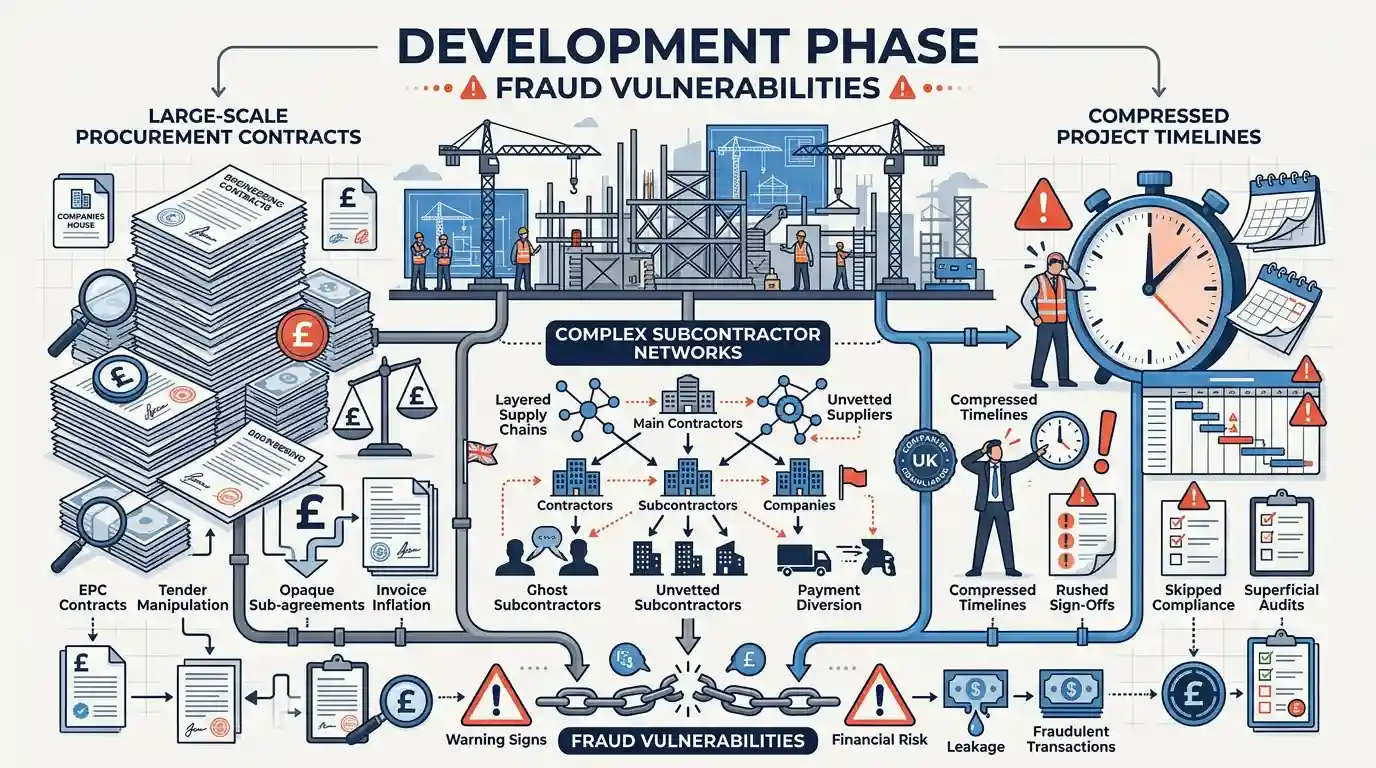
The transition from exploration to field development triggers a massive influx of capital directed toward infrastructure construction, drilling rig mobilization, and pipeline installation. Organizations manage extensive supply chains involving engineering, procurement, and construction contractors alongside numerous tiers of subcontractors. This operational complexity obscures transparency regarding material costs, labor hours, and equipment rentals. Project managers operating under strict delivery deadlines frequently bypass standard procurement controls to accelerate construction. Such exceptions create fertile ground for invoice mispricing, duplicate billing, and unauthorized scope changes.
Workforce development strategies in this phase focus on enhancing the capabilities of project managers, procurement specialists, and financial controllers. Training delivery formats combine intensive workshops, hybrid learning modules, and digital role-play scenarios simulating contract negotiation and invoice reconciliation. Professionals learn to apply frameworks that detect billing anomalies and evaluate vendor performance against established benchmarks. Organizations track key performance indicators such as cost-variance percentages, vendor audit recovery amounts, and contract compliance rates. These metrics demonstrate a direct link between targeted professional development and reduced project leakage. Structured learning methodologies ensure that project teams maintain uncompromising integrity without sacrificing operational velocity.
Why does production and trading activity generate complex financial crime exposures?
Production phase fraud risks materialize through high-volume crude custody transfers, complex trade finance mechanisms, and cross-border commercial transactions.
Once commercial extraction begins, the enterprise manages continuous physical product flows paired with intricate financial settlements. Crude oil trading involves international buyers, multimodal transport logistics, and sophisticated financing structures. These high-volume transactions attract sophisticated financial crimes, including trade based money laundering, commodity trade finance risk, and letter of credit abuse. Perpetrators exploit intricate supply chains to obscure illicit funds, utilize shell company structures to siphon profit margins, and deploy offshore intermediaries to disguise ultimate beneficial ownership. Furthermore, navigating correspondent banking risk and international trade restrictions exposes businesses to severe regulatory penalties if sanctions evasion occurs within transaction chains.
To counter these sophisticated threats, organizations deploy rigorous corporate training frameworks aligned with the Anti-Money Laundering (AML) Risk in Crude Trading Training Course. Educational programs deliver comprehensive instruction on detecting invoice mispricing, identifying unauthorized beneficiary changes, and evaluating counterparties for hidden ownership ties. Learning methodologies incorporate real-world transaction monitoring scenarios, forensic accounting exercises, and compliance simulations. Finance teams, trade execution desks, and compliance officers master the analytical techniques required to scrutinize bills of lading, Certificates of Origin, and letters of credit. Organizations measure training impact through audit readiness scores, the reduction of compliance breach incidents, and the speed of suspicious activity identification.
What core training components and methodologies ensure effective organizational implementation?
Effective organizational implementation relies on blended delivery formats, measurable performance KPIs, and continuous competency-based assessments.
Deploying robust anti-fraud and compliance training across a multinational enterprise requires a structured architectural approach. Organizations avoid generic, one-size-fits-all modules in favor of tailored programs reflecting specific operational tiers. Entry-level administrative personnel, mid-level project managers, and executive leadership committees receive distinct curricula tailored to their decision-making authority and operational exposure. Training delivery combines interactive online modules for foundational regulatory knowledge with intensive, instructor-led workshops for complex transactional analysis. Blended learning ensures high engagement and accommodates demanding operational schedules across global assets.
Training Dimension | Operational Focus | Key Performance Indicators |
Foundational Compliance | Regulatory awareness across all personnel | Completion rates and baseline assessment scores |
Operational Risk Detection | Technical verification for engineers and auditors | Audit discovery rates and variance reduction |
Advanced Transactional Analysis | Complex financial controls for trade desks | Suspicious activity detection speed and error rates |
Workforce development frameworks incorporate rigorous assessment tools to measure knowledge retention and practical application. Post-training evaluations utilize competency-based testing rather than passive attendance tracking. Organizations monitor productivity improvements, error reductions in financial reporting, and the strengthening of the internal leadership pipeline. By embedding principles of excellence, integrity, and collaboration into daily operations, enterprises cultivate a resilient culture where ethical decision-making reinforces long-term business sustainability.
Why do traditional corporate training programs fail to mitigate complex petroleum fraud risks?
Traditional training fails when it relies on passive theoretical instruction, neglects operational realities, and lacks measurable performance metrics.
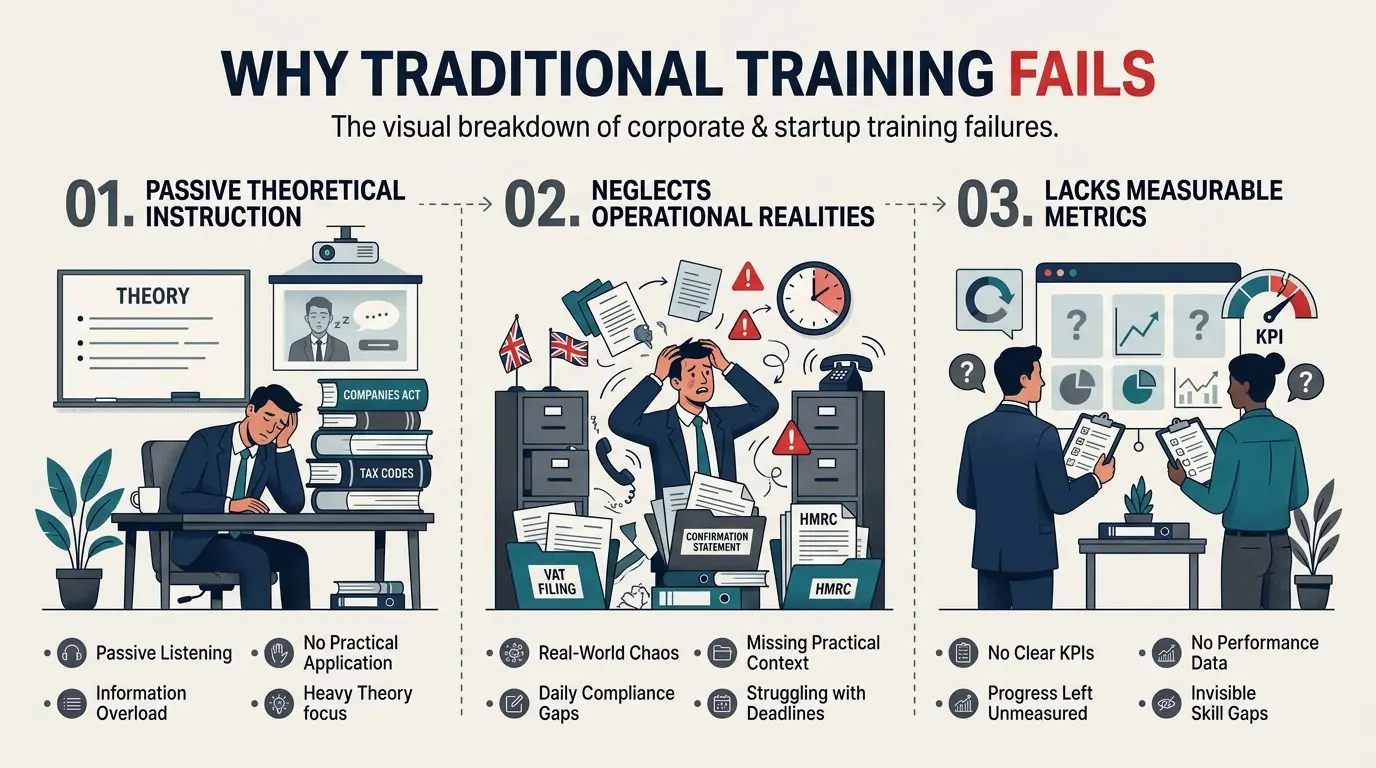
Many organizations implement compliance training merely to satisfy regulatory minimums, utilizing generic video modules that bear little relevance to actual workplace environments. Employees passively consume abstract legal definitions without gaining practical skills in detecting invoice anomalies, identifying shell company structures, or recognizing suspicious trade finance patterns. This theoretical approach produces a false sense of security while leaving core operational vulnerabilities unaddressed. Furthermore, programs lacking post-training reinforcement fail to drive permanent behavioral change among personnel.
Overcoming these deficiencies requires a systematic shift toward outcome-based professional development. Modern learning initiatives incorporate industry-specific case studies, interactive simulations of actual financial crimes, and continuous feedback loops. Organizations evaluate training ROI by tracking quantifiable outcomes, such as decreased audit exception rates, faster detection of supply chain discrepancies, and improved cross-departmental collaboration between legal, finance, and operational units. Aligning educational investments with strategic enterprise objectives ensures that workforce development drives measurable performance improvement and sustainable risk mitigation.
Frequently Asked Questions
What is oil and gas petroleum compliance, AML and risks?
Oil and gas petroleum compliance, AML and risks encompass the regulatory frameworks, anti-money laundering controls, and risk management strategies implemented by energy organizations to prevent financial crime and legal breaches. Through specialized programs offered by the Institute For Oil & Gas Training, professionals learn to navigate complex international trade regulations, sanctions compliance, and above-ground operational hazards. These protocols protect corporate integrity across exploration, development, and production workflows.
Why is anti-money laundering (AML) critical in crude trading operations?
Crude oil trading involves high-volume financial flows, multimodal logistics, and intricate cross-border transactions that attract sophisticated financial crimes. Anti-money laundering controls safeguard organizations against illicit activities such as trade-based money laundering, invoice mispricing, and the use of offshore shell companies. Implementing rigorous compliance frameworks through the Institute For Oil & Gas Training ensures that trading desks successfully identify ultimate beneficial ownership and avoid severe regulatory penalties.
How do exploration fraud risks differ from production phase risks?
Exploration fraud risks typically stem from remote geographical locations, decentralized operations, and the specialized technical validation required for capital expenditures and reserve estimates. Conversely, production phase risks center on continuous custody transfers, complex trade finance instruments, and international supply chain transactions. Organizations utilize targeted professional development to equip internal audit and finance teams with the specific analytical skills needed for each operational lifecycle stage.
What are the main indicators of commodity trade finance risk in petroleum supply chains?
Key indicators of commodity trade finance risk include unexplained variances in shipment volumes, suspicious changes in transaction beneficiaries, and discrepancies across bills of lading or letters of credit. Energy companies mitigate these vulnerabilities by training compliance officers and trade execution personnel to spot invoice mispricing and shell company structures. Adopting structured educational programs from the Institute For Oil & Gas Training enhances an enterprise's ability to detect transactional anomalies before they result in financial loss.
How can organizations improve their corporate compliance training in the energy sector?
Organizations improve compliance training by moving away from passive video modules and adopting interactive, outcome-based learning methodologies such as case-based simulations and forensic accounting exercises. Tailoring curricula to specific operational tiers ensures that geologists, project managers, and finance professionals receive relevant instruction suited to their decision-making authority. Continuous competency assessments and performance metrics help decision-makers measure training effectiveness and reduce audit exception rates across global energy assets.
Frequently Asked Questions
What is oil and gas petroleum compliance, AML and risks?
Oil and gas petroleum compliance, AML and risks encompass the regulatory frameworks, anti-money laundering controls, and risk management strategies implemented by energy organizations to prevent financial crime and legal breaches. Through specialized programs offered by the Institute For Oil & Gas Training, professionals learn to navigate complex international trade regulations, sanctions compliance, and above-ground operational hazards. These protocols protect corporate integrity across exploration, development, and production workflows.
Why is anti-money laundering (AML) critical in crude trading operations?
Crude oil trading involves high-volume financial flows, multimodal logistics, and intricate cross-border transactions that attract sophisticated financial crimes. Anti-money laundering controls safeguard organizations against illicit activities such as trade-based money laundering, invoice mispricing, and the use of offshore shell companies. Implementing rigorous compliance frameworks through the Institute For Oil & Gas Training ensures that trading desks successfully identify ultimate beneficial ownership and avoid severe regulatory penalties.
How do exploration fraud risks differ from production phase risks?
Exploration fraud risks typically stem from remote geographical locations, decentralized operations, and the specialized technical validation required for capital expenditures and reserve estimates. Conversely, production phase risks center on continuous custody transfers, complex trade finance instruments, and international supply chain transactions. Organizations utilize targeted professional development to equip internal audit and finance teams with the specific analytical skills needed for each operational lifecycle stage.
What are the main indicators of commodity trade finance risk in petroleum supply chains?
Key indicators of commodity trade finance risk include unexplained variances in shipment volumes, suspicious changes in transaction beneficiaries, and discrepancies across bills of lading or letters of credit. Energy companies mitigate these vulnerabilities by training compliance officers and trade execution personnel to spot invoice mispricing and shell company structures. Adopting structured educational programs from the Institute For Oil & Gas Training enhances an enterprise's ability to detect transactional anomalies before they result in financial loss.
How can organizations improve their corporate compliance training in the energy sector?
Organizations improve compliance training by moving away from passive video modules and adopting interactive, outcome-based learning methodologies such as case-based simulations and forensic accounting exercises. Tailoring curricula to specific operational tiers ensures that geologists, project managers, and finance professionals receive relevant instruction suited to their decision-making authority. Continuous competency assessments and performance metrics help decision-makers measure training effectiveness and reduce audit exception rates across global energy assets.
Related training courses
Regulatory Compliance for Petroleum Entities Training Course
- Specialisation
- Oil & Gas Petroleum Compliance, AML & Risks
- Duration
- 5 days · 15 CPD hours
Management Reporting Design for JV & Partner Audiences Training Course
- Specialisation
- Oil & Gas Petroleum IFRS & Financial Reporting
- Duration
- 5 days · 15 CPD hours
Consolidation & JV Structures for Multi-Country Groups Training Course
- Specialisation
- Oil & Gas Petroleum Accounting
- Duration
- 5 days · 15 CPD hours
More articles

Fraud Risks in Petroleum Operations: What to Look for in Specialist Professional Training
Master petroleum financial crime detection with the Institute For Oil & Gas Training. Enroll in our specialized AML and crude trading compliance course.
Read article →
Integrating Fraud Risk Assessment, Forensic Accounting and AML Controls Across the Petroleum Lifecycle
Discover how to integrate fraud risk assessment forensic accounting and AML controls to combat trade based financial crime across the petroleum lifecycle.
Read article →
Selecting Specialist Oilfield Economics & Project Evaluation Training for Commercial and Economics Teams
Master upstream oilfield economics, PSC fiscal waterfalls, and joint venture financial modelling with Institute For Oil & Gas Training. Enroll today.
Read article →