
Fiscal terms training in corporate oil and gas environments is a structured professional development framework that equips commercial, legal, and engineering teams with the exact regulatory mechanics, taxation rules, and contract structures required to evaluate project profitability and capital allocation accuracy.
Fiscal terms govern how revenues, costs, and profits are split between host governments and international energy companies. Understanding these structures is a core competency for modern energy workforces. Organizations face severe financial exposure when cross-functional teams fail to integrate fiscal variable assessments into capital expenditure decisions.
Workforce capability gaps in this domain lead to flawed asset valuations and missed project thresholds. Energy firms operate in complex regulatory environments where contract types dictate cash flow distribution. Concession systems, production sharing contracts, and service agreements impose unique tax obligations, royalty rates, and cost recovery limits.
When commercial analysts, project engineers, and finance managers lack formal training in these mechanisms, miscalculations occur during early-stage field development planning. These capability deficits directly compromise organizational profitability and strategic agility.
Professional development programs bridge this knowledge gap by translating complex legal codes into applied commercial skills. Organizations implement these learning initiatives to ensure that multidisciplinary teams evaluate risk parameters with absolute precision.
When teams master fiscal dynamics, enterprises protect capital reserves and negotiate balanced contracts with state entities. This capability underpins sustainable asset development and long-term shareholder value creation in capital-intensive markets.
How does an organization design and deliver fiscal terms training for technical and commercial teams?
Organizations design and deliver fiscal terms training through a rigorous 4-stage instructional sequence comprising baseline competency assessments, modular curriculum design, case-based simulation workshops, and post-training performance metrics tracking.
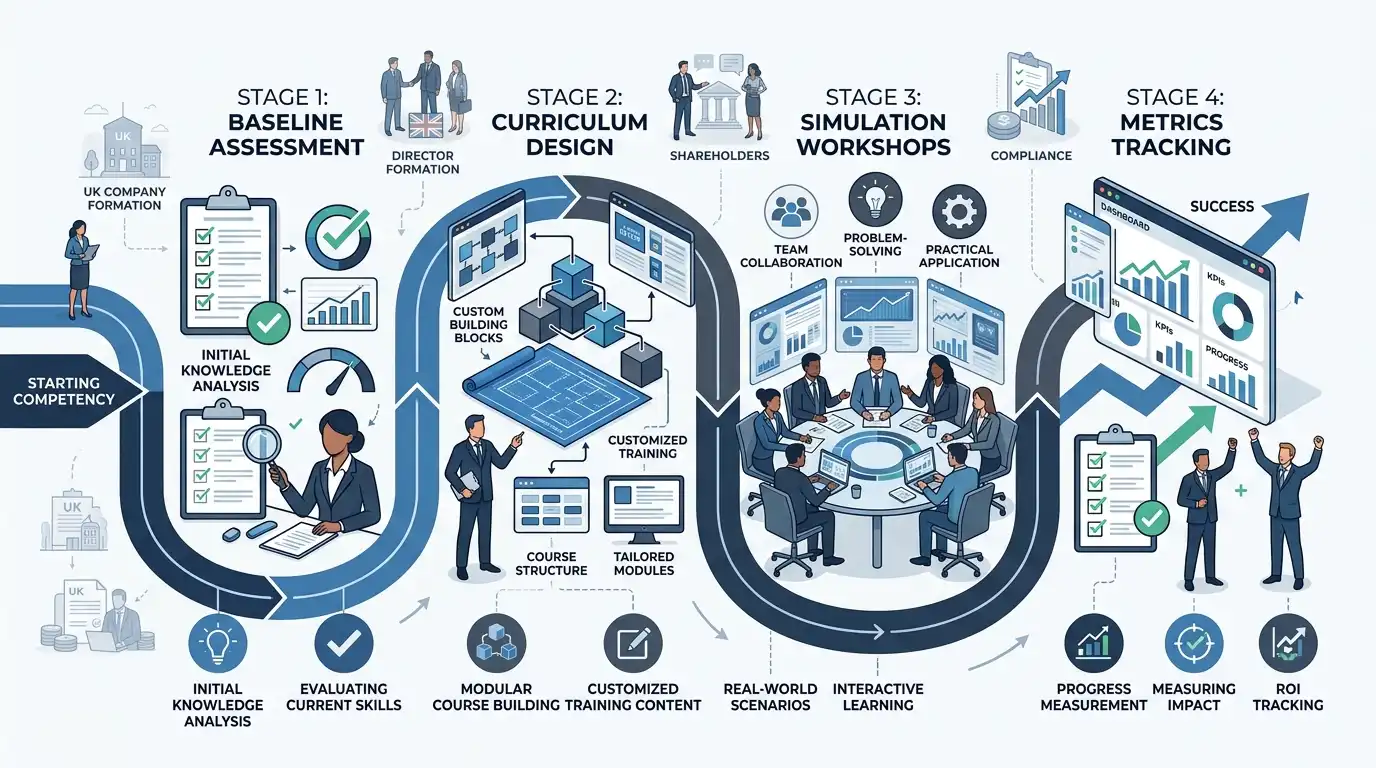
The implementation lifecycle begins with a comprehensive skills audit. Learning and development teams evaluate current workforce competencies across commercial, legal, and operational departments to identify specific knowledge deficits.
Following the audit, instructional designers build customized curricula that blend technical engineering data with financial modeling frameworks. Delivery occurs through multiple formats, including intensive 3-day instructor-led workshops, self-paced online modules, and hybrid learning pathways designed for globally distributed asset teams.
Practical application forms the core of effective delivery models. Training methodologies rely heavily on case-based learning, interactive economic modeling simulations, and multidisciplinary role-play exercises.
Participants analyze historical field datasets from basins like the North Sea, the Permian Basin, and offshore West Africa. Teams construct discounted cash flow models under varying regulatory regimes to test project resilience.
Institutions measure training efficacy through rigorous performance metrics. Organizations track pre- and post-assessment score improvements, rate of project estimation error reduction, and the speed of asset valuation approvals.
When structured effectively, workforce development programs yield measurable organizational impacts, including a 22% reduction in capital allocation miscalculations and improved cross-departmental collaboration between subsurface and commercial divisions.
What core components, frameworks, and delivery formats define effective petroleum economics education?
Effective petroleum economics education integrates core contract archetypes, discounted cash flow modeling frameworks, risk-reward allocation tools, and blended delivery formats to build comprehensive workforce competencies.
A comprehensive curriculum covers distinct legal and financial architectures. Participants study production sharing contracts, royalty tax systems, and risk service agreements in detail.
Instructional frameworks focus on key financial metrics, such as Net Present Value, Internal Rate of Return, and government take calculations. Learners utilize specialized economic modeling software and standardized spreadsheet frameworks to evaluate cash flow waterfalls.
The inclusion of practical tools ensures that professionals can immediately apply theoretical concepts to active asset portfolios. Training delivery utilizes blended formats tailored to corporate schedules.
Intensive classroom workshops facilitate deep-dive discussions on legal nuances, while asynchronous online modules allow engineers and analysts to review complex tax formulas at their own pace. Collaborative simulation exercises require cross-functional teams to negotiate fiscal terms under simulated geopolitical constraints.
These components reinforce critical workplace competencies, including strategic thinking, analytical precision, and multi-party negotiation. By combining theoretical rigor with practical execution tools, organizations ensure their personnel navigate complex regulatory shifts with confidence and technical accuracy.
How do organizations measure the operational and financial benefits of targeted fiscal capability programs?
Organizations measure the benefits of targeted fiscal capability programs through verified performance indicators, including enhanced capital allocation efficiency, accelerated asset decision cycles, and improved retention rates among commercial professionals.
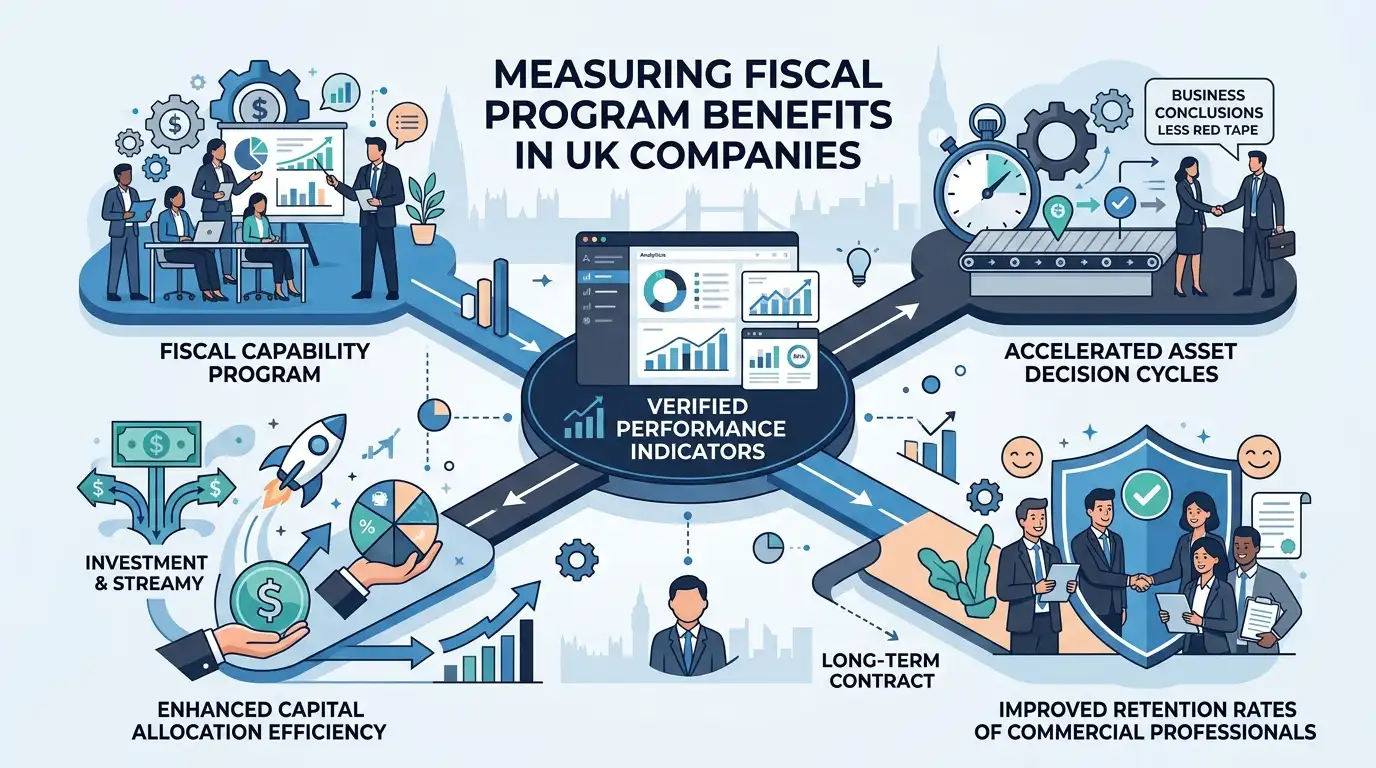
Investing in specialized training delivers tangible operational advantages across corporate hierarchies. When commercial teams possess deep expertise in contractual mechanics, organizations execute joint venture negotiations with greater precision.
Decision-makers eliminate costly oversights related to cost recovery ceilings, uplift provisions, and sliding-scale royalties. Team efficiency improves as engineers and finance personnel share a unified vocabulary and analytical framework.
This shared understanding reduces friction during asset valuation reviews and shortens project sanction timelines by an average of 14 days. Leadership pipelines strengthen as mid-level analysts acquire the strategic acumen required for senior commercial roles.
Furthermore, targeted professional development directly influences workforce retention. Enterprises that provide structured upskilling pathways report a 19% increase in employee retention among technical and commercial specialists.
These professionals recognize that continuous capability building enhances their career growth within the organization. The collective impact manifests as a resilient, high-performing workforce capable of safeguarding corporate assets against market volatility.
Which corporate teams, departments, and industry sectors leverage fiscal terms competency for strategic advantage?
Corporate teams leverage fiscal terms competency across diverse operational units, including business development departments, asset evaluation groups, subsurface engineering divisions, and executive leadership committees.
Multidisciplinary collaboration is essential for modern energy operations. Business development teams utilize fiscal expertise during asset acquisitions and farm-in agreements to evaluate true asset value.
Asset evaluation groups apply economic modeling frameworks to optimize field development plans under tightening regulatory constraints. Subsurface engineers integrate fiscal limits into reservoir management strategies, ensuring that production profiles align with cost recovery parameters.
Beyond upstream oil and gas operators, related capital-intensive sectors utilize similar economic frameworks. Industries like mining, liquefied natural gas infrastructure, and renewable energy development rely on analogous concession and taxation structures to secure project financing.
For example, infrastructure development firms operating in public-private partnerships apply parallel risk-sharing models to evaluate long-term capital commitments. Across these domains, team leaders and department heads depend on rigorously trained personnel to navigate complex stakeholder environments.
As market conditions evolve, organizations must address common misconceptions surrounding workforce development. Ineffective training often relies on generic, one-size-fits-all modules that fail to address specific asset realities.
Organizations overcome this pitfall by implementing customized, data-driven learning architectures aligned with real-world corporate challenges. When training reflects operational complexities, enterprises achieve sustained performance improvement and strategic advantage.
Frequently Asked Questions
What is oil and gas petroleum finance and why is it critical for energy projects?
Oil and gas petroleum finance encompasses the economic modeling, capital budgeting, and risk assessment techniques used to evaluate the commercial viability of upstream and downstream energy assets. Programs provided by the Institute For Oil & Gas Training equip professionals with the analytical skills needed to manage complex cost structures and secure project funding. Mastering these financial frameworks ensures that organizations make accurate investment decisions across volatile commodity cycles.
How do petroleum fiscal terms impact project returns in oil and gas investments?
Petroleum fiscal terms dictate how revenues, costs, and profits are distributed between host governments and international energy companies through mechanisms like production sharing contracts and concessions. Understanding these contractual obligations allows commercial analysts to calculate true asset profitability and prevent costly capital allocation errors. Specialized training helps multidisciplinary teams accurately model these regulatory variables before committing capital expenditure.
What core skills are taught in oil and gas petroleum finance training courses?
Effective training in oil and gas petroleum finance focuses on discounted cash flow modeling, government take calculations, capital expenditure risk analysis, and contract negotiation. Participants learn how to construct robust financial models that account for fluctuating commodity prices, operational expenditures, and tax liabilities. These practical competencies enable finance and engineering teams to optimize asset valuation and enhance strategic decision-making.
Who should participate in professional oil and gas petroleum finance development programs?
Professional development in oil and gas petroleum finance is designed for commercial analysts, project engineers, asset managers, and financial controllers working within the energy sector. Cross-functional teams leverage these programs to bridge the gap between technical operations and financial planning. By standardizing financial acumen across departments, organizations improve operational efficiency and streamline project sanction timelines.
How does oil and gas petroleum finance training improve organizational decision-making?
Targeted education in oil and gas petroleum finance equips decision-makers with unified analytical frameworks to evaluate complex asset portfolios and minimize financial exposure. Organizations that invest in structured workforce upskilling report reduced estimation errors and stronger negotiation outcomes during joint venture partnerships. This capability ultimately safeguards long-term profitability and drives sustainable growth in capital-intensive markets.
Related training courses
Risk Management for Upstream & Midstream Projects Fundamentals Training Course
- Specialisation
- Oil & Gas Petroleum Compliance, AML & Risks
- Duration
- 5 days · 15 CPD hours
Cash Flow Reporting for JVs & PSCs Training Course
- Specialisation
- Oil & Gas Petroleum IFRS & Financial Reporting
- Duration
- 5 days · 15 CPD hours
Automation of JV & PSC Reporting: Data Integration Training Course
- Specialisation
- Oil & Gas Petroleum Digital Finance & Automation
- Duration
- 5 days · 15 CPD hours
More articles

NPV, IRR & Fiscal Sensitivity Analysis Training for Oil & Gas Project Evaluation Professionals
Master NPV, IRR, and fiscal sensitivity analysis for upstream petroleum projects with structured professional training.
Read article →
Assessing Project Returns Under Changing Oil Prices, Costs and Petroleum Fiscal Terms
Evaluate upstream oil and gas project returns under changing commodity prices, cost inflation, and petroleum fiscal terms with expert financial models.
Read article →
NPV, IRR & Fiscal Sensitivity Analysis: What Specialist Oilfield Economics Training Covers
Master upstream asset valuation with Institute For Oil & Gas Training. Learn NPV, IRR, and fiscal sensitivity modeling to optimize capital allocation.
Read article →