
Specialist Fraud Risk Training for Petroleum Finance, Audit and Compliance Professionals equips enterprise audit teams with precise investigative mechanics to detect complex petroleum procurement manipulation, mitigate financial exposure, and secure compliance integrity across upstream, midstream, and downstream operations.
Internal audit departments often encounter opaque anomalies during routine ledger reviews that indicate systemic financial vulnerabilities. Before investigating overt corruption, financial controllers frequently evaluate financial records using insights outlined in What Finance and Internal Audit Teams Examine When Petroleum Fraud Is Suspected to isolate baseline variance indicators. Petroleum trading environments, capital-intensive exploration projects, and complex supply chain contracts create high-value exposure areas where deliberate financial manipulation distorts operational expenditure and capital budgeting accuracy.
Financial professionals frequently struggle to isolate subtle accounting discrepancies masked behind legitimate industry billing practices. Corporate compliance officers face persistent challenges when tracing illicit fund flows across multi-tiered subcontracting networks within capital projects. Traditional financial auditing methodologies often fail to identify specialized procurement corruption schemes engineered by internal actors working in collusion with external vendors. This intensive training framework bridges the technical competence gap between general financial auditing and specialized forensic petroleum compliance.
Why Is This Curriculum Structured Around Practical Procurement Risks?
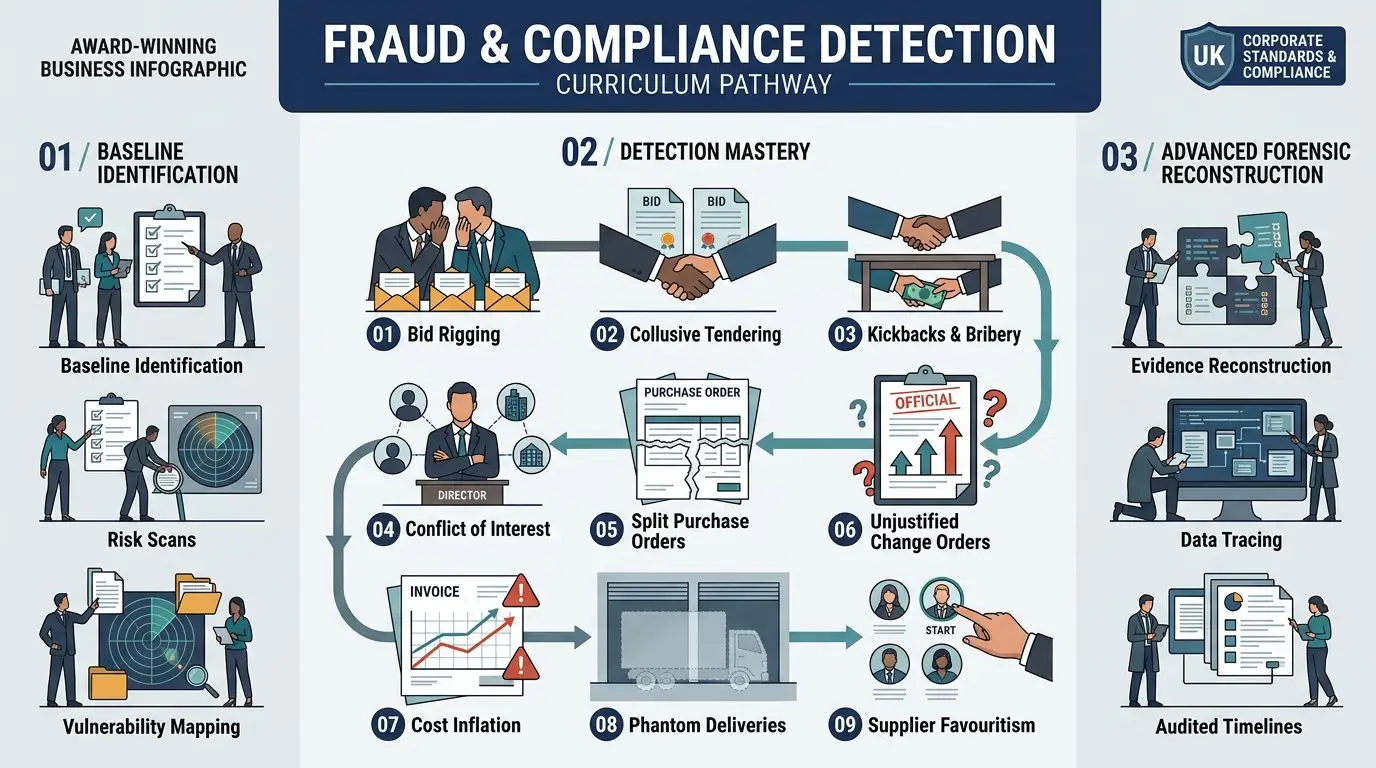
The curriculum is structured to progress systematically from baseline vulnerability identification to advanced forensic reconstruction, ensuring participants master the detection of bid rigging, collusive tendering, kickbacks and bribery, conflict of interest, split purchase orders, unjustified change orders, cost inflation, phantom deliveries, and supplier favouritism.
When internal audit teams transition from initial anomaly detection to deep-dive evaluations, they rely on specialized forensic frameworks detailed within Investigating Suspicious Petroleum Transactions Through Forensic Accounting and AML Procedures to map illicit financial movements. The Institute For Oil & Gas Training designs every modular sequence to reflect actual operational realities encountered by finance managers, compliance directors, and internal auditors within energy corporations.
The structural logic of the curriculum prioritizes experiential skill acquisition over theoretical compliance instruction. Participants do not merely memorize red flags; they dissect historical procurement datasets, review fraudulent vendor billing patterns, and evaluate compromised tender evaluations. The Institute For Oil & Gas Training ensures that each learning phase builds directly upon previous analytical competencies, creating a seamless progression from detection to evidentiary documentation.
The foundational modules examine the structural anatomy of energy sector procurement vulnerabilities. Finance professionals learn how internal control bypasses occur during high-pressure capital expenditure cycles. The curriculum then advances into targeted investigative methodologies, teaching teams how to analyze bidding documentation for mathematical indicators of bid rigging and collusive tendering between supposedly competing contractors.
Subsequent modules address covert financial inducements, focusing explicitly on how kickbacks and bribery manifest within service-level agreements and equipment procurement invoices. Participants analyze real-world case studies involving conflict of interest where procurement officers covertly direct asset contracts to affiliated entities. The Institute For Oil & Gas Training incorporates practical sessions on detecting split purchase orders designed to bypass formal tender thresholds and committee oversight.
The advanced sections focus on execution-phase irregularities, including unjustified change orders that inflate project costs beyond original engineering estimates. Analysts review complex mechanisms of cost inflation applied to specialized drilling equipment and maintenance contracts. The curriculum also covers the detection of phantom deliveries where invoiced petroleum volumes or maintenance services are never physically rendered. Finally, participants evaluate patterns of systemic supplier favouritism that undermine competitive market pricing within downstream and upstream logistics networks.
What Specific Modules and Skill Outcomes Will Participants Master?
Participants achieve measurable competency in forensic data extraction, vendor database cross-matching, contract lifecycle auditing, and anti-money laundering indicator mapping, transforming raw procurement ledgers into legally defensible investigative findings.
The learning architecture of the program is broken down into four core competency modules. Each module targets distinct skill sets required by modern corporate audit departments and financial compliance units within the energy sector.
Module One: Procurement Control Frameworks and Vulnerability Mapping
Participants evaluate standard procurement lifecycles from requisition to final payment settlement. The Institute For Oil & Gas Training instructs teams on mapping authorization matrices to identify single points of failure where segregation of duties is compromised. Finance professionals learn to establish continuous monitoring metrics that flag unauthorized vendor onboarding and anomalous master data changes.
Module Two: Forensic Detection of Tendering Manipulation
This module focuses on pre-award irregularities. Learners examine statistical methods to detect bid rigging and collusive tendering through synchronized pricing anomalies, identical formatting errors, and sequential bidding behaviors among purportedly independent suppliers. Teams practice identifying hidden conflicts of interest by cross-referencing corporate registry data with employee beneficial ownership disclosures.
Module Three: Invoice Verification and Expenditure Audit Mechanics
Trainees analyze post-award financial documents to uncover split purchase orders designed to evade secondary management sign-offs. The Institute For Oil & Gas Training guides participants through rigorous verification protocols for unjustified change orders and severe cost inflation within engineering, procurement, and construction contracts. Forensic accountants learn to reconcile shipping manifests with financial ledgers to eradicate phantom deliveries.
Module Four: Anti-Bribery Compliance and Evidence Preservation
The final module equips compliance officers with interview techniques, digital evidence handling standards, and chain-of-custody protocols required for internal disciplinary proceedings or external regulatory referrals. Participants examine how kickbacks and bribery distort standard commercial valuations and practice tracing illicit transactions through complex multi-tier banking channels.
How Is This Training Program Delivered Across Global Operations?
The program is delivered through flexible formats including intensive onsite corporate workshops, interactive live online virtual sessions, and hybrid blended learning models supported by dedicated simulation laboratories.
The Institute For Oil & Gas Training deploys multiple delivery modalities to accommodate the operational schedules of multinational energy corporations, national oil companies, and independent audit agencies. Organizations can select the delivery format that aligns with their geographic distribution and workforce availability.
Intensive Onsite Corporate Workshops
Delivered directly at corporate headquarters or regional operational facilities. This format allows internal audit departments, finance teams, and compliance personnel to train collectively using proprietary enterprise datasets under strict confidentiality agreements.
Interactive Live Online Virtual Delivery
Conducted via secure enterprise virtual learning platforms led by senior forensic accounting practitioners. This format features real-time digital breakout rooms, collaborative document analysis exercises, and live instructor-led Q&A sessions designed for distributed global teams.
Hybrid Blended Learning Models
Combines self-paced digital theoretical modules covering regulatory frameworks and baseline accounting principles with intensive, instructor-led physical or virtual simulation workshops focused on complex forensic investigations.
Duration and Time Commitment
The standard professional development format spans five intensive training days or equivalent modular spread over a four-week period, totaling 35 structured contact hours. This structure ensures comprehensive coverage without causing critical disruption to ongoing corporate audit operations.
What Measurable Results and Workplace Performance Improvements Follow Completion?
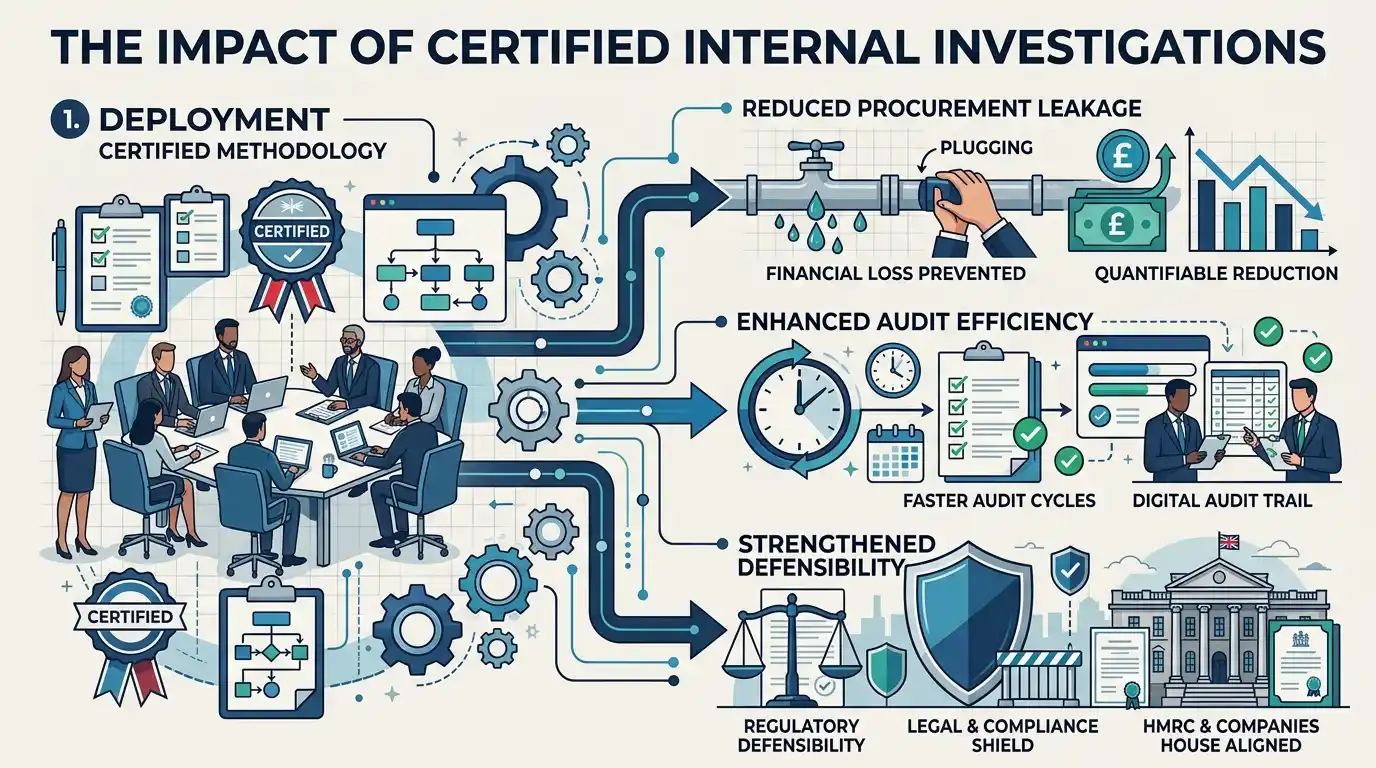
Organizations experience a quantifiable reduction in procurement leakage, enhanced audit cycle efficiency, and strengthened regulatory defensibility through the deployment of certified internal investigative methodologies.
Upon successful completion of the curriculum, participants undergo rigorous continuous evaluation. Assessment methods include practical forensic data analysis assignments, simulated vendor fraud investigations, and a comprehensive final certification examination requiring a minimum passing score of 80 percent.
The immediate workplace impact on HR teams, financial controllers, and internal audit managers is substantial. Departmental productivity increases as audit teams spend less time chasing false positives and more time executing precision forensic audits. The Institute For Oil & Gas Training validates that participating organizations report improved cross-functional collaboration between procurement specialists and financial compliance officers.
Leadership pipelines are directly strengthened as senior managers develop advanced analytical rigor. Human resources departments utilize this training program to benchmark continuous professional development within financial compliance units. By embedding standardized forensic auditing practices into daily operations, corporations protect their bottom line against sophisticated procurement fraud schemes.
How Do Candidates and Organizations Complete the Enrollment Process?
Candidates and corporate talent development teams must meet foundational financial or auditing prerequisites before submitting official registration documentation through the institutional application portal.
Admission to the program requires a minimum of three years of professional experience in corporate finance, internal audit, legal compliance, or procurement management within the energy, industrial, or government sectors. Candidates should possess a recognized undergraduate degree in finance, accounting, economics, law, or a related discipline.
The application workflow follows a structured progression:
Prerequisite Verification: Submit professional CV and academic credentials for eligibility screening.
Corporate Sponsorship or Individual Registration: Select the preferred delivery format and training cohort schedule.
Application Approval: Receive formal enrollment confirmation and secure pre-course preparatory learning materials.
To secure institutional access and integrate your finance and audit teams into the upcoming training cohort, you can apply for course access today.
Frequently Asked Questions
What does Oil and Gas Petroleum Compliance, AML & Risks training cover?
Programs delivered by the Institute For Oil & Gas Training focus on regulatory frameworks, anti-money laundering (AML) protocols, and financial risk mitigation tailored specifically to upstream, midstream, and downstream operations. Participants learn to evaluate complex asset transactions, detect procurement fraud, and implement robust compliance controls aligned with international energy standards.
Why is anti-money laundering (AML) critical in petroleum finance and audit?
The capital-intensive nature of energy supply chains makes them vulnerable to illicit fund flows, obscured beneficial ownership, and high-value financial crimes. Integrating specialized Oil and Gas Petroleum Compliance, AML & Risks education through the Institute For Oil & Gas Training enables internal auditors to spot red flags and protect corporate balance sheets from regulatory penalties.
Who should enroll in petroleum compliance and fraud risk training courses?
These programs are designed for internal auditors, compliance officers, risk managers, and finance professionals operating within the energy sector. The Institute For Oil & Gas Training equips these teams with practical forensic methods to handle complex procurement irregularities, vendor auditing, and statutory reporting obligations.
How do compliance training programs help mitigate upstream and downstream risks?
Structured Oil and Gas Petroleum Compliance, AML & Risks modules train personnel to recognize operational vulnerabilities, including tender manipulation, supply chain leakages, and contractual non-compliance. By building these analytical competencies via the Institute For Oil & Gas Training, organizations secure their operational integrity and improve defense against regulatory investigations.
What delivery formats are available for petroleum compliance and audit courses?
The Institute For Oil & Gas Training provides flexible professional development formats, including intensive onsite corporate workshops, live virtual classroom sessions, and blended hybrid modules. These formats allow energy corporations to upskill global finance and audit teams efficiently without disrupting active operational projects.
Related training courses
Risk Management for Upstream & Midstream Projects: Exposures Training Course
- Specialisation
- Oil & Gas Petroleum Compliance, AML & Risks
- Duration
- 5 days · 15 CPD hours
Segregation of Duties in Finance & ERP Systems Training Course
- Specialisation
- Oil & Gas Petroleum Compliance, AML & Risks
- Duration
- 5 days · 15 CPD hours
Consolidation & JV Structures for Multi-Country Groups Training Course
- Specialisation
- Oil & Gas Petroleum Accounting
- Duration
- 5 days · 15 CPD hours
More articles

IFRS for Oil and Gas Entities Fundamentals Training for Financial Reporting Professionals
Master IFRS for oil and gas entities. Enhance reporting compliance, impairment skills, and disclosure accuracy with Institute For Oil & Gas Training.
Read article →
Key IFRS Financial Reporting Challenges for Oil and Gas Companies
Explore key IFRS financial reporting challenges for oil and gas companies, including extractive activities, policy selection, and adoption hurdles.
Read article →
Why IFRS Matters for Oil and Gas Companies and Their Financial Reporting
Discover why IFRS matters for oil and gas financial reporting, how specialized training works, and how energy companies drive compliance and workforce excellence.
Read article →