
This professional training program resolves complex financial reporting deficiencies by equipping oil and gas professionals with advanced competencies in IFRS revenue recognition, joint operations accounting, asset valuation, and segment disclosure to eliminate compliance errors and regulatory scrutiny.
Financial reporting within the upstream, midstream, and downstream petroleum sectors presents extraordinary accounting challenges due to long-term operational lifecycles, massive capital investments, and complex contractual arrangements. When finance teams misinterpret accounting requirements, organizations face severe financial restatements, stock market volatility, and regulatory penalties. Professionals often struggle to translate complex field realities into compliant financial statements. Organizations frequently discover that traditional accounting training fails to address specialized industry requirements. Accountants face persistent difficulties when applying standard rules to unique petroleum sector arrangements.
Many finance professionals encounter difficulties when evaluating whether production-sharing contracts transfer control of hydrocarbons at the delivery point or over time. Teams frequently misapply accounting frameworks when dealing with complex multinational joint ventures. Complex petroleum agreements demand granular technical comprehension that standard academic syllabi rarely cover. Organizations must understand Why Revenue Recognition Matters for Oil and Gas Companies before evaluating advanced technical solutions. Without targeted skill development, internal accounting errors often trigger external audit failures. Regulatory bodies globally demand higher transparency and strict adherence to modern reporting standards.
The Institute For Oil & Gas Training developed this rigorous curriculum to address these precise technical vulnerabilities. Accountants, financial controllers, and corporate finance officers must navigate intricate reporting mandates with absolute precision. This technical training course provides the systematic knowledge required to execute compliant reporting under rigorous international frameworks. The Institute For Oil & Gas Training ensures that every participant engages with realistic reporting scenarios drawn directly from active petroleum operations. Corporate leadership teams rely on accurate financial data to formulate capital allocation strategies and communicate performance to investors.
HR teams frequently evaluate workforce competency levels to identify critical skill gaps across financial reporting divisions. When department heads notice recurring discrepancies in asset valuations or revenue schedules, targeted training becomes an operational necessity. The Institute For Oil & Gas Training designs its corporate programs to transform theoretical accounting knowledge into practical workplace capability. Participants learn to systematically analyze contracts, evaluate performance obligations, and document revenue recognition policies defensibly. This structured approach directly mitigates the risk of non-compliance and enhances the credibility of corporate financial disclosures.
Why this course is structured this way and how the curriculum logic ensures complete technical mastery?
The curriculum is structured across four progressive learning modules that transition participants from fundamental contract analysis to advanced asset impairment, joint arrangement accounting, and operational segment reporting for maximum professional retention.
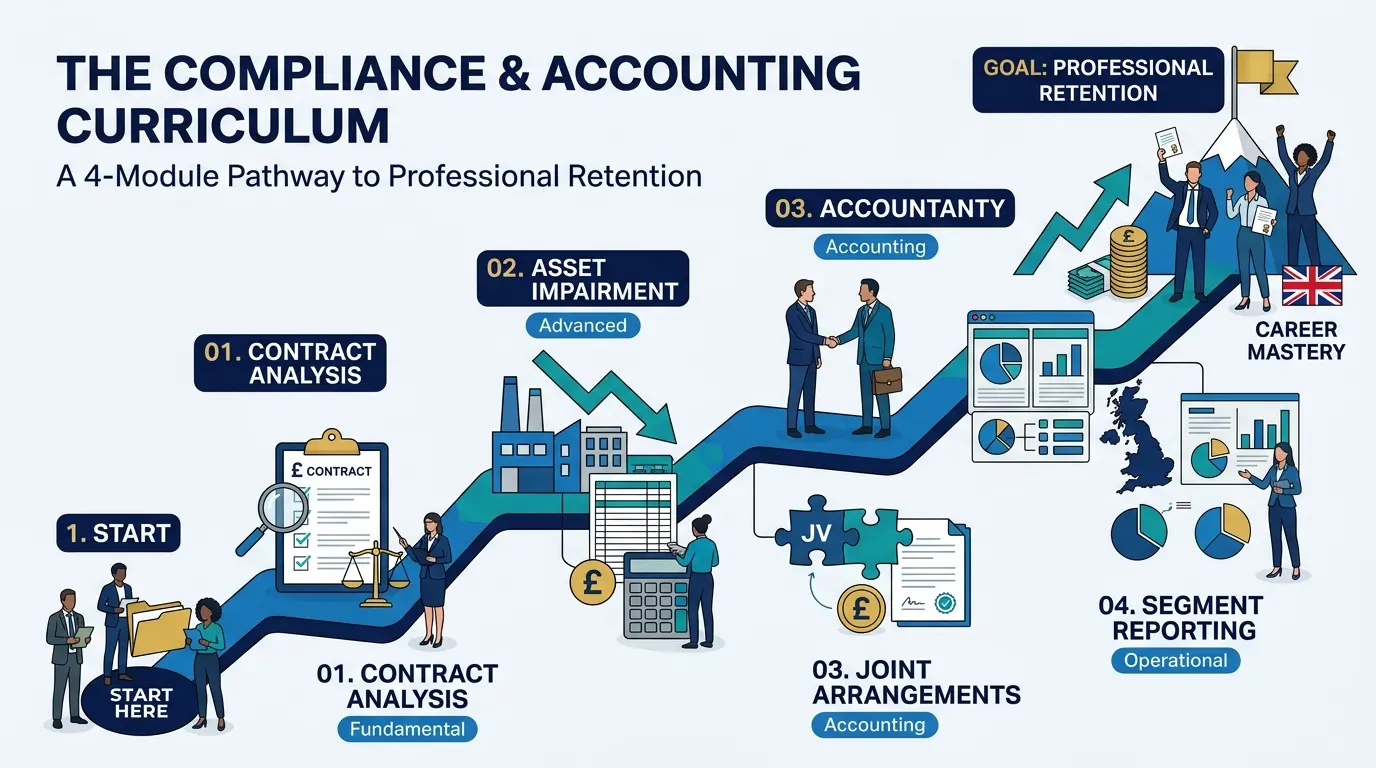
Corporate learning methodologies require a logical sequence that builds foundational competence before addressing advanced transactional complexities. Financial reporting professionals cannot evaluate impairment losses or segment disclosures without first mastering core revenue standards. The Institute For Oil & Gas Training organizes its syllabus to mirror the natural lifecycle of petroleum accounting operations. Each module introduces progressively advanced concepts designed to reinforce previous learning milestones and expand technical capability.
Learners begin by examining foundational recognition principles before advancing to multi-party contractual structures. Accounting teams must understand Key Revenue Recognition Challenges for Oil and Gas Companies Under IFRS to appreciate why specific operational workflows are embedded within the syllabus. This progressive design prevents cognitive overload and ensures that complex regulatory interactions are thoroughly understood. The Institute For Oil & Gas Training integrates practical case studies at the conclusion of each module to test analytical reasoning and application accuracy.
Technical progression requires participants to move beyond rote memorization into active financial modeling and compliance evaluation. The curriculum sequence connects revenue recognition rules directly with downstream valuation impacts and impairment testing protocols. When finance professionals evaluate revenue streams, they must simultaneously account for shared assets and contractual obligations. The Institute For Oil & Gas Training ensures that training modules reflect these interconnected operational realities.
Workplace application depends on how effectively technical knowledge translates into daily accounting operations. HR managers and department directors use this structured progression to track employee skill enhancement systematically. The Institute For Oil & Gas Training builds comprehensive feedback loops into the curriculum to monitor participant comprehension and performance readiness. By structuring the learning path logically, organizations ensure that financial reporting teams achieve measurable improvements in technical accuracy and workflow efficiency.
What will participants learn and which specific technical modules form the core syllabus?
Participants master IFRS 15 revenue recognition frameworks, IFRS 11 joint arrangements, IAS 36 asset impairment calculations, cash generating unit identification, recoverable amount determinations, value in use computations, IFRS 8 operating segments, and IAS 16 property, plant, and equipment accounting.
The core syllabus is divided into comprehensive technical modules that address every critical aspect of petroleum financial reporting. The Institute For Oil & Gas Training delivers a curriculum mapped directly to current international accounting standards and regulatory expectations. Participants engage with detailed technical content covering complex contractual agreements and asset valuation methodologies.
Module One: Core Revenue Standards and Contract Analysis
Mastery of IFRS 15 revenue from contracts with customers, identifying distinct performance obligations, and transaction price allocations.
Application of control transfer criteria for crude oil, natural gas, and liquefied natural gas sales contracts.
Evaluation of variable consideration, volume discounts, and take-or-pay contract provisions in petroleum sales.
Module Two: Joint Arrangements and Operational Control
Detailed interpretation of IFRS 11 joint arrangements, distinguishing between joint operations and joint ventures.
Accounting for operator and non-operator interests in shared upstream exploration and production assets.
Recognition of joint assets, joint liabilities, revenues, and expenses in upstream financial statements.
Module Three: Asset Impairment and Valuation Methodologies
Execution of IAS 36 impairment of assets testing for upstream production fields and midstream infrastructure.
Rigorous cash generating unit identification for complex, interdependent petroleum production networks.
Calculation of recoverable amount, fair value less costs of disposal, and value in use using discounted cash flow models.
Module Four: Segment Reporting and Property Accounting
Implementation of IFRS 8 operating segments for diversified multinational petroleum corporations.
Integration of IAS 16 property plant and equipment rules for capital-intensive extraction facilities and decommissioning assets.
Documentation of accounting policies, critical judgments, and estimation uncertainties for external auditors.
Financial controllers and corporate accountants utilize these modules to standardize reporting practices across international business units. The Institute For Oil & Gas Training ensures that every module includes actionable frameworks applicable to active corporate environments. HR departments track these specific learning milestones to validate training return on investment and employee professional development. When accounting teams master these standards, organizations experience a dramatic reduction in audit adjustments and compliance errors.
How is the course delivered and what training formats and assessment methods ensure rigorous skill acquisition?
The training is delivered through flexible formats including intensive workshops, live virtual online sessions, hybrid combinations, and customized onsite corporate programs, reinforced by rigorous practical tests, financial modeling assignments, and operational simulations.
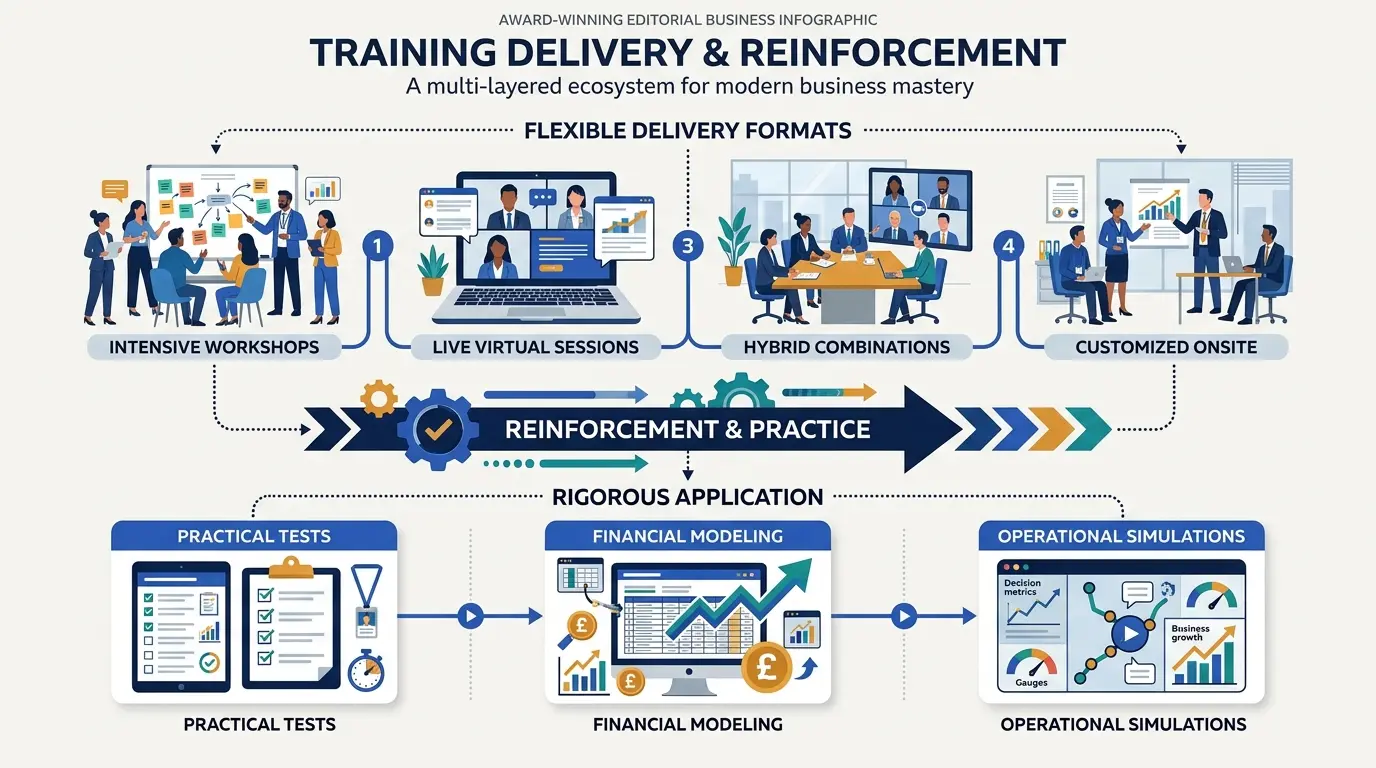
Corporate schedules demand adaptable training delivery mechanisms that accommodate busy professionals without compromising educational depth. The Institute For Oil & Gas Training provides multiple delivery modalities to suit individual learners, project teams, and enterprise-wide training initiatives. Participants can select intensive classroom workshops, interactive online digital sessions, hybrid learning pathways, or tailored onsite corporate programs delivered directly at company offices. Each format maintains strict academic rigor and utilizes identical core curriculum materials.
Training delivery relies on active problem-solving rather than passive lecture formats. The Institute For Oil & Gas Training integrates real-world simulations where finance teams analyze messy, unstructured petroleum contract data. Participants evaluate simulated financial statements, identify accounting discrepancies, and formulate corrective reporting entries. These exercises mirror the exact pressures accountants face during quarterly and annual closing cycles.
Assessment methodologies are designed to measure genuine technical competence and practical application capability. Participants complete formative knowledge checks, complex financial modeling assignments, and comprehensive final examinations. The Institute For Oil & Gas Training applies strict grading rubrics to evaluate each submission against international accounting standards.
HR professionals and finance managers receive detailed performance analytics following assessment completion. This reporting enables organizations to verify that participants have achieved the necessary competency thresholds before returning to critical reporting duties. The Institute For Oil & Gas Training ensures that every delivery format maintains high engagement, peer collaboration, and direct access to senior technical instructors.
What results can be expected and how does this training impact workplace performance and corporate capability?
Participants achieve measurable improvements in technical reporting accuracy, audit readiness, and contractual analysis, enabling organizations to eliminate regulatory penalties, optimize financial workflows, and strengthen internal leadership pipelines.
Investing in specialized training yields immediate and long-term dividends for both individual professionals and employing organizations. When finance teams complete this program, their capacity to interpret complex accounting standards increases significantly. The Institute For Oil & Gas Training measures success through concrete workplace improvements, such as reduced audit query counts and faster financial close cycles. Accountants gain the confidence to challenge improper reporting practices and defend technical positions before external auditors.
Corporate leadership and HR directors observe a direct enhancement in cross-departmental collaboration. Finance professionals communicate more effectively with legal, commercial, and engineering teams regarding contract structures and asset valuations. The Institute For Oil & Gas Training designs its curriculum to foster this holistic operational perspective. Junior accountants accelerate their career progression, while senior managers build robust succession pipelines for critical financial reporting roles.
Organizations benefit from minimized financial risk and enhanced credibility with capital markets and regulatory bodies. Accurate impairment testing and transparent segment disclosures protect shareholder value and maintain investor confidence. The Institute For Oil & Gas Training empowers corporate entities to maintain flawless compliance records even as international accounting standards evolve. When entire finance departments undergo this training, the organization establishes a benchmark of technical excellence across the industry.
How does enrollment work and what are the entry requirements and completion pathways?
Enrollment requires relevant finance or accounting credentials and professional experience in the energy sector, processed through a streamlined online application leading to verified certification and structured continuing professional development credits.
Candidates seeking admission into this professional development program must satisfy specific entry criteria to ensure a productive peer learning environment. Applicants should hold a recognized degree in accounting, finance, economics, or a related discipline, combined with practical experience in corporate finance, auditing, or financial reporting. The Institute For Oil & Gas Training reviews each application carefully to verify that incoming participants possess the necessary foundational knowledge to engage with advanced IFRS standards.
The application and enrollment process is entirely digital and straightforward. Prospective participants or corporate HR sponsors submit professional credentials and course selection preferences through the institutional portal. Once admission is confirmed, learners receive access to preparatory reading materials and digital learning management platforms. The Institute For Oil & Gas Training provides dedicated administrative support to guide participants through pre-course onboarding and schedule coordination.
Upon successful completion of all coursework, practical simulations, and final assessments, participants receive a formal professional certificate. This credential validates advanced technical proficiency in petroleum financial reporting and contributes to annual continuing professional development requirements. Organizations looking to upgrade their financial reporting capabilities can review schedule availability and apply for course access to secure professional training placement.
Frequently Asked Questions
What is Oil and Gas Petroleum IFRS & Financial Reporting?
Oil and Gas Petroleum IFRS & Financial Reporting encompasses the specialized application of international accounting standards to upstream, midstream, and downstream petroleum operations. The Institute For Oil & Gas Training delivers dedicated programs covering complex transaction rules, such as IFRS 15 revenue recognition and IAS 36 asset impairments, ensuring corporate compliance.
How does IFRS 15 apply to petroleum revenue recognition?
Under IFRS 15, oil and gas entities must identify distinct performance obligations and determine transaction prices when control of commodities transfers to customers. The Institute For Oil & Gas Training provides structured curriculum modules that teach finance teams how to accurately account for variable consideration and take-or-pay sales contracts.
Why are joint arrangements critical in oil and gas financial reporting?
Petroleum exploration and production operations frequently involve multi-party joint ventures governed by IFRS 11 standards. The Institute For Oil & Gas Training equips accounting professionals with the technical skills needed to properly account for shared assets, liabilities, and operational revenues.
How is asset impairment evaluated under oil and gas IFRS standards?
Upstream production assets and infrastructure require rigorous impairment testing and cash generating unit identification under IAS 36 rules. The Institute For Oil & Gas Training covers recoverable amount determinations and value-in-use calculations to help corporate accountants eliminate reporting errors.
Who should enroll in Oil and Gas Petroleum IFRS & Financial Reporting courses?
This specialized training is designed for financial controllers, corporate accountants, internal auditors, and finance department personnel operating within the petroleum sector. The Institute For Oil & Gas Training offers targeted professional development courses that enhance workforce competency and ensure absolute regulatory compliance.
Related training courses
Management Reporting Design for JV & Partner Audiences Training Course
- Specialisation
- Oil & Gas Petroleum IFRS & Financial Reporting
- Duration
- 5 days · 15 CPD hours
Consolidation & JV Structures for Petroleum Group Entities Training Course
- Specialisation
- Oil & Gas Petroleum Accounting
- Duration
- 5 days · 15 CPD hours
Consolidation & JV Structures for Multi-Country Groups Training Course
- Specialisation
- Oil & Gas Petroleum Accounting
- Duration
- 5 days · 15 CPD hours
More articles

Key Revenue Recognition Challenges for Oil and Gas Companies Under IFRS
Explore key IFRS revenue recognition challenges in oil and gas, covering IFRS 15, IFRS 11 joint arrangements, IAS 36 impairments, and IAS 16 assets.
Read article →
Why Revenue Recognition Matters for Oil and Gas Companies
Discover how oil and gas companies master revenue recognition through targeted B2B workforce training, improving compliance and financial accuracy.
Read article →
IFRS for Oil and Gas Entities Fundamentals Training for Financial Reporting Professionals
Master IFRS for oil and gas entities. Enhance reporting compliance, impairment skills, and disclosure accuracy with Institute For Oil & Gas Training.
Read article →