

Determining the precise financial viability of upstream exploration and production projects requires a rigorous evaluation of petroleum fiscal regimes, production sharing contracts, tax structures, and royalties. Many upstream energy firms struggle with capital allocation decisions because standard financial models fail to incorporate complex fiscal terms into break-even price calculations, leading to inaccurate risk profiles and misaligned investment decisions. Understanding Why Fiscal Terms Matter in Break Even Oil Price Analysis for Oil and Gas Projects is the foundational step towards establishing accurate financial baselines across complex operating environments. The Break-even Oil Price Analysis Under Fiscal Terms Training Course by Institute For Oil & Gas Training bridges this technical capability gap by offering structured, specification-driven instruction designed to transform how financial analysts, corporate planning teams, and commercial managers evaluate asset profitability, manage risk, and optimize capital efficiency under diverse regulatory environments.
What is the Break-even Oil Price Analysis Under Fiscal Terms Training Course and what problem does it solve?
The Break-even Oil Price Analysis Under Fiscal Terms Training Course is a professional capability program that resolves financial miscalculations in asset valuation by teaching professionals to integrate complex royalty, tax, and production sharing terms directly into corporate break-even models.
Financial analysts, project managers, and commercial valuation teams in the upstream sector frequently rely on simplified, pre-tax metrics that fail to reflect actual corporate cash flow dynamics. In real-world petroleum operating environments, economic profitability is governed by complex petroleum fiscal terms, including cost recovery caps, profit oil splits, windfall taxes, sliding-scale royalties, and tax depreciation schedules. When commercial teams evaluate field economics without properly factoring in fiscal regimes, the resulting break-even estimates generate misleading signals for capital investment, reserve valuation, and portfolio hedging.
This capability gap directly affects corporate capital allocation, joint venture negotiations, and enterprise risk management. The Institute For Oil & Gas Training structured this course to replace speculative economic assumptions with standardized, specification-driven financial modeling techniques. Participants learn to isolate fiscal variables and construct rigorous cash flow models that reflect true commercial realities. By mastering advanced metrics such as post-tax break-even, dividend covering oil price, and corporate cash break-even thresholds, finance professionals gain the technical competence required to protect upstream assets against market volatility and regulatory shifts.
Why is this training course structured in this specific academic format?
This course uses a sequential, module-based structure that transitions participants from foundational fiscal regime analysis to advanced risk sensitivity modeling, ensuring complete mastery of corporate financial metrics and technical project economics.
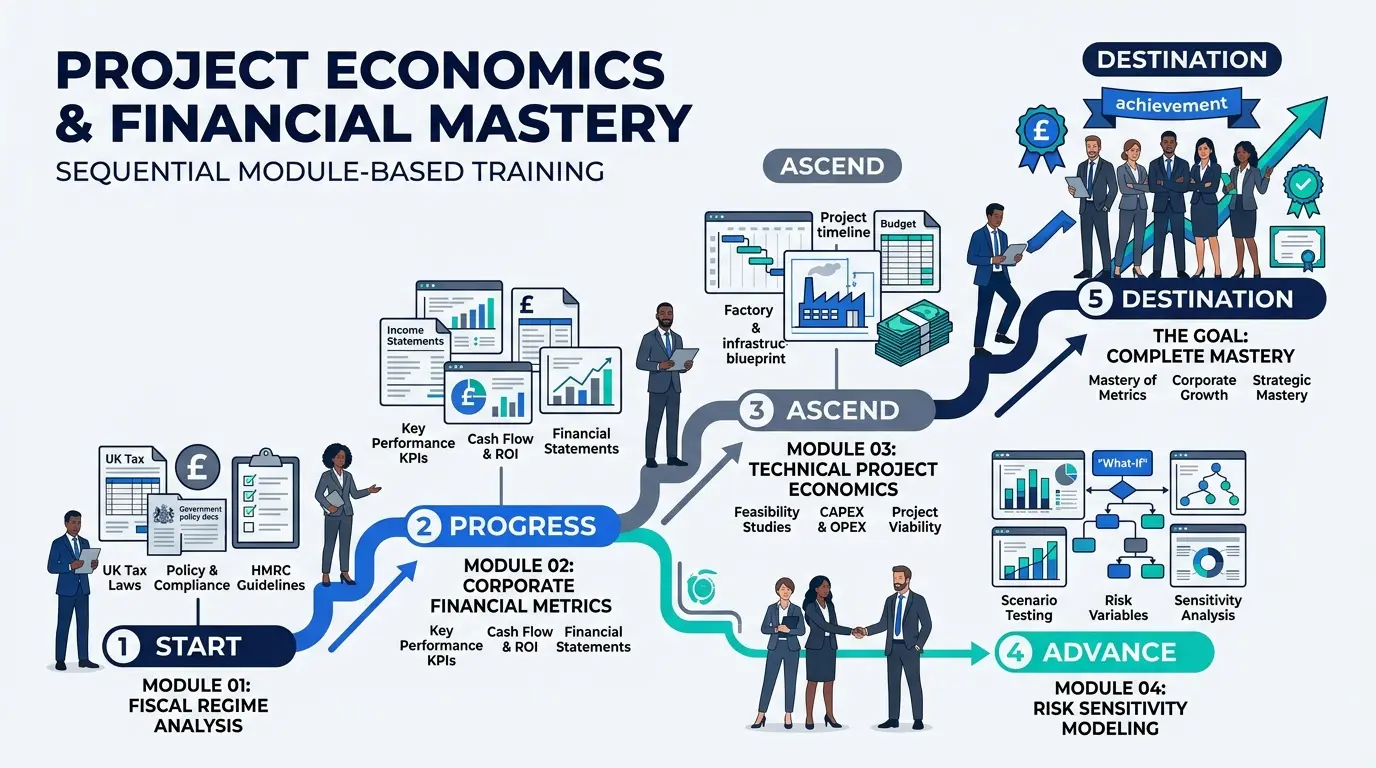
The curriculum design follows a logical progression designed specifically for technical finance professionals, commercial managers, and corporate planning teams. Upstream financial modeling cannot be learned through disconnected theoretical modules; it requires a structured framework where each analytical concept builds upon the previous one. Understanding How to Assess the Impact of Petroleum Fiscal Terms on Break Even Oil Prices serves as the primary technical pivot within this learning pathway, guiding participants from basic cash flow construction to complex fiscal sensitivity analysis.
The Institute For Oil & Gas Training developed this learning progression to match the real-world workflow of energy finance departments. The initial phases focus on deconstructing fiscal architecture, establishing clear definitions for concessionary systems, production sharing contracts, and service agreements. Once these legal and financial boundaries are established, the training transitions into quantitative modeling, covering cost escalation sensitivity, service cost inflation adjustments, and government take impact on break-even thresholds. This systematic approach ensures that participants do not merely run static models, but instead acquire the capability to perform stress-testing and scenario analysis across dynamic market environments.
What will participants learn across the curriculum modules?
Participants learn to build robust cash flow models, evaluate diverse fiscal regimes, perform sensitivity analysis under inflation, and calculate post-tax, corporate, and dividend-covering break-even price metrics.
The curriculum is divided into four comprehensive technical modules, structured to deliver actionable financial capabilities that can be immediately applied within corporate environments.
Module 1: Petroleum Fiscal Regimes and Fiscal Architecture
Structural mechanics of concessionary tax and royalty systems, Production Sharing Contracts (PSCs), and Risk Service Agreements.
Quantification of government take impact on break-even metrics across varying oil price environments.
Cost recovery mechanisms, cost caps, profit oil split thresholds, and ring-fencing provisions.
Analysis of direct taxation, windfall profit levies, state participation, and signature/production bonuses.
Module 2: Cash Flow Construction and Post-Tax Economics
Building discount cash flow (DCF) models integrating specific fiscal terms and variable depreciation schedules.
Isolating post-tax break-even thresholds from gross field-level operating economics.
Calculating net present value (NPV) neutral price points under variable discount rates.
Factoring operational expenditure (OPEX), capital expenditure (CAPEX), and abandonment/decommissioning provisions into long-term price floors.
Module 3: Advanced Corporate Break-Even Metrics
Determining corporate cash break-even requirements to maintain balance sheet liquidity and solvency.
Modeling the dividend covering oil price required to sustain equity investor payouts and debt covenants.
Comparing hedged versus unhedged price floor scenarios to evaluate corporate risk exposure.
Calculating fiscal drag and fiscal leverage metrics across international asset portfolios.
Module 4: Inflation, Sensitivity Analysis, and Resilience Testing
Incorporating service cost inflation dynamics and cost escalation sensitivity into baseline economics.
Executing resilience testing protocols against sharp commodity price downcycles and regulatory modifications.
Monte Carlo simulation applications for probabilistic break-even price distribution analysis.
Stress-testing upstream portfolios against climate policies, carbon pricing mechanisms, and shifting fiscal terms.
How is the training program delivered and evaluated?
The program is delivered through flexible live virtual, classroom, hybrid, and corporate onsite formats utilizing practical financial modeling workshops, real-world case studies, and practical technical assessments.
The Institute For Oil & Gas Training employs a specification-driven instructional methodology that prioritizes applied technical execution over passive lectures. Training programs are structured around practical modeling sessions where participants construct live economic models using industrial datasets and real-world petroleum contracts.
Delivery Format | Duration | Structure & Methodology | Target Audience |
Live Virtual Workshop | 5 Days (3 hours/day) | Interactive online sessions, real-time spreadsheet coaching, breakout case studies | Distributed global finance and commercial teams |
Classroom Intensive | 3 Consecutive Days | Full-day immersive training, direct instructor interaction, peer modeling reviews | Senior analysts, planners, and finance managers |
Hybrid Executive | 2 Weeks (Self-paced + Live) | Blended online preparatory modules combined with intensive live synthesis workshops | Department heads and cross-functional executives |
Corporate Onsite | Customized Schedule | Tailored instruction using company-specific fiscal contracts and portfolio assets | HR-led corporate teams, business units, and joint ventures |
Assessment within the Break-even Oil Price Analysis Under Fiscal Terms Training Course is rigorous and objective. Participants undergo practical benchmarking assessments at the conclusion of each module. Rather than relying on multiple-choice testing, evaluation is conducted through hands-on financial modeling tasks, scenario stress-testing assignments, and case study defense presentations. Participants must demonstrate technical competency in calculating exact post-tax price thresholds under constrained fiscal environments to receive certification.
What measurable outcomes can participants and corporate teams expect?
Graduates gain immediate technical competency in cash flow modeling, capital allocation accuracy, fiscal risk mitigation, and corporate resilience testing, driving improved portfolio performance.
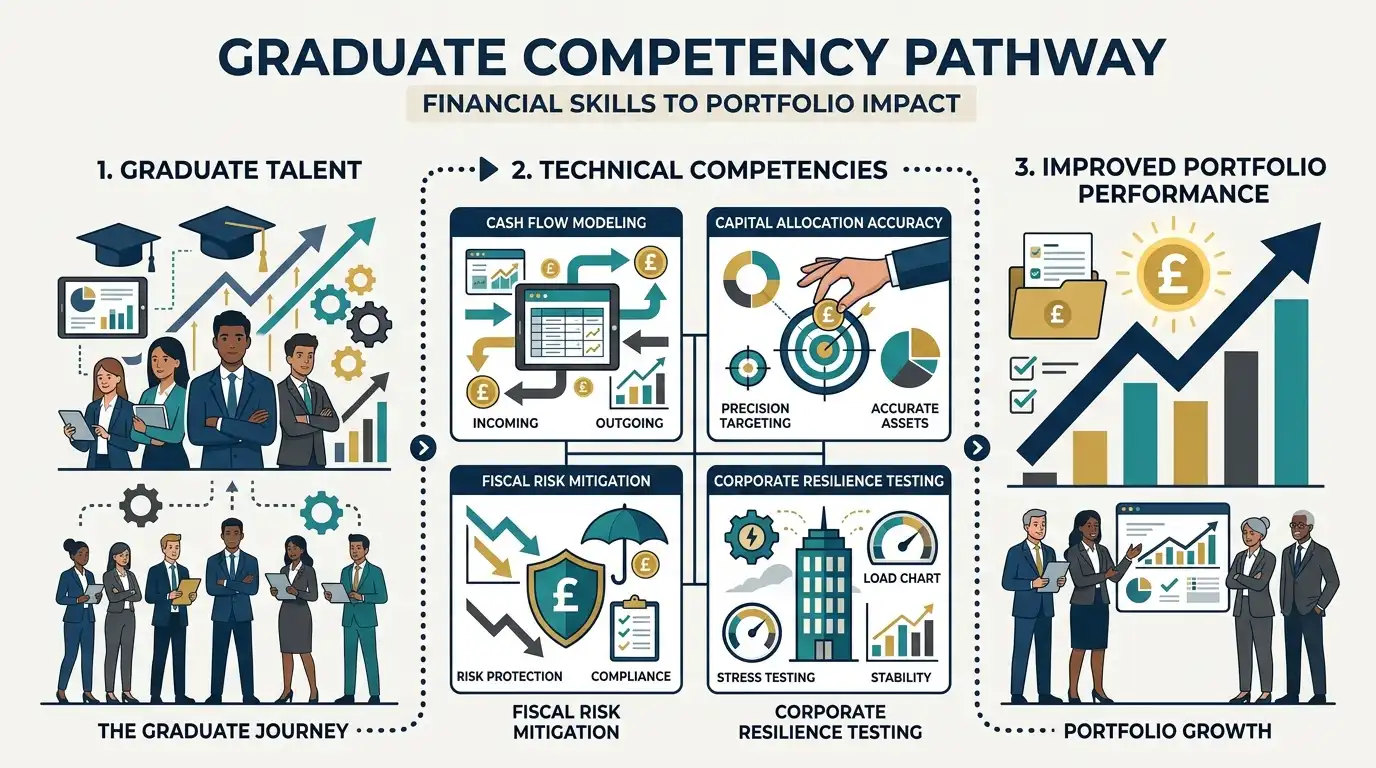
For individual finance professionals, completing this training establishes verifiable expertise in upstream project economics and financial analysis. Participants transition from basic financial modeling roles into strategic advisors capable of evaluating international petroleum concessions, structuring joint venture commercial terms, and defending capital expenditure proposals before executive investment committees.
For human resources directors, corporate learning managers, and department leaders, enrolling teams in this program at the Institute For Oil & Gas Training provides direct organizational benefits:
Enhanced Capital Efficiency: Finance teams calculate accurate price floors, preventing underinvestment in resilient fields and overcapitalization in high-risk fiscal environments.
Standardized Valuation Methodologies: Establishes a uniform corporate framework for evaluating upstream assets across international regional offices.
Improved Risk Governance: Enables commercial teams to stress-test corporate cash flows against service cost inflation, tax amendments, and market downturns.
Optimized Commercial Negotiation: Equips business development teams with deep insights into government take dynamics, strengthening position during licensing rounds and PSC renegotiations.
Streamlined Leadership Development: Builds a robust talent pipeline of commercial managers capable of bridging the gap between technical engineering data and corporate financial strategy.
How does the enrollment process work for individuals and corporate teams?
Enrollment involves a streamlined eligibility assessment, registration review, pre-course technical preparation, and a structured pathway to professional certification.
The Institute For Oil & Gas Training maintains defined admission criteria to ensure that all participants possess the baseline technical background required to fully engage with the advanced curriculum material.
1. Eligibility Criteria
Candidates should possess a foundational understanding of basic corporate finance, accounting principles, or upstream energy operations. Ideal participants include:
Financial analysts, economic evaluators, and planning specialists.
Commercial managers, business development officers, and asset managers.
Petroleum engineers and geoscientists involved in project economics and capital budgeting.
Government regulators, national oil company (NOC) representatives, and ministry finance officials.
2. Enrollment Steps
Application Submission: Candidates or corporate HR teams submit an enrollment application specifying desired training dates and delivery format.
Technical Screening: The academic team reviews candidate profiles to confirm baseline prerequisite alignment.
Pre-Course Preparation: Admitted participants receive preliminary technical reading materials and baseline dataset templates to complete prior to session start.
Course Execution: Attendance and active participation in all technical workshops, modeling sessions, and practical case studies.
Final Capability Assessment: Completion of an applied post-tax break-even modeling exam and portfolio resilience project.
Certification Award: Successful candidates receive the formal professional credential verifying technical competency in break-even price analysis under fiscal regimes.
To upgrade your organization's financial modeling capabilities and secure your seat in the upcoming cohort, submit your application to enroll in this program today.
Frequently Asked Questions
What is included in Oil and Gas Petroleum Financial Analysis training?
Oil and Gas Petroleum Financial Analysis training by Institute For Oil & Gas Training covers discounted cash flow (DCF) modeling, fiscal regime assessment, cost recovery mechanisms, and post-tax break-even price evaluation. Participants learn to evaluate production sharing contracts (PSCs), calculate government take, and model fiscal leverage across upstream asset portfolios. The curriculum equips finance professionals with standardized valuation frameworks to assess project profitability under dynamic market conditions.
How do fiscal terms affect petroleum economic models?
Petroleum fiscal terms—including sliding-scale royalties, windfall profit taxes, ring-fencing, and cost recovery caps—directly dictate net cash flows and post-tax break-even thresholds for upstream projects. Without incorporating these specific fiscal terms into economic models, corporate break-even estimates often overstate project profitability and misjudge capital risk. Institute For Oil & Gas Training delivers structured modules on Oil and Gas Petroleum Financial Analysis to help commercial teams quantify fiscal drag and optimize asset valuation.
Who should undertake Oil and Gas Petroleum Financial Analysis training?
This professional training program is designed for financial analysts, commercial managers, corporate planners, petroleum economists, and investment decision-makers in the energy sector. It is also highly relevant for HR teams seeking to build specialized technical capability and leadership pipelines within upstream finance departments. Institute For Oil & Gas Training provides tailored corporate instruction to ensure teams can rigorously stress-test investment proposals against market volatility.
What is the difference between pre-tax and post-tax break-even oil price analysis?
Pre-tax break-even analysis measures field-level capital and operating expenditures without accounting for host government fiscal obligations, offering an incomplete metric of economic viability. Post-tax break-even analysis incorporates direct taxation, production sharing splits, state participation, and royalties to establish the true price floor required for corporate cash solvency. Master class modules in Oil and Gas Petroleum Financial Analysis at Institute For Oil & Gas Training teach professionals how to accurately construct post-tax models across international concessions.
How does this training help energy companies improve capital allocation decisions?
Oil and Gas Petroleum Financial Analysis training equips planning teams with specification-driven risk sensitivity protocols, including cost escalation and dividend-covering price floor assessments. By establishing uniform corporate valuation standards, organizations can identify resilient projects, mitigate fiscal risk during joint venture negotiations, and avoid overcapitalising high-risk assets. Institute For Oil & Gas Training delivers this instruction through practical, workshop-based cash flow modeling sessions tailored for immediate workplace application.
Related training courses
Petroleum Refinery Processes & Operations Training Course
- Specialisation
- Oil & Gas Process Engineering and Operations
- Duration
- 5 days · 15 CPD hours
API RP 1188 Hazardous Liquid Pipeline Facilities Integrity Training Course
- Specialisation
- Oil & Gas Pipeline Integrity and Inspection
- Duration
- 5 days · 15 CPD hours
Corrosion Control in Petroleum Refineries Training Course
- Specialisation
- Oil & Gas Corrosion Management and Control
- Duration
- 5 days
More articles

Production Forecasting and Decline Curve Analysis Training for Oil and Gas Finance Professionals
Master production forecasting and decline curve analysis. Evaluate reservoir performance for oil and gas financial planning.
Read article →
How to Evaluate Production Forecasts and Decline Curves for Reliable Financial Analysis
Learn how to evaluate production forecasts and decline curves to improve financial modeling, risk assessments, and asset valuations in oil and gas.
Read article →
Why Production Forecasting and Decline Curve Analysis Matter in Oil and Gas Financial Planning
Discover why production forecasting and decline curve analysis drive oil and gas financial planning, workforce capability, and corporate capital allocation.
Read article →