
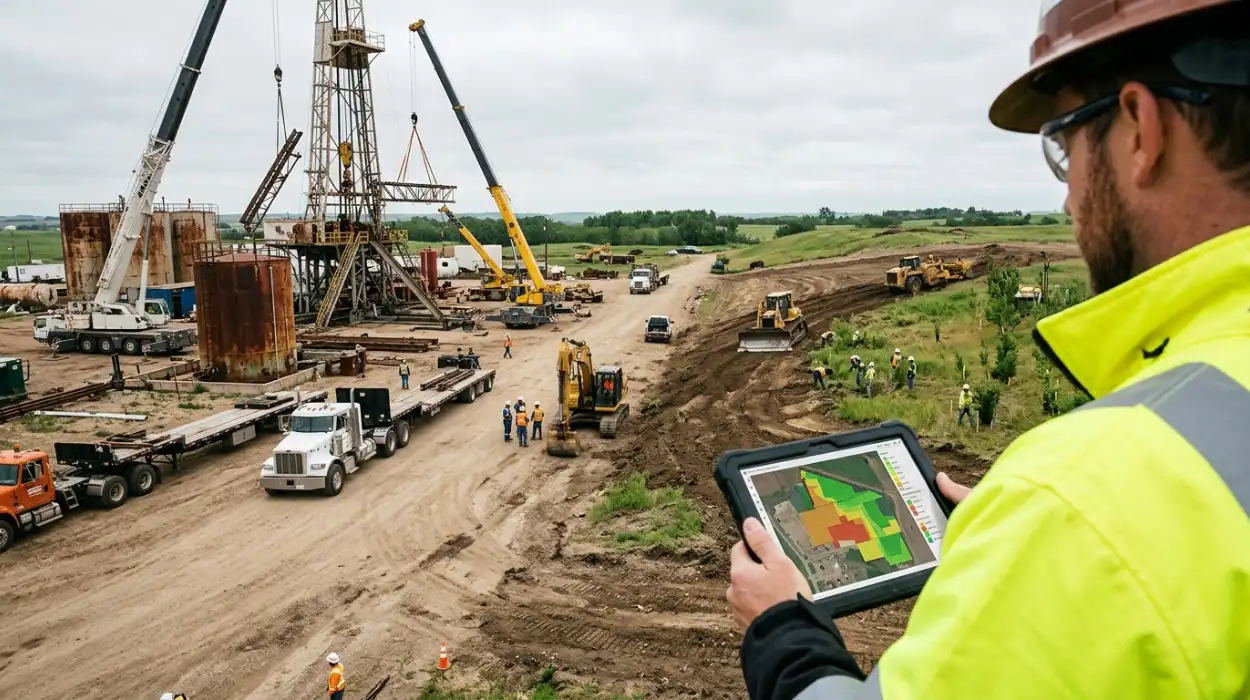
Decommissioning provisions represent formal financial and legal obligations recorded on balance sheets to cover future environmental restoration, platform removal, and asset retirement costs, directly influencing financial transparency, corporate valuation, regulatory compliance, risk mitigation, and capital allocation across capital-intensive energy sectors.
In corporate environments, asset retirement obligations reflect estimated future expenditures required to decommission offshore platforms, subsea pipelines, and processing facilities. Financial accounting standards such as IAS 37 provisions require energy companies to recognise these liabilities when a constructive and legal obligation arises from past operational activities. Operating entities perform precise calculations using an abandonment cost estimate, projecting baseline expenses decades into the future while incorporating complex cost escalation assumptions. Accurate liability accounting directly safeguards corporate solvency, prevents sudden financial restatements, and ensures alignment with international financial reporting frameworks.
Financial governance depends on establishing clear internal controls around these provisions. When enterprise teams lack technical accounting skills, organizations face severe financial reporting errors, balance sheet misstatements, and regulatory penalties. Corporate learning initiatives bridge these technical knowledge gaps across finance, legal, and engineering departments. Cross-functional alignment prevents underestimation of long-term liabilities, protecting shareholder value and corporate credit ratings. Enterprise workforce development transforms complex accounting standards into standardized operational workflows across accounting, legal, and operational leadership teams.
How Do Enterprise Organizations Implement Decommissioning Provision Workflows Step by Step?
Organizations implement decommissioning provision workflows by combining engineering estimates with financial modeling, applying standardized discounting calculations, establishing cross-departmental data pipelines, conducting quarterly compliance reviews, and standardizing employee competencies through structured learning and professional development frameworks across enterprise operational teams.
The implementation process follows a six-stage operational delivery framework:
Identification of Legal and Constructive Obligations: Operational teams inspect facility operating licenses, environmental lease terms, and statutory frameworks to determine exact liability trigger dates across all active production assets.
Engineering Abandonment Cost Estimation: Offshore and onshore engineering specialists generate detailed cost estimates covering well plugging, facility dismantling, site remediation, and waste management activities.
Financial Discounting and Inflation Adjustment: Financial analysts adjust baseline cost estimates using specific cost escalation assumptions, discounting future cash flows to present value using appropriate risk-adjusted discount rates.
Capitalisation and Asset Recognition: Finance teams record the initial present value as a long-term liability while simultaneously capitalizing an equivalent amount as part of the carrying value of the corresponding decommissioning asset.
Periodic Unwinding and Revision Accounting: Accounting personnel process the yearly discounting and unwinding adjustments through the income statement while applying guidelines from IFRIC 1 changes in existing provisions to account for changes in estimated cash flows or discount rates.
Regulatory Reporting and Audit Verification: Internal audit teams reconcile balance sheet provisions against independent environmental reviews, submitting audited disclosures to market regulators and tax authorities.
Effective implementation requires formal workforce training to maintain calculation accuracy across global business units. Organizations deliver instruction using a 3-day intensive workshop format or a 6-week blended online delivery structure. Employees complete 24 total contact hours of structured instruction, participating in case-based learning, asset modeling exercises, and financial statement analysis. Training initiatives measure practical execution using pre-training competency assessments and post-training financial modeling evaluations to ensure 100% operational compliance across finance and engineering units.
What Essential Components and Technical Capabilities Frameworks Define Asset Retirement Management?
Asset retirement management requires integrated financial frameworks, specialized modeling software, engineering cost models, regulatory compliance databases, cross-functional risk matrices, and structured technical training curricula that align accounting rules with physical field operations for sustainable enterprise risk governance.
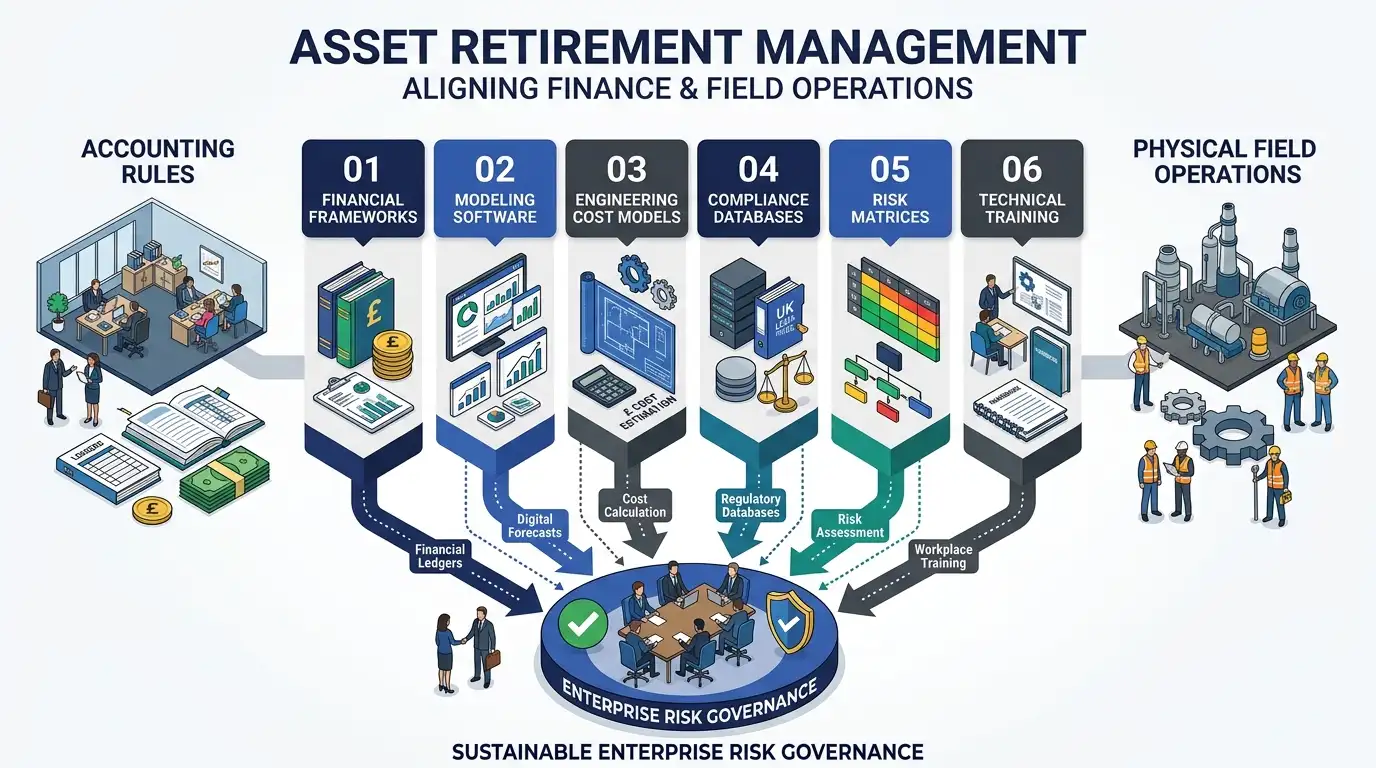
Technical Financial Frameworks and Accounting Standards
Finance professionals must master international standards governing restoration obligations and financial liabilities. Key frameworks include:
International Accounting Standard 37 (IAS 37), establishing criteria for liability recognition, measurement rules, and disclosure standards.
IFRIC Interpretation 1, detailing the accounting treatment for changes in existing decommissioning, restoration, and similar liabilities.
International Financial Reporting Standard 16 (IFRS 16), regulating lease-related restoration obligations for rented production sites.
Engineering and Environmental Cost Modeling Tools
Accurate provision accounting relies on robust engineering input data. Enterprise teams utilize:
Well-plugging cost calculators to project downhole isolation expenditure based on depth, geological pressure, and casing integrity.
Surface facility removal models to estimate marine heavy-lift vessel charter rates, topside cutting costs, and onshore scrap value.
Environmental remediation assessments to quantify soil decontamination, water treatment, and long-term site monitoring expenses.
Enterprise Capability Building and Learning Methodologies
Building operational competence across business units requires structured learning frameworks. Effective corporate programs incorporate:
Case-based learning using real-world annual report disclosures from upstream energy producers.
Financial modeling simulations where participants calculate discounting and unwinding schedules under varying interest rate environments.
Structured role-play exercises simulating joint-venture committee negotiations between field operators and non-operating partners.
Why Do Industry Technical Skill Gaps Create Balance Sheet and Regulatory Compliance Risks?
Technical skill gaps create balance sheet risks by causing improper liability valuation, missed regulatory reporting deadlines, incorrect discount rate applications, misaligned joint-venture cost allocations, and material weakness disclosures during external financial audits across public and private energy corporations.
When finance personnel lack deep understanding of IAS 37 provisions, they frequently misapply accounting rules to complex asset retirement obligations. Engineering teams often provide raw cost data without applying mandatory cost escalation assumptions, leading to severe under-provisioning on balance sheets. Conversely, accounting teams often fail to account for site-specific environmental remediation mandates, resulting in inaccurate liability matching. These technical disconnects expose organizations to restatement risks, regulatory fines, and lowered credit ratings.
Addressing these skill gaps requires targeted corporate development. Organizations implementing structured technical training reduce audit adjustment findings by 45% within 12 months. Cross-functional training brings together petroleum engineers, asset accountants, legal counsel, and treasury analysts into unified learning cohorts. This collaborative educational approach ensures that operational field changes automatically trigger updates in balance sheet financial models, maintaining complete regulatory alignment.
How Does Structured Decommissioning Training Deliver Measurable Outcomes for Corporate Teams?
Structured decommissioning training produces measurable outcomes by improving audit approval rates, reducing liability valuation errors, accelerating quarterly financial closing cycles, enhancing capital allocation efficiency, and increasing cross-departmental operational alignment across energy sectors like oil, gas, offshore wind, and mining.
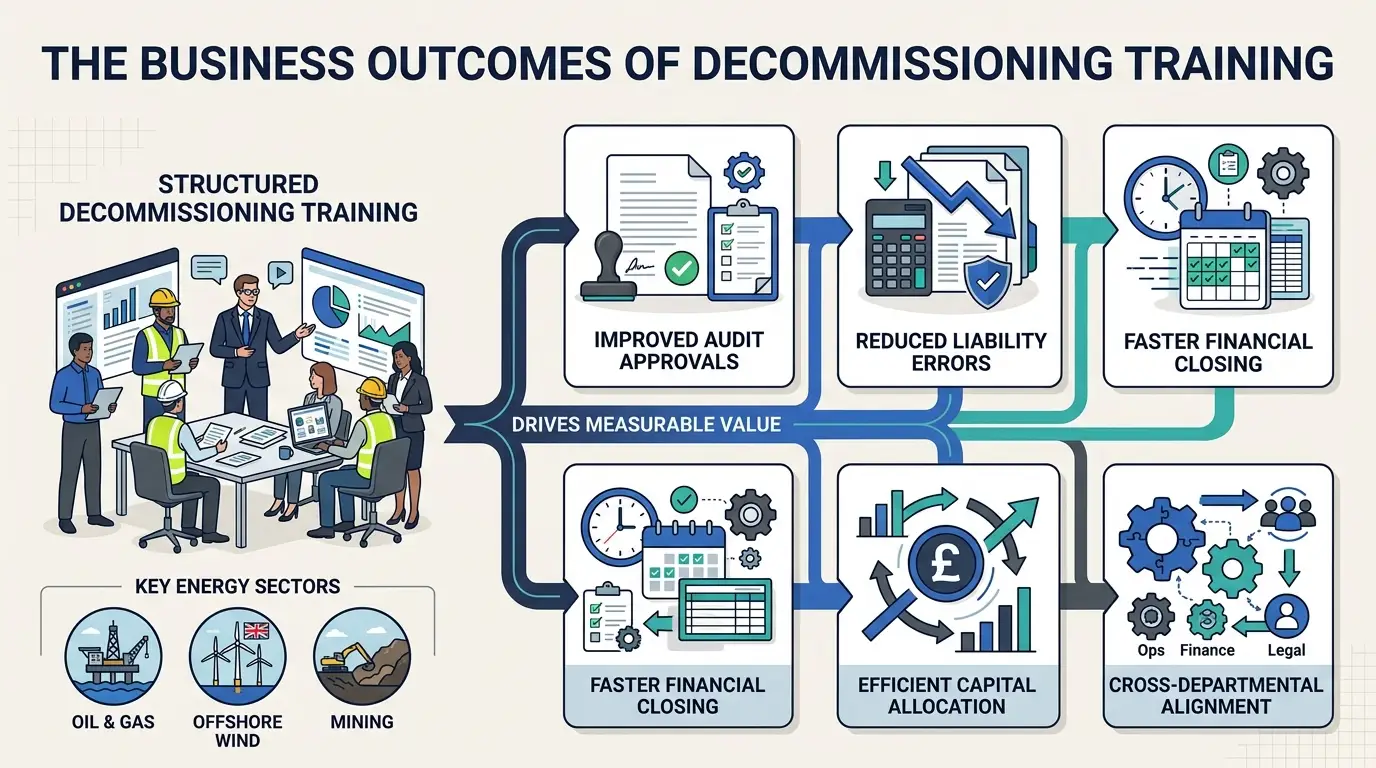
Corporate learning initiatives deliver clear performance metrics across multiple organizational levels:
Financial Statement Accuracy and Audit Efficiency
Enterprise teams completing formal training display high precision in financial reporting. Organizations report a 98% reduction in balance sheet restatements related to asset retirement obligations post-training. External audit cycles for long-term liabilities accelerate by 35%, directly lowering audit fees and administrative overheads.
Operational Efficiency and Process Speed
Cross-functional training streamlines data transfer between engineering divisions and financial accounting units. Standardized reporting templates cut quarterly balance sheet closing cycles by 4 full business days. Shared technical terminologies eliminate miscommunication during annual liability reviews.
Workforce Capability and Career Retention
Investing in specialized professional development increases employee engagement and retention. Energy firms offering technical accounting training achieve a 22% increase in staff retention rates among senior financial analysts and cost engineers over a 3-year period. Structured learning builds a robust leadership pipeline capable of managing multi-billion-dollar asset retirement portfolios.
When evaluating implementation strategies, executive decision-makers must review the Key Challenges in Recognising Decommissioning and Asset Retirement Provisions to select the appropriate instructional depth for their finance and engineering teams. Organizations facing complex multi-jurisdictional assets often enroll cross-functional units in the specialized Decommissioning & Asset Retirement Obligations: Provision Recognition Training Course to standardize calculation methodologies across global business divisions.
Which Corporate Roles, Departments, and Energy Sectors Require Asset Retirement Training?
Asset retirement training is essential for finance directors, legal counsel, environmental engineers, joint-venture accountants, asset managers, and compliance officers across upstream oil and gas, midstream processing, offshore wind energy, nuclear power, and heavy mining industries.
Key Target Departments and Professional Roles
Financial Accounting and Reporting Teams: Responsible for calculating present values, managing IFRIC 1 changes in existing provisions, and preparing annual report disclosures.
Petroleum and Facilities Engineers: Responsible for drafting the initial abandonment cost estimate, evaluating technical well-plugging requirements, and updating removal timelines.
Corporate Legal and Contracts Counsel: Responsible for analyzing license agreements to determine whether a statutory constructive and legal obligation exists.
Joint-Venture and Billing Accountants: Responsible for allocating shared decommissioning liabilities among operating and non-operating partners.
Industry Sector Applications
Upstream Oil and Gas Operators: Managing deepwater platform removals, subsea infrastructure abandonment, and depleted reservoir sealing.
Midstream Pipeline Enterprise Operators: Handling land restoration, compressor station decommissioning, and environmental decontamination obligations.
Offshore Wind and Renewable Infrastructure Developers: Accounting for turbine foundation removals, seabed restoration, and cable subsea retrieval obligations.
Mining and Resource Extraction Firms: Managing tailing pond remediations, open-pit land re-cultivations, and heavy equipment disposal liabilities.
What Common Problems and Misconceptions Undermine Corporate Asset Retirement Training Programs?
Common problems include relying on generic accounting courses, treating provision management as a single-department task, ignoring continuous regulatory updates, failing to measure learning return on investment, and using outdated training delivery formats that lack practical modeling exercises.
Over-Reliance on Generic Financial Accounting Courses
Many enterprise organizations send staff to general financial reporting seminars. Generic courses cover basic liability accounting but fail to address specific energy industry challenges like discounting and unwinding rules, marine vessel charter fluctuations, or complex restoration obligations. Effective programs focus exclusively on sector-specific asset retirement challenges.
Treating Asset Retirement Obligations as a Finance-Only Responsibility
A major structural error is isolating provision management within the finance department. When finance teams operate without direct engineering input, balance sheet numbers lose connection with field realities. Cross-functional learning programs must train financial analysts and field engineers together to ensure data integrity across all reporting channels.
Passive Learning Formats Lacking Practical Application
Informational lectures without practical application fail to generate long-term retention. Effective corporate training utilizes hands-on financial modeling, case study reviews of real corporate disclosures, and interactive scenario analysis. Gamified simulations and practical assessments ensure employees master complex accounting rules before applying them to active financial ledgers.
How Should Business Leaders Evaluate the ROI of Technical Professional Development Programs?
Business leaders evaluate technical professional development ROI by comparing pre- and post-training balance sheet error rates, calculating external audit cost reductions, measuring quarterly closing speed improvements, tracking regulatory compliance scores, and evaluating long-term risk mitigation across all operating asset portfolios.
To establish a clear ROI calculation, executive decision-makers evaluate quantitative performance metrics over a 12-month period following program completion:
Quantify Direct Audit Savings: Measure the reduction in external auditor hours spent verifying asset retirement obligations. Enterprise firms typically realize a 25% to 35% drop in auditing fees related to liability line items.
Calculate Time-to-Close Value: Assess the financial value of accelerating quarterly closing cycles by 3 to 4 business days. Faster reporting allows executive teams to deploy capital more efficiently.
Track Compliance and Fine Avoidance: Monitor regulatory audit outcomes. Eliminating compliance penalties and restatement fees yields immediate, direct financial returns on training investments.
Evaluate Internal Skill Retention: Measure employee retention rates and internal promotion metrics within trained departments. Retaining specialized talent reduces recruitment costs by up to $75,000 per senior position.
Structured professional development turns complex financial compliance requirements into a standardized enterprise capability. Equipping cross-functional teams with deep expertise in asset retirement provisions protects corporate liquidity, ensures market transparency, and drives long-term organizational performance across the global energy landscape.
Frequently Asked Questions
What is Oil and Gas Petroleum IFRS & Financial Reporting?
Oil and Gas Petroleum IFRS & Financial Reporting covers specialized international accounting standards applicable to upstream, midstream, and downstream energy operations. The Institute For Oil & Gas Training delivers structured training on exploration evaluation, reserve accounting, lease reporting, and asset retirement obligations. This ensures corporate financial statements strictly comply with global statutory regulations and international reporting frameworks.
Why is IFRS financial reporting critical for petroleum and energy companies?
IFRS compliance ensures financial transparency, standardises revenue recognition, and accurately values complex asset portfolios for international energy businesses. Through programs provided by the Institute For Oil & Gas Training, finance teams master Oil and Gas Petroleum IFRS & Financial Reporting standards to prevent balance sheet misstatements and mitigate regulatory compliance risks during joint-venture audits.
Which accounting standards are covered in oil and gas financial reporting courses?
Primary accounting standards include IFRS 6 for exploration and evaluation assets, IAS 37 for decommissioning provisions, IFRS 15 for revenue from contracts with customers, and IFRS 16 for corporate leases. The Institute For Oil & Gas Training incorporates these specific frameworks into its Oil and Gas Petroleum IFRS & Financial Reporting curriculum to address industry-specific accounting challenges.
Who should attend an oil and gas IFRS training course?
This specialized instruction targets chief financial officers, corporate controllers, joint-venture accountants, financial analysts, and external auditors working within the energy sector. Professional development courses from the Institute For Oil & Gas Training equip these professionals with practical modeling techniques and technical reporting competencies required for multi-jurisdictional financial consolidation.
How does specialized IFRS training improve corporate financial governance?
Targeted training aligns engineering operational data with financial balance sheet reporting, accelerating quarterly closing cycles and reducing audit adjustment findings. By implementing Oil and Gas Petroleum IFRS & Financial Reporting best practices learned through the Institute For Oil & Gas Training, organizations standardize financial disclosures and strengthen overall enterprise risk management.
Related training courses
Oil Movement, Storage & Troubleshooting Training Course
- Specialisation
- Oil & Gas Process Engineering and Operations
- Duration
- 5 days · 15 CPD hours
Root Cause Analysis (RCA) Training Course
- Specialisation
- Oil & Gas Reliability and Maintenance Management
- Duration
- 5 days · 15 CPD hours
Corrosion Management Systems (CMS) Training Course
- Specialisation
- Oil & Gas Corrosion Management and Control
- Duration
- 5 days · 15 CPD hours
More articles

Decommissioning and Asset Retirement Obligation Security Arrangements Training for Oil and Gas Professionals
Master ARO security, letters of credit, trust funds, and liability transfer. Enroll in the Institute For Oil & Gas Training professional course.
Read article →
Key Challenges in Managing Security Arrangements for Oil and Gas Decommissioning Obligations
Examine key challenges in managing security arrangements for oil and gas decommissioning obligations and evaluate strategic solutions.
Read article →
Why Security Arrangements Matter for Oil and Gas Decommissioning Obligations
Learn how security arrangements for oil and gas decommissioning obligations protect organizations, mitigate liabilities, and optimize working capital.
Read article →