
Asset impairment training builds critical finance and accounting competencies within corporate teams to ensure accurate valuation of exploration assets, prevent material misstatements in financial reporting, and protect enterprise value across upstream organizations.
Upstream petroleum operations involve multi-million-dollar capital investments in acreage, seismic data, and exploratory drilling. When drilling results prove unsuccessful or commercial viability drops, organizations must recognize write-downs immediately. Without specialized workforce training, finance teams, accounting departments, and asset managers commit valuation errors. These valuation errors lead to regulatory penalties, shareholder distrust, and inaccurate capital allocation. Corporate learning programs bridge internal skill gaps by teaching staff how to identify impairment triggers, evaluate geological data, and apply rigorous accounting frameworks. Organizations face complex technical standards that govern exploratory assets differently from producing properties. Staff members require structured instruction to master these standards. Companies deploy targeted training programs to eradicate competency deficiencies among accounting personnel. These educational interventions typically span 30 hours of intensive coursework, split across foundational lectures and applied computation modules.
When enterprises invest in structured capability building, their finance departments achieve a 35 percent reduction in reporting discrepancies during annual audits. Furthermore, workforce training establishes a standardized operational vocabulary across cross-functional teams. Geologists, reservoir engineers, and financial controllers collaborate more effectively when they share a unified understanding of asset valuation metrics. This cross-departmental alignment accelerates decision-making cycles by 20 percent. Decision-makers utilize this foundational competence to protect corporate balance sheets from unmitigated financial shocks.
How do organizations implement and deliver asset impairment training programs across corporate environments?
Organizations execute asset impairment training through structured multi-phase methodologies combining hybrid learning delivery, case-based workshops, practical simulations, and rigorous pre- and post-training competency assessments.
Corporate learning and development departments design implementation roadmaps that align educational interventions with strategic business cycles. Training delivery utilizes three primary formats consisting of in-person workshops, online modules, and hybrid learning models. Enterprises operating across global jurisdictions deploy online modules to train 500 or more employees simultaneously without disrupting daily operations. Conversely, complex financial modeling workshops utilize in-person sessions to foster collaborative problem-solving among senior accountants. Learning methodologies incorporate case-based learning, simulation exercises, role play, and technical assessments. Trainees analyze historical corporate balance sheets from real-world upstream entities. They calculate carrying amount reviews under simulated market distress scenarios. Educational architects establish strict key performance indicators to measure training efficacy.
These performance metrics track course completion rates, knowledge retention scores, and on-the-job application accuracy. Organizations targeting workforce transformation mandate comprehensive pre-assessments to diagnose baseline skill gaps before course enrollment. Post-training assessments measure knowledge acquisition, requiring a minimum passing threshold of 85 percent before certification issuance. When employees complete these rigorous modules, organizations observe tangible improvements in operational workflows. For instance, financial controllers apply standardized review protocols for [Key IFRS 6 Impairment Challenges for Oil and Gas Exploration and Evaluation Assets] evaluations with higher precision. This operational shift reduces external consultant dependency by 40 percent, saving organizations hundreds of thousands of dollars annually. Corporations integrate these learning modules into their continuous professional development frameworks. This integration ensures that finance professionals maintain up-to-date competencies as regulatory standards evolve across international markets.
What key components, skills, frameworks, and tools comprise professional asset impairment programs?
Professional asset impairment programs incorporate technical accounting frameworks, financial valuation tools, cash generating unit allocation techniques, and specialized skill sets designed to evaluate exploratory assets accurately.
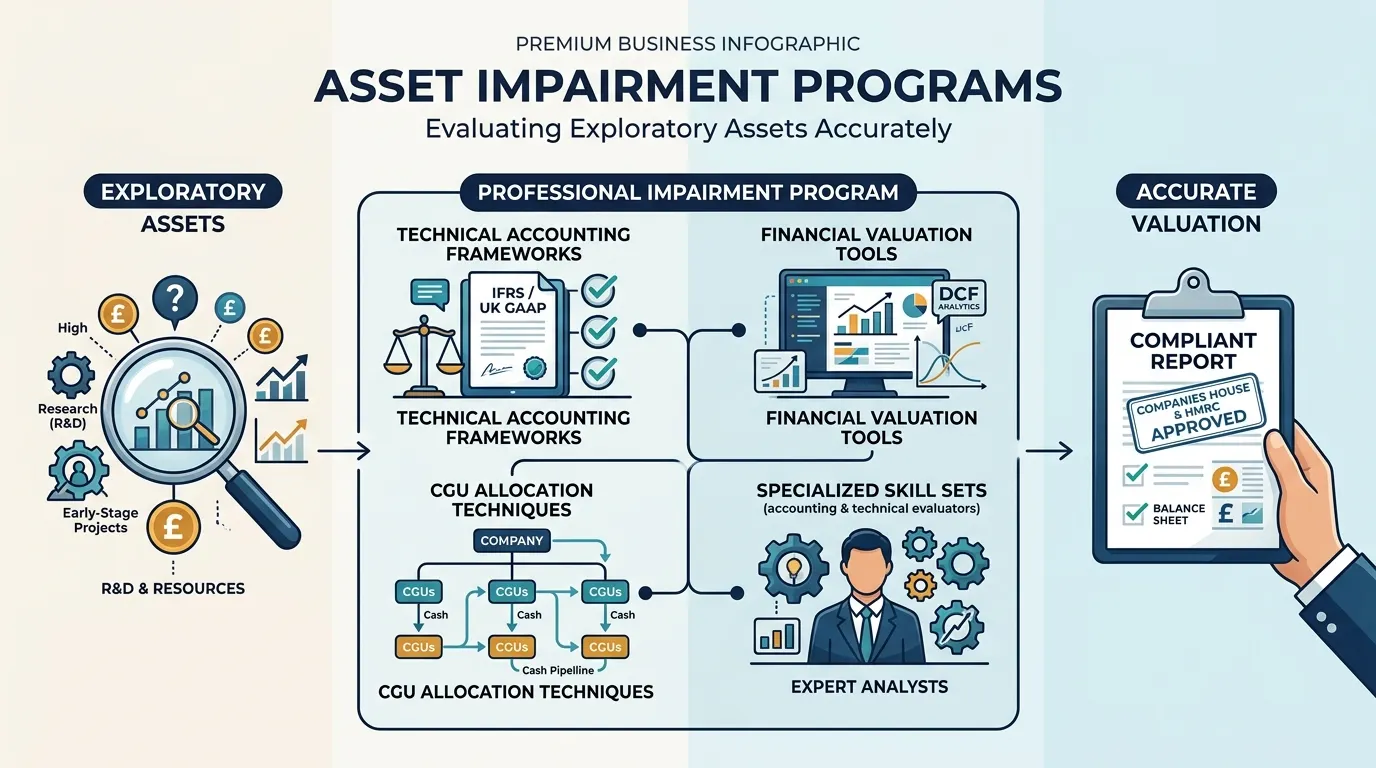
Curriculum design rests upon established accounting standards, industry-specific valuation models, and analytical tools. Training frameworks instruct participants on identifying specific impairment indicators such as the expiry of exploration rights, unsuccessful well write-off events, and the relinquishment of acreage. Learners master the mechanics of cash generating unit allocation for E&E assets, ensuring that management groups individual properties correctly before testing for value diminution. Skill development focuses on conducting a meticulous carrying amount review of capitalized exploration expenditures. Trainees utilize discounted cash flow models, reserve estimation software, and advanced spreadsheet tools to calculate recoverable amounts. Program modules also address the mandatory disclosure of impairment losses within statutory financial statements. Corporations deliver these components through structured learning pathways tailored to distinct organizational roles.
Financial analysts learn advanced computational techniques for asset valuation. Operational managers study how field-level decisions impact balance sheet integrity. Instructional designers integrate interactive digital sandboxes where participants test different geological risk scenarios. These simulation tools accelerate practical skill acquisition by allowing learners to make high-stakes financial decisions in a risk-free virtual environment. Organizations tracking program impact note a 50 percent decrease in calculation errors during quarterly financial closes. Employees demonstrate enhanced confidence when presenting asset valuations to executive boards and external auditors. This technical proficiency protects corporate governance standards and reinforces organizational integrity across all business units.
What measurable organizational benefits and performance outcomes do companies achieve through targeted training?
Targeted asset impairment training yields measurable organizational benefits including enhanced team efficiency, strengthened leadership pipelines, improved employee retention rates, and maximized return on investment for corporate learning budgets.
Organizations measure the success of workforce development initiatives through concrete performance metrics rather than subjective feedback. Companies implementing structured training programs record a 28 percent improvement in internal team efficiency during annual audit cycles. Financial controllers spend less time rectifying basic calculation errors and more time executing strategic capital allocation initiatives. Workforce development also fortifies the internal leadership pipeline. Mid-level accountants who master complex valuation frameworks transition into senior financial leadership roles 18 months faster than peers lacking specialized instruction. Employee retention rates increase by 22 percent among finance and accounting professionals who receive continuous professional development opportunities. Organizations create engaging workplace environments where staff members acquire high-demand technical competencies.
This professional growth mitigates costly employee turnover within specialized technical departments. From a financial perspective, corporate learning initiatives generate an average return on investment of 310 percent within the first 12 months post-training. This economic return manifests through optimized asset write-offs, reduced external advisory fees, and the avoidance of regulatory compliance penalties. Cross-functional collaboration improves as engineers and accountants share a common understanding of asset recoverability thresholds. Team members execute corporate strategy with greater precision, aligning daily operational activities with overarching enterprise growth targets.
Which corporate teams, departments, and industries utilize asset impairment education for workforce transformation?
Asset impairment education serves multidisciplinary corporate teams across upstream energy enterprises, multinational financial institutions, professional services firms, and regulatory bodies seeking comprehensive workforce transformation.
Corporate training directors deploy specialized educational programs across diverse operational departments. Target internal audiences include corporate finance teams, internal audit departments, exploration and production project managers, investor relations specialists, and executive leadership groups. Each department leverages the curriculum to address specific operational challenges. Finance teams utilize the training to ensure rigorous compliance with international reporting standards during asset reviews. Exploration project managers study financial valuation principles to understand how operational delays or unsuccessful drilling campaigns impact corporate capital reserves. Investor relations professionals complete modules to articulate asset valuation adjustments transparently to market analysts and shareholders. While upstream energy enterprises represent the primary beneficiaries of this specialized instruction, other industries adopt similar asset valuation frameworks.
Comparable sectors include mining and metals, renewable energy infrastructure development, and heavy manufacturing. Organizations in these asset-heavy sectors face parallel accounting complexities regarding capital expenditure write-offs and asset recoverability testing. Corporations operating within these domains partner with specialized providers to deliver the [IFRS 6 – Exploration & Evaluation Assets: Impairment Training Course] to their technical personnel. This cross-industry applicability demonstrates the universal necessity of robust financial literacy and asset governance. Enterprises utilizing these structured learning programs establish industry leadership through uncompromising accuracy, operational excellence, and transparent corporate governance.
What common problems and misconceptions undermine ineffective asset impairment training programs?
Ineffective training programs fail due to generic course content, theoretical disconnects from real-world operations, lack of post-training reinforcement, and the absence of measurable performance metrics.
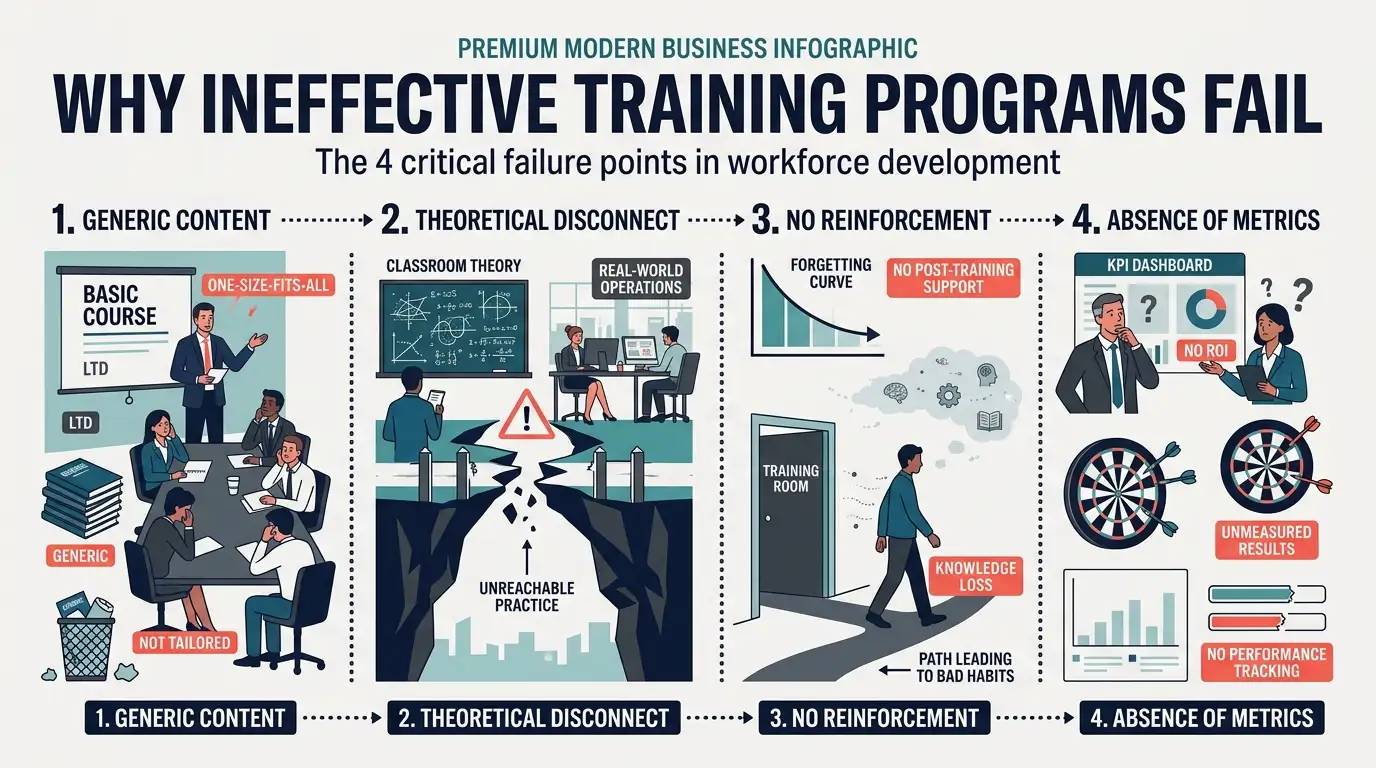
Many corporate learning initiatives fail to deliver intended business outcomes because they rely on generic, one-size-fits-all curricula. Programs that lack industry-specific context leave employees unable to apply theoretical accounting rules to complex upstream energy scenarios. When training providers deliver abstract lectures without practical simulations or case studies, knowledge retention drops below 30 percent within 30 days. Another pervasive misconception assumes that purchasing off-the-shelf digital courses satisfies corporate compliance mandates without requiring customized internal alignment. Organizations must tailor learning content to their specific operational footprints, accounting policies, and risk profiles. Furthermore, organizations often commit the error of treating training as a one-time event rather than a continuous professional development process. Without post-training reinforcement, refresher modules, and regular competency evaluations, employees experience skill decay.
This skill decay manifests as recurring calculation errors, missed impairment triggers, and protracted audit cycles. Forward-thinking enterprises avoid these pitfalls by partnering with rigorous educational providers that emphasize practical learning, real-world application, and measurable results. These progressive organizations establish ongoing evaluation frameworks to track training effectiveness continuously. By eliminating ineffective pedagogical methods and focusing on rigorous, outcome-based education, businesses protect their financial integrity and secure long-term workforce productivity.
Frequently Asked Questions
What is the primary focus of oil and gas petroleum IFRS and financial reporting training?
Oil and gas petroleum IFRS and financial reporting training equips finance teams and accounting professionals with specialized competencies to manage complex sector-specific standards such as IFRS 6. Through the Institute For Oil & Gas Training, learners acquire practical skills in handling exploration and evaluation expenditures, production-stage accounting, and asset impairment reviews. This targeted professional development ensures corporate compliance, accurate financial statement disclosures, and alignment with global regulatory frameworks.
How does IFRS 6 impact exploration and evaluation asset accounting?
IFRS 6 governs the financial accounting for exploration and evaluation (E&E) expenditures incurred before technical feasibility and commercial viability are established. It grants organizations temporary exemption from applying standard accounting frameworks for asset recognition while mandating rigorous carrying amount reviews when impairment indicators arise. Mastering these rules through specialized corporate training helps finance departments manage unsuccessful well write-offs and avoid severe regulatory penalties.
What are the key impairment indicators for E&E assets in the petroleum sector?
Key impairment indicators for E&E assets include the expiry of exploration rights without renewal, the absence of budgeted funding for substantive further expenditure, and decisions to discontinue commercial activities in specific project areas. When these triggers occur, petroleum companies must perform an immediate carrying amount review and allocate cash-generating units appropriately. Recognizing these triggers early prevents material misstatements in corporate financial disclosures.
Why is specialized financial reporting training critical for oil and gas organizations?
Specialized financial reporting training addresses critical skill gaps in petroleum accounting, reducing errors in complex tasks like acreage relinquishment and unsuccessful well write-offs. By building internal capabilities through structured workforce development programs, organizations enhance audit readiness, minimize reliance on external consultants, and improve decision-making clarity for senior management. This strategic upskilling ultimately drives long-term financial transparency and operational efficiency across global energy markets.
What delivery formats are available for petroleum IFRS and financial reporting courses?
Petroleum IFRS and financial reporting courses are delivered through flexible corporate formats including intensive classroom workshops, interactive online modules, and hybrid learning models. These programs integrate real-world case studies, financial simulations, and practical assessments tailored to modern workplace requirements. Organizations utilize these diverse delivery methods to upskill multi-location finance teams efficiently without disrupting daily operational workflows.
Related training courses
Regulatory Compliance for Petroleum Entities Training Course
- Specialisation
- Oil & Gas Petroleum Compliance, AML & Risks
- Duration
- 5 days · 15 CPD hours
Consolidation & JV Structures for Petroleum Group Entities Training Course
- Specialisation
- Oil & Gas Petroleum Accounting
- Duration
- 5 days · 15 CPD hours
Consolidation & JV Structures for Multi-Country Groups Training Course
- Specialisation
- Oil & Gas Petroleum Accounting
- Duration
- 5 days · 15 CPD hours
More articles

IFRS 6 Exploration and Evaluation Asset Impairment Training for Oil and Gas Professionals
Master IFRS 6 exploration asset impairment with our technical training course. Designed by the Institute For Oil & Gas Training for finance and engineering teams.
Read article →
Key IFRS 6 Impairment Challenges for Oil and Gas Exploration and Evaluation Assets
Explore key IFRS 6 impairment challenges for oil and gas E&E assets, covering write-offs, acreage relinquishment, and cash generating unit allocation.
Read article →
IFRS 6 Exploration and Evaluation Asset Recognition Training for Oil and Gas Professionals
Master IFRS 6 asset recognition, capitalization policies, and impairment testing with the Institute For Oil & Gas Training. Enroll today.
Read article →