
Finance teams and technical asset managers across the upstream sector face complex regulatory demands when evaluating mineral resource properties. This specialized program addresses the technical complexities of accounting standards governing upstream capital expenditures. As organizations navigate volatile commodity markets, accurate financial reporting depends on precise application of accounting rules.
Before evaluating specific syllabus modules, professionals should understand foundational reporting principles by exploring Why Asset Impairment Matters in Oil and Gas Exploration and Evaluation, which details the core mechanics of asset valuation and regulatory oversight.
What is the course and what problem does it solve?
This technical training program solves critical reporting compliance gaps by equipping finance and engineering professionals with the exact methodology required to assess, calculate, and document asset write-downs under international financial reporting standards.
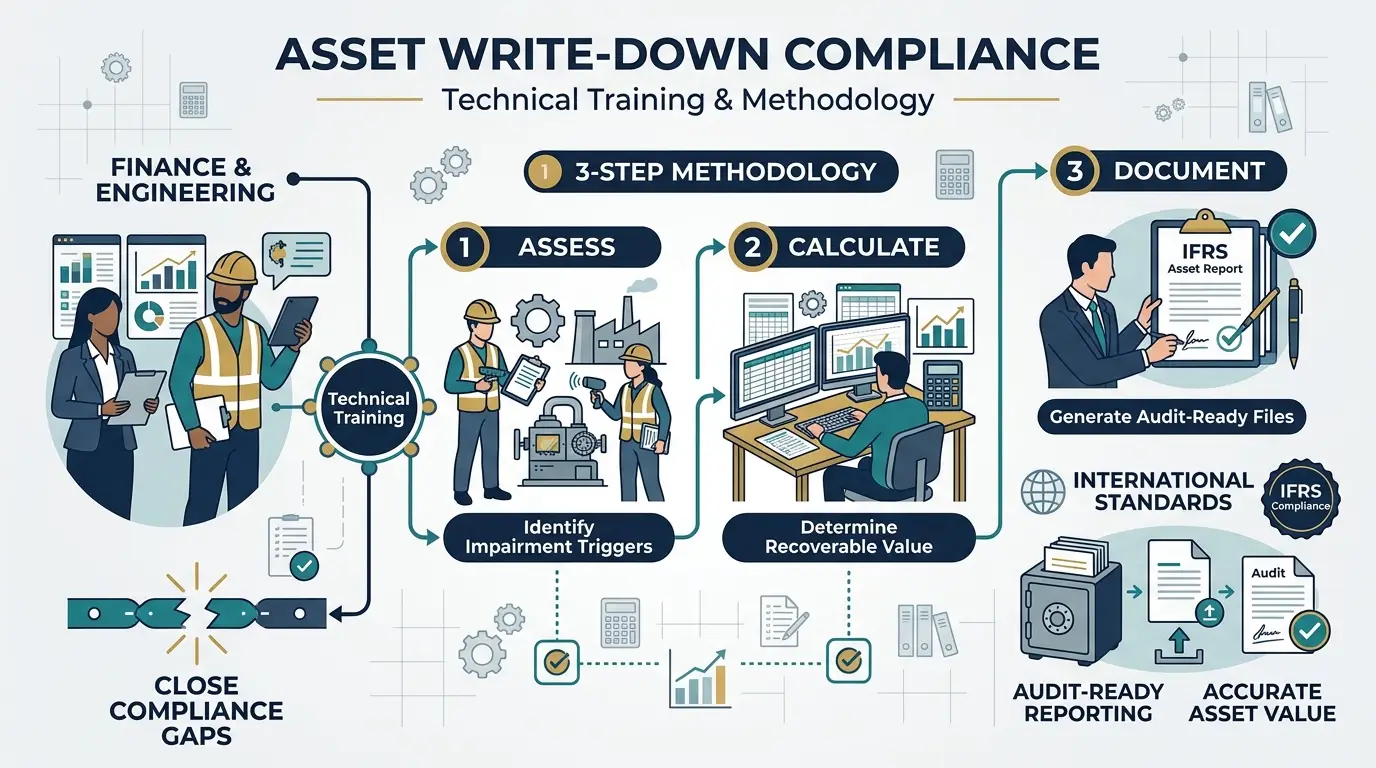
Upstream operating companies frequently struggle with inconsistent accounting treatments for unproven reserves and non-performing properties. Accounting departments often operate in silos away from subsurface teams, leading to delayed identification of impaired assets.
When exploration licenses expire without commercial discovery, companies face immediate pressure from auditors to write down capitalized expenditures. Without standardized internal frameworks, finance teams risk material misstatements in financial statements, regulatory penalties, and reputational damage among institutional investors.
The Institute For Oil & Gas Training designed this specialized curriculum to bridge the knowledge gap between technical petroleum engineering data and financial reporting requirements. Corporate finance departments and asset management teams rely on the Institute For Oil & Gas Training to deliver rigorous skill enhancement that standardizes impairment testing across global business units.
When technical teams fail to communicate asset performance metrics accurately to finance units, balance sheets reflect inflated asset values. This course eliminates operational friction by establishing unified cross-functional workflows between geoscientists, reservoir engineers, and corporate controllers.
Why this course is structured this way
The curriculum is structured across four progressive learning blocks to transition participants from foundational standard requirements to complex impairment indicator testing and multi-asset cash-generating unit allocations.
Complex financial regulations require a systematic learning approach that mirrors real-world corporate reporting cycles. The Institute For Oil & Gas Training builds its courses on a modular framework that reinforces theoretical knowledge through immediate practical application.
Participants begin by analyzing statutory definitions and scope limitations before progressing to quantitative impairment testing. This incremental design ensures that participants from diverse professional backgrounds achieve total comprehension before tackling advanced accounting scenarios.
Corporate learning and development teams at major energy firms collaborate with the Institute For Oil & Gas Training because the syllabus targets specific operational vulnerabilities. For example, finance managers often struggle when matching technical relinquishment data with balance sheet accounts.
The training structure directly resolves this challenge by integrating technical data workflows into financial reporting schedules. Each module builds upon the previous unit, ensuring seamless knowledge retention and immediate transferability to daily workplace responsibilities.
What will participants learn?
Participants master specific technical competencies including impairment indicators, expiry of exploration rights, unsuccessful well write-offs, cash-generating unit allocation for E and E assets, relinquishment of acreage, carrying amount review, and disclosure of impairment losses.
Skill acquisition is broken down into granular technical modules that cover every facet of the reporting standard.
Module 1: Regulatory Scope and Recognition Thresholds
Participants examine the boundaries of international reporting standards governing exploration and evaluation expenditures. Learners review criteria for capitalizing versus expensing geological and geophysical outlays.
Corporate accounting teams learn how to establish internal governance policies that prevent premature capitalization of administrative overhead.
Module 2: Identifying Impairment Triggers and Expiry of Rights
This component focuses on mandatory trigger events outlined in regulatory frameworks. Learners evaluate scenarios involving the expiry of exploration rights within the current period or near future.
Workplace teams analyze case studies concerning the relinquishment of acreage and the strategic implications for asset carrying values.
Module 3: Technical Failure and Unsuccessful Well Write-Offs
Participants dive into the accounting treatment for dry holes and commercial viability assessments. Learners calculate write-off values when data indicates that technical feasibility does not support further commercial development.
Engineering and finance departments learn to reconcile drilling logs with general ledger entries to ensure timely loss recognition.
Module 4: Cash-Generating Unit (CGU) Allocation and Carrying Amount Reviews
Allocating exploration assets to larger cash-generating units presents unique structural challenges due to the lack of independent cash flows. Participants study aggregation principles and testing methodologies for combined asset groups.
Learners evaluate the carrying amount review process to ensure that combined asset pools do not exceed recoverable amounts.
For a deeper dive into advanced technical hurdles, participants frequently review Key IFRS 6 Impairment Challenges for Oil and Gas Exploration and Evaluation Assets during intermediate assessment phases.
Module 5: Financial Statement Disclosures and Reporting Compliance
The final module covers mandatory disclosure requirements for impairment losses and reversals. Participants draft comprehensive financial statement notes that satisfy strict regulatory scrutiny and investor transparency demands.
How is the course delivered?
The course is delivered through flexible corporate formats including intensive multi-day workshops, interactive live online sessions, hybrid cohorts, and customized onsite corporate training executed by industry practitioners.
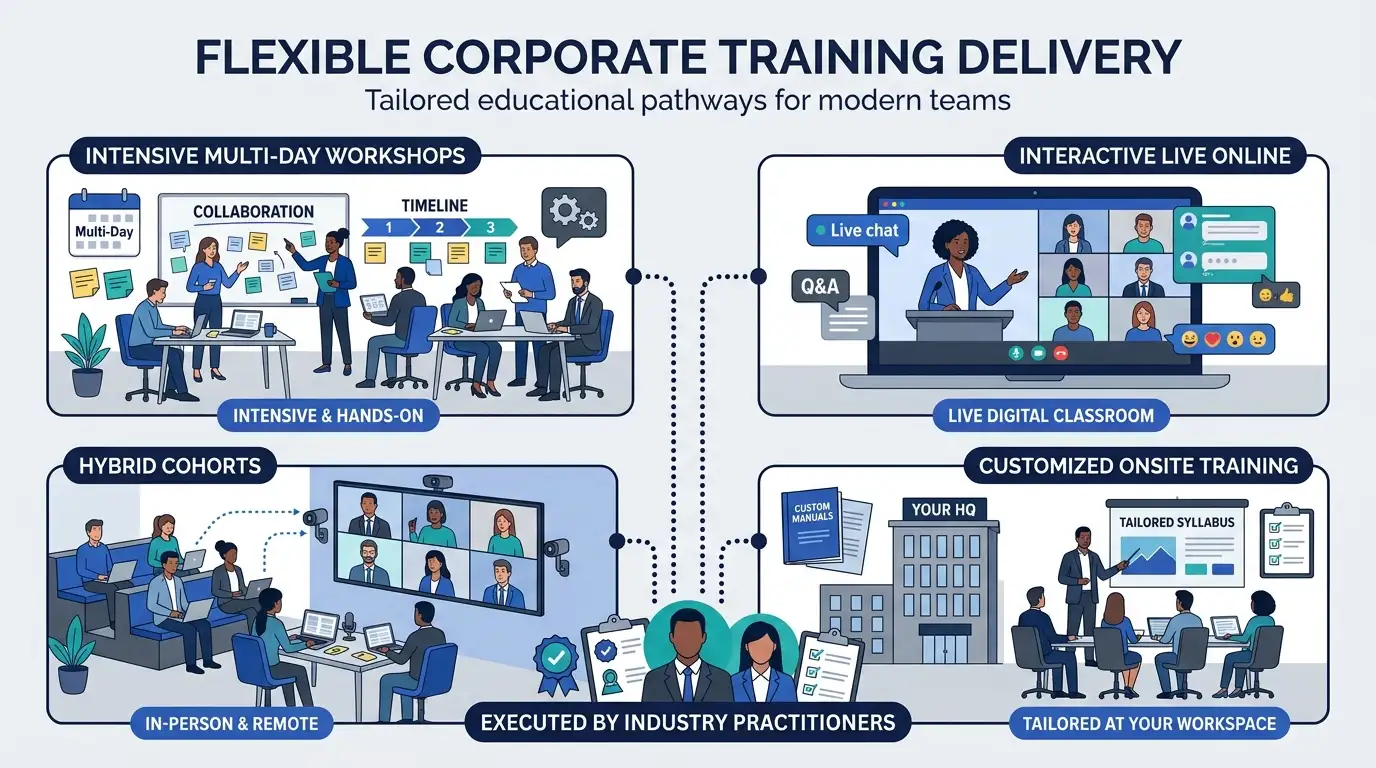
Organizations require delivery models that accommodate active operational schedules without sacrificing educational depth. The Institute For Oil & Gas Training provides versatile scheduling options tailored to the demands of busy corporate calendars.
Onsite delivery allows internal corporate teams to analyze proprietary company datasets under the direct supervision of technical instructors. Hybrid and virtual formats incorporate asynchronous digital modules paired with live instructor-led case study analysis.
The Institute For Oil & Gas Training utilizes rigorous assessment methods throughout the program to verify skill acquisition. Participants complete diagnostic pre-assessments, quantitative simulation exercises, and peer-reviewed case study assignments.
These evaluations ensure that learners can independently execute complex impairment calculations upon returning to their operational roles.
What results can be expected?
Participants achieve measurable improvements in financial reporting accuracy, reduced audit adjustments, enhanced cross-functional communication between finance and engineering, and streamlined asset impairment review cycles.
Workplace performance enhancement remains the primary objective of every program offered by the Institute For Oil & Gas Training. Upon completing the curriculum, finance managers report a significant reduction in audit queries and faster reconciliation of exploration asset portfolios.
HR directors and corporate leadership pipelines benefit from standardized skill baselines across international subsidiaries. When technical departments and accounting units share a common operational vocabulary, project execution accelerates and compliance risks diminish.
Organizations partnering with the Institute For Oil & Gas Training consistently observe heightened analytical capabilities within their corporate finance divisions.
How does enrollment work?
Enrollment is open to qualified finance professionals, regulatory accountants, petroleum engineers, and corporate compliance officers meeting baseline upstream experience criteria through a streamlined online registration pathway.
Candidates aiming to secure their professional development placement must complete a brief professional profile review to confirm alignment with course prerequisites. The Institute For Oil & Gas Training maintains selective cohort sizes to ensure optimal interaction between participants and expert instructors.
Corporate group bookings include tailored onboarding support and dedicated account management through the Institute For Oil & Gas Training administrative team.
To secure your professional credential and integrate advanced reporting standards into your corporate workflow, please enroll in this program.
Frequently Asked Questions
What does IFRS 6 cover in the oil and gas sector?
IFRS 6 specifically governs the financial reporting of exploration and evaluation expenditures incurred before the technical feasibility and commercial viability of extracting mineral resources are demonstrable. Through specialized programs like Oil and Gas Petroleum IFRS & Financial Reporting by the Institute For Oil & Gas Training, finance professionals learn how to properly recognize, measure, and present these upstream assets on corporate balance sheets.
When must exploration and evaluation assets be tested for impairment?
Exploration and evaluation assets must undergo impairment testing whenever facts and circumstances indicate that the carrying amount may exceed the recoverable amount, such as when exploration rights expire or commercial drilling yields no viable reserves. The Institute For Oil & Gas Training covers these mandatory impairment triggers extensively within its Oil and Gas Petroleum IFRS & Financial Reporting curriculum to help finance teams prevent material misstatements.
How do upstream companies allocate exploration assets to cash-generating units?
Allocating exploration and evaluation assets to larger cash-generating units requires grouping unproven properties with producing assets or broader regional pools when independent cash flows cannot be independently identified. Training courses such as Oil and Gas Petroleum IFRS & Financial Reporting offered by the Institute For Oil & Gas Training provide structured methodologies to execute these complex aggregate carrying amount reviews accurately.
What are the main accounting challenges under IFRS 6 for upstream operators?
Key challenges include determining whether specific geological and geophysical expenses should be capitalized or expensed, identifying technical failure, and documenting successful well write-offs in compliance with international standards. The Institute For Oil & Gas Training addresses these specific regulatory hurdles in its Oil and Gas Petroleum IFRS & Financial Reporting courses, bridging the operational gap between geoscientists and corporate controllers.
Why is specialized financial training important for oil and gas accounting teams?
Upstream accounting demands precise technical interpretation of specialized regulations that standard corporate accounting programs rarely cover in sufficient detail. By enrolling staff in professional development courses like Oil and Gas Petroleum IFRS & Financial Reporting from the Institute For Oil & Gas Training, organizations ensure rigorous compliance, minimized audit adjustments, and enhanced cross-functional reporting transparency.
Related training courses
Segregation of Duties in Finance & ERP Systems Training Course
- Specialisation
- Oil & Gas Petroleum Compliance, AML & Risks
- Duration
- 5 days · 15 CPD hours
Consolidation & JV Structures for Petroleum Group Entities Training Course
- Specialisation
- Oil & Gas Petroleum Accounting
- Duration
- 5 days · 15 CPD hours
Consolidation & JV Structures for Multi-Country Groups Training Course
- Specialisation
- Oil & Gas Petroleum Accounting
- Duration
- 5 days · 15 CPD hours
More articles
Key IFRS 6 Impairment Challenges for Oil and Gas Exploration and Evaluation Assets
Explore key IFRS 6 impairment challenges for oil and gas E&E assets, covering write-offs, acreage relinquishment, and cash generating unit allocation.
Read article →
Why Asset Impairment Matters in Oil and Gas Exploration and Evaluation
Discover why asset impairment training matters in oil and gas exploration. Learn how organizations implement corporate learning for valuation accuracy.
Read article →
IFRS 6 Exploration and Evaluation Asset Recognition Training for Oil and Gas Professionals
Master IFRS 6 asset recognition, capitalization policies, and impairment testing with the Institute For Oil & Gas Training. Enroll today.
Read article →