
Navigating complex financial reporting frameworks requires absolute precision, particularly when energy enterprises communicate upstream assets to international markets. Financial controllers and reporting teams face immense scrutiny regarding transparency, asset valuation, and regulatory compliance under modern accounting standards. Understanding these systemic reporting hurdles ensures that finance divisions maintain credibility, mitigate audit risks, and accurately represent asset portfolios to external stakeholders.
Asset valuation and reserve estimations sit at the very heart of corporate value creation in the upstream sector. Organizations often begin their journey by examining Why Reserves Disclosure Matters for Oil and Gas Companies to grasp how transparency influences investor trust and capital allocation. Without a robust foundational understanding of asset reporting, finance professionals struggle to interpret subsequent accounting complexities that govern upstream disclosures.
Why does categorizing proved and probable reserves complicate financial reporting?
Classifying subterranean hydrocarbons into rigorous categories introduces significant subjectivity, forcing finance teams to reconcile geological uncertainty with strict accounting definitions.
Upstream enterprises operate in environments where subsurface certainty shifts continuously as extraction proceeds. Under current reporting frameworks, distinguishing between commercial thresholds requires multidisciplinary collaboration among petroleum engineers, reservoir analysts, and financial controllers. Geological data gathered from drilling operations often shifts, altering the baseline assumptions underpinning asset valuation.
When geological models change, accounting teams must immediately reassess whether specific hydrocarbon accumulations satisfy the stringent criteria for commercial extraction. Misalignments between technical engineering assessments and financial ledger entries trigger costly audit adjustments. Financial reporting professionals must interpret complex volumetric reports and translate physical quantities into compliant balance sheet disclosures.
Furthermore, fluctuating commodity prices alter the economic cut-off point for extraction, turning economic reserves into sub-commercial resources overnight. Finance departments must establish rigorous internal controls to validate inputs supplied by technical teams before publishing balance sheet figures. Failing to bridge the communication gap between technical reservoir engineering and corporate accounting leads to material misstatements, drawing regulatory penalties and eroding investor confidence.
How does unit of production depletion impact periodic financial statements?
Calculating depletion charges using volume-based metrics creates direct volatility in cost-of-sales figures when extraction rates and reserve estimates fluctuate.
The unit of production depletion method allocates capitalised acquisition and development costs over the expected productive life of an asset. This approach ties capital recovery directly to physical extraction volumes rather than arbitrary time-based schedules. However, denominator changes in the depletion formula generate sharp financial swings. Every time reservoir engineers revise upward or downward reserve estimates, the depletion rate per barrel shifts prospectively across subsequent reporting periods.
Finance teams must carefully track these volumetric revisions to ensure depreciation and amortization expenses reflect current asset realities. Rapid changes in production profiles amplify cost-of-goods-sold volatility, complicating margin analysis for executive leadership.
Organizations deploying advanced enterprise resource planning systems integrate technical reservoir databases directly with financial ledgers to automate depletion calculations. Despite technological automation, human judgment remains vital for determining which capital pools qualify for inclusion in the depreciable base.
Inaccurate asset categorisation distorts operating income and misleads capital markets regarding operational efficiency. Finance leaders must implement continuous monitoring protocols to catch volumetric discrepancies before quarterly closing cycles conclude.
What makes reserve based disclosure compliance a persistent regulatory burden?
Satisfying multifaceted international reporting mandates requires extensive cross-functional alignment, rigorous data governance, and meticulous documentation of every reserve revision.
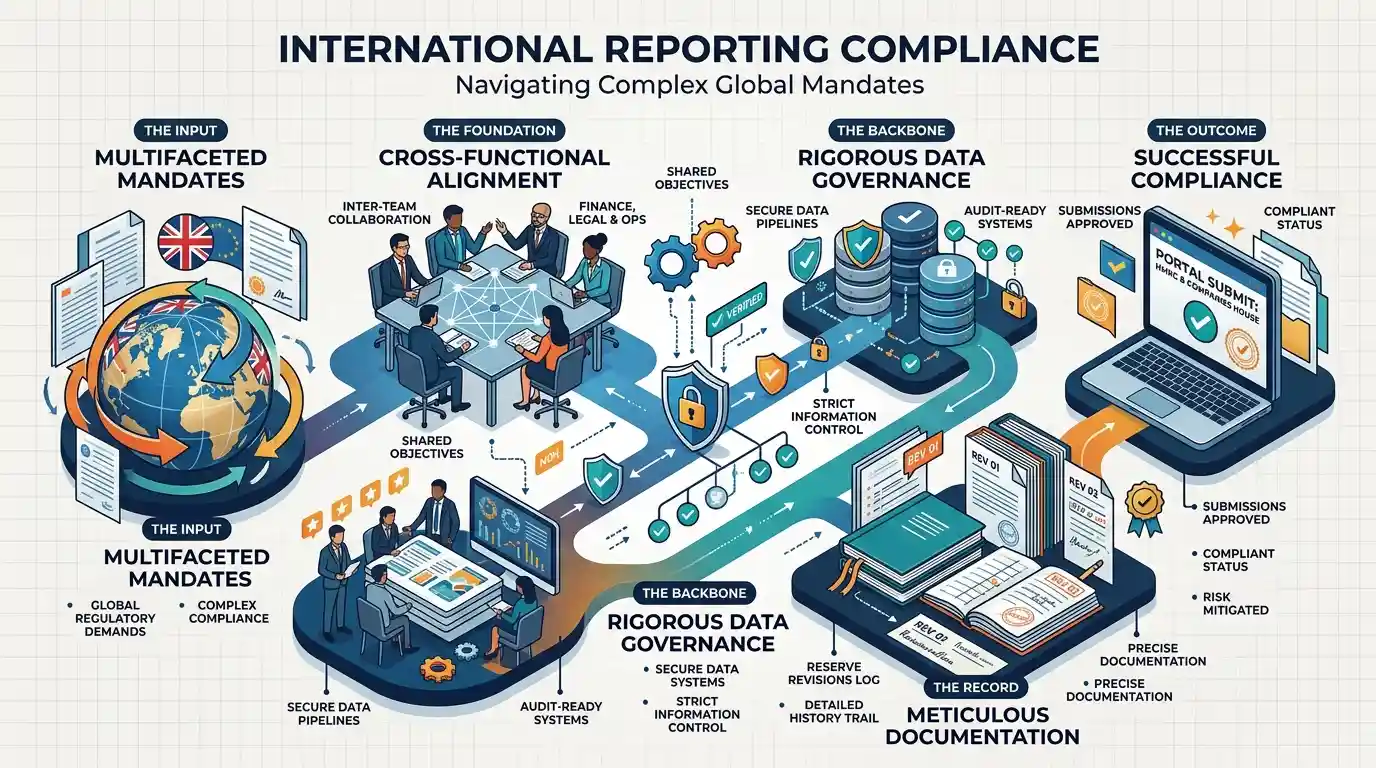
Regulatory authorities demand exhaustive transparency regarding upstream asset portfolios, requiring companies to disclose reconciliation schedules that track opening balances, revisions, discoveries, and production. Compiling these schedules involves gathering fragmented operational data from diverse geographical assets, joint venture partners, and outsourced extraction operations.
Financial controllers often struggle with data silos where operational logs remain detached from central corporate accounting systems. This disconnection delays reporting timelines and increases the risk of human error during manual data aggregation.
Complying with disclosure mandates also requires continuous tracking of concession agreements, production sharing contracts, and fiscal regimes across multiple international jurisdictions. Each operating environment imposes unique legal constraints on mineral rights, royalties, and state take percentages, complicating consolidated financial reporting.
Organizations invest heavily in specialised software and structured IFRS Reserves Disclosure Training for Oil and Gas Financial Reporting Professionals to bridge organizational skill gaps and streamline compliance workflows. Training corporate reporting teams on these intricate regulatory nuances ensures that disclosures withstand rigorous external audits without costly delays.
How do supplementary oil and gas information disclosures affect market perception?
Providing un-audited supplementary metrics alongside primary financial statements exposes companies to heightened scrutiny regarding future cash flow projections and valuation assumptions.
International reporting standards often mandate the inclusion of supplementary schedules detailing discounted future net cash flows, standardized measures of discounted cash flow, and multi-year reserve replacement ratios. While these schedules sit outside the primary financial statements, institutional investors and credit rating agencies rely heavily on them for valuation modelling.
The primary challenge lies in formulating defendable macroeconomic assumptions, such as long-term commodity price decks and inflation rates, mandated by regulatory bodies rather than internal corporate forecasts. When mandated price benchmarks diverge significantly from spot market realities, supplementary disclosures present distorted asset valuations that confuse market participants.
Finance teams must provide clear narrative context within management discussion and analysis sections to explain these variances and prevent misinterpretation by equity analysts. Additionally, calculating discounted future cash flows requires precise modeling of future development, production, and abandonment costs across decades of operational life.
Inflationary pressures and supply chain volatility make cost forecasting exceptionally difficult, introducing high variance into reported net present values. Organizations that fail to manage these supplementary disclosures transparently face increased cost of capital and negative credit rating adjustments.
How should finance teams handle comparative restatement and accounting estimates?
Applying retrospective restatements for accounting changes demands exhaustive historical data reconstruction while managing complex estimates and judgements under volatile market conditions.
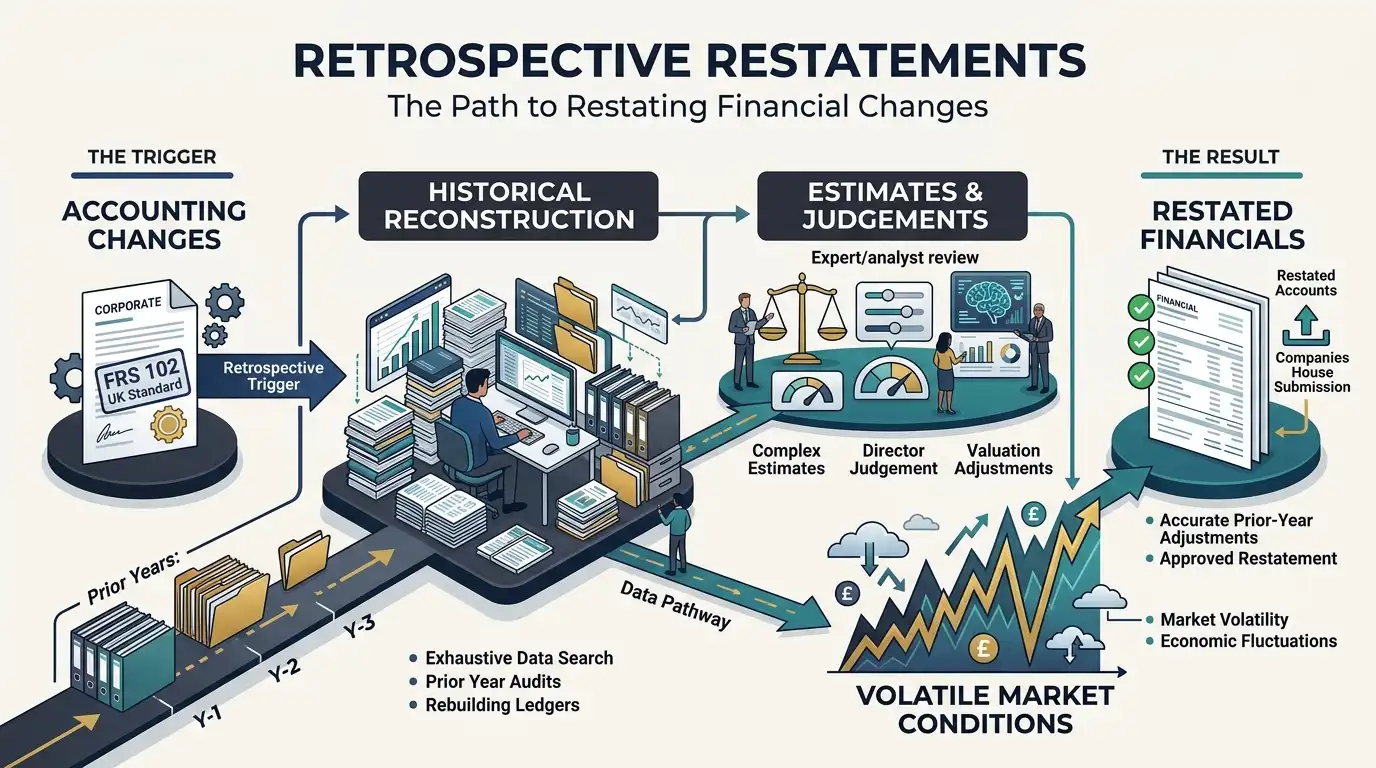
Financial reporting standards mandate that any fundamental shift in accounting policy or correction of prior-period errors requires comparative restatement of historical financial statements. For upstream entities, restating comparative periods involves recalculating historical depletion charges, asset impairments, and deferred tax liabilities across multiple fiscal years. This process strains internal finance resources, especially when historical source documents lack the granularity required by modern disclosure rules.
Compounding this operational burden is the heavy reliance on accounting estimates and judgements regarding asset recoverability and impairment testing. Determining whether an exploratory well or producing field has suffered impairment requires projecting complex discounted cash flow models over long operational horizons. Management must exercise objective judgment when selecting discount rates that reflect specific asset risks and prevailing market conditions.
Auditors scrutinize these estimates intensely, challenging the underlying economic assumptions and sensitivity analyses used by management. Finance professionals must document every qualitative judgment and quantitative input to defend reported figures against regulatory challenges.
Upskilling finance personnel through the IFRS for Oil & Gas Entities: Reserves Disclosure Training Course equips reporting teams with the methodological rigor needed to navigate complex estimates and deliver audit-ready financial statements.
Frequently Asked Questions
What are the main reporting standards for upstream petroleum accounting?
Upstream entities primarily rely on International Financial Reporting Standards, specifically IFRS 6 for exploration and evaluation expenditures, alongside specialized industry practices for asset valuation and reserve disclosures. The Institute For Oil & Gas Training covers these frameworks thoroughly through its Oil and Gas Petroleum IFRS & Financial Reporting programs, helping finance professionals navigate complex sector-specific regulations.
How do oil and gas companies account for exploration and evaluation costs?
Under IFRS 6, enterprises can develop accounting policies that specify which expenditures are recognised as exploration and evaluation assets prior to technical feasibility being demonstrated. The Institute For Oil & Gas Training addresses these capitalization choices in its Oil and Gas Petroleum IFRS & Financial Reporting curriculum, enabling teams to establish compliant and consistent accounting policies.
What is the role of unit of production depletion in financial statements?
Unit of production depletion allocates capitalized asset costs over the expected productive life of a reservoir based on actual extraction volumes rather than standard time-based depreciation. Through Oil and Gas Petroleum IFRS & Financial Reporting courses, the Institute For Oil & Gas Training equips finance teams with the technical skills needed to handle volumetric revisions and maintain accurate cost-of-sales figures.
Why are proved and probable reserves disclosures critical for investors?
Proved and probable reserves disclosures provide institutional investors and credit rating agencies with vital transparency regarding an upstream company's future cash flow potential and asset backing. The Institute For Oil & Gas Training explores these valuation challenges in its Oil and Gas Petroleum IFRS & Financial Reporting modules, ensuring reporting professionals present reliable supplementary asset schedules.
How can finance teams manage impairment testing for upstream assets?
Impairment testing requires finance professionals to project complex discounted cash flow models over long operational horizons using rigorous macroeconomic and pricing assumptions. Programs such as Oil and Gas Petroleum IFRS & Financial Reporting by the Institute For Oil & Gas Training provide practical frameworks for applying accounting estimates and judgements under volatile market conditions.
Related training courses
Regulatory Compliance for Petroleum Entities Training Course
- Specialisation
- Oil & Gas Petroleum Compliance, AML & Risks
- Duration
- 5 days · 15 CPD hours
Segregation of Duties in Finance & ERP Systems Training Course
- Specialisation
- Oil & Gas Petroleum Compliance, AML & Risks
- Duration
- 5 days · 15 CPD hours
Management Reporting Design for JV & Partner Audiences Training Course
- Specialisation
- Oil & Gas Petroleum IFRS & Financial Reporting
- Duration
- 5 days · 15 CPD hours
More articles

IFRS 6 Exploration and Evaluation Asset Recognition Training for Oil and Gas Professionals
Master IFRS 6 asset recognition, capitalization policies, and impairment testing with the Institute For Oil & Gas Training. Enroll today.
Read article →
Key IFRS 6 Asset Recognition Challenges for Oil and Gas Companies
Explore key IFRS 6 asset recognition challenges in oil and gas, covering pre-licence costs, capitalisation policies, and technical feasibility.
Read article →
Why Exploration and Evaluation Asset Recognition Matters in Oil and Gas
Discover how structured exploration and evaluation asset recognition training improves compliance, reduces audit risks, and builds workforce capability.
Read article →