
The implementation of accounting standards in capital-intensive asset sectors requires precision, particularly when asset ownership shifts toward flexible operational arrangements. Capital asset structuring within the energy sector relies heavily on long-term commitments for expensive maritime and drilling equipment. Organisations operating within this sector face complex accounting evaluations when separating service provisions from equipment rentals. Understanding foundational concepts is vital before assessing structural hurdles, which is why financial teams examine Why Lease Accounting Matters for Oil and Gas Rigs and Vessels to establish baseline reporting principles.
Financial controllers must navigate intricate contract terms that dictate whether a physical asset qualifies as a controlled resource under current financial frameworks. Contractual ambiguities complicate financial statements, creating discrepancies in asset recognition and liability measurement across global operations. Energy enterprises must address these reporting hurdles to maintain transparent balance sheets and ensure regulatory compliance with international financial reporting standards.
What makes lease identification difficult in deepwater rig and vessel contracts?
Lease identification requires determining whether a contract conveys the right to control the use of an identified asset for a period of time in exchange for consideration, which becomes highly complex in energy charters due to shared operational control and frequent equipment substitution rights.
Master service agreements and charterparty contracts in the maritime and drilling sectors often bundle vessel operations, crew provision, maintenance services, and equipment utilization into a single commercial fee. Dissecting these agreements demands rigorous analysis of contract language to separate lease components from non-lease service elements. Contractual terms frequently grant the supplier substitution rights if a specific drilling rig or support vessel encounters mechanical failure.
When a supplier possesses substantive rights to substitute an asset throughout the operating period, the arrangement fails to meet the criteria for an identified asset. Finance teams evaluate whether the supplier benefits economically from exercising this substitution right. If replacement costs exceed the economic benefits of substitution, the right is not substantive, and an asset is deemed identified.
Operational personnel and commercial managers must collaborate closely with finance departments to review every service contract. Energy companies utilize the IFRS 16 – Leases for Rigs & Vessels Training Course to bridge workforce skill gaps and train commercial teams on contract evaluation methodologies. Without proper training, internal audit teams misclassify service agreements as leases, inflating balance sheet liabilities and distorting key financial ratios.
Workforce development models for corporate accounting teams emphasize practical contract dissection through case studies based on actual charterparty agreements. HR training decisions focus on building internal competency to prevent costly restatements and compliance penalties. Organizations deploy targeted learning delivery models, combining workshops with digital modules, to ensure continuous alignment across global finance hubs.
How do companies measure right of use assets and lease liabilities for offshore equipment?
Right of use asset measurement involves taking the initial lease liability amount, adding initial direct costs and prepaid lease payments, and subtracting any lease incentives received, while lease liability measurement requires discounting future lease payments over the term.
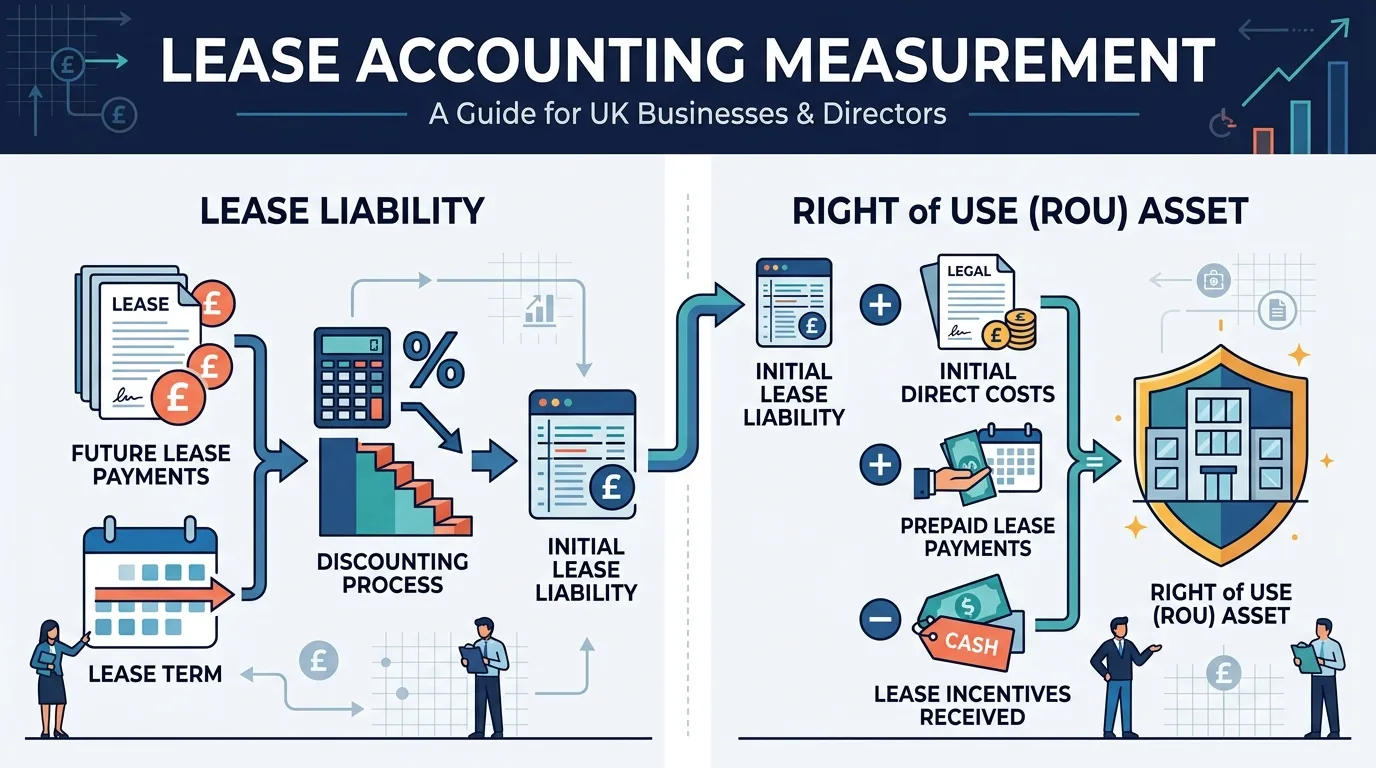
Valuation accuracy depends entirely on discount rate determination, which presents a significant hurdle when borrowing rates for specialized marine assets are not explicitly stated in the contract. Finance teams must estimate an incremental borrowing rate reflecting the currency, lease term, and economic environment of the specific rig or vessel deployment. A minor variance in the discount rate alters the present value of lease liabilities significantly, impacting debt-to-equity ratios and covenant compliance.
Variable lease payments linked to production output, vessel utilization hours, or index rates introduce further calculation volatility. Under current standards, variable payments that depend on an index or rate enter the initial lease liability calculation using the index value at the commencement date. Payments tied strictly to future performance or usage remain expensed as incurred, requiring continuous monitoring and adjustment by accounting staff.
The complexity of these calculations demands structured learning programs that equip finance professionals with advanced analytical techniques. When operational leaders recognize the need for systematic risk mitigation, they implement specialised learning solutions such as the IFRS 16 – Leases for Rigs & Vessels Training Course to standardize valuation practices across regional offices.
Workforce readiness directly influences the accuracy of financial disclosures. Organizations measure training return on investment by tracking the reduction in audit adjustments and the speed of month-end closing cycles. Structured corporate learning frameworks ensure that accounting personnel apply consistent methodologies when recalculating liabilities following contract modifications or asset impairments.
How are embedded leases and service contracts separated in offshore operations?
Embedded leases exist when a contract does not take the legal form of a lease but still conveys the right to control the use of an asset, requiring finance teams to disaggregate lease components from underlying service components using observable standalone prices.
Drilling contracts and floating production storage and offloading agreements frequently contain embedded leases disguised as standard service agreements. Suppliers provide specialized rigs alongside specialized drilling crews, catering services, and routine maintenance packages. Accounting standards mandate the allocation of total consideration to each lease and non-lease component based on relative standalone prices.
When standalone prices are not readily observable, finance teams must estimate prices using market data, competitor pricing benchmarks, and internal cost-plus margins. This estimation process requires deep familiarity with maritime charter rates and rigspread market economics. Failing to separate embedded leases leads to the misstatement of operating expenses and underreported capital commitments on the statement of financial position.
Addressing this challenge requires targeted professional development for contract administrators, legal counsel, and financial analysts. Companies seeking robust operational solutions deploy the IFRS 16 Lease Accounting Training for Oil and Gas Rigs and Vessels to establish comprehensive internal review protocols. This targeted program addresses the nuances of service contract versus lease evaluations, ensuring cross-functional teams apply unified standards.
Workforce skill gaps in contract parsing often originate from siloed communication between legal departments and accounting teams. Effective corporate training bridges this gap by fostering collaborative review sessions where legal clauses translate directly into accounting entries. Measuring performance improvement post-training involves auditing contract intake workflows to verify that embedded leases undergo rigorous evaluation before final contract execution.
What impact do short term and low value exemptions have on maritime asset reporting?
Short term and low value exemptions permit entities to bypass balance sheet recognition for leases lasting twelve months or less without a purchase option, and for assets of minimal individual value when new, though offshore rigs and vessels rarely qualify.
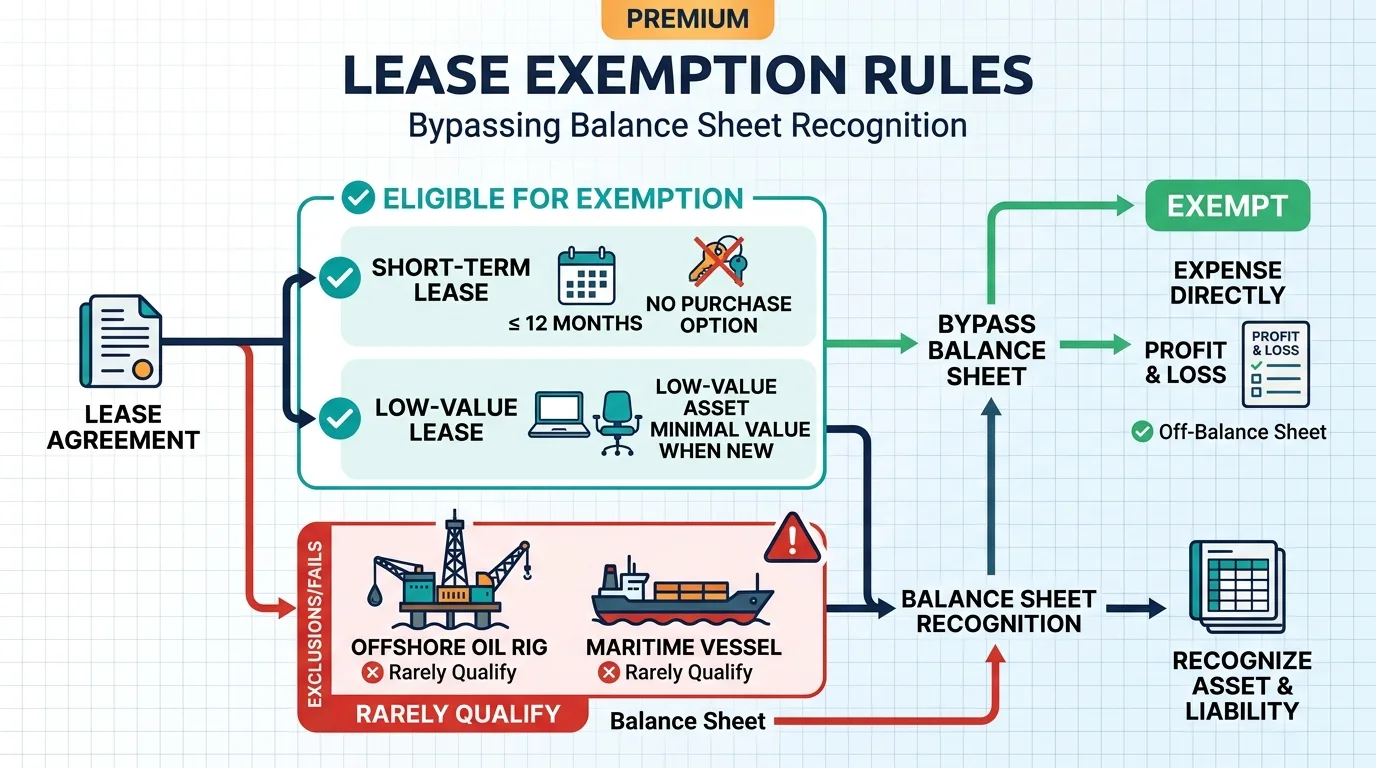
The twelve-month threshold restricts the application of short-term exemptions for core energy assets. Offshore drilling rigs, seismic vessels, and deepwater support ships require capital investments running into millions of dollars daily, with charter durations frequently spanning multiple years. Consequently, these high-value assets remain firmly within the scope of capitalization rules.
Low-value exemptions apply to office equipment, computing hardware, and minor operational tools, but hold zero relevance for heavy maritime units or subsea intervention equipment. Misinterpreting these exemptions exposes organizations to severe regulatory scrutiny and mandatory restatement of financial statements. Internal audit teams must enforce stringent governance policies to prevent improper asset classification under exemption categories.
Corporate learning initiatives play a crucial role in eliminating compliance errors related to lease exemptions. HR teams design continuous professional education pathways that integrate practical risk management frameworks for regional controllers. By leveraging the IFRS 16 – Leases for Rigs & Vessels Training Course, organizations ensure that financial staff understand the strict boundary conditions governing exemption criteria.
Evaluating the effectiveness of these learning programs involves assessing error rates in quarterly asset registers and monitoring audit feedback reports. Enterprises that prioritize practical, industry-driven training experience fewer compliance breaches, safeguarding investor confidence and maintaining operational stability across global energy markets.
Frequently Asked Questions
How does the Institute For Oil & Gas Training approach Oil and Gas Petroleum IFRS & Financial Reporting compliance?
The Institute For Oil & Gas Training delivers practical, industry-specific programs focusing on complex standards like IFRS 16 lease accounting and revenue recognition for energy assets. Their professional corporate training aligns with measurable business outcomes, helping finance teams navigate specialized upstream and downstream reporting challenges.
What are the primary financial reporting challenges addressed in petroleum IFRS training?
Program curricula tackle intricate accounting hurdles such as right-of-use asset valuation, discount rate determination, and separating embedded leases from service contracts. Participants learn to manage variable lease payments and maintain accurate balance sheet disclosures for high-value offshore rigs and vessels.
Why is specialized IFRS and financial reporting training necessary for energy sector personnel?
Energy enterprises manage capital-intensive assets and intricate master service agreements that often obscure contractual liabilities and operating expenses. Specialized training bridges internal workforce skill gaps, ensuring compliance and minimizing audit adjustments across global financial statements.
Who should attend the Oil and Gas Petroleum IFRS & Financial Reporting courses?
These programs suit financial controllers, corporate accountants, internal auditors, and commercial managers operating within upstream, midstream, and downstream energy sectors. HR teams and finance leaders utilize these professional courses to standardise valuation practices and enhance cross-functional contract reviews.
How do corporate training programs in petroleum financial reporting improve business performance?
Targeted learning delivery models combine interactive workshops and case studies to streamline month-end close cycles and reduce compliance penalties. By strengthening internal competency, organizations achieve greater financial transparency and alignment with international reporting standards.
Related training courses
Water Treatment Technology Training Course
- Specialisation
- Oil & Gas Water Treatment and Management
- Duration
- 5 days · 15 CPD hours
API 510 Pressure Vessel Inspectors Training Course
- Specialisation
- Oil & Gas Inspection and Non-Destructive Testing
- Duration
- 5 days · 15 CPD hours
Asset Integrity Management (ISO 55000/PAS 55) Training Course
- Specialisation
- Oil & Gas Asset Integrity Management
- Duration
- 5 days · 15 CPD hours
More articles

IFRS 9 Expected Credit Loss Training for Oil and Gas Financial Professionals
Master IFRS 9 expected credit loss models for oil and gas assets. Enhance compliance and valuation accuracy. Enroll in our specialized training course today.
Read article →
Key IFRS 9 Expected Credit Loss Challenges for Oil and Gas Companies
Explore key IFRS 9 expected credit loss challenges in oil and gas, covering business model assessments, SPPI tests, and lifetime ECL measurement.
Read article →
Why Expected Credit Loss Matters for Oil and Gas Financial Instruments
Discover how expected credit loss training closes skill gaps, improves financial reporting, and ensures IFRS 9 compliance in oil and gas companies.
Read article →