
This comprehensive professional training programme addresses critical reporting deficits by equipping financial specialists with precise methodologies to interpret, calculate, and present extractives data accurately. Navigating complex extractive industry reporting frameworks requires specialised technical competence that standard accounting syllabi rarely cover. Financial professionals operating within the petroleum sector encounter intense regulatory scrutiny regarding reserve quantities, valuation models, and asset recoverability. When regulatory filings contain inconsistencies or misaligned metrics, organisations face severe compliance penalties, diminished investor confidence, and distorted capital allocation decisions.
Addressing these foundational challenges begins with understanding Why Reserves Disclosure Matters for Oil and Gas Companies, a crucial awareness resource outlining how accurate disclosure safeguards market integrity. Financial reporting teams often struggle to reconcile internal engineering estimates with rigorous financial statements, creating operational friction between technical reserves evaluators and corporate accounting divisions. Bridging this technical divide is essential for maintaining transparent stakeholder communication and ensuring full compliance with international financial standards.
What specific technical problems does this course solve for reporting professionals?
This specialised curriculum resolves technical disconnects between reserve engineering estimations and financial statement presentations by teaching professionals how to accurately integrate volumetric data into formal reporting schedules. Financial reporting teams across the petroleum sector frequently encounter challenges when translating geological data into compliant financial disclosures. Many senior accountants and technical analysts lack structured training on how to properly handle complex metrics such as proved and probable reserves within statutory financial statements. This knowledge gap often leads to improper impairment assessments, deficient disclosures, and delayed regulatory approvals during external audits.
Evaluating technical reports requires an intricate understanding of how resource volumes influence balance sheet valuations and income statements. When professionals lack clarity regarding reserve based disclosure standards, corporate filings risk non-compliance with statutory requirements. Key IFRS Reserves Disclosure Challenges for Oil and Gas Companies provides detailed evaluation criteria for identifying and mitigating these structural compliance hurdles before they trigger regulatory actions.
Furthermore, inaccurate calculations regarding unit of production depletion can severely distort operating margins and asset carrying values. This training programme systematically dismantles these complexities, providing step-by-step methodologies that align technical reserve updates with statutory accounting disclosures. By standardising these internal review processes, Institute For Oil & Gas Training empowers corporate accounting teams to eliminate reporting errors and streamline audit cycles. Participants learn to manage accounting estimates and judgements with absolute technical precision, ensuring that all published financial metrics reflect the true economic reality of upstream assets.
Why is this curriculum structured around sequential technical progression?
The curriculum employs a modular, scaffolded learning framework that systematically advances participants from core reserve definitions to complex multi-period comparative statement disclosures.
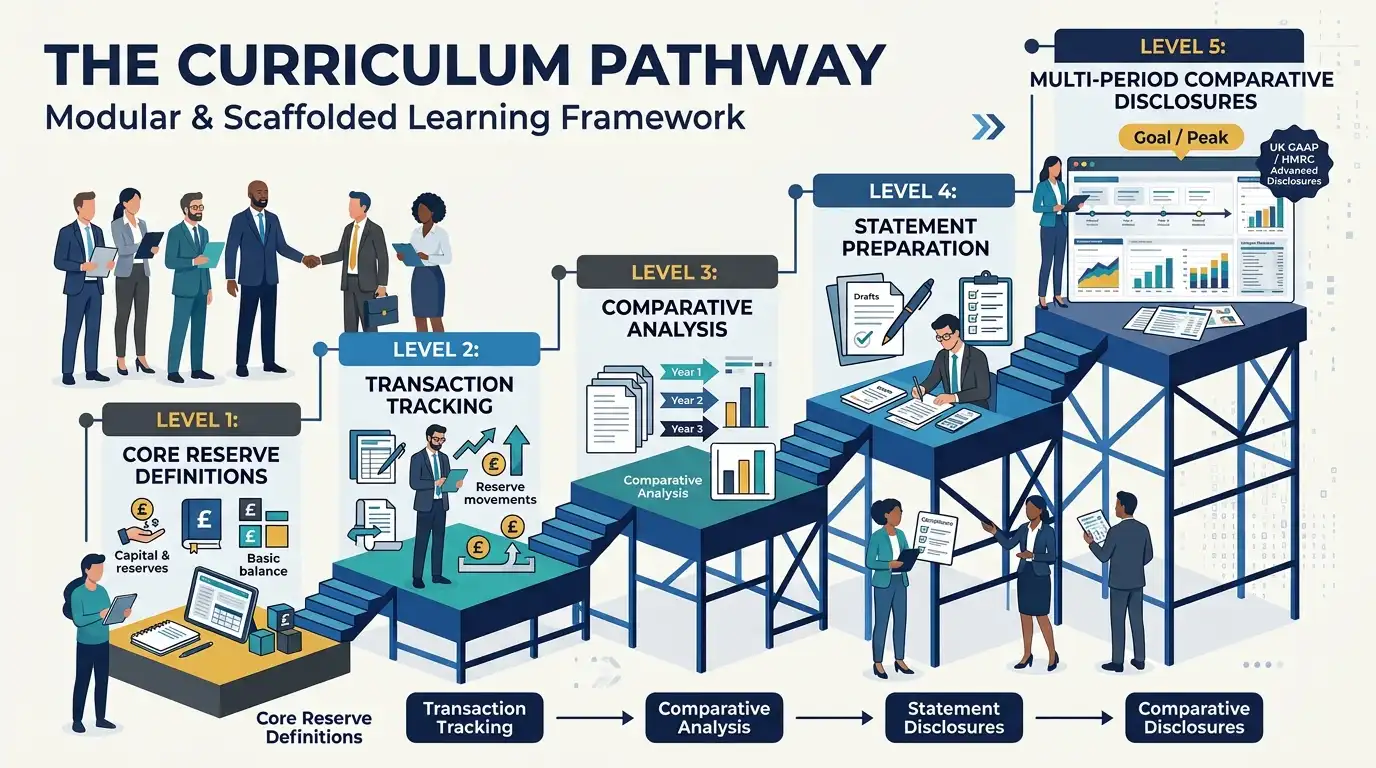
Educational architecture within Institute For Oil & Gas Training prioritises foundational technical competence before introducing advanced financial consolidation techniques. This deliberate structural sequencing ensures that participants build a robust, unshakeable grasp of extractive accounting principles without experiencing cognitive overload or knowledge gaps.
Phase one of the syllabus establishes rigorous baseline definitions regarding asset categorisation, recovery factors, and technical uncertainty parameters. Once participants master these core concepts, the curriculum advances toward quantitative valuation models and asset recoverability testing. This pedagogical progression allows finance professionals to connect geological findings directly to financial statement line items.
Throughout each learning module, Institute For Oil & Gas Training integrates practical case studies derived from actual petroleum sector reporting anomalies. This methodology ensures that theoretical principles immediately translate into actionable workplace capabilities. By structuring the learning journey around real-world reporting cycles, Institute For Oil & Gas Training prepares financial controllers and accounting managers to handle multi-jurisdictional reporting frameworks with complete confidence.
What core technical learning outcomes will participants achieve?
Participants master the precise calculation, documentation, and presentation of extractives data, enabling them to produce audit-ready financial statements that fully satisfy international regulatory expectations. Upon successful completion of this rigorous programme, participants acquire a comprehensive suite of technical skills designed to elevate corporate reporting standards. The learning outcomes are explicitly aligned with the day-to-day responsibilities of senior financial accountants, reporting controllers, and technical evaluation managers.
Specific competency milestones achieved during the programme include:
Applying precise mathematical models for calculating unit of production depletion across complex, multi-field asset portfolios.
Drafting comprehensive notes to the accounts that accurately detail supplementary oil and gas information for institutional investors and regulatory bodies.
Structuring the presentation of financial statements to clearly delineate between operating segments, exploration expenditures, and development costs.
Executing necessary comparative restatement procedures when technical reserve revisions alter historical asset carrying values or depreciation schedules.
Documenting complex accounting estimates and judgements regarding future commodity pricing, extraction costs, and discount rates to satisfy independent statutory auditors.
Reconciling technical reserve reports issued by independent petroleum engineers with internal financial ledgers without creating reporting discrepancies.
These technical proficiencies directly enhance the operational capability of corporate finance departments. By establishing standardized reporting protocols, organisations trained through Institute For Oil & Gas Training significantly reduce external audit queries and accelerate public filing timelines.
How is this technical training programme delivered to enterprise teams?
The training is delivered through flexible, high-impact instructional formats designed to accommodate demanding corporate schedules without compromising technical depth or experiential engagement. Institute For Oil & Gas Training offers multiple delivery channels tailored to the operational requirements of international energy corporations, national oil companies, and specialized financial advisory firms.
Available delivery modalities include:
Intensive Onsite Workshops: Delivered directly at corporate headquarters or operational hubs, facilitating team-wide alignment and collaborative problem-solving on proprietary datasets.
Virtual Instructor-Led Sessions: Interactive online modules combining real-time lectures, digital whiteboard demonstrations, and structured technical Q&A sessions for dispersed global teams.
Hybrid Blended Learning: A balanced combination of self-paced digital preparatory modules and live, facilitator-led practical application workshops.
Customised Corporate Cohorts: Tailored delivery schedules developed specifically for enterprise HR and learning development departments seeking targeted workforce upskilling.
Each delivery format incorporates rigorous assessment methodologies, including practical calculation assignments, multi-variable reporting simulations, and comprehensive technical knowledge evaluations. These evaluation mechanisms ensure that theoretical comprehension translates into verified workplace competence before participants receive their professional certification.
What measurable organisational results and performance impacts follow completion?
Organisations experience a measurable reduction in audit adjustments, enhanced regulatory compliance, and significantly faster financial closing cycles for upstream and midstream operations.
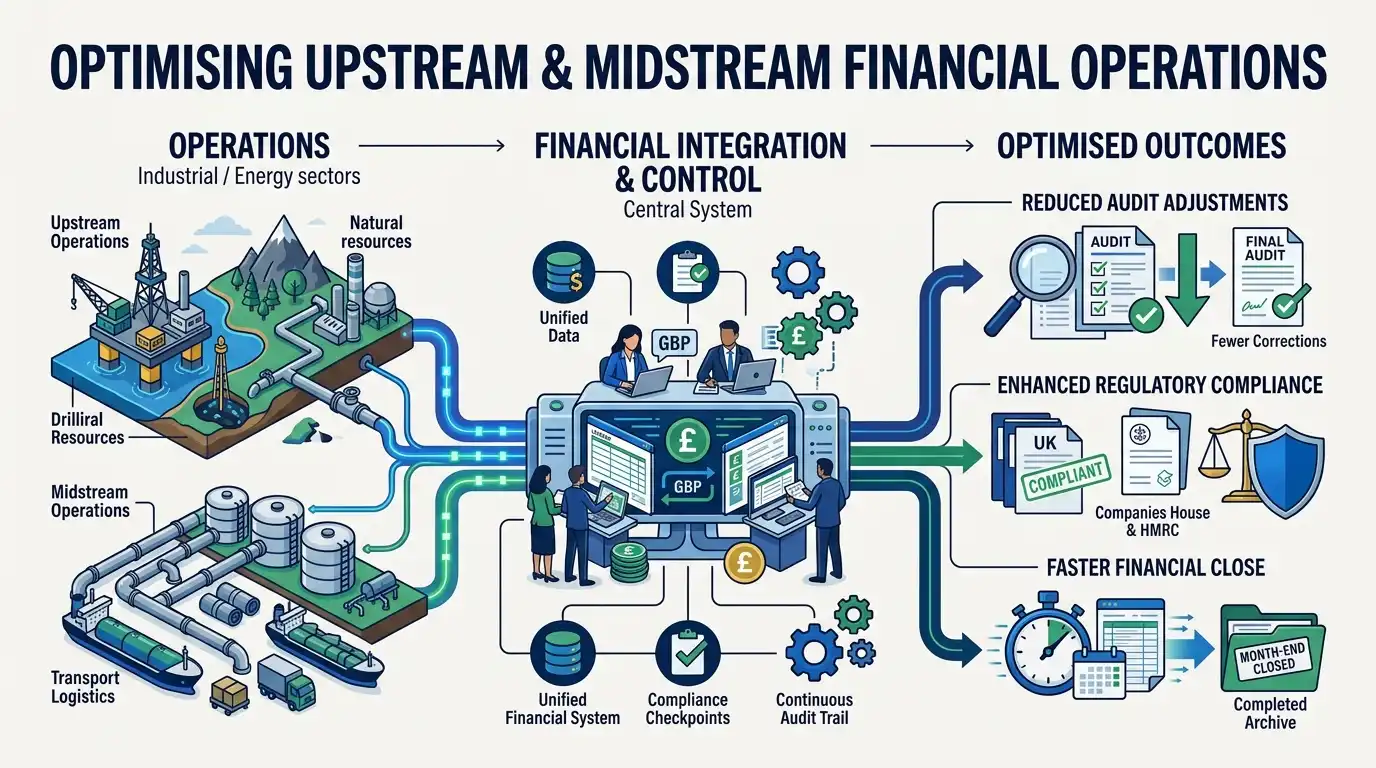
Implementing standardized reporting methodologies across corporate finance teams eliminates costly compliance oversights and strengthens internal governance structures. When accounting professionals possess advanced mastery over reserve disclosures, executive leadership gains absolute confidence in the integrity of published financial data.
The performance impact extends across multiple organizational layers:
For Corporate Finance Teams: Eliminates ambiguity during annual audits, reducing time spent defending reserve valuations and depletion calculations to external regulators.
For HR and Talent Development: Provides a reliable benchmark for evaluating technical accounting competence, supporting internal career progression pipelines for senior financial controllers.
For Executive Leadership: Ensures transparent, audit-proof disclosures that protect market valuation and maintain investor trust during capital-raising initiatives.
Through the strategic interventions provided by Institute For Oil & Gas Training, enterprises transform their reporting function from a compliance burden into a strategic operational asset. The measurable skill gains achieved by participants directly correlate with improved audit outcomes and elevated professional credibility across the global energy sector.
How does the enrollment process and candidate selection work?
Registration requires meeting specific professional prerequisites and completing a formal corporate application to ensure optimal cohort alignment and maximum professional relevance. Because this programme addresses advanced technical reporting standards, applicants must possess foundational experience in corporate accounting, financial auditing, or petroleum economic evaluation.
The enrollment workflow is streamlined for corporate HR managers and individual professionals seeking structured professional development:
Review candidate eligibility criteria including minimum professional experience in finance, accounting, or extractive industries.
Submit the formal application via the official registration portal provided by Institute For Oil & Gas Training.
Receive enrollment confirmation and access credentials for preparatory digital learning materials and technical reading lists.
Participate in scheduled training modules, complete practical assessment assignments, and achieve the required competency benchmark to secure certification.
Organizations seeking to enroll multi-member cohort teams can coordinate directly with corporate advisors at Institute For Oil & Gas Training to schedule customized delivery dates. Ready to elevate your organisation's financial reporting accuracy and ensure seamless regulatory compliance? You can apply for course access to secure professional certification for your finance team today.
Frequently Asked Questions
What does Oil and Gas Petroleum IFRS & Financial Reporting training cover?
Oil and Gas Petroleum IFRS & Financial Reporting courses provided by Institute For Oil & Gas Training cover specialized accounting treatments such as reserve-based disclosures, unit of production depletion, and exploration and evaluation expenditures. Participants gain technical expertise in interpreting complex geological metrics to ensure full compliance with international financial reporting standards.
Who should attend IFRS training for oil and gas financial reporting?
This specialised programme is designed for senior financial accountants, reporting controllers, corporate auditors, and technical valuation specialists working within upstream and midstream energy sectors. Professionals seeking to master accounting estimates, asset impairments, and supplementary oil and gas disclosures will benefit directly from the curriculum.
How do IFRS standards impact reserve-based disclosures in financial statements?
IFRS standards require extractives companies to maintain transparent reporting regarding proved and probable reserves, as these volumes directly influence asset valuation and depreciation schedules. Through courses offered by Institute For Oil & Gas Training, finance professionals learn to align technical engineering estimates with statutory balance sheet presentations.
What are the primary reporting challenges in petroleum financial accounting?
Key challenges include reconciling independent technical reserve reports with internal general ledgers and executing accurate comparative restatements following reserve revisions. Institute For Oil & Gas Training equips accounting teams with the methodologies required to manage complex accounting judgements and eliminate audit discrepancies.
How is the training programme delivered for corporate finance teams?
Institute For Oil & Gas Training delivers its curriculum through flexible formats including intensive onsite corporate workshops, virtual instructor-led sessions, and custom hybrid models. These delivery structures incorporate practical case studies and quantitative simulations to ensure verifiable skill acquisition for enterprise finance departments.
Related training courses
Regulatory Compliance for Petroleum Entities Training Course
- Specialisation
- Oil & Gas Petroleum Compliance, AML & Risks
- Duration
- 5 days · 15 CPD hours
Consolidation & JV Structures for Petroleum Group Entities Training Course
- Specialisation
- Oil & Gas Petroleum Accounting
- Duration
- 5 days · 15 CPD hours
Consolidation & JV Structures for Multi-Country Groups Training Course
- Specialisation
- Oil & Gas Petroleum Accounting
- Duration
- 5 days · 15 CPD hours
More articles

Why Asset Impairment Matters in Oil and Gas Exploration and Evaluation
Discover why asset impairment training matters in oil and gas exploration. Learn how organizations implement corporate learning for valuation accuracy.
Read article →
IFRS 6 Exploration and Evaluation Asset Recognition Training for Oil and Gas Professionals
Master IFRS 6 asset recognition, capitalization policies, and impairment testing with the Institute For Oil & Gas Training. Enroll today.
Read article →
Key IFRS 6 Asset Recognition Challenges for Oil and Gas Companies
Explore key IFRS 6 asset recognition challenges in oil and gas, covering pre-licence costs, capitalisation policies, and technical feasibility.
Read article →