
Petroleum accounting is a specialized financial discipline governing the valuation, classification, and reporting of exploration, development, and production expenditures in the oil and gas sector, requiring adherence to unique regulatory frameworks like successful efforts and full cost methods.
General financial reporting principles taught in standard business degrees focus on manufacturing, retail, or service industries. These commercial entities deal with tangible inventory, predictable supply chains, and straightforward depreciation schedules for fixed assets.
Conversely, upstream energy operations involve high-risk capital outlays, geological uncertainties, and complex contractual arrangements such as Joint Operating Agreements and Production Sharing Contracts. Accounting professionals operating in this sector must navigate joint venture audits, complex asset retirement obligations, and specialized revenue recognition rules tied to hydrocarbon lifting entitlements rather than simple invoice billing.
Workforce development initiatives implemented by the Institute For Oil & Gas Training address this exact competency gap. Standard corporate finance teams lack the contextual knowledge required to handle exploratory dry hole write-offs or reserve-based lending calculations. Organizations operating in the energy sector face significant financial exposure when their accounting teams apply standard accrual concepts to multi-year, multi-partner extraction projects.
Consequently, targeted professional training programs bridge this divide by aligning financial oversight with the physical realities of field operations. Accountants transition from passive ledger keepers to strategic financial partners who understand how drilling rig expenditure classifications alter balance sheet valuations and taxable income calculations.
How do organizations structure specialized accounting training for finance teams?
Organizations structure specialized petroleum accounting training through sequential curriculum design, combining technical regulatory modules with hands-on case studies to transition general accountants into specialized upstream financial analysts over a twelve-week professional development cycle.
Workforce transformation in technical accounting requires a rigorous, multi-phased implementation methodology. L&D professionals begin with a comprehensive skills assessment to measure baseline competencies across existing finance teams. This diagnostic phase identifies specific knowledge deficits regarding joint interest accounting, cost pooling, and concession lease acquisitions.
Following the assessment, learning and development teams deploy blended delivery formats. These formats typically include 40 hours of instructor-led workshops, 60 hours of interactive online simulations, and structured peer-led role-play sessions focusing on joint venture billing disputes. Organizations such as exploration and production companies, integrated energy firms, and oilfield service providers utilize these structured interventions to accelerate onboarding for newly hired accounting staff.
The implementation process relies heavily on case-based learning methodologies. Participants examine historical financial disclosures from multinational energy enterprises to analyze how different capitalisation methods impact reported earnings.
Performance metrics track post-training effectiveness through specific Key Performance Indicators. These metrics include a 25 percent reduction in joint venture billing error rates, a 30 percent decrease in audit adjustment findings, and an overall improvement in monthly financial close cycle times by 3.5 days. Furthermore, structured assessments ensure that teams retain complex regulatory knowledge, thereby safeguarding corporate compliance and mitigating financial misstatement risks.
What core competencies and delivery formats define petroleum accounting programs?
Core components of petroleum accounting programs include successful efforts versus full cost accounting methodologies, joint interest billing frameworks, production sharing contract mechanics, and asset retirement obligation calculations delivered via hybrid learning models.
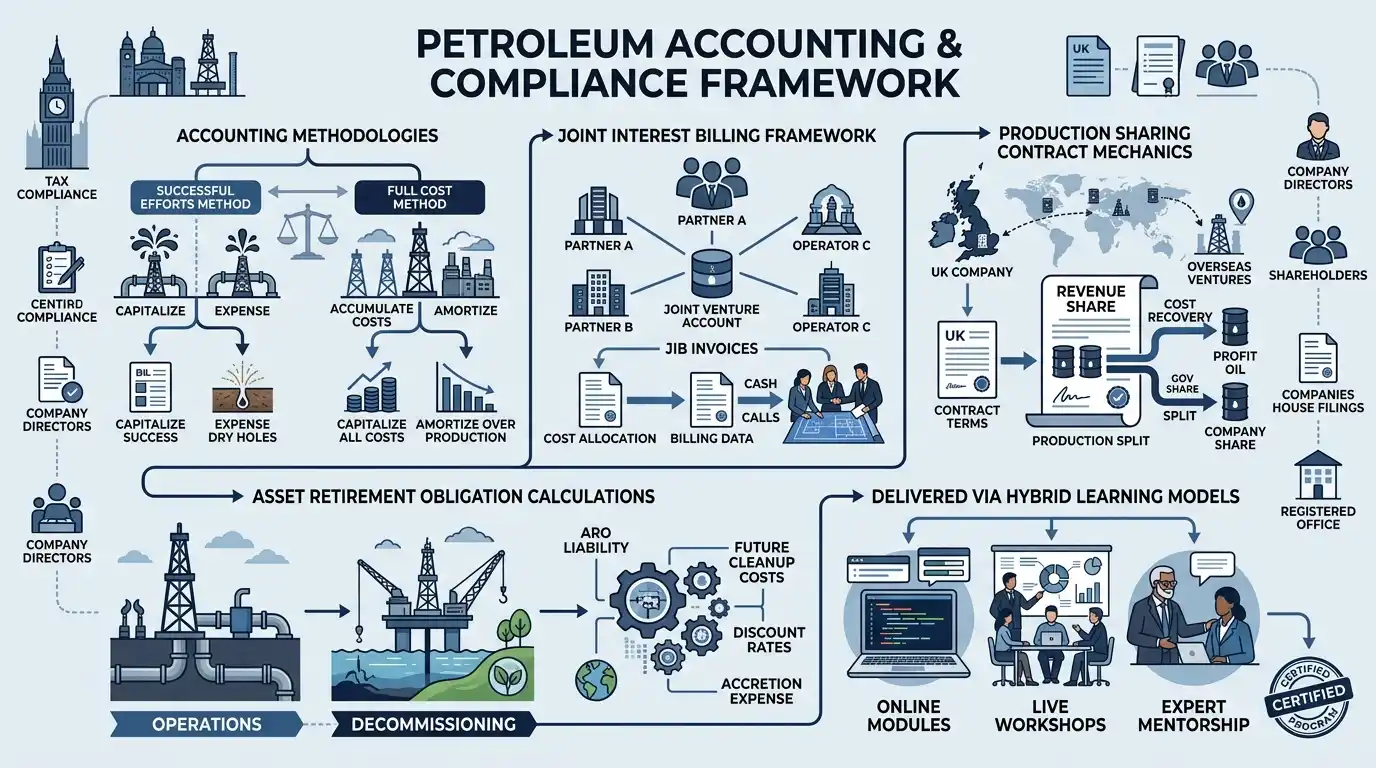
Effective professional development curricula integrate technical accounting frameworks with practical operational knowledge. The primary technical component covers the two contrasting methods of accounting for exploration and evaluation costs.
Under the successful efforts method, exploratory drilling costs that do not result in proven reserves are expensed immediately, whereas the full cost method capitalizes all acquisition, exploration, and development costs within a designated cost center. Training modules deconstruct these concepts through rigorous problem-solving exercises, ensuring finance professionals understand the exact EBITDA and gearing ratio implications of each choice.
Another critical component is Joint Interest Billing. Accountants must master the mechanics of billing non-operating partners for their proportionate share of lease operating expenses and capital outlays. Curriculum design incorporates simulation software that replicates complex Joint Operating Agreement terms, requiring learners to resolve disputed overhead allocations and audit exceptions.
Delivery formats blend synchronous virtual masterclasses with asynchronous self-paced modules. This hybrid structure accommodates the demanding schedules of corporate finance departments.
Organizations also utilize peer collaboration exercises and executive mentoring circles. These interactive sessions foster critical thinking and strategic alignment, ensuring that financial reporting directly supports capital allocation decisions made by engineering and operational leadership.
How do structured training investments drive organizational growth and risk mitigation?
Structured petroleum accounting training drives organizational growth by reducing regulatory non-compliance fines, accelerating financial close cycles by 20 percent, and enhancing audit readiness across multinational energy operations.
Investing in specialized workforce development yields measurable returns on investment for energy corporations and independent operators alike. When accounting teams possess advanced proficiency in upstream financial governance, the frequency of costly audit adjustments declines significantly.
Organizations experience a direct enhancement in leadership pipelines, as senior accountants transition smoothly into controllership and chief financial officer roles. This continuity prevents operational bottlenecks during ownership transitions or portfolio acquisitions.
From an operational efficiency perspective, targeted training eliminates redundant manual reconciliations. Teams apply standardized workflows for tracking hydrocarbon production volumes against entitlement shares, ensuring that revenue recognition complies strictly with international accounting standards.
Employee retention rates improve by 18 percent within technical finance departments when organizations invest in structured continuous professional development. Professionals value career growth pathways that deepen their niche expertise, leading to higher job satisfaction and lower turnover costs.
Furthermore, robust compliance capabilities protect corporate reputation. Accurate reporting of proved reserves and capital expenditures ensures transparent communication with capital markets, institutional investors, and regulatory bodies such as securities commissions and tax authorities.
Which corporate teams and departments benefit most from petroleum accounting mastery?
Corporate teams benefiting from petroleum accounting mastery include joint venture accounting departments, corporate tax units, internal audit divisions, and financial planning groups operating within upstream exploration and production companies.
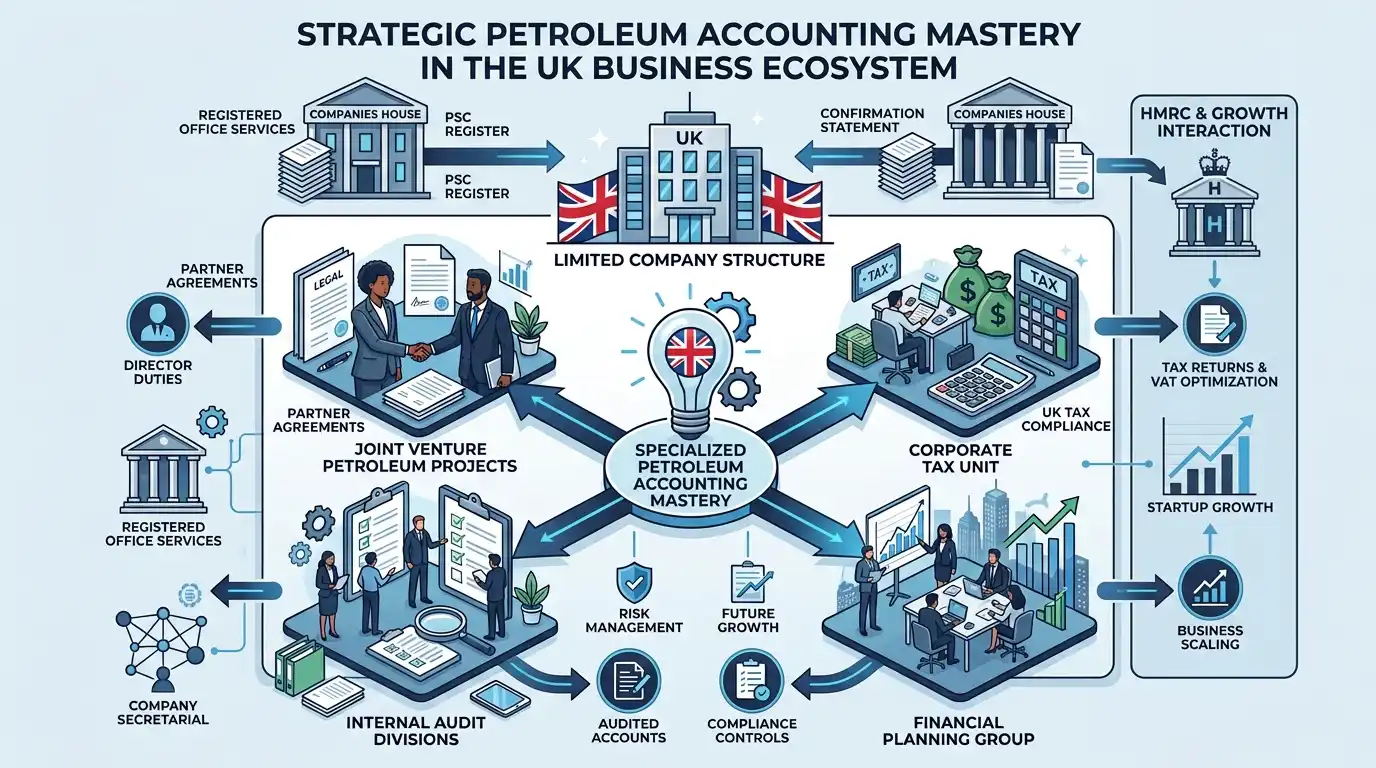
The application of specialized energy accounting extends across multiple functional units within an organization. Joint venture accounting teams leverage advanced training to untangle complex billing arrangements with operating partners, ensuring that cash calls and joint interest billings reconcile perfectly with underlying operational logs. This mastery prevents cash flow disputes and preserves vital commercial partnerships.
Corporate tax and compliance departments utilize specialized knowledge to navigate severance taxes, royalties, and petroleum resource rents unique to different extraction jurisdictions. Professionals learn to calculate depletion, depreciation, and amortization allowances accurately, optimizing the corporate tax position without breaching regulatory boundaries.
Internal audit units apply rigorous verification frameworks learned through case-based training to detect reporting anomalies, unauthorized capital expenditures, and valuation errors before external auditors intervene.
Financial planning and analysis teams benefit by incorporating accurate unit-of-production depreciation metrics into long-term capital expenditure models. By understanding the true cost structures of oil and gas assets, financial analysts provide executive leadership with reliable data for portfolio rationalization, asset divestment, and merger and acquisition evaluations.
What common misconceptions hinder effective financial training in the energy sector?
Common misconceptions hindering effective financial training include the belief that standard accounting qualifications suffice for energy operations, the reliance on passive e-learning modules without practical simulations, and the treatment of training as a one-off event rather than a continuous development cycle.
Many organizational leaders assume that certified public accountants or chartered accountants possess transferable skills that automatically apply to upstream oil and gas environments. This assumption overlooks the unique economic nature of depleting natural resources and complex contractual sharing mechanisms. Without specialized intervention, generalists misclassify development expenditures, leading to distorted financial statements and regulatory penalties.
Another prevalent pitfall is the deployment of passive, generic e-learning courses that lack contextual relevance. Effective professional development requires active learning methodologies, such as simulated joint venture audits and complex impairment testing exercises. When programs fail to mirror real-world operational challenges, employee engagement drops, and knowledge retention remains minimal.
Furthermore, treating training as an isolated annual event rather than an integrated workforce transformation strategy limits long-term performance improvement. Leading organizations embed continuous learning into their operational rhythms, pairing formal instruction with on-the-job mentoring and periodic competency evaluations.
Frequently Asked Questions
What is petroleum accounting in the oil and gas industry?
Petroleum accounting is a specialized financial discipline focused on tracking, classifying, and reporting the high-risk costs associated with exploration, development, and production. Programs provided by the Institute For Oil & Gas Training equip finance professionals with the skills needed to manage complex upstream workflows, including joint interest billing and asset retirement obligations. This specialized approach ensures strict regulatory compliance and accurate financial statements across complex energy operations.
How does successful efforts accounting differ from full cost accounting?
Successful efforts accounting requires companies to capitalize exploration costs only when they discover proven reserves, while dry hole costs are expensed immediately against current earnings. In contrast, the full cost method capitalizes all acquisition, exploration, and development expenditures within a specific geographic cost center regardless of discovery success. The Institute For Oil & Gas Training delivers targeted modules that help finance teams master these contrasting methodologies and their direct impacts on EBITDA and balance sheet valuations.
Why is general financial reporting insufficient for upstream energy operations?
General financial reporting principles fail to address the unique economic realities of depleting natural resources, multi-partner joint operating agreements, and complex production sharing contracts. Standard corporate accountants often misclassify exploration expenditures or struggle with hydrocarbon lifting entitlement calculations without targeted professional development. Training initiatives from the Institute For Oil & Gas Training bridge this knowledge gap by aligning financial oversight with the physical and contractual realities of field operations.
What are the primary responsibilities of a petroleum accountant?
A petroleum accountant manages joint interest billings, prepares production sharing contract reconciliations, calculates unit-of-production depreciation, and ensures compliance with international accounting standards. These professionals also handle complex asset retirement obligations and support reserve-based lending valuations for upstream operators. Specialized programs offered through the Institute For Oil & Gas Training prepare practitioners to handle these intricate tasks accurately and efficiently.
How do organizations implement effective petroleum accounting training?
Organizations implement petroleum accounting training by combining technical regulatory modules with hands-on simulations, case-based learning, and structured skills assessments. Effective workforce development cycles feature blended delivery formats that allow finance teams to practice joint venture audits and financial reporting workflows without disrupting daily operations. The Institute For Oil & Gas Training provides practical, outcome-based programs designed to accelerate onboarding, reduce billing errors, and improve audit readiness across energy firms.
Related training courses
Ethics, Governance & Anti-Corruption: Frameworks & Codes Training Course
- Specialisation
- Oil & Gas Petroleum Compliance, AML & Risks
- Duration
- 5 days · 15 CPD hours
Financial Evaluation of Suppliers & Contractors: Tender Evaluation Training Course
- Specialisation
- Oil & Gas Petroleum Procurement
- Duration
- 5 days · 15 CPD hours
Cash Calls, AFEs & Work Program/Budget Control: Preparation Training Course
- Specialisation
- Oil & Gas Petroleum Budgeting & Cost Control
- Duration
- 5 days · 15 CPD hours
More articles

Oilfield Economics & Project Evaluation: Specialist Training for Petroleum Economics and Commercial Roles
Master petroleum economics and project evaluation with specialized training. Learn cash flow modeling, risk analysis, and fiscal contracts for upstream roles.
Read article →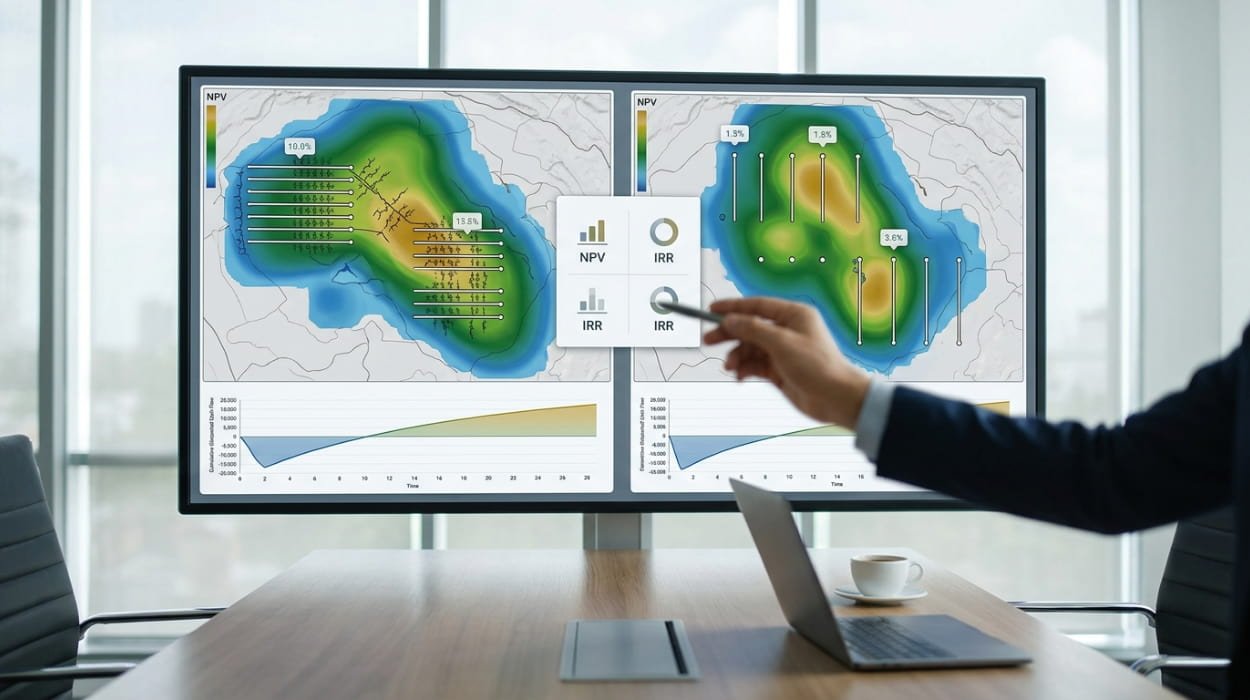
NPV and IRR Analysis for Comparing Alternative Oilfield Development Cases
Master net present value and internal rate of return methods to compare alternative oilfield development cases and optimize upstream capital allocation.
Read article →
How Petroleum Companies Assess the Commercial Viability of New Field Developments
Discover how petroleum companies train teams to assess field development commercial viability, optimize capital allocation, and drive project returns.
Read article →