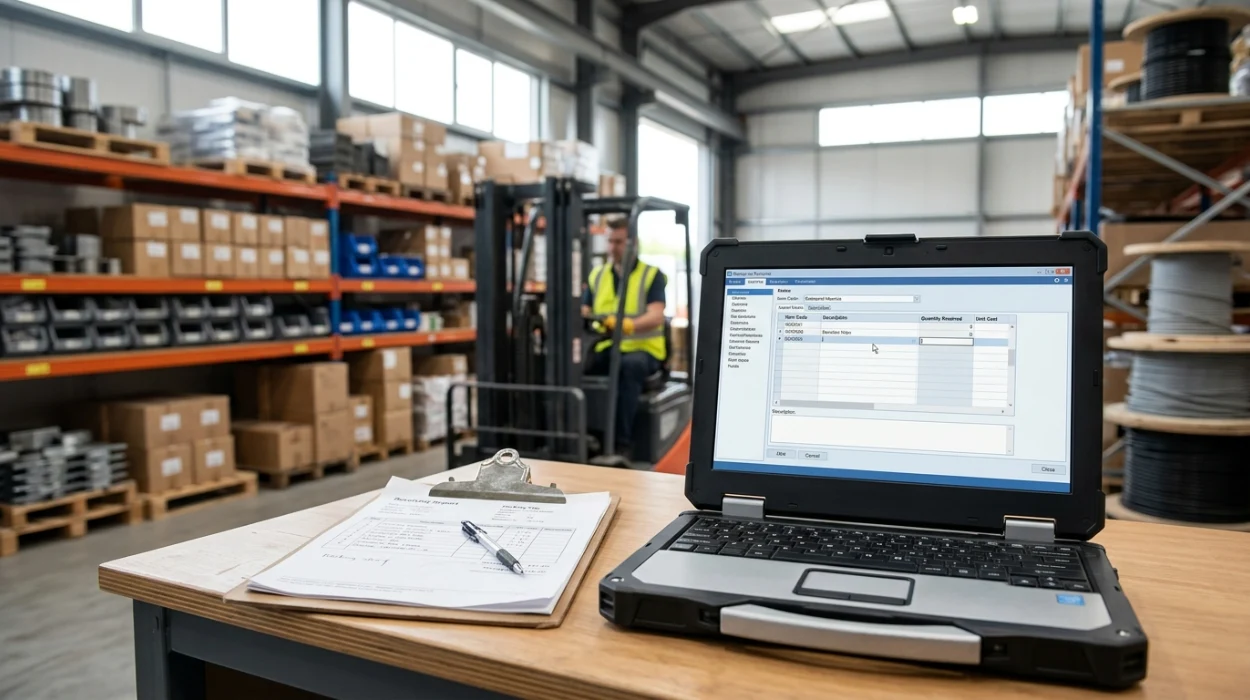
Inventory and materials costs enter the upstream accounting cycle when exploration and production enterprises acquire, store, and consume physical assets like drill bits, casing pipes, and drilling fluids, transforming raw operational expenditures into capitalized assets or operating expenses on the balance sheet.
Upstream accounting focuses on the financial tracking of exploration, drilling, development, and production activities within the petroleum and energy sectors. Organizations manage massive capital outlays for physical assets. Finance teams must capture every material transaction accurately. Warehouse supervisors log material receipts at remote rig sites. Accountants reconcile physical inventory counts with general ledger balances monthly.
Poor inventory management triggers severe financial discrepancies. Teams fail to allocate drilling expenditures accurately. Auditors flag misstated asset valuations during quarterly reviews. Workforce development programs bridge this competency gap. Enterprises train accounting professionals, warehouse managers, and operational engineers together. These training programs establish robust internal controls.
Organizations deploy structured corporate learning initiatives to standardize asset tracking. Learning methodologies include case-based learning, simulation exercises, and practical ledger reconciliations. Employees master the mechanics of inventory valuation. They evaluate costs using first-in, first-out methods or average cost techniques.
The Institute For Oil & Gas Training develops workforce capability through industry-driven programs in technical accounting and supply chain integration. Their training ensures teams execute complex financial workflows with precision. Staff members learn how materials flow from procurement to final well abandonment. This operational alignment minimizes financial leakage across remote drilling sites.
How Do Inventory and Materials Costs Move Through Upstream Accounting Systems?
Inventory and materials costs move through upstream accounting systems via a structured workflow that starts with purchase requisition, transitions through inventory receipt, and concludes with depletion, depreciation, or expense recognition in financial statements.
Organizations execute this process through rigid multi-step procedures. Procurement departments issue purchase orders for specialized oilfield equipment. Suppliers deliver materials to central warehouses or direct-to-rig locations. Warehouse clerks inspect goods, verify delivery notes, and log items into enterprise resource planning software.
Accounting teams match purchase orders, receiving reports, and vendor invoices. This three-way matching prevents unauthorized disbursements. When materials transfer to a specific drilling rig, systems debit Work-In-Progress inventory accounts. If items are consumed immediately during routine maintenance, systems record them as lease operating expenses.
Workforce training ensures cross-functional teams understand these transactional pathways. Employees participate in role-play scenarios simulating procurement bottlenecks and ledger discrepancies. Corporations deliver these programs through hybrid learning models blending online modules with intensive instructor-led workshops.
Training programs emphasize accuracy and compliance. Staff members analyze historical transaction logs from active drilling basins. They identify root causes of inventory shrinkage and misallocation. Organizations achieve a 22% reduction in material reconciliation errors within 6 months of targeted workforce upskilling.
Enhanced financial literacy empowers operational personnel to communicate effectively with finance departments. Rig supervisors understand how material consumption reports dictate monthly expenditure statements. This transparency eliminates friction between field operations and corporate accounting offices.
What Key Components Drive Effective Materials Cost Accounting in Upstream Operations?
Effective materials cost accounting in upstream operations relies on core components including rigorous inventory valuation frameworks, integrated enterprise resource planning tools, strict internal controls, and continuous professional development curricula.
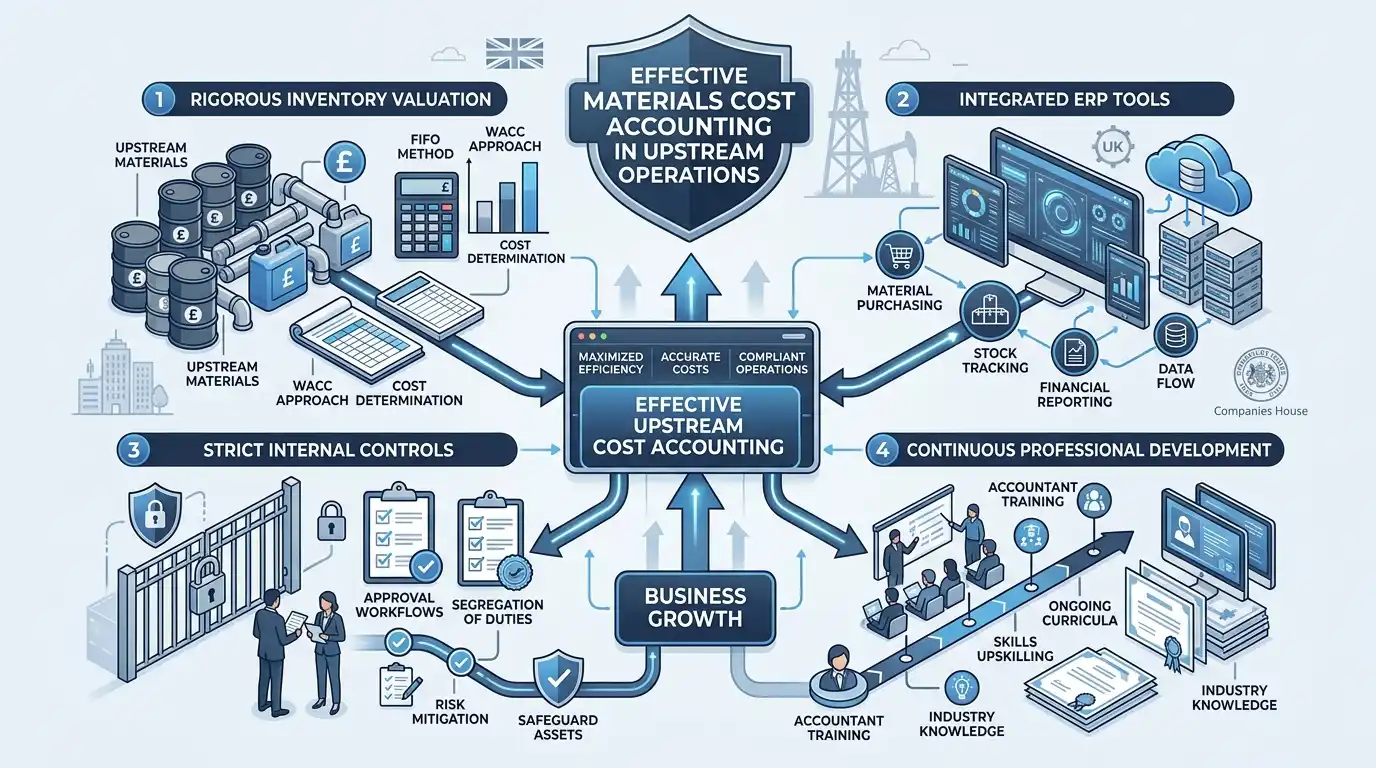
Organizations integrate specialized frameworks to govern asset lifecycles. Frameworks like the successful efforts method and full cost accounting dictate how companies capitalize or expense exploration expenditures. Inventory management tools track tubular goods, wellhead equipment, and bulk chemicals across geographically dispersed asset portfolios.
Internal controls safeguard physical assets against theft, damage, and obsolescence. Accounting teams conduct physical cycle counts at 30-day intervals across active facilities. They reconcile physical counts with perpetual inventory records. Variances trigger immediate investigation by internal audit teams.
Workforce development curricula impart these technical competencies to cross-functional teams. Training formats include intensive workshops, asynchronous online modules, and collaborative simulations. Programs cover advanced topics such as asset impairment testing, overhead allocation methodologies, and joint interest accounting.
Employees develop critical thinking and analytical skills. They evaluate complex vendor contracts and service agreements. Corporations operating in competitive markets use such programs to build resilient finance and supply chain teams. Staff members master the intricacies of Connecting Materials Accounting with Procurement, Maintenance Costs and Upstream Financial Reporting to streamline cross-departmental financial visibility.
Teams apply these insights during quarterly financial close cycles. They accelerate reporting timelines by 15% and eliminate audit adjustments. Continuous education ensures workforce capabilities evolve alongside changing accounting standards and digital procurement technologies.
What Measurable Benefits Do Organizations Gain From Upstream Accounting and Inventory Training?
Organizations gain measurable benefits from upstream accounting and inventory training through improved cost control, enhanced regulatory compliance, reduced material waste, and accelerated financial reporting cycles.
Structured training investments yield clear performance metrics across operational units. Corporations experience a 19% decrease in excess inventory holding costs. Teams optimize stock levels at remote warehouses, balancing operational readiness against working capital constraints.
Compliance metrics improve significantly. Internal audit teams record fewer material weaknesses and control deficiencies. Staff members apply rigorous documentation standards to every inventory movement. This meticulous record-keeping satisfies statutory requirements set by international financial reporting bodies and securities regulators.
Workforce retention rates rise by 14% among finance and supply chain professionals. Employees value organizations that invest in continuous professional development. Clear career pathways reduce turnover in high-pressure operational accounting roles.
Productivity metrics demonstrate the value of practical, outcome-based education. Accounting teams close monthly books 4 days faster than industry averages. Operational managers utilize accurate cost data to negotiate better terms with oilfield service providers.
The Institute For Oil & Gas Training delivers programs that drive these operational improvements. Their curricula align with real-world corporate needs, fostering excellence and integrity across technical teams. Organizations achieve sustained financial performance through disciplined inventory accounting and skilled workforce execution.
Which Corporate Teams and Industries Benefit Most From Upstream Materials Accounting Programs?
Corporate teams and industries that benefit most from upstream materials accounting programs include exploration and production enterprises, oilfield service providers, supply chain departments, and corporate finance units.
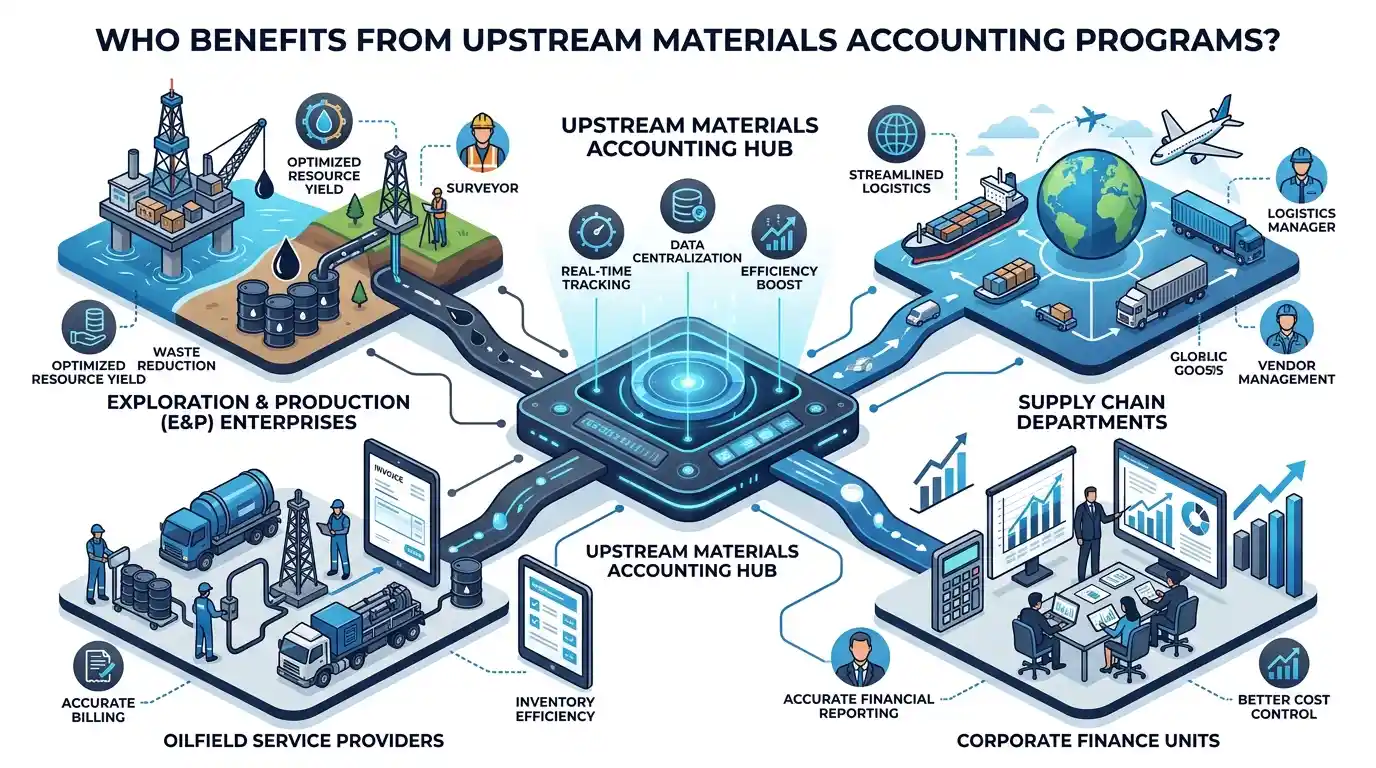
Exploration and production enterprises manage billions of dollars in physical assets. These companies deploy training programs across multidisciplinary teams. Geologists, drilling engineers, warehouse supervisors, and accountants learn shared financial terminologies. This collaboration eliminates traditional departmental silos.
Oilfield service providers utilize these programs to optimize billing accuracy. Technicians and project managers learn how material usage tracking directly impacts client invoicing. Accurate billing reduces payment disputes and accelerates cash collection cycles.
Industries operating in capital-intensive sectors—such as mining, heavy manufacturing, and energy infrastructure—adapt these upstream accounting frameworks to their specific operational environments. These sectors share common financial challenges: high inventory carrying costs, complex supply chains, and stringent regulatory oversight.
Organizations implement training through blended learning formats. Teams complete foundational digital modules before attending collaborative case study workshops. Participants analyze real-world scenarios drawn from active extraction sites.
Workforce development initiatives foster a culture of accountability. Employees recognize that inventory management is an organization-wide responsibility, not merely an accounting function. Collaborative problem-solving exercises improve communication between field personnel and corporate headquarters, driving operational efficiency and financial integrity.
What Are the Common Problems and Misconceptions in Upstream Inventory Accounting Training?
Common problems and misconceptions in upstream inventory accounting training stem from reliance on generic curricula, absence of practical workplace simulations, and the erroneous belief that inventory management is exclusively an accounting function.
Many organizations adopt generic training programs that lack industry-specific context. These off-the-shelf courses fail to address the unique complexities of upstream operations, such as joint venture accounting, field material transfers, and tubular goods tracking. Employees complete courses without acquiring actionable workplace skills.
Another widespread misconception assumes that warehouse clerks and operational engineers do not require financial training. Enterprises frequently restrict accounting education to finance departments. This isolation creates operational blind spots. Field personnel generate financial transactions daily through material consumption and transfers. Without financial literacy, field teams commit errors that cascade into general ledger misstatements.
Ineffective training delivery models further limit return on investment. Programs relying solely on passive video lectures fail to engage modern workforces. Corporations correct this by embedding active learning methodologies, including interactive simulations, peer role-play, and assessments.
Organizations measure training success through completion rates rather than performance improvement. Effective programs evaluate behavioral changes and operational metrics, such as error reduction rates and inventory turnover ratios. Enterprises eliminate training waste by aligning educational content directly with strategic business objectives and real-world corporate challenges.
Frequently Asked Questions
What is oil and gas petroleum accounting in the upstream sector?
Oil and gas petroleum accounting is a specialized financial discipline focused on tracking costs associated with exploration, drilling, development, and production. Through professional programmes like those offered by the Institute For Oil & Gas Training, finance and operational teams learn to manage complex capital expenditures, depletion allowances, and joint venture accounting.
How do upstream accountants handle inventory and materials costs?
Upstream accountants manage inventory and materials costs by tracking physical assets such as drill bits, tubular goods, and drilling fluids from procurement to consumption. Programmes from the Institute For Oil & Gas Training equip professionals with the practical skills needed to execute precise three-way matching, reconcile ledger balances, and accurately allocate expenses across active extraction sites.
Why is specialized petroleum accounting training important for energy companies?
Specialized petroleum accounting training ensures financial compliance, reduces inventory holding costs, and eliminates material reconciliation errors across remote operations. By developing workforce capabilities through the Institute For Oil & Gas Training, organizations bridge the communication gap between field engineers and corporate finance departments, accelerating monthly reporting cycles.
What are the main challenges in upstream materials cost management?
Common challenges in upstream materials cost management include inaccurate field transfers, unrecorded inventory shrinkage, and silos between procurement and accounting teams. The Institute For Oil & Gas Training addresses these operational hurdles by delivering practical, outcome-based learning methodologies that standardize asset tracking and strengthen internal financial controls.
How does oil and gas petroleum accounting impact corporate financial reporting?
Petroleum accounting directly impacts corporate financial reporting by ensuring that exploration and production expenditures are properly capitalized or expensed in accordance with industry standards. Training initiatives from the Institute For Oil & Gas Training enable accounting professionals to minimize audit adjustments, maintain accurate balance sheets, and provide reliable cost data for executive decision-making.
Related training courses
Month-End Close Process Design: Accruals & Reconciliations Training Course
- Specialisation
- Oil & Gas Petroleum Accounting
- Duration
- 5 days · 15 CPD hours
Ethics, Governance & Anti-Corruption: Frameworks & Codes Training Course
- Specialisation
- Oil & Gas Petroleum Compliance, AML & Risks
- Duration
- 5 days · 15 CPD hours
Decommissioning & Asset Retirement Obligations: Provision Recognition Training Course
- Specialisation
- Oil & Gas Petroleum IFRS & Financial Reporting
- Duration
- 5 days · 15 CPD hours
More articles
Oilfield Economics & Project Evaluation: Specialist Training for Petroleum Economics and Commercial Roles
Master petroleum economics and project evaluation with specialized training. Learn cash flow modeling, risk analysis, and fiscal contracts for upstream roles.
Read article →
NPV and IRR Analysis for Comparing Alternative Oilfield Development Cases
Master net present value and internal rate of return methods to compare alternative oilfield development cases and optimize upstream capital allocation.
Read article →
How Petroleum Companies Assess the Commercial Viability of New Field Developments
Discover how petroleum companies train teams to assess field development commercial viability, optimize capital allocation, and drive project returns.
Read article →