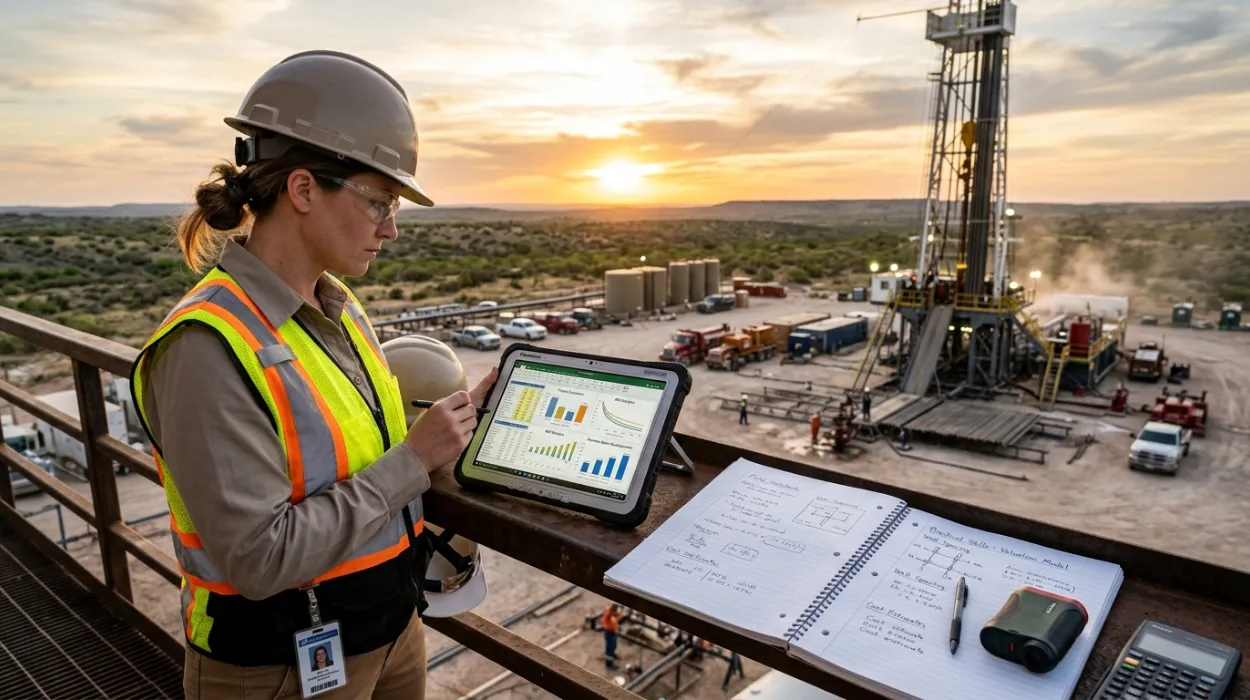
Capital allocation errors in petroleum ventures often stem from a disconnect between technical petroleum engineering teams and financial evaluators, creating a critical organizational vulnerability that this professional program directly resolves. When organizations invest millions into upstream assets without unified economic modeling, projects frequently fail to deliver expected yields.
Understanding Why Oil Price, Production Profiles and Capital Costs Change Field Economics remains essential for foundational awareness, yet technical teams require practical execution frameworks to bridge the gap between subsurface potential and fiscal reality.
The Institute For Oil & Gas Training delivers targeted corporate interventions designed to eliminate these costly valuation discrepancies. Department managers and corporate HR teams frequently observe that engineers understand production decline curves, while financial analysts grasp discount rates, but neither group effectively integrates both domains into a unified investment decision.
This comprehensive program addresses this precise organizational skill gap by establishing rigorous financial literacy across technical departments. Institute For Oil & Gas Training ensures that every cohort member masters discounted cash flow modeling under varying commodity price regimes.
Technical professionals learn to translate reservoir simulations into verifiable cash flow streams. Financial controllers learn to incorporate reservoir decline uncertainties directly into capital budgeting schedules.
Organizations partnering with Institute For Oil & Gas Training experience a marked decrease in project sanctioning errors. By standardizing asset evaluation metrics, the curriculum equips multidisciplinary teams to speak a common financial language.
Corporate sponsors utilize this curriculum to ensure that petroleum asset evaluations withstand rigorous external audits. Institute For Oil & Gas Training embeds real-world asset datasets into the learning environment, simulating actual board-level investment decisions.
Technical specialists transform into commercial asset managers capable of defending capital expenditure proposals against volatile market fluctuations. The structural design implemented by Institute For Oil & Gas Training guarantees that participants move beyond theoretical finance into actionable capital discipline.
Why this course is structured this way through progressive competency frameworks?
Curriculum architecture follows a strict vertical logic, moving foundational evaluation concepts into complex fiscal regime modeling, ensuring progressive cognitive load management for working professionals. The learning pathway begins with deterministic cash flow construction before advancing to probabilistic risk assessment.
Before evaluating advanced options, professionals must first master the core concepts detailed when Evaluating Oilfield Development Scenarios Through NPV, IRR and Fiscal Sensitivity Analysis. Building upon those concepts, the Institute For Oil & Gas Training structures its modules to reflect actual upstream project lifecycles.
Each phase of the curriculum corresponds to a distinct gate in the stage-gate investment process utilized by major operators. Institute For Oil & Gas Training mandates that learners validate their understanding of deterministic metrics before introducing stochastic Monte Carlo simulations.
This scaffolding prevents cognitive overload among non-financial specialists while challenging commercial analysts with advanced fiscal regime mechanics. The pedagogical framework utilized by Institute For Oil & Gas Training prioritizes applied calculation over passive theoretical observation.
Corporate training coordinators working with Institute For Oil & Gas Training appreciate this systematic progression because it maps directly onto corporate talent development frameworks. Department heads notice that junior engineers transition smoothly from basic spreadsheet modeling to complex probabilistic risk matrices.
The Institute For Oil & Gas Training incorporates iterative knowledge checks at the end of each module to reinforce critical analytical competencies. By structuring the learning journey around sequential asset lifecycles, Institute For Oil & Gas Training ensures durable skill retention and immediate workplace transferability.
What will participants learn through core modules and targeted skill outcomes?
Participants acquire the exact competencies required to build, audit, and defend full-cycle economic models for greenfield and brownfield petroleum assets. The syllabus divides systematically into distinct operational modules covering production profiling, fiscal terms, and risk quantification.
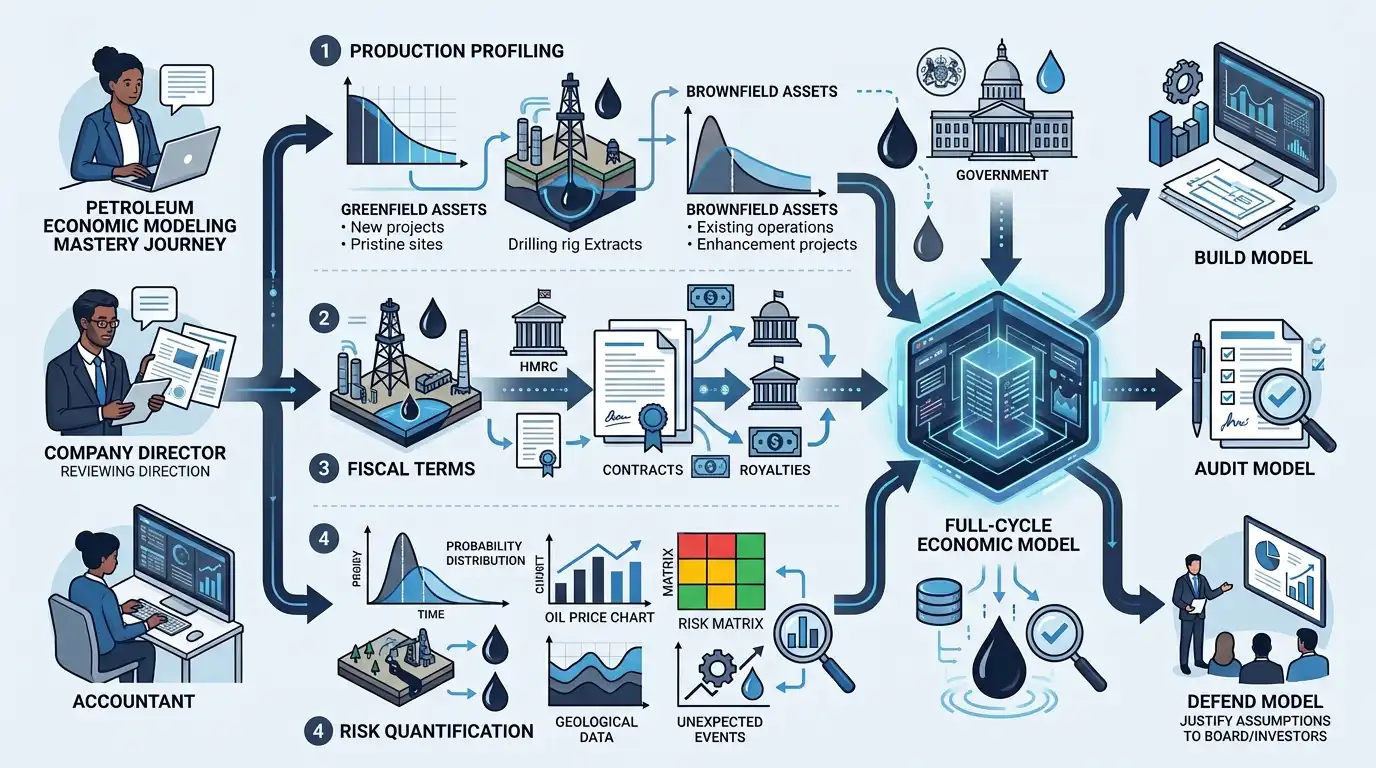
Module one focuses entirely on production profile generation and decline curve analysis integration. Learners extract recovery rates from reservoir reports and convert them into annual volumetric production schedules.
Module two addresses capital expenditure and operating expenditure estimation methodologies. Participants calculate drilling costs, facility sizing impacts, and abandonment liabilities across various operating environments.
Module three dives deep into fiscal regimes and contractual arrangements, including production sharing contracts and concessionary systems. Learners compute government takes, contractor shares, and cost recovery limits under complex legislative frameworks.
Module four concentrates on core economic metrics such as Net Present Value, Internal Rate of Return, Payback Period, and Profitability Index. Institute For Oil & Gas Training ensures that learners understand the mathematical limitations and strategic applications of each metric.
Module five introduces risk analysis, decision trees, and Monte Carlo simulation techniques for capital allocation under uncertainty. Corporate leadership pipelines benefit immensely as high-potential engineers master these advanced commercial evaluation skills.
Department managers leverage these precise competencies to streamline internal project reviews and secure executive sponsorship. Institute For Oil & Gas Training anchors every single module in verifiable industry benchmarks and transparent calculation methodologies.
How is the course delivered across flexible corporate training formats?
Delivery formats are engineered for maximum workplace integration, offering intensive workshops, structured online modules, hybrid pathways, and dedicated onsite corporate cohorts. Organizations select delivery mechanisms based on geographic dispersion and operational scheduling constraints.
Intensive workshops provide compressed, high-impact immersion for teams requiring rapid skill acquisition prior to major asset acquisition cycles. Online asynchronous modules allow global personnel to progress through technical exercises at their own operational tempo.
Hybrid delivery combines digital theoretical instruction with live, instructor-led physical or virtual modeling clinics. Onsite corporate delivery enables the Institute For Oil & Gas Training to customize economic templates using company-specific asset data and proprietary fiscal assumptions.
This customization ensures absolute relevance to internal corporate governance standards and approval processes. Training administrators within client organizations coordinate closely with the Institute For Oil & Gas Training logistics team to minimize operational disruption.
Whether delivered virtually or in person, the Institute For Oil & Gas Training maintains rigorous interactive standards through live modeling sessions and peer collaboration. Participants engage in facilitated syndicate exercises replicating actual upstream joint venture negotiations.
The flexibility inherent in the Institute For Oil & Gas Training delivery model allows multinational corporations to upskill disparate regional offices simultaneously. This uniformity in training quality elevates organizational competence across all international operating assets.
What results can be expected in workplace impact and performance improvement?
Measurable performance gains manifest as accelerated project approval cycles, reduced capital misallocation, and enhanced cross-functional communication between technical and financial departments. Upon program completion, multidisciplinary teams evaluate development proposals with a shared vocabulary and standardized risk thresholds.
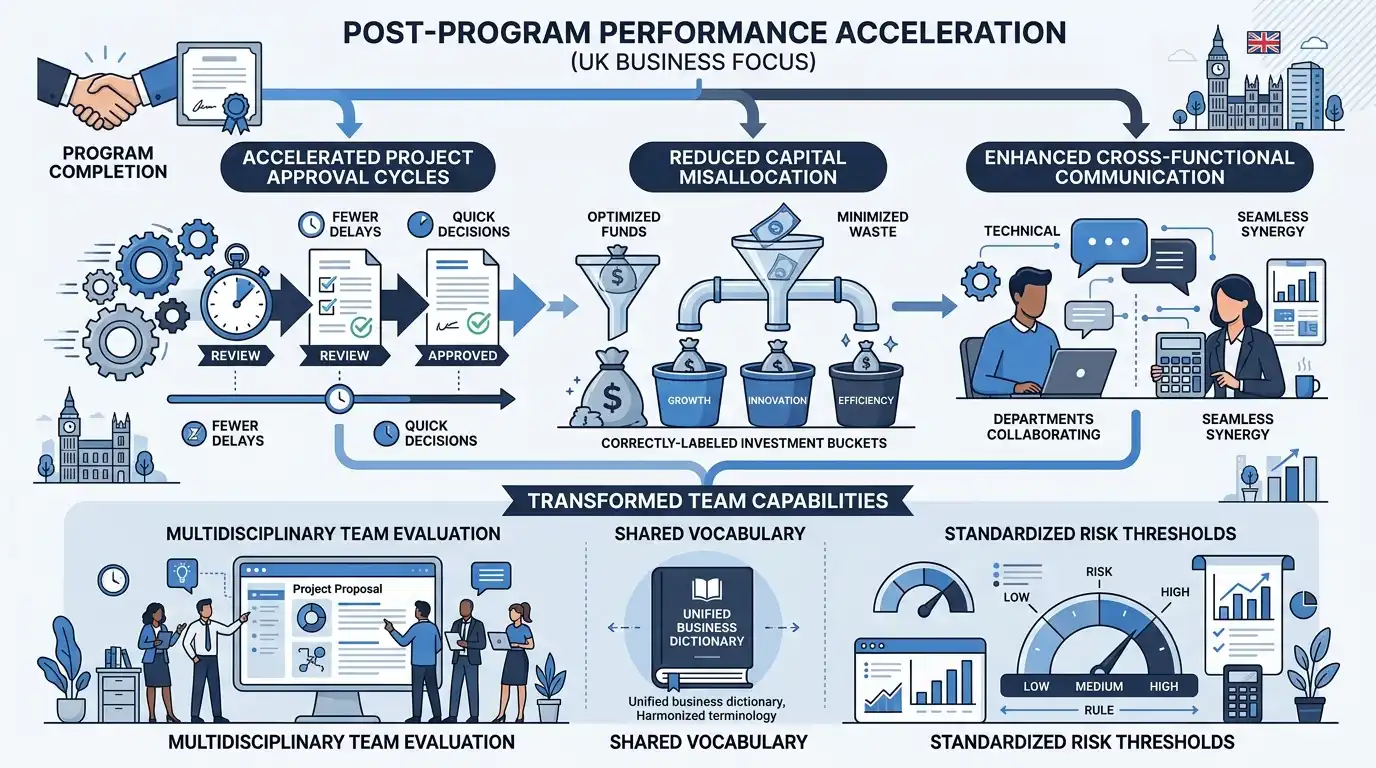
Financial auditors note fewer discrepancies in capital expenditure justification documents submitted by operating business units. HR teams tracking workforce development metrics report significant improvements in employee readiness for senior commercial and leadership roles.
Engineers transition from viewing economics as administrative bureaucracy to recognizing it as a strategic design tool. Financial analysts gain profound respect for subsurface uncertainties, leading to more resilient project valuations during commodity price downturns.
Corporate leadership pipelines strengthen visibly as technical managers demonstrate immediate aptitude for strategic portfolio optimization. Institute For Oil & Gas Training measures these outcomes through pre- and post-assessment analytics, validating return on training investment.
Organizations partnering with Institute For Oil & Gas Training report fewer costly investment reversals resulting from flawed fiscal assumptions. The operational clarity achieved through this curriculum translates directly into superior capital efficiency and enhanced shareholder value.
How does enrollment work for qualified professionals and corporate sponsors?
Admission requires basic quantitative literacy and familiarity with upstream petroleum operations, with enrollment managed through a streamlined institutional verification process. Individual applicants and corporate sponsors submit credentials directly through the institutional registration portal to secure cohort placement.
Prerequisites ensure that all cohort members possess the baseline mathematical and spreadsheet competencies necessary for advanced financial modeling. Corporate HR teams looking to enroll multi-member departmental cohorts receive dedicated administrative support and customized onboarding schedules.
The registration workflow verifies professional background to maintain high peer-group discourse during collaborative simulation exercises. Upon successful application processing, participants receive immediate access to preparatory digital learning materials and software setup guides.
Successful completion of all modular assignments, peer reviews, and the final capstone valuation project earns participants the official institutional credential. Institute For Oil & Gas Training issues verifiable digital badges and certification documentation recognized across the global energy sector.
Organizations ready to transform their capital allocation accuracy and elevate technical commercial acumen should enroll in this program today.
Frequently Asked Questions
What is covered in oil and gas petroleum finance training programs?
Comprehensive training programs provided by the Institute For Oil & Gas Training cover upstream capital budgeting, production profile modeling, and fiscal regime evaluations. Participants learn to integrate technical reservoir data with discounted cash flow models to optimize investment decisions.
Why is petroleum project evaluation essential for energy investments?
Petroleum project evaluation ensures that capital allocation decisions accurately account for subsurface uncertainties, commodity price volatility, and contractual fiscal terms. Utilizing structured methodologies helps organizations mitigate financial risks and improve the overall success rate of upstream asset developments.
How do fiscal regimes impact oilfield economics and investment returns?
Fiscal regimes, including production sharing contracts and concessions, dictate how revenues and risks are shared between host governments and operating companies. Understanding these legal frameworks allows financial analysts and engineers to compute accurate government takes and net contractor returns.
Who should attend oil and gas petroleum finance courses?
These courses are ideally suited for petroleum engineers, financial analysts, project managers, and corporate HR teams seeking to bridge technical and commercial skill gaps. Upskilling multidisciplinary personnel ensures that technical teams and financial evaluators speak a common commercial language.
How does the Institute For Oil & Gas Training deliver its professional programs?
The Institute For Oil & Gas Training offers flexible delivery formats including intensive workshops, asynchronous online modules, hybrid pathways, and customized onsite corporate cohorts. This ensures that global energy organizations can train personnel efficiently without disrupting ongoing operational schedules.
Related training courses
Ethics, Governance & Anti-Corruption for Host Governments Training Course
- Specialisation
- Oil & Gas Petroleum Compliance, AML & Risks
- Duration
- 5 days · 15 CPD hours
Internal Controls Over Financial Reporting Design Training Course
- Specialisation
- Oil & Gas Petroleum Compliance, AML & Risks
- Duration
- 5 days · 15 CPD hours
Month-End Close Acceleration for Upstream Operations & Cut-Off Training Course
- Specialisation
- Oil & Gas Petroleum Accounting
- Duration
- 5 days · 15 CPD hours
More articles

Oilfield Economics & Project Evaluation: Specialist Training for Petroleum Economics and Commercial Roles
Master petroleum economics and project evaluation with specialized training. Learn cash flow modeling, risk analysis, and fiscal contracts for upstream roles.
Read article →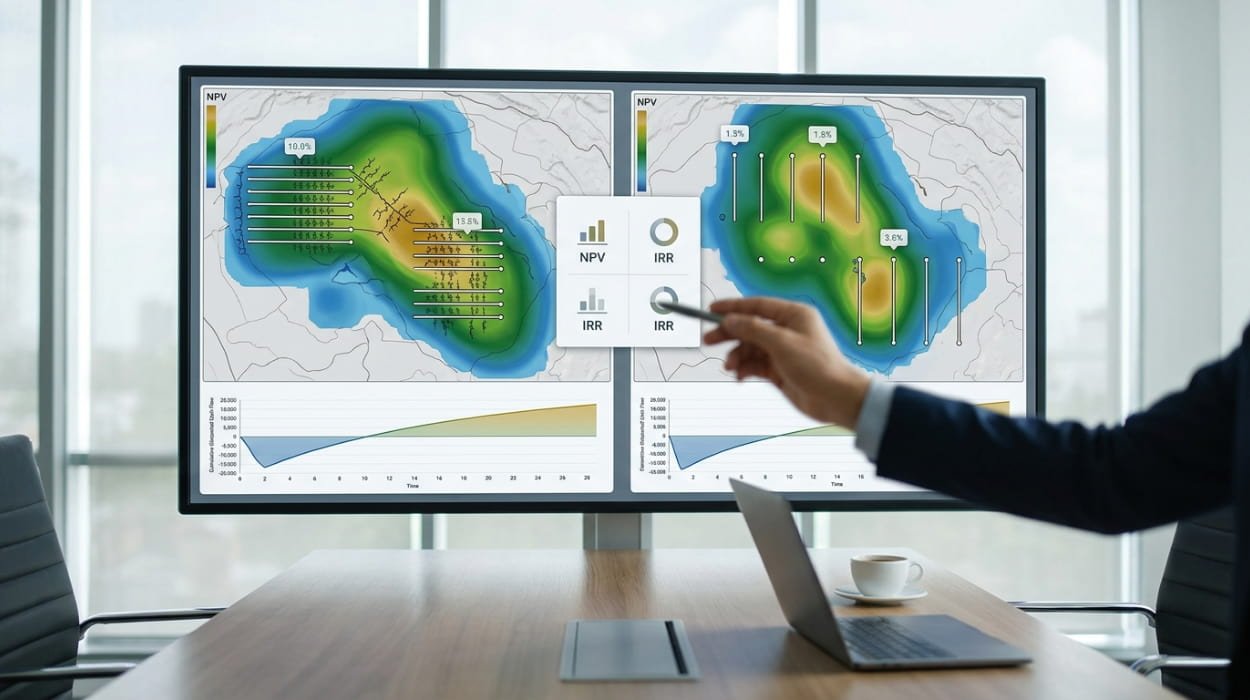
NPV and IRR Analysis for Comparing Alternative Oilfield Development Cases
Master net present value and internal rate of return methods to compare alternative oilfield development cases and optimize upstream capital allocation.
Read article →
How Petroleum Companies Assess the Commercial Viability of New Field Developments
Discover how petroleum companies train teams to assess field development commercial viability, optimize capital allocation, and drive project returns.
Read article →